A Brief Discussion: Tradition – Modernity – Postmodernity – Contemporary
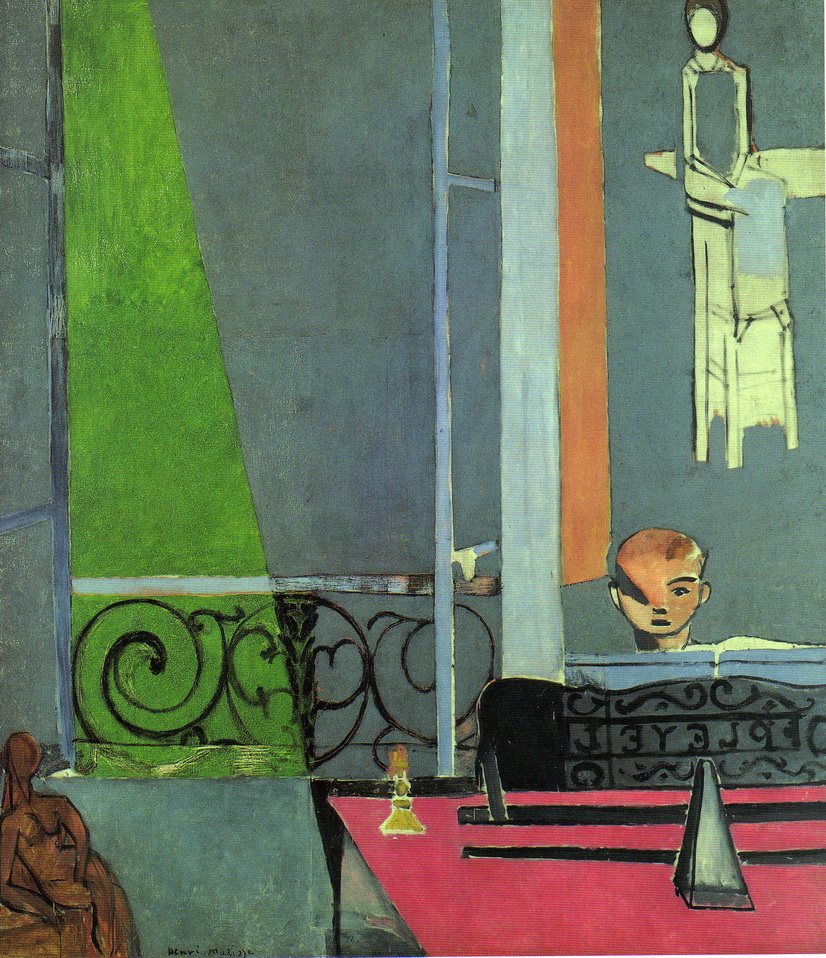
Matisse Piano Lesson 245x213cm 1916 Museum of Modern Art NY Collection
Text/Chen Chi-Hsiang The theme of this speech draft is as follows: Avant-garde, Tradition–Modernity–Contemporary, Postmodernity.
Tradition: Customs and norms accumulated through generations. In the history of human civilization that inherits the past and opens up the future, each ethnic group and society has its own deep-rooted traditions and creative power of the era (perhaps called modernity). Living customs, values, and existential meaning evolve with trends; traditions may decline or disappear unintentionally, like many ancient civilizations, perhaps to be rediscovered by archaeologists one day. Indeed, traditions are life and social initiatives of every era. Where there is no creativity, traditions wither. Culture permeates and updates continuously; without today’s creation, there will be no tomorrow’s tradition. Tradition should have the driving force of inheriting the past and ushering in the future. By observing how each group and society faces and refines it, and by reviewing the old to understand the new, the future can be anticipated.
Modernity: The current era, present state, and immediate spatiotemporal context. The meaning of "modernity" is refusing to be defined by old authorities and insisting that everyone define themselves with their own vocabulary, using negation as an artistic manifesto. It attempts to view one’s birth and possessed world from a non-presupposed, brand-new perspective. In fact, the tumultuous modernism and avant-garde art are of the same body. Their greatest characteristic is constant "confrontation" with tradition and society and experimental "innovation." They play the role of progress and liberation, projecting the image of a progressive world. They act "for action's sake," "for negation's sake," and "for innovation's sake." Standing on the position of artistic liberation, they pour out destructively toward destroying art, regarding the criticism and transformation of society as a sacred mission within the spirit of "patricidal sentiment."
In the eyes of modernists, tradition becomes old, stale, and corrupt. Facing current perception with a reformist stance and expanding into the unknown world, the avant-garde spirit becomes mainstream consciousness, dominating the trend of the times. Advancing while retreating, surging forward, competing in brilliance, causing confusion and doubt, evolutionary modernism leads humanity where?
Avant-garde art: Equivalent to modernism, it is rebellious, thoroughly liberating art, entering unknown realms. It subverts traditional society and politics, innovating beauty and revolutionizing art. Avant-garde art is a revolutionary type based on progressivism or evolutionism. It radically seeks various new possibilities, making the liberation of art or removal of artistic boundaries its duty, actively expanding into anti-art and non-art fields. In the most radical behavioral attitudes, ultimately, art is art because it is art. Art becomes itself. As long as the artist declares it art, it is art. Is this not the end of modernism or the end of utopia? The end of avant-garde art or modernism occurs because the concept of the avant-garde is no longer authoritative, allowing postmodernism to survive against all odds.
Postmodernity: Breaking the tyranny, singularity, and dictatorship of modernism, emphasizing plurality. Updating tradition under any possibility, diversely and gently reinterpreting tradition and modernity. Postmodern visual arts: renewal, retro, appropriation, transformation. Postmodern popular culture: inflation of knowledge and culture, multiculturalism and commercial supremacy. Postmodern liberation shifts toward globalization in the new century. Two major characteristics of postmodernism: First, reality is transformed into images; second, time divides into a series of enduring presents (the disappearance of historical sense). It no longer blindly opposes or confronts precedent trends like modernism. Instead, it flattens and synthesizes precedent artistic trends or historical procedural tendencies, appropriating them as a rhetoric of creation to apply and handle. "Postmodernity" involves returning to, going back to, or resurrecting historical images in Western art, which is also the common appearance and characteristic of postmodern art.
Contemporary: This era or the immediate now, reviewing the old to understand the new, touching upon current perception and unknown realms. Clearly: Contemporary humans, under the dominance of production lines driven by handicraft–industry–post-industry–informatization–automation–biotechnology–artificial intelligence–robots, enter an unprecedented window period. Contemporary encompasses everything, diverse and varied. Tradition continues to dance with modernity, fighting for their respective values and meanings. The avant-garde and the rear-guard maintain eternal confrontation, among which mainstream consciousness must dominate. Contemporary implies facing the present and peering into unknown realms. Unexpectedly, it assaults your imagination, stunning you in a state of rest.
This speech outline was compiled after being invited by Mr. Su Dong Zhenhui in February to share in Kaohsiung.