Su Kuo-ching: The Homeland of Life – Landscape
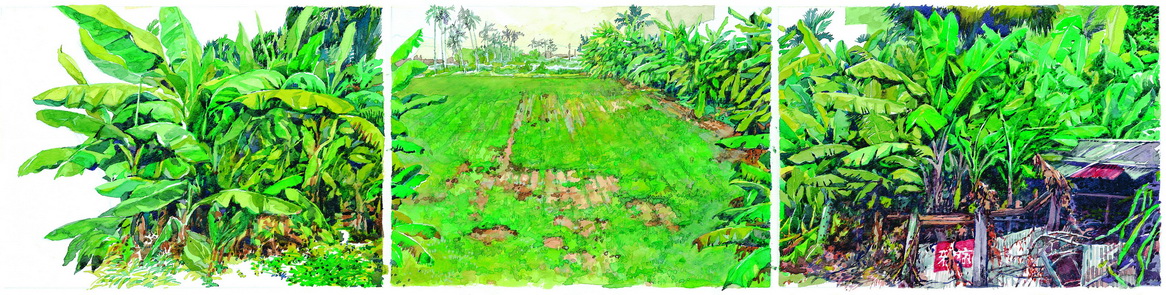
Day to Night - Seasons 91.5x549 cm 1992-1994 Oil on canvas


Text and photos by Chen Chi-Hsiang
"I use landscape painting to convey the shared human emotions at the deepest level of my heart."
Su Kuo-ching
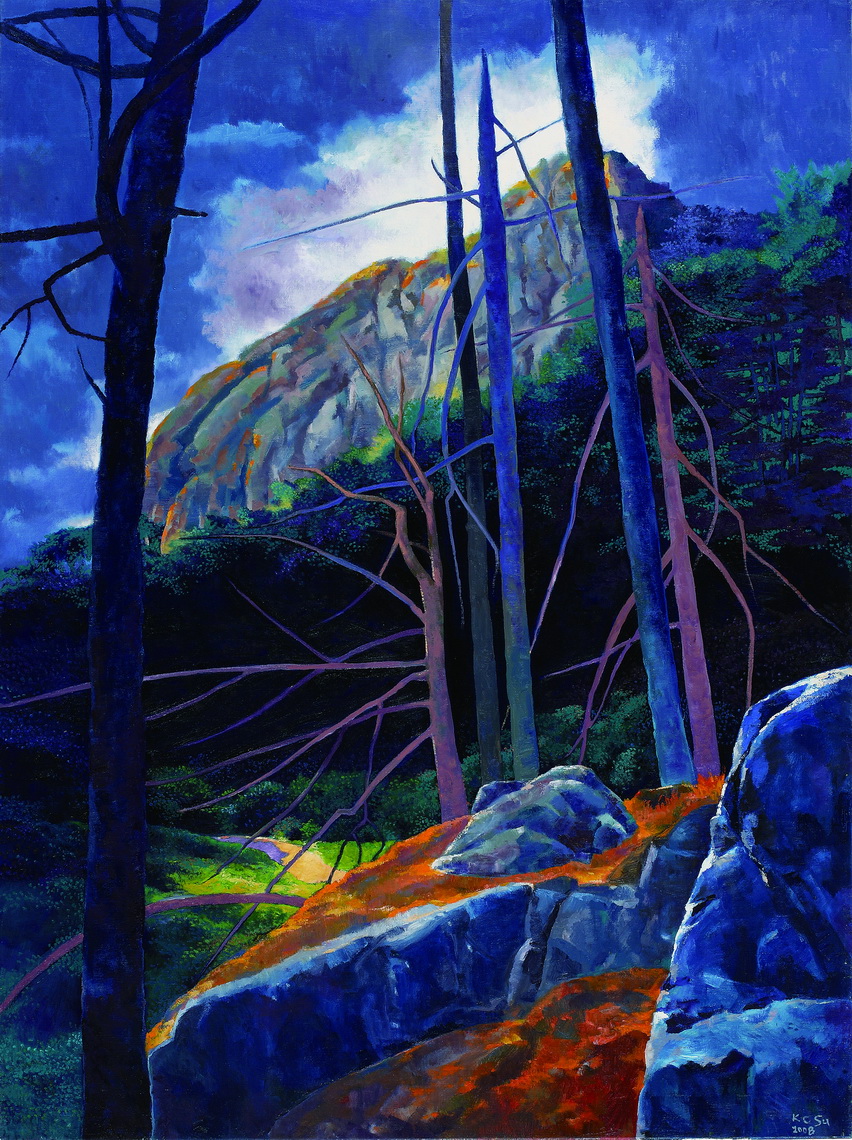
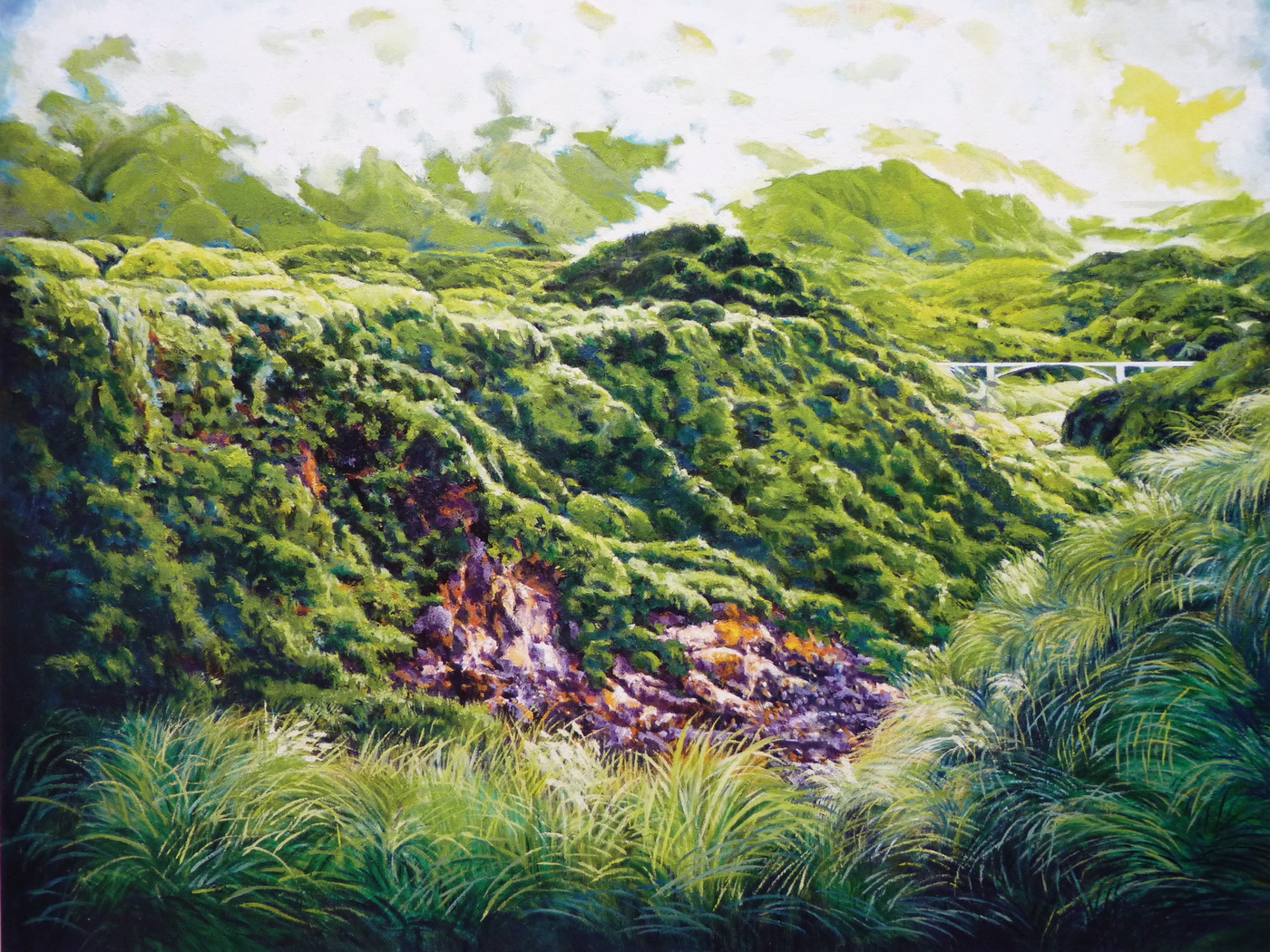
Preface: After postmodernism, painting seems to have become lost and declined. In an era today characterized by excessive stratification and alienation from nature, where the symbolic meaning of landscape painting is ignored, Su Kuo-ching’s devotion to landscape painting seems out of step. For this Su Kuo-ching who awaits a great landscape, there is undoubtedly a deep sense of frustration and loneliness; devoted to himself, he can only walk alone through thousands of mountains and rivers. In an era where anything goes, what is wrong with expressing landscapes? How should one paint landscapes today, and what kind of landscapes? How to express them, and what might be the modern or contemporary face of landscapes? This is a major test. Su Kuo-ching seems to treat landscape as the redemption of life, making it naturally become the local scenery of his life? Su Kuo-ching’s obsession and passionate love for painting is purely a yearning, incurable, rooted in a performance obsession based on survival conditions, a combination of life attitude and life dreams. He said: "Pleasing critics or viewers is not my goal in painting; presenting my inner exploration and feelings about life is what makes me addicted and the source of my lifelong creative drive" (Note 1). Landscapes are Su Kuo-ching’s subjective expression of inner reflection triggered by scenes. He paints the landscapes of life or mental landscapes in his mind using literary techniques, and as he observes and references life, they constantly transform. He has always been searching for the key to life to unlock the code of existence. His landscape paintings are records of this search, documenting that which disappears (Note 2). Overall, his landscape paintings can be divided into three categories: urban landscapes - figurative, natural landscapes - imagistic, and inner landscapes - mental images. The German Symbolist painter C. David Friedrich said: "Landscape is the painter's state of mind." Su Kuo-ching believes this has two aspects: one is "the painter uses his inner eye to see the world," and the other is "the painter uses landscapes to express his mental image world" (Note 3).
His landscapes are absolutely not Eden; they possess a strong "aesthetic of loneliness," serving as metaphors for the painter’s personal life? Indeed, landscapes strike the painter’s innermost consciousness, representing the field and context of existence. Facing the meditation of the present landscape is inseparable from present emotions and experiences. Landscapes become the painter’s self-analysis, expressing reflections and insights on the human world. Between the visible and invisible, referring to and metaphorizing, they elucidate the magnificent, turbulent scenery of the painter’s vast life. The painter said: "I use landscape painting to convey the shared human emotions at the deepest level of my heart" (Note 4). He has ambitious plans to explore, intending to present a paradigm of great Taiwanese landscape painting.
The Painter’s Original Intention: Su Kuo-ching (born 1947) was born in Baihe, Tainan, a place with clear waters and beautiful mountains. From memory, he started doodling from kindergarten at age six, and at eight or nine, he cut landscape patterns out of black paper with scissors. He was lucky enough to enter Baihe Elementary School, the most focused on aesthetic education nationwide. The principal himself came from an art teaching background and had a special fondness for children’s aesthetic education. Under the school’s policy of "life and education" and diverse education, the natural science classroom and art classroom were Su Kuo-ching’s favorites. He particularly loved art class, starting with sketching. Biology and natural ecology classes taught him observation and experimentation, while history and geography classes enlightened him on space-time geography and cultural landscapes. Coupled with rare home economics classes (cooking, sewing), labor classes, and movie classrooms, he discovered the joys of daily life, laying a foundation for his humanities education. His uncle, also an art teacher, often went out sketching with him, cultivating his interest and having a profound influence. His uncle’s attention to activities in the Taiwanese art scene meant the family had many catalogs of the Formosa Art Exhibition. As a youth, he became a literary young man, maturing early in art. By elementary school, he had a preliminary understanding of the Taiwanese art scene, and unexpectedly won a World Children’s Painting Award in third grade. In junior high, inspired and encouraged by art teacher Huang Shui-wen, he resolved to become a painter.
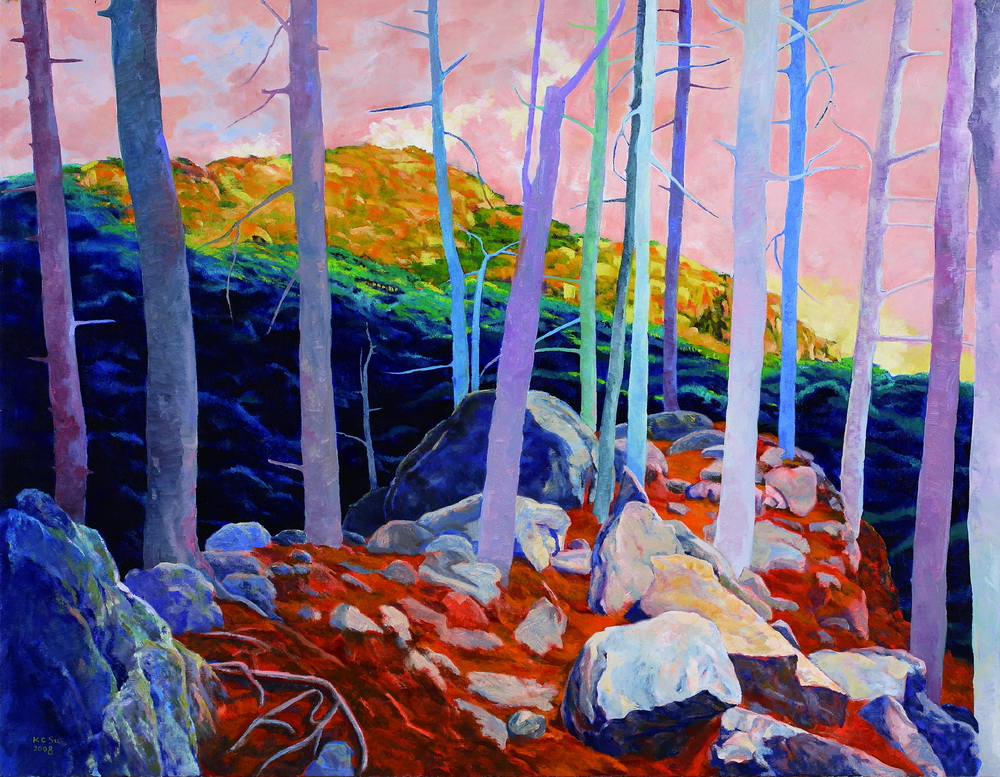
During his time at Kaohsiung High School, the art classroom attracted him most. Inside, he freely imitated Western masterpieces, gaining a deeper understanding of them and developing a keen interest in folk arts and crafts. The most memorable, of course, were two classic paintings by Barbizon master Millet hanging in the living room: The Angelus and The Gleaners. Growing up looking at these reproductions, he was subtly influenced and yearned for the path of artistic skill. In high school, he was obsessed with painting, arrogantly completing a hundred paintings in one go. In the countryside, there was only natural scenery, especially forests. Using pure sketching methods, he drew only trees without leaves (branches), focusing on line practice, becoming infatuated with trees and woods. Too immersed and confused by painting, he neglected his studies and failed the first entrance exam for the Arts College.
After military service, he entered the Western Painting Department of the Arts College with high scores. The young dreamer embarked on the path toward his original intention of becoming a painter. At that time, the college had a powerful faculty roster, with pioneering Taiwanese painters such as Yang San-lang, Li Mei-shu, Liao Chih-chun, Hung Jui-lin, Li Ze-fan, and recently returned teacher Chen Ching-jung teaching there. He diligently practiced his skills and was deeply inspired by his teachers’ concepts. He understood Teacher Hung Jui-lin’s spirit of honest painting. Chen Ching-jung said: "Being a painter is a lifelong vocation, like a marathon race; you only know when you reach the finish line" (Note 5). Li Ze-fan, skilled in sketching, said regarding watercolor: "When painting watercolors, use plenty of water and plenty of colors" (Note 6), among other inspirations and guidance. Under Su Kuo-ching’s dedication to watercolor and diligent practice, he became a leading figure in the watercolor painting of his era.
Su Kuo-ching’s love for sketching was cultivated since childhood, part of the process of mastering his craft. This sketching, stemming from a deep affection for nature in the countryside, made painting landscapes his unique preference. Amidst the Eastern and May Fourth abstract storms, classmates like Cheng Yen-ping and a batch of radical young art students went to study automatic techniques with Li Chung-sheng, but Su Kuo-ching remained unmoved, preferring natural landscapes. Indeed, personality determines destiny; painting landscapes became Su Kuo-ching’s artistic fate and personal style.
Su Kuo-ching had long favored Western philosophy and literature, growing up as a literary young man reading novels by Qi Dengsheng. Influenced by new trends from the Painters Outside the Circle (Note: Painters Outside the Circle existed between 1966-1974, after the Eastern and May groups and before thenative soil debate) and inspired by thenative soil literature movement in the 1960s. After graduating in 1974, he presented urban and rural landscapes in modernist forms, especially expressing the alienation, indifference, and bitterness between people in modern cities. In 1977, he held his first solo exhibition at the U.S. Information Service. The following year, he traveled to major American cities for six months, witnessing the overwhelming power of Western modern and American contemporary art, shaking all his artistic cells. During the day he visited museums, and at night in hotels, he recorded scenes of American modernized life (buildings and highways) using collage. In 1981, he held the solo exhibition "American Impressions – A Brave New World" at Nan Gallery. In 1984, he moved to Los Angeles, USA. To support his family, he resolutely put down his beloved lover—painting—and temporarily paused his career development. Thus, he interrupted his artistic practice for eight years, which for someone who passionately loves painting was like losing a part of his life.
He was very clear that work was for the sake of his original intention to paint. One day in 1992, he woke up startled recalling a final statement by Xi Dejin, then gathered courage to pick up his brushes again. Taking his beloved landscape sketching as spiritual practice, he completed the "California Diamond Bar Watercolor Diary" in diary format during 1993-94, and finished his most representative oil painting series "Day to Night." In 1994, he held the solo exhibition "Temporal Landscapes" in Los Angeles, USA. In 1997, he was recruited back to Taiwan for work, and in 1999, posted to mainland China, halting his painting work again. The painter said: "I only like painting, I only know how to paint, and I am willing to paint, but what I need more is to make a living. So most of my life proceeded in such conflict and contradiction... Especially when realizing the temptation of style, insisting on freedom is tormenting, difficult and painful, often waking up in the middle of the night, staring blankly into the dark void" (Note 7). It was not until 2004, when he was completely liberated from work, that he could devote himself fully to his beloved painting creation. The appearance of the "Tree" series, symbolizing the lonely and helpless life, foreshadowed his own premonitory picture of fate, "Midnight Crucifixion." In 2007, he unexpectedly discovered he had lymphoma. With major surgery and over two years of chemotherapy living under the shadow of death, he narrowly escaped death. He faced life’s challenges more bravely, created more actively, and firmly believed that "where there is artistic creation, there is no death" (Note 8).
The Homeland of Life – Landscape: Su Kuo-ching is deeply devoted to landscape painting. Sketching opened his creation. Although landscapes originate from sketching, they ultimately undergo imaginative compilation under subjective consciousness. Nature is the creative text, literature is the creative foundation, pouring out his fatalistic punishment between reality and ideals. Natural landscapes serve as the redemption of life, delving deeper into exploring the issues of human existence. Through rich literary, narrative, storytelling, and allegorical qualities, he elaborates on where humans come from, what they do here, and where they are going. He excels in landscape vocabulary: trees, forests, fields, wastelands, woods, high mountains, valleys, lakes, plains, and pastoral scenery. The painter said: "Painting fate, painting life, my landscape paintings are my life, the presentation of life, a kind of life landscape" (Note 9). Indeed, landscapes are his story, humanity’s story, the story of existence, and a reflection of the painter’s life reflections.
Landscapes are nothing but him, the homeland of life – landscape. Landscapes become the field where Su Kuo-ching ruminates on life and death. Using trees and forests as symbols for people and crowds, he uses landscapes to metaphorize the prosperity and decline of life, reflecting the impermanence and modulation of human fate. The painter wrote: "Landscapes are actually my inner images, the landscape in my heart. Even if silent and isolated from people, it is a landscape of the soul with a broad vision, my life memories. Recording real objects and imaginary situations, presenting light and shadow shapes through clouds, expressing the thinking process. The impression of real landscapes may be chaotic or clear, but once frozen on the canvas, that eternal image is established." (Note 10)
The painter uses the inner landscape to write about personal existential consciousness. The soul borrows the canvas for a lonely, silent chant. Reflecting on natural disasters and human tragedies in Taiwan, the fate of people whose land is life, doubts about the future, the impermanence of life, and the shadow of death, all mirror the painter’s inner voice. He wrote: "The tone of the works is filled with sentimental and sorrowful soul chants. Although the colors are bright and gorgeous, those are the tones of Taiwan’s island southern lands. Behind the high saturation lie natural disasters, threats to life, the impermanence of fate, the drifting of life, hidden fears and doubts in the heart, the shadow of death... Every day I fight with myself in loneliness. The canvas is my battlefield and also the place where my soul returns. Works are witnesses and records; they cannot be fake. There is nothing more real than works." (Note 11) The homeland of life is indeed landscape.
Directed Landscapes: Su-style unique landscapes are directed, full of imaginative cinematic scenes and dramatic compositions, carefully planned through layout, set design, color, light, context, field, and unique emotional projection. Clever theatrical layouts, creating suspenseful contexts with dreamlike wonderful light. Su Kuo-ching is particularly sensitive to color, having unique insights into the warmth and coolness of colors and their complementary contrasts. He likes almost unreal intense and saturated vivid colors. Color serves as a carrier of emotion, subjectively exercising imagination, paradoxically constructing a deep, lonely, and independent desolate feeling, revealing psychological contexts, referring to faces of loneliness, sorrow, and despair. Light is the soul of his painting; the light source is like the mysterious origin of exploring life. Without light, everything loses meaning. He excels in directing subtle backlighting, side lighting, and glimmer, sculpting the faint sorrow of life.
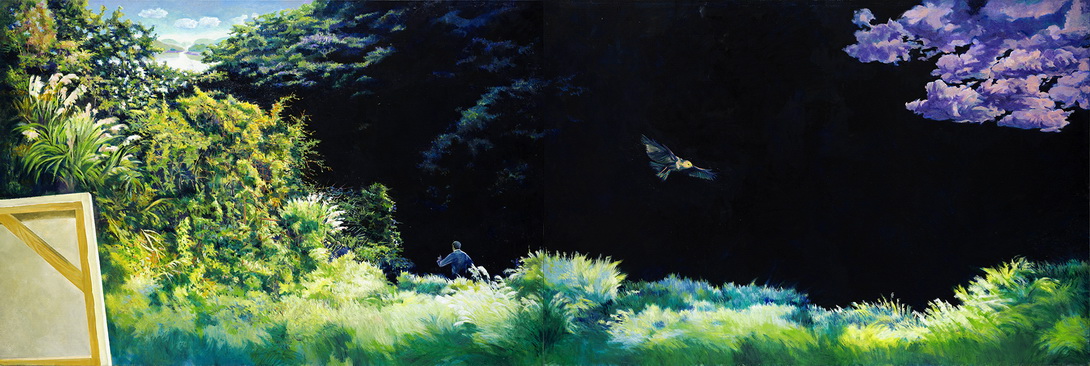
Like a director, Su Kuo-ching likes to dramatically place figures or animals within grand natural theaters, constructing suspenseful contexts and psychological tension between nature and humanity. Theatrical performances enact one dreamlike life after another, becoming the painter’s inner self-analysis of life. For example, the dramatic performance context of the male and female protagonists in "Turbulence" (2006), or the cinematic scene of "Silence" (2015-2016), where a soaring eagle emerges from a vast dark forest shade. The painter, facing away from the audience, walks away from the canvas into a dim valley, metaphorically implying the painter’s ambition and fate of walking alone through thousands of mountains and rivers. Another notable feature is the landscape of "people" not present on site: such as "Gazing" (2009) and "Symbol of Eternal Loneliness" (2014-2016). In bright natural landscapes, chairs indicate absent figures, strongly implying a thought-provoking sense of loneliness.
The dramatic scene "Turbulence" (2006): In the theater of nature, the painter wearing a dark blue shirt is concentrating on painting. Suddenly, a black-haired beauty in a red qipao appears. The painter is tempted and turns around, creating a disturbance, embodying a deeply disturbed context. The panoramic natural theater "Silence" (2015-2016): A freely soaring eagle circles in the dark forest shade, a conflict between motion and stillness in the landscape. The eagle is always alone, metaphorizing the painter’s solitary state of mind. The large canvas in the left corner refers to the painter’s existence. The painter, facing away from the audience, panics and runs into a pitch-black unknown dim forest, metaphorizing the impermanence of life and the loneliness and confusion of existence.
Landscapes of absent figures "Gazing" (2009) and "Symbol of Eternal Loneliness" (2014-2016): In rolling green hills and emerald landscapes, there is a yellow platform in front, two chairs (wooden and director’s chair), a lone bird perched on transparent glass showing spatial perspective, and a white shirt draped. Like a theatrical scene, the characters have not yet appeared, embodying the landscape of absent figures, elaborating on the loneliness and helplessness of human existence. Directed contrasts: inside and outside, motion and stillness, day and night, light and dark, surface and deep interior, color contrast and complementarity, nature and humanity, presence and absence dialectics.
The Existential Condition of Humans – "Crucifixion Diagram" Series: Knowing Su Kuo-ching loves natural landscapes, especially trees, "trees" standing tall have always been symbols of humanity. Their strict forms, like human bodies, are both familiar and strange. The painter believes trees are closest to human existence. Forests are like human society, having experienced various stories. He said that whenever he stands in natural landscapes or amidst mixed urban trees, "Who is there?" – the opening monologue of Hamlet – echoes in his ears (Note 12).
That "who is there" is the painter himself, because he is like a "transplanted" tree, even a portrayal of encountering the "Crucifixion Diagram" of life.
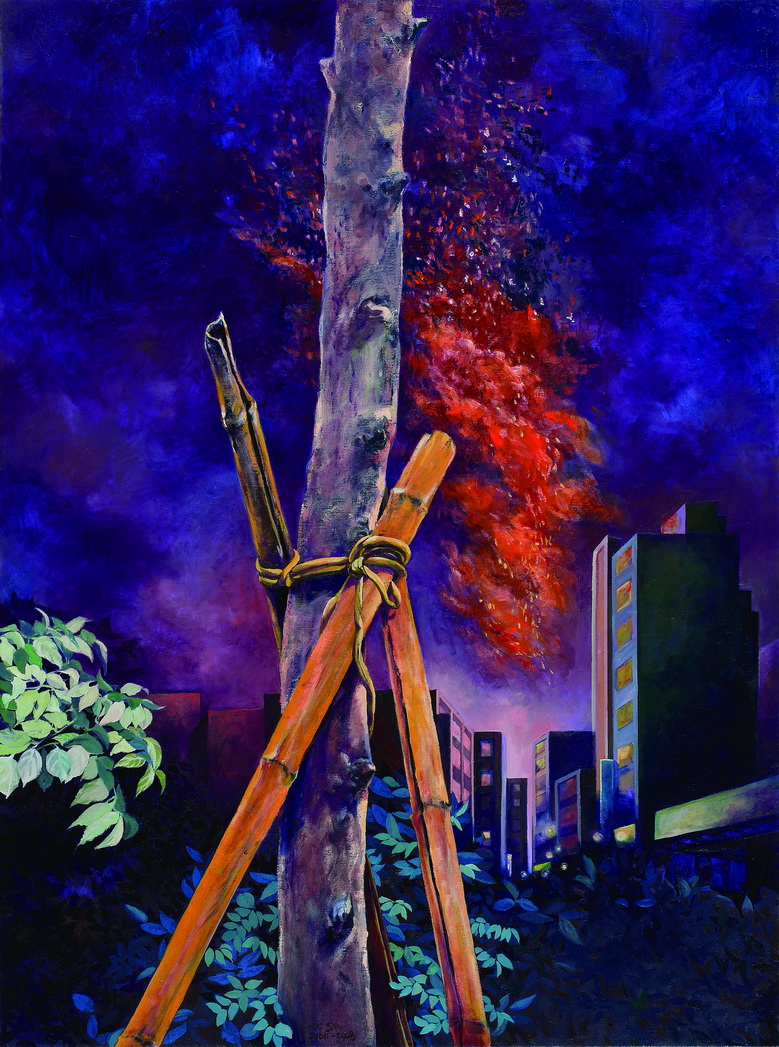
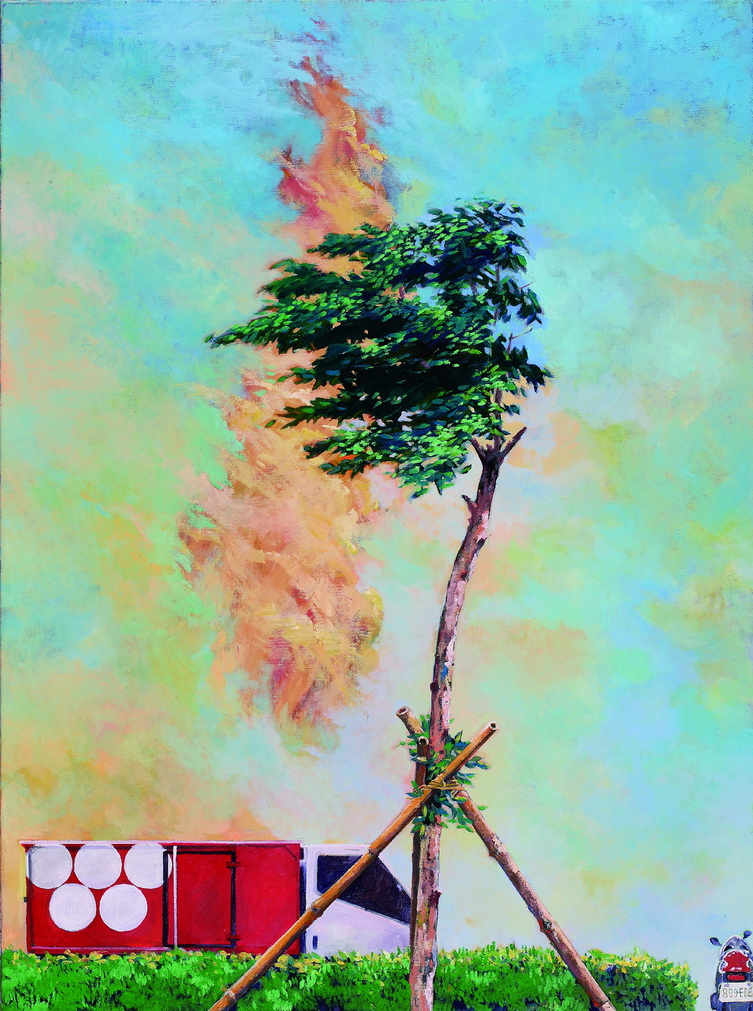
Anthropomorphic urban pedestrian trees murmur the painter’s deep thoughts. The "Transplantation and Survival" series, concerning the existential condition of humans, was inspired by Goya’s painting "The Third of May 1808" (1814), depicting Napoleon’s army shooting innocent civilians. Although the painter harbored deep affection for trees, seeing urban pedestrian trees evoked indescribable emotion. The pallor, hollowness, amputation, bracket binding, and straw rope wrapping of the trees were shocking, resembling ancient limb-splitting crucifixions or like the Passion of Christ. The painter empathized, unable to speak of the suffering, depression, sorrow, and indignation of life. Unsettled urban trees symbolize the possibility of rebirth, the state of mind of the drifting painter. Transplanting trees is like immigration and displacement, uprooted and transplanted to new soil, adapting to new environments, otherwise withering.
The lonely, pale, hollow "Midnight Crucifixion (Taipei No. 1)" (2000-2008), the "Crucifixion Diagram" (2005) wrapped in straw ropes and held by brackets, the "Urban Crucifixion Record" embracing half a torso with straw ropes, and the waiting moment "Midnight Crucifixion (Shanghai)" (2007) series are reflections of the painter’s life, his own premonitory picture of contracting cancer. As if projected at the edge of life, showing signs of a bumpy fate facing the shadow of death. "At the edge of the forest, memories of being lonely under the scorching sun surrounded by scaffolding like an execution ground in the distance. How comfortable and pleasant time was in the forest, the morning dew, wetlands, wild grasses, breeze, light and shadow... But what is lost can never return." The impermanence of fate, the drifting of life, the fragility of life all surge to the heart. The canvas becomes a stage or battlefield to vent his loneliness and doubt, will and fear. (Note 13)
Life is not the Happy Paradise of Rolling Stones Records (Note 14). Life is forced, leaving one to leave it to fate. The "Spiritual Life Factors" (2006), the "Uneasy Tree Spirit" (2007) under the shadow of death and fear, are mirrors of the painter’s solitary reflection on life before and after contracting cancer. The sad and desolate colors of the psychedelic five-colored sky light shift from "Road Broken at the End of the World" to "Path to Heaven" (2008). The rugged life process leads to the reappearance of belonging to light "Birth" and "Rebirth" (2000-2008), finally arriving at the true face seen "Self-Portrait" (2009) from the "Modulated Fate" (2006). The trees painted during this period lost their green leaves like winter, bare branches and trunks, lonely against a novel purple, blue-black, scarlet green, and clear yellow subjectively expressive, unpredictable background, deep and lonely, desolate and independent. Sighing, trees are like people; historical vicissitudes, life and death, prosperity and decline happen overnight. Struggling and fighting, knocking on the heart and asking oneself.
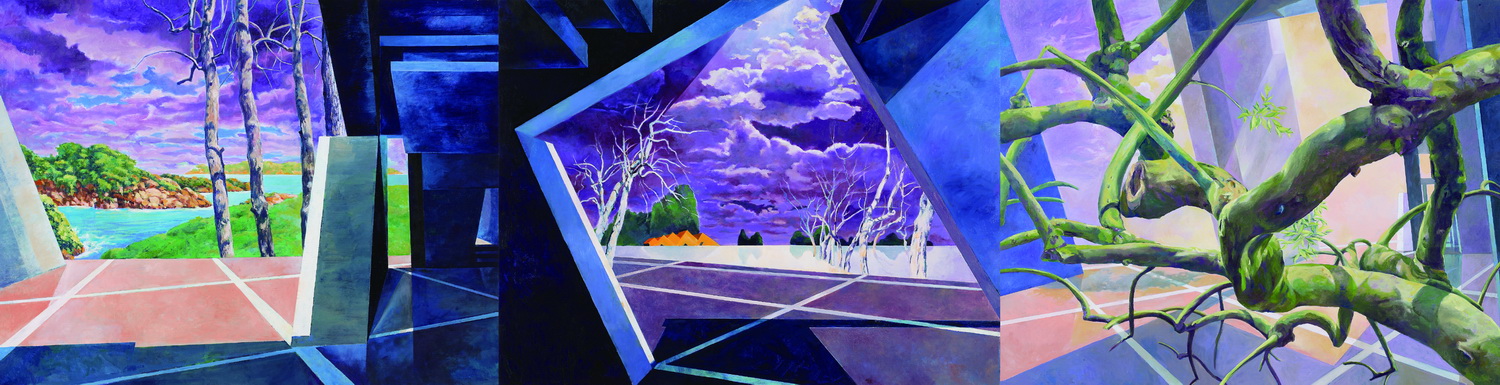
Having walked through the torment of chemotherapy, emerging from the phantom of death which seemed unreachable, seeing the "Mirage" (2009) of existence like a dream. 2010 was Su Kuo-ching’s most productive year of creation. A series of masterpieces comforting life was born, also indicating his life transformation. Crossing the dark valley of death, he expressed grief, suffering, and mourning in a triptych using a dead tree lying under leaf shadows: "Edge of Sea," "Edge of Night," and "Edge of Spring." In despair, he continued to deeply question "What is life? Why is fate so perverse? Are birth and death the same thing?" (Note 15) The life and death that can never be fully penetrated suddenly opened up through divine revelation. Existence is nothing else; life remains strong and unyielding because where there is artistic creation, there is no death. A mysterious power exists, profoundly deep, coming to pray for the blessing of peace from the tree spirits "Tree of the Spiritual Realm." The drifting traveler, undergoing life transformation, arrives at the homeland in the ravine of the heart – "Peach Blossom Spring" (2010).
The Face of Time – "Day to Night" Series: Su Kuo-ching likes continuous or album-style time landscapes, displaying a full-time spatial and temporal vision, associative visual links of time-lapse photography. Light and shadow color temperature is the main force expressing landscape time. Distinguishing the cold and hot feelings of different light and shadows, the difference between day and night, clearly subdivides memories of different years of life and the meaning within those memories. Time landscapes are the realm where Su Kuo-ching observed and experienced changes in time from daily sketching. The experience of shifting hours from morning to night, attempting to convey the message of endless cosmic vitality from this earth’s time rotation, realizing its meaning, witnessing the bright world under the sun. When night falls, slowly swallowing everything, the sky gradually floods from pitch black until only one’s own breathing can be heard, and peaceful silence descends. Facing oneself, that aesthetic experience is something the eyes cannot appreciate, providing a unique space for life reverie in poetry. Su Kuo-ching wrote: "Watching landscapes unfold from day to night, hours changing, four seasons cycling. Landscapes are just like records of life, from light to darkness, to light, cycling endlessly" (Note 16).
Kandinsky heard the "sound" of color, but Su Kuo-ching often hears the "sound" of light. Indeed, whatever you focus on, you will discover. In time landscapes, he uses subtle backlighting, side lighting, and glimmer as symphonies of time, playing magnificent life scenery. Time landscapes are Su Kuo-ching’s unique "light" great landscape paradigm. Moving viewpoint scroll formats, the most dramatic contexts, and cinematic space-time scenes are landscapes endowed with the spirit of the times through the painter’s imagination. Under the transformation of sunlight and shadows, subtle expressions appear dramatically on the faces of landscapes. Wind blows across the sky, mountains, forests, and plains. His landscapes come with the wind. Each painting has different elements and combinations, different times and spaces. Air temperature, day and night represent different meanings and feelings. In this matured series, the full-time face of time is presented.
Under daylight, colors are bright and gorgeous. At night, everything is swallowed in pitch black, colors become deep and generalized, peaceful and quiet, built with frosty moonlight, presenting the chill of the night scene and the realm of "cool." Su Kuo-ching has a unique feeling for the night, especially the atmosphere and hidden light under the moonlight like "Moon" (1994) and "Moonlight" (1996). "Day to Night · Seasons" (1992-1994) implies mental transformation and growth through the succession of four seasons. Seasons become a metaphor for the painter’s state of mind or life encounters. Time sonata "Day to Night · Time Difference" and "Day to Night · Observation" (1994). Time difference: contrasting bright pastoral scenery under the sun with a hidden pitch-black mountain forest. Observation: bright rock landscapes contrasting with the misty forest garden under a high moon. Time march, implying "day and night coexist in our consciousness."
Covering day, night, and dawn, "Temporal Landscapes" (2015-16) is Su Kuo-ching’s classic work of space and time. Landscapes processed from moving viewpoints, reflecting blue skies and white clouds in lakes and mountains from remote clear skies. As time slowly shifts in the forest, entering dusk, evening, nightfall, and pitch-black woods, a moon hangs in the sky and a foraging animal in the dense forest. The woods in the dark appear more peaceful and quiet. The slow forest wakes up from morning sunlight, arriving at green streams, listening carefully to the babbling water sound, a poetic field and state of mind. Osamu Dazai believed: "Beauty does not exist in objects, but in the yin and yang between objects" (Note 17). Indeed, temporalization becomes Su Kuo-ching’s most unique style. Under romantic sentiments, concrete narratives or symbolic metaphors all praise life. Even with curses, helplessness, and pessimism, it does not diminish the brilliance of life; life remains strong and unyielding. (Note 18)
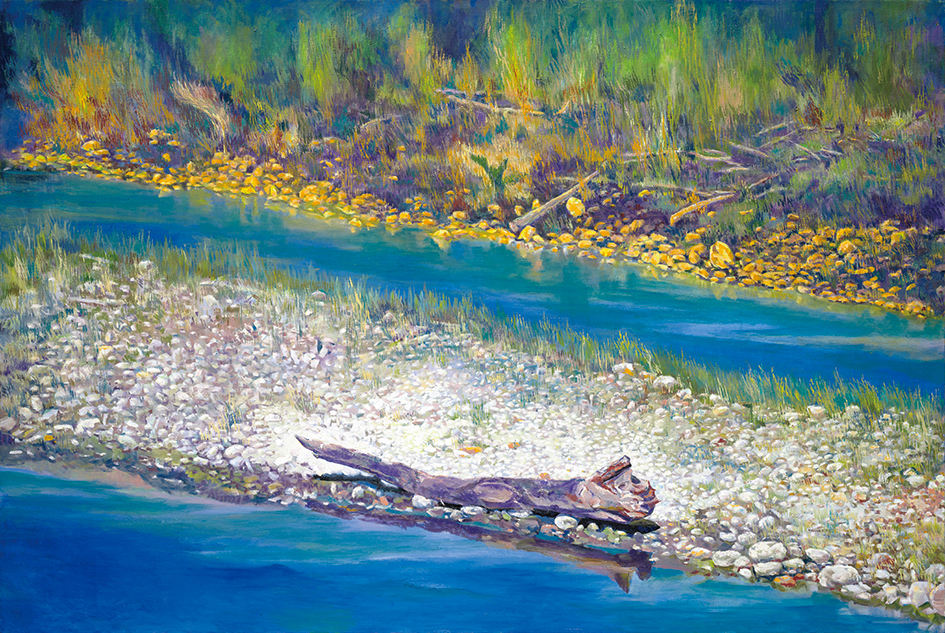
Existential Aesthetic of Loneliness: Landscapes are never lonely; they reflect human loneliness. Loneliness is the freedom/independence of being isolated in the heart. Loneliness is the unique character quality of artists or poets. But only in loneliness can one embrace oneself, soaring freely in the sky of the soul. For Su Kuo-ching who likes painting, a day without painting is so lonely. His works often reveal an unhidden deep sense of loneliness. He said, "Eating, resting, reading alone, even work is lonely." An existential sense of loneliness arises spontaneously: such as the "Urban Pedestrian Tree Series" (2000-08) often featuring a broken/incomplete and lonely tree; the loneliness of urban life "Song of Life" (2003); a stone accompanying a lonely chair in the landscape of "Gazing" (2009); that little bird in the natural landscape theater of "Symbol of Eternal Loneliness" (2014-16); the driftwood forever drifting lonely in the stream implied by "White Year Loneliness" (2015-16), a strong sense of loneliness penetrating the heart. "Silence" (2015-16) implies the painter’s existential loneliness. As Zarathustra said: "Do not go to people, stay only in the forest" (Note 19). But through a proud eagle soaring freely in the world of his creation, continuing to sing of the "beauty" of existential loneliness and natural solitude.
Modernized "Indoor-Outdoor" Landscapes: Indoor and outdoor emphasize structure. Inside and outside are actually two sides of the same coin. Su Kuo-ching uses this to update traditional landscape painting, specifically exploring the modernity of natural landscapes and the expression of contemporary life contexts. Constructed through the spatial cutting and combination of nature and modern buildings, breaking free from the shackles of traditional landscape vision. Each cut represents a conversion of time and space, like every transformation of life. Whether deliberately borrowing beams, window grids, buildings, trees, curtains..., whether abstract or figurative, it expresses the erratic changes of life. Especially the pastoral scenery viewed through floor-to-ceiling windows from the indoors (living room), showing the contemporaneity of urban landscapes, between architecture and nature, vertical and parallel, hard and soft, inside and outside, color contrasts.
Mental Image World of Indoor-Outdoor: Starting from 1995 with two indoor rattan chair sofas with the same pastoral background, "Seat" – the landscape outside the window hangs on the wall above the bamboo-woven sofa like a painting. "Inside and Outside" – natural landscapes occupy four-fifths of the picture. A landscape painting placed sideways on an easel next to the sofa pulls open the spatial depth, exploring imagery of the inner world.
Ten years later, "Transplantation" (2005) late at night behind the white sofa, transparent glass divides inside and outside. A heavy red curtain hangs on the right. A lonely transplanted tree in the center shows a strong sense of loneliness in the quiet night. "Peaks Locked Outside Life" (2006) inside and outside are one. The picture acts as a frame hanging with a deep blue heavy curtain. A majestic sharp peak on the left points to the state of mind of life’s impermanence. "Stage Record of Landscape Views" (2007) left shows busy highways and elevated roads of the modern city, and planes crossing the sky; right shows domestic plots under pastoral scenery, elaborating on the space-time context of modern life. "Isolated Building Outside the Window" (2008) in the dim window at night, a dreamlike isolated building, elaborating on the painter’s lonely and lonely soul. "Modulated Fate" (2009) under the framework of strong diagonal window frames and ochre curtains, the pale pedestrian trees supporting the city are seen, singing the elegy of life. "Peach Blossom Spring" (2010) is a geometric maze. Looking through complex architectural structural frames at the dreamlike mental landscape. A twisted struggling tree on the right intends to break through spatial norms and develop outward, forming an incredible view of life, expecting the eternity of life through art.
A Leading Figure in Taiwanese Watercolor Painting: Su Kuo-ching is the first leader in Taiwanese watercolor painting I have seen who is best at mastering watercolors. He knows watercolor media like the back of his hand. Control of moisture and color concentration, richness and thickness of thick tones in watercolors, color contrast and other skills, plus parameter brushstrokes transforming into natural and harmonious forms. Painting watercolors is most convenient. Sketching is regarded by him as an unchanging habit of daily life. After an eight-year interruption, the "California Watercolor Diary" (1993-94) series, with plain object descriptions, subjectively colored faces (high purity colors: clear yellow, fresh green, azure blue, ultramarine, etc.) pour out the chapter of life. Softness and passion present the sensibility and state of mind of the moment, elaborating on his days living in the mountains of Diamond Bar. Although the canvases are small, they do not lose the solemnity and seriousness of life. Starting from diary pictures of self-dialogue, he regains the painter’s original intention and confidence.
Vitality is always between landscapes. The "Intertidal Zone and Driftwood" (2012) series is Su Kuo-ching’s most brilliant and classic Taiwanese watercolor work, pushing watercolor painting to the pinnacle. Deep and profound Taiwanese landscape group paintings, using nature as text and literature as foundation. Writer Lin Wen-yi said: "Su Kuo-ching tells the context of every moment with pigments. In softness, he resembles Kawabata Yasunari; in passion, he resembles Kafka. If he abandoned painting for literature, he would surely be an elegant poet" (Note 20). Perceiving the land with enthusiasm, expressing the solemn and extremely beautiful face of the land, showing the aesthetics of Taiwanese landscape painting.
Note 1: My idea notes. Note 2: Landscape Code explanation by Kunshan University of Science and Technology classmate Su Kuo-ching. Note 3: Su Kuo-ching Landscape - My Inner World Lecture Notes March 2011. Note 4: My idea notes. Note 5: Su Kuo-ching Interview Record 2016-03-08 Xinzhuang District, New Taipei City. Note 6: Su Kuo-ching Interview Record 2016-03-08 Xinzhuang District, New Taipei City. Note 7: Su Kuo-ching’s Watercolor Diary P8. Note 8: Transplantation and Survival – A Drifter’s Tree of Life Wang Yijia p15. Note 9: Thinking so notes. Note 10: Su Kuo-ching - My idea notes. Note 11: Transplantation and Survival p87. Note 12: Landscape · My Inner World Su Kuo-ching text p47 Lecture Notes March Issue 2011 Wang Yijia introduction. Note 13: Transplantation and Survival – A Drifter’s Tree of Life Wang Yijia p13. Note 14: Transplantation and Survival – The Painter Carving Art with Life Fang Huiguang p17. Note 15: Transplantation and Survival – A Drifter’s Tree of Life Wang Yijia p14. Note 16: Su Kuo-ching Complete Catalog of Paintings 2009 Solo Exhibition Catalog at Shanghai-Oscar Gallery p68. Note 17: Su Kuo-ching’s notes. Note 18: Su Kuo-ching Complete Catalog of Paintings 2009 Solo Exhibition Catalog at Shanghai-Oscar Gallery p210. Note 19: Su Kuo-ching - My idea notes. Note 20: Intertidal Zone and Driftwood Su Kuo-ching - Taiwanese Landscape Group Paintings Lin Wenyi / Text 2017-04 Paris