Chang En-Tzu: Art Is the Power of Awakening, "Big Brother Is Watching You" Solo Exhibition
Kaohsiung Paradox Gallery Chang En-Tzu "Big Brother Is Watching You" solo exhibition
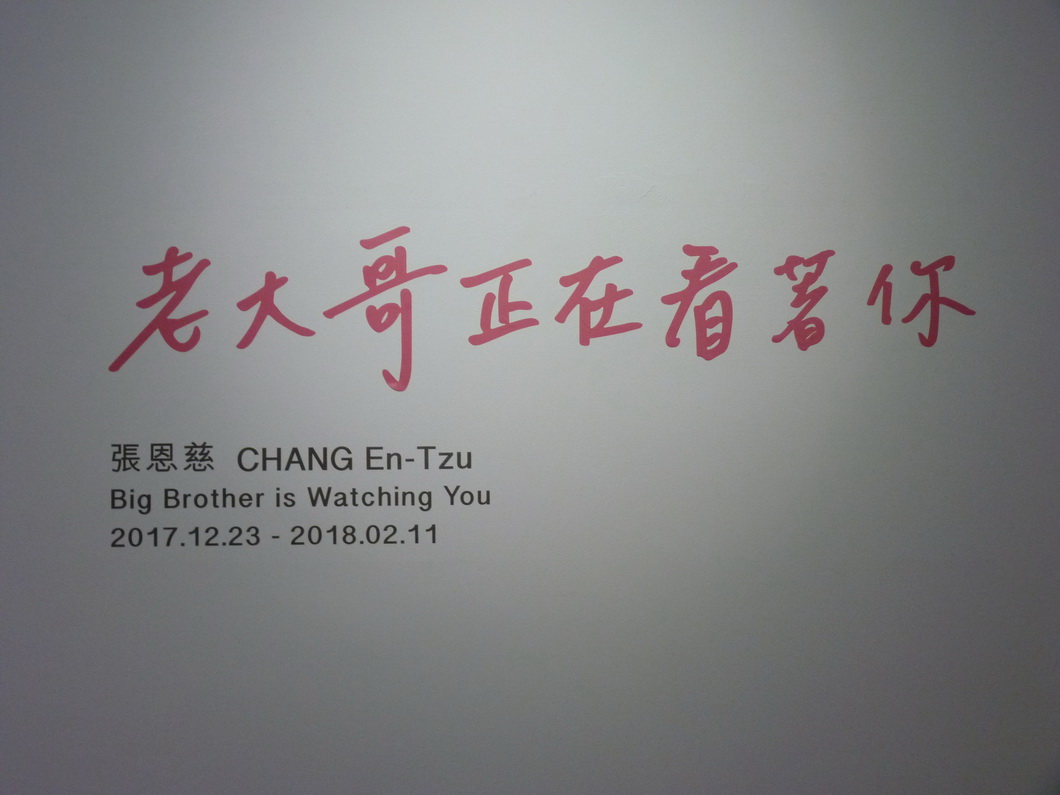
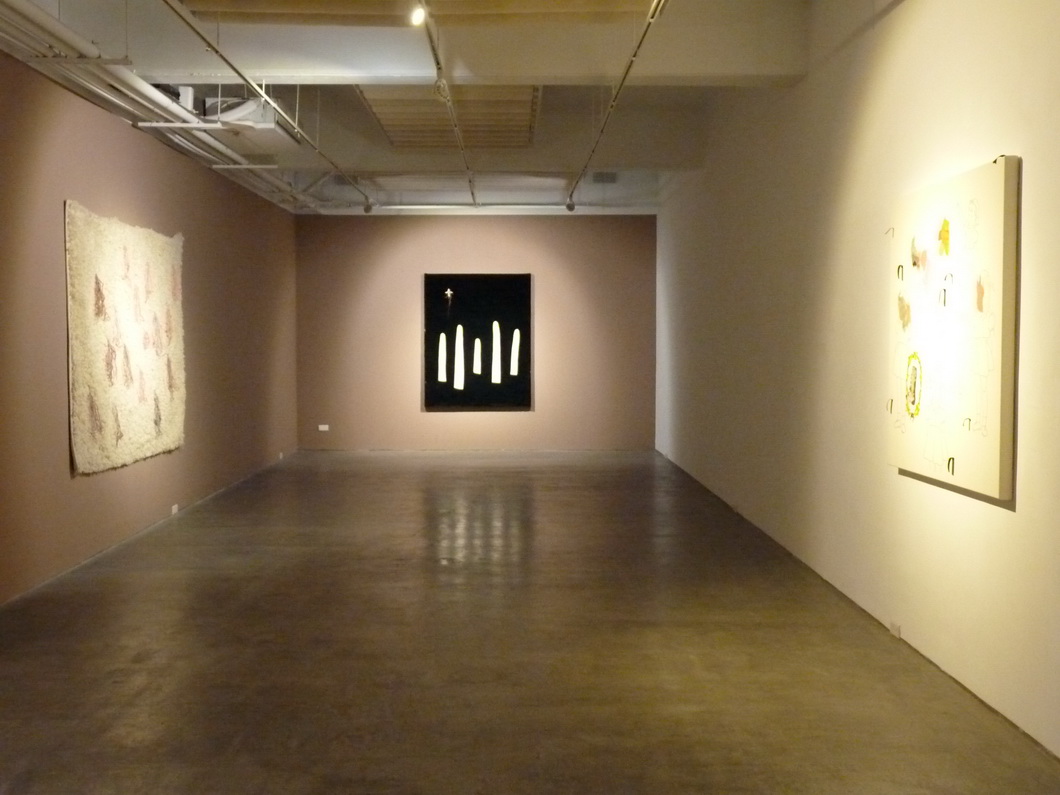
Text/Photos by Chen Chi-Hsiang. Location: Kaohsiung Paradox Gallery. Dates: December 23, 2017 to February 11, 2018.
"Art is not only a weapon of battle; it can also soothe the consciousness of local spirits."
Chang En-Tzu is one of Taiwan’s most notable emerging artists and winner of the 2008 Kaohsiung Award. Her work has shifted from exploring personal female identity and social recognition to examining her own Taiwanese identity. Her awareness of place awakened during the Sunflower Student Movement, as she felt the connection to her native soil and the infectious power of society. She explores the unbearable history of totalitarian rule in this region, confronts her own existence and life circumstances, summons the collective memory of Taiwanese people, and aims to heal their bodies. As Jung stated, humans possess a desire to return from "material expression" to the "true essence" of inner wholeness. Chang’s creations are built upon exploring contradictions and socially constructed appearances. Her works are filled with feminine warmth and tenderness, adeptly using softness to face violence and cruelty, and employing a light tone to reveal the unbearable weight of life. Amidst beauty and sorrow, she sensitively uses soft materials such as canvas, floral fabric, velvet, cotton, suede, and raw cloth, along with colored embroidery threads, cotton, and wool. She employs traditional delicate needlework and embroidery techniques to create unique expressions, gently recounting moving stories of Taiwanese people and the tragic suffering of humanity.
After returning from her residency in Paris, Chang prepared for nearly two years for this solo exhibition. Her strong steps bring a new series intimately connected to the land of Taiwan. Inspired by interpretations of books and historical texts, this marks the beginning of her rethinking of creation. This new thought matured during her 2015 Paris residency, where she reflected on her identity from afar. After systematically understanding the history and land consciousness of being Taiwanese, she reflected on and gazed at current historical and social issues, which finally fermented. Upon returning to Taiwan after the residency, a strong sense of belonging and creative explosive force emerged. She realized that art is the power of awakening in place and a tool for participating in social liberation. "Art is not only a weapon of battle; it can also soothe the consciousness of local spirits," leading her to explore themes that touch the nerves of Taiwan and save one's soul.
The theme of this solo exhibition, "Big Brother Is Watching You," continues to extend her concern with beauty and violence over more than ten years. It adopts a direct gaze, trembling at state violence, desiring to delve into the sorrowful and indignant history of Taiwan where individuals were powerless. It explores how the state apparatus controls personal relationships under strict surveillance mechanisms, suppressing and distorting the will to live. The exhibition title comes from George Orwell’s Nineteen Eighty-Four. It describes a high-pressure situation where society is under seamless surveillance under totalitarian rule, detailing the devastation of lives in Taiwan from the February 28 Incident to the martial law era of white terror. The artist writes: "We know too little. When we perceive strange events, we find they are packaged and hidden beneath elegant appearances; it is too difficult to discover. Such beautiful and calm scenes are actually dark, intertwined roots in history." (Note-1) Relying on Orwell’s belief: "In a time of universal deceit, telling the truth is a revolutionary act." (Note-2), she uses her work to elucidate the inevitability of the politicization process of Taiwan’s collective depoliticization.
This solo exhibition, "Big Brother Is Watching You," views local history and the past in a new way, questioning and asking. It consists of three shocking series: "Little Girls," "The Last Word/Letters of Testament," and "Monumental Forms/The Invisible Wall," interwoven and unfolding through narrative, literary, referential, or metaphorical elements.
The innocent "Little Girls" series extends the image of Snow White into a new narrative context regarding this conflicting and contradictory beauty and violence, attempting to expand different interpretive spaces. The innocent little girls metaphorically represent people’s ignorance or their inability to face even the sharpest, heaviest truths. In daily mundane life scenes, adults intentionally cover the sky with one hand, shielding little girls from ignoring various contradictory and absurd events under totalitarian oppression, pointing out the historical context of the silenced era of surveillance.
"Little Girls Series—1—2" (2016): Both works depict carefree play scenes of little girls (riding hobby horses, playing, holding hands and jumping, playing hide-and-seek). 1. A group of children play obliviously in front of a tree hanging with lights (surveillance cameras?), including one with black hair facing away from the audience and several others with faces wrapped in cotton, creating a paradoxical scene. 2. In the foreground, two little girls sit before barricades, contradictorily and absurdly hiding in cloth covers while playing hide-and-seek. In the background, injured or dead people and soldiers lie on the ground. "Little Girls Series—5" (2017): An innocent little girl plays lazily on a palm beach next to two pineapple grenades, referencing the hidden, unknown cruel violence amidst the colorful and gorgeous everyday life, in a silent situation unaware of life and death.
The heavy "The Last Word/Letters of Testament" series: This heart-moving testament series was inspired by the 177 letters written by victims of the White Terror to their families, declassified in 2011. From the heavy and moving words exchanged between prisoners facing death and their families, Zhang En-Tzu examines the unavoidable scars of the human condition and the darkness in human nature that must always be fought against yet seems futile (Note-3).
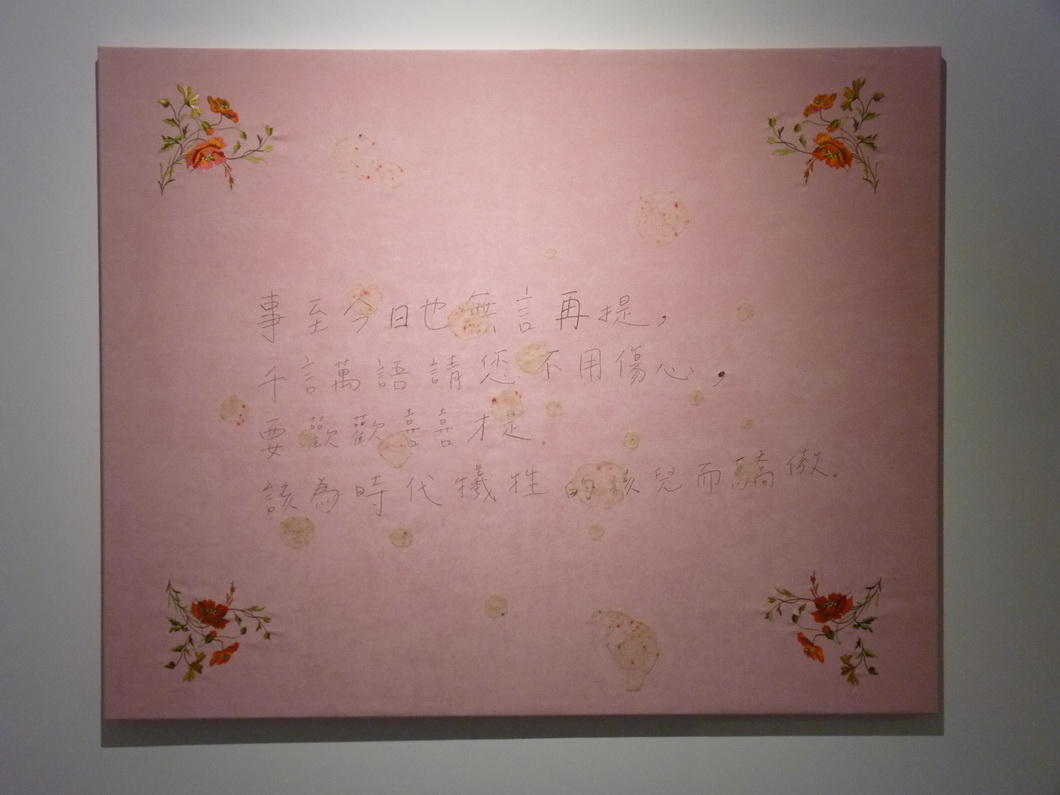
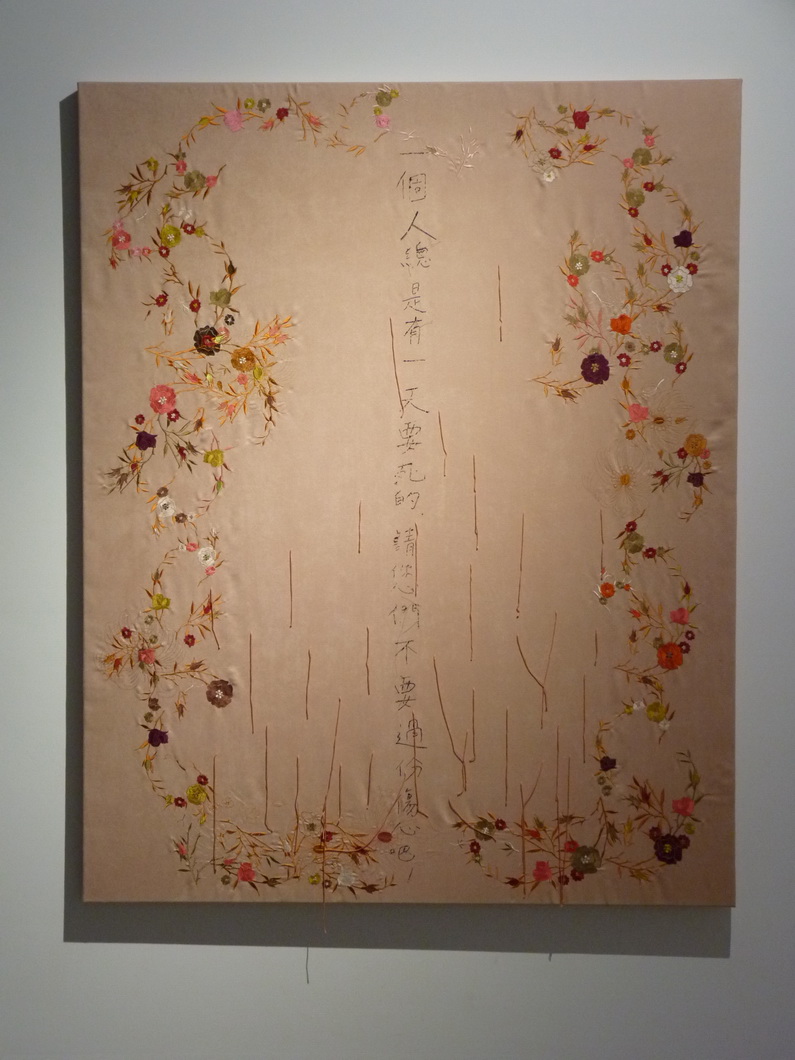
The moving and infectious "The Last Word or Letters of Testament Series-1 and 2" (2016): Beautifully written (embroidered) sentences on fabric read: "One day everyone will die; please do not be overly sad," and "There is nothing more to say today. Please do not be sad; instead, be joyful. You should be proud of your sacrificed child." These two works were inspired by the text of the 177 declassified letters from White Terror victims to their families. The words show proud souls, igniting the spirit of life, calmly accepting death when life ends, and soothing the spirits of surviving family members. Death becomes the sublimation of the soul; dying for righteousness awakens the consciousness of Taiwanese people.
"Dramatic Spirituality 'The Last Word or Letters of Testament Series-3'" (2017): Silent echoes, images and language disappear. On a monochrome canvas (pure light brown raw cloth), loose stitching and unintentionally scattered fine lines resembling spider silk appear. The scene of the testament is full of imaginative abstract clues, suffocating air, frozen time, infinite thoughts and sorrow beyond words. The letter calling out to the soul exceeds the capacity of text, revealing a huge tension of speechless questioning to heaven. Where did the person writing the testament go?
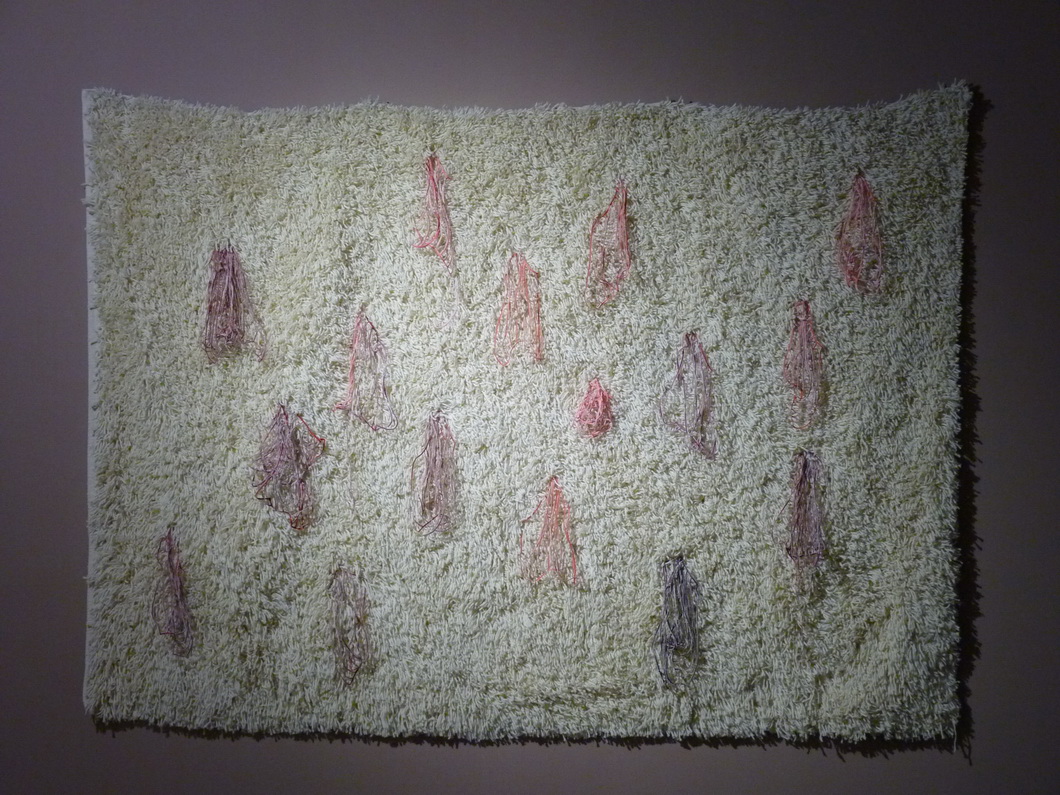
"The Blankness in Shock 'The Last Word or Letters of Testament Series-4 (Two pieces, large and small, as a set)'" (2017): The small piece features highly abstract vertical line letters. Because letters were checked, writers could not fully express their emotions and thoughts, so they used brief, metaphorical, covered, or internally expressed content. She represents this through smearing/abstract forms. The atmospheric large work features a blanked-out letter paper hanging on a white wool blanket, representing the unbearable weight of emotional content that cannot be described in words. Thus, the artist hollowed out the content of the white letter paper to present this transformation. The artist asks: "How much effort does it take to understand the blankness in shock?" (Note-4)
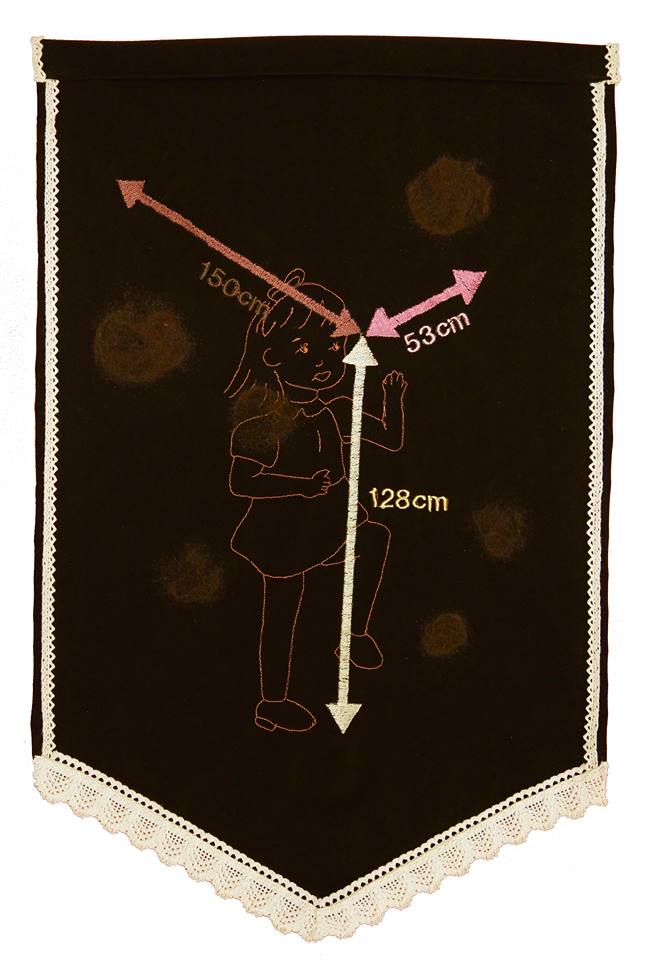
On the third floor, a suffocating wall "150 53 128" (2017): Using an innocent little girl and tall/wide dimensions to metaphorically tell a cruel story of the White Terror. It details the true story of Shi Ru-Zhen (1916–1970), a political victim from Hsinchu (a case unearthed during oral history interviews in the 1990s). To avoid totalitarian surveillance, persecution, and pursuit, with the help of his brother, he imprisoned himself in a narrow gap between a low wall in his family’s woodshed (length 150 x height 128 x width 53 cm) (unable to lie down or stretch his legs), spending a tragic transitional life.
The spiritual core "Monumental Forms/The Invisible Wall" series: Elegant paintings, like the "Monumental Forms/The Invisible Wall" series, are the core spirit of this exhibition. Earnest and climactic words awaken people’s awareness and consciousness, raising vigilance about this world. Under totalitarian rule and comprehensive surveillance nets, visible walls represent enclosure, confinement, and imprisonment. However, that omnipresent invisible wall causes loneliness, indifference, helplessness, alienation, unease, and fear due to distrust and distorted human nature between people. In an era that disregards human life, disaster can happen to anyone at any time.
"Monumental Forms/The Invisible Wall—1" (2017): On an elegant, simple, slightly solemn brown canvas, nine parallel strips of cloth sewn across (long and short) resemble nine sharp martial arts blades slicing through the space of existence. Full of imagination, it metaphorically represents the sharpness of thought itself. Written (embroidered) on the cloth strips are earnest English sentences from the novel 1984: "Freedom is slavery. Ignorance is strength. Who controls the past controls the future. Who controls the present controls the past. Thoughtcrime does not entail death, thoughtcrime IS death." (Note-5) Powerful and shocking words: under free will, thought becomes the consciousness of existence. Thought is a weapon of battle. Strong willpower can conquer even the highest mountains. Only thought, penetrating everywhere, can pierce that invisible iron wall, soaring freely in the cosmic starry sky. To strictly monitor and restrict thought, thoughtcrime does not bring death, but thoughtcrime itself is death. Narrating behind the wall are these huge, cruel, yet forgotten or covered heavy historical memories.
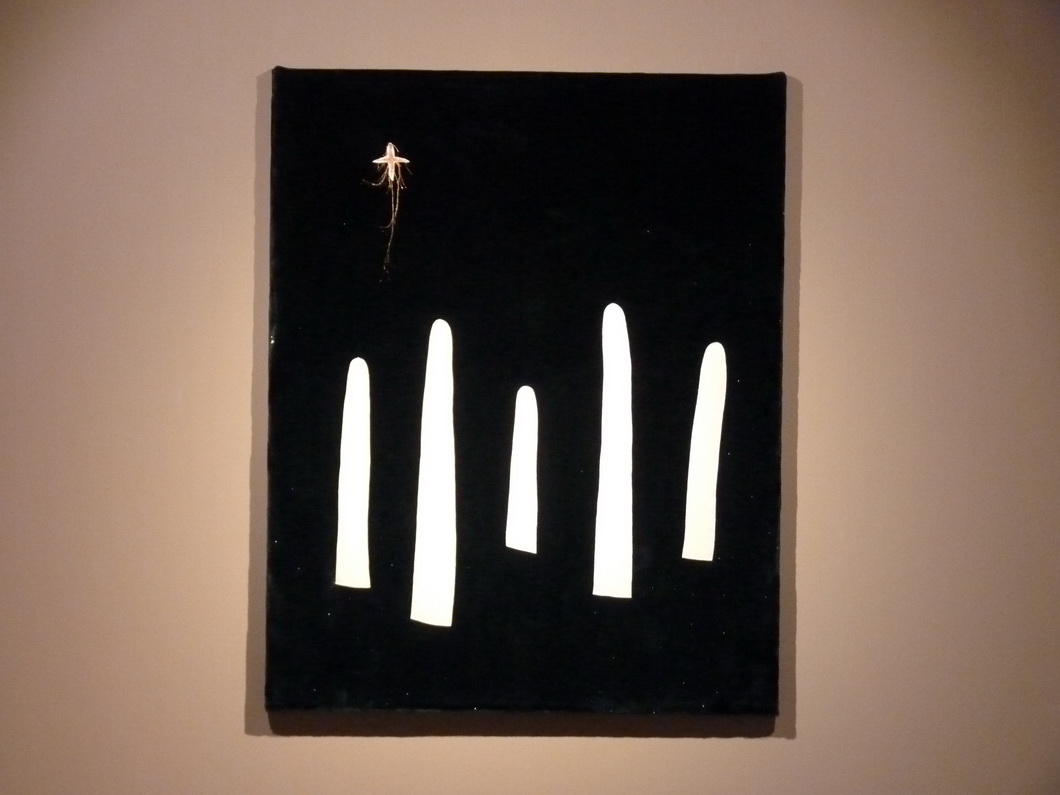
"Monumental Forms/The Invisible Wall—2—3" (2017): These two works feature concise, powerful, relatively abstract symbolic signs. With black glazed long-pile velvet as the base, they present a contrast of white counting as black. Five fingertips like tombstones sink deep into the night, with a shining lonely star hanging in the upper left corner. Another piece features five shining stars of varying sizes distributed across the canvas, accompanied by some faint halos. Like crossing that invisible wall, the stars reference heroic spirits soaring freely in the cosmic starry sky, and metaphorically suggest that thought is a bright lamp in the night, guiding humanity toward a bright vision of the future, illuminating the beloved homeland. Like the situation where stars know my heart, the artist pays the highest tribute to death or this era, expressing her deep love for the land promised by her mother.
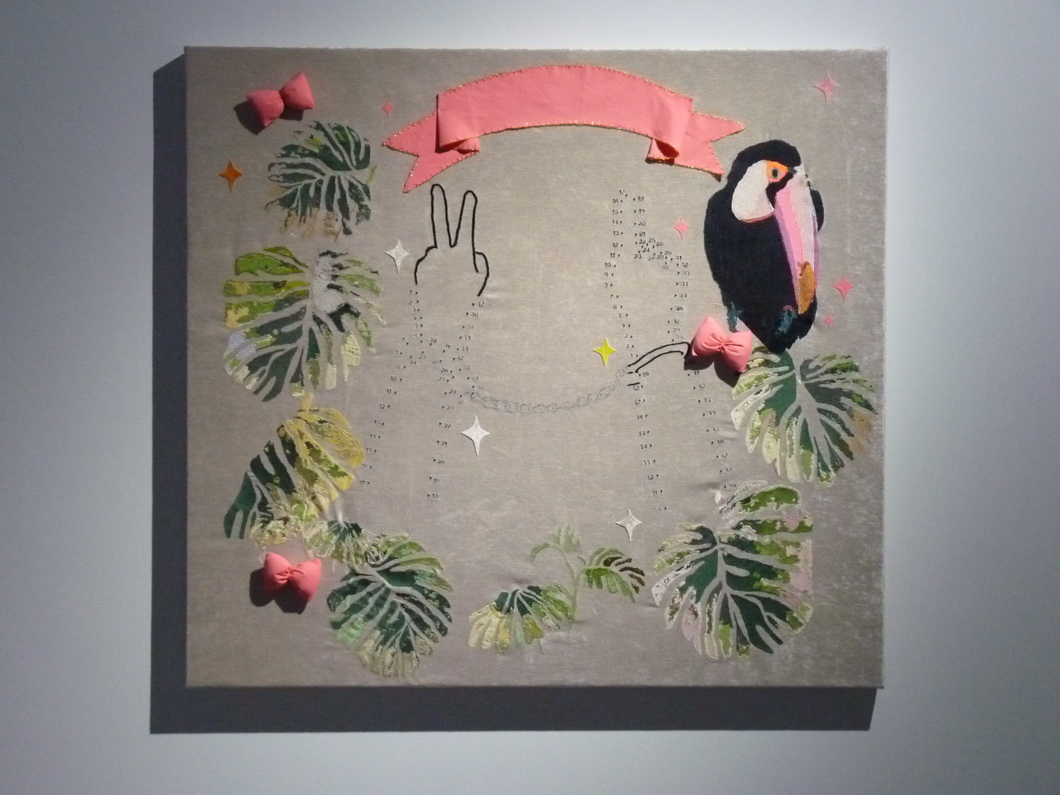
"Monumental Forms/The Invisible Wall-5" (2016): A toucan and tropical rainforest flowers and plants create an elegant picture both soft and poetic. Through serious connection game handcuffs and hand gesture symbols, it hides the gesture made by political victims sentenced to death (making a 2-1 sign, the only death penalty clause during martial law). It shows an unyielding spirit, unhesitatingly questioning the proud demeanor of political victims sentenced to death making a fearless gesture, embracing their souls and singing as they sacrifice. Like Taiwanese martyr Chen Zhi-Xiong: "Alive as a Taiwanese, dead as a Taiwanese soul." (Note-6)
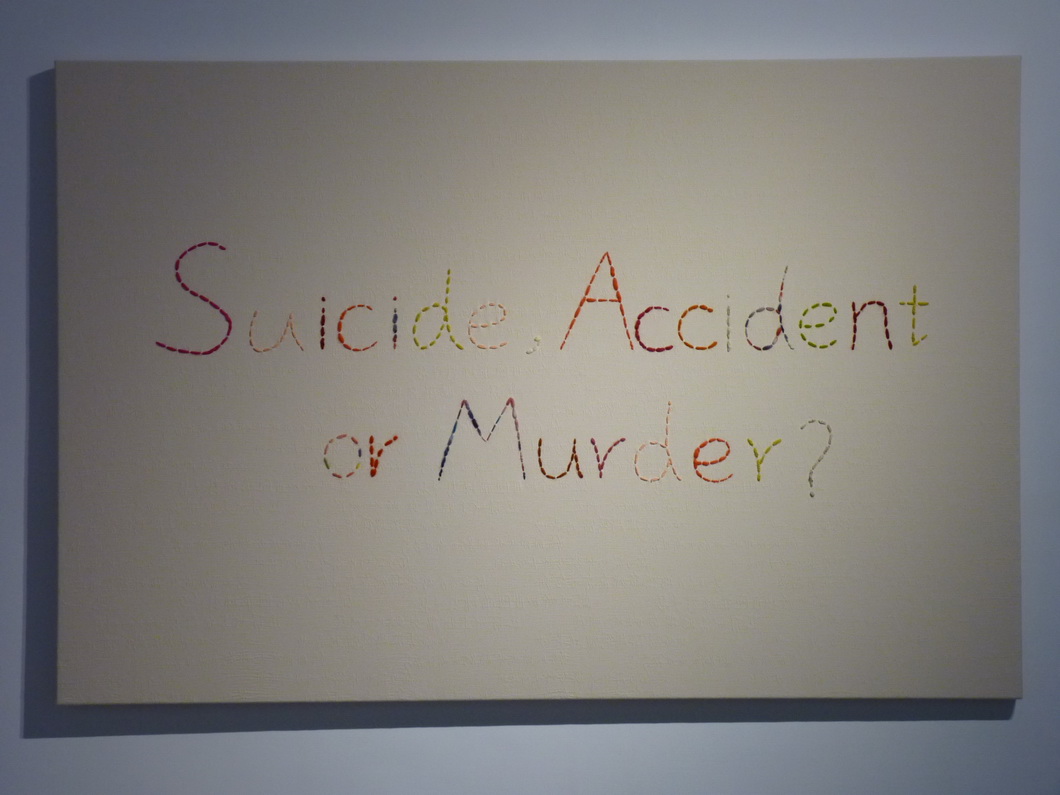
Using text and words as clues to unfold real history, such as the proposition "ASIAWEEK 1981" (2017), which embroiders the powerful reference "Suicide, Accident, or Murder" in gentle colored wool thread on a white background. It comes from the title and question of Asia Week regarding the Chen Wen-Cheng incident that year. The artist uses soft sweetness to face violence and cruelty, describing the terrifying situation of arrest or killing innocents under high-pressure rule. The mark of state violence destroying Taiwan’s talent is engraved in the consciousness of Taiwanese people, not to be forgotten.
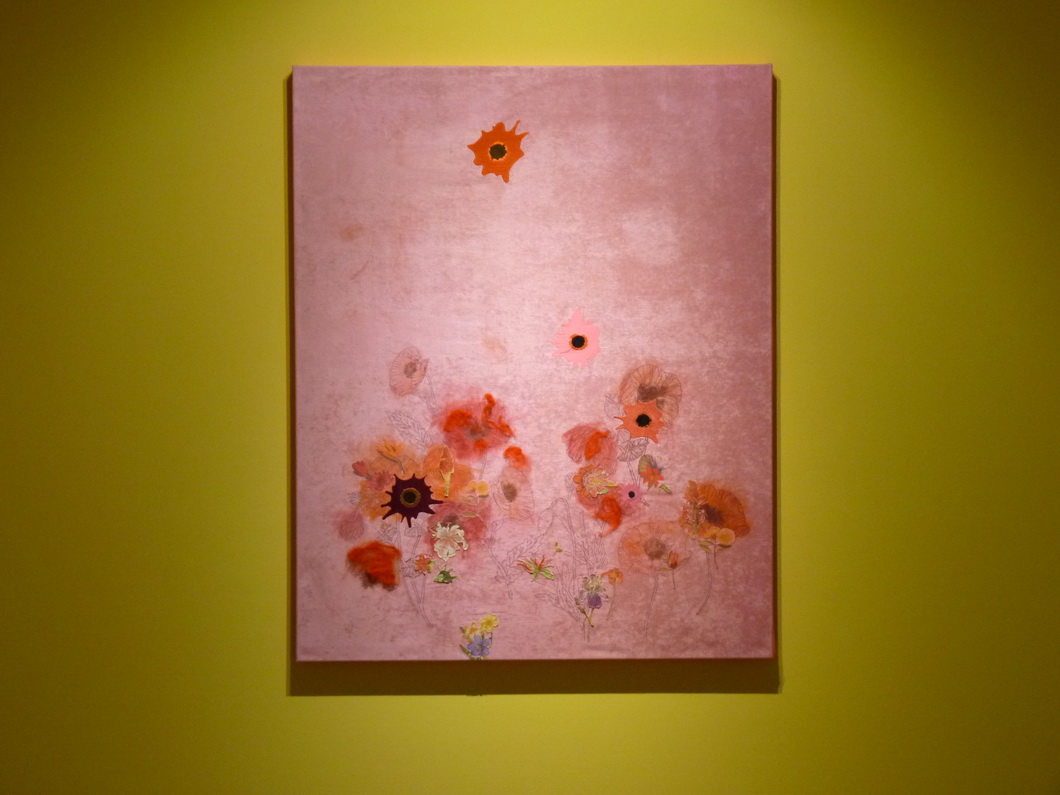
"Floral Fabric": The common or daily floral fabric in traditional Taiwanese households hides high-pressure rule and surveillance nets (intelligence systems and soldiers) beneath its colorful appearance. Below, it reads "Confidentiality and Espionage Prevention is Everyone's Responsibility," referencing the omnipresence of the totalitarian surveillance system, implying situations where events can occur at any time. The era of silence with ears everywhere leaves no escape, and even the terrifying accusation of "Communist Spy" leaves people terrified with no way out, leading to death. The artist writes: "I use soft, beautiful materials, lightly, as if it were just a scene from your and my daily life, attempting to narrate heavy memories." (Note 7)
When our world is under such terror control, people still seem to live very daily lives. Like a piece of floral fabric in the work, bringing joy and glory pink flags, or innocent little girls playing lazily on palm beaches, behind these daily routines seems to be row after row of invisible walls. Behind the walls are these huge, cruel pasts that have been forgotten or covered. (Note 8)
Perhaps creation is always a dynamic process in "interstices," a state of simultaneously constantly escaping self-enclosure and the gaze of the other. Those histories and emotions related to the land of one’s own growth weave the "context" that creators connect horizontally and root deeply vertically in the reshaping and unfolding of self when returning from elsewhere. (Note 9)
Postscript: Taiwan’s democratization has been over 30 years. The Big Brother era has passed, but the ghost of authoritarianism seems to follow closely. Once bitten by a snake, afraid for a lifetime. The older generation covered our eyes, yet we seal the mouths of the next generation. Stand up! Only through artistic creation is it possible. Art is the power of awakening. Frankfurt School philosopher Adorno wrote in "At Least Morality, Thinking of Diverse Lives": "Art is magical, freeing us from the lies of true existence."
Note-1: Chang En-Tzu "Big Brother Is Watching You" solo exhibition artist statement. Note-2: From Cathrine Yen’s Facebook reply on 2018-02-22: "In a time of universal deceit, telling the truth is a revolutionary act." -George Orwell. Note-3: From Zhang En-Tzu’s Facebook post by Yang Jing-Zhe on December 21. Note-4: Chang En-Tzu "Big Brother Is Watching You" solo exhibition artist statement. Note-5: The wall – 1: Original text FREEDOM IS SLAVERY IGNORANCE IS STRENGTH. Who controls the past controls the future. Who controls the present controls the past. Thoughtcrime does not entail death, thoughtcrime IS death. Chang En-Tzu "Big Brother Is Watching You" solo exhibition artist statement. Note-6: From Pun Tiunn’s Facebook - Unforgettable Taiwanese Martyrs, 2018-02-12. Note-7: Chang En-Tzu "Big Brother Is Watching You" solo exhibition artist statement. Note-8: Chang En-Tzu "Big Brother Is Watching You" solo exhibition artist statement. Note-9: Hsiang-Pin Wu Facebook, 2017-11-10. February 13, 2018, at Zhuluo Mountain - Fengshan Yunshui