A Global Artistic Outline
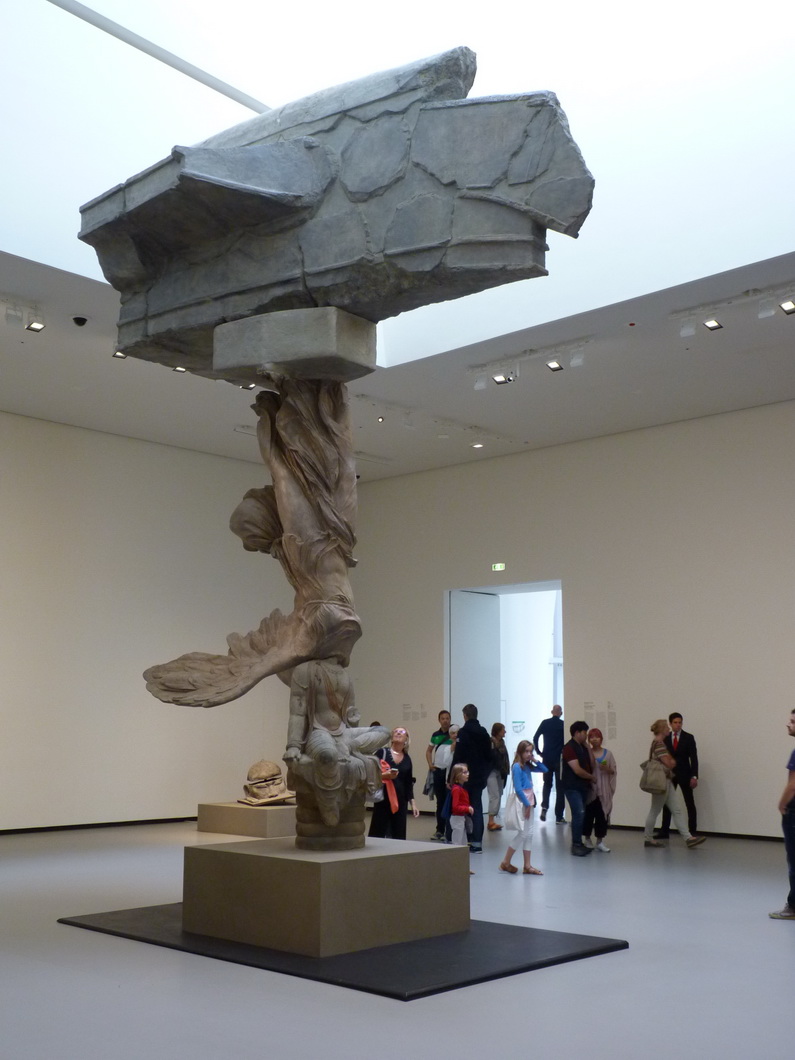
Chinese artist Xu Zhen, eternitt-tianlongshan grottoes bodhisattva .winged victory of samothrace 626x460x230 cm 2013


Text and images by Chen Chi-Hsiang. The surging tide of globalization: Globalization is the obvious political reality of today’s international landscape, a world trend encompassing everything from realpolitik and economic layouts to cultural industries and consumer society. Neoliberalism sweeps like a powerful torrent across every corner of the globe, significantly impacting social and economic structures in any region. This trend is inevitable; under this torrent, the unprecedented multi-layered upheaval in global politics and economy is historic.
What is "globalization"? Why "globalization"? Have we been "globalized"? Globalization has developed recently alongside commercial consumption. It seems more accurate to say it is homogenization, or more specifically, Westernization. The rampant materialism is evident; this form of globalization was formed under the liberation of international transnational corporations. In major metropolitan consumer civilizations worldwide, life trends are becoming increasingly similar and uniform, creating a unified financial-consumer-cultural and informational system.
Is globalization or transnational capitalism a form of re-colonization? The division of global economics and interests by transnational corporations and transnational capitalism is obvious. Globalization is an era where transnational capitalism runs rampant; it is a liberal market economy dominated by the interests of transnational capitalism. Through the WTO opening economic doors for various countries, under free market competition, globalization's influence is ubiquitous—from food, clothing, housing, and transportation to entertainment, and even affecting general thinking systems. It involves informatization, economization, consumerization, institutionalization, standardization, colonization, or sub-colonization.
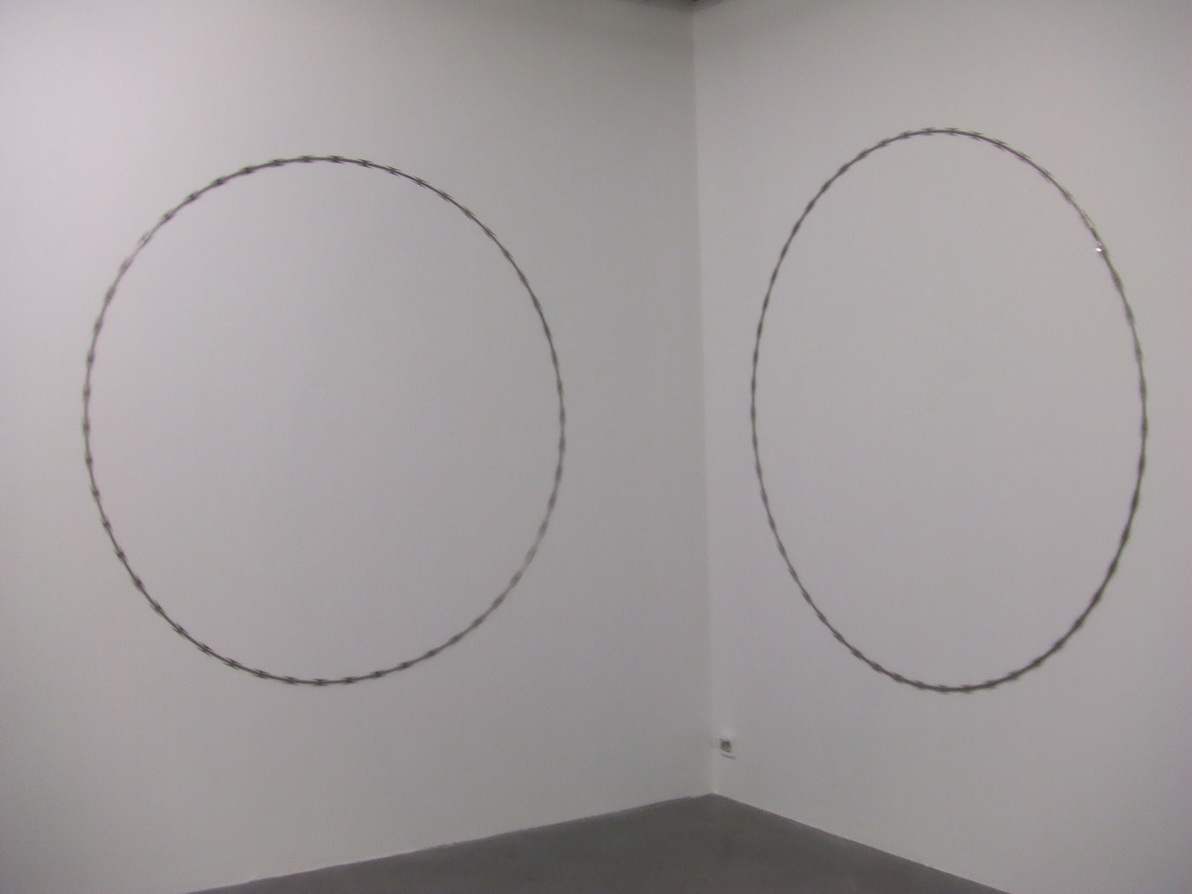
Common characteristics of globalization include popularization, representation, universality, homogenization, networking, vulgarity, and consumerization. German sociologist Helmut Willke observed the cultural geography of globalization, particularly noting the shrinking of the world map, spatial displacement, urbanization, and the dissolving of borders during the process. "During globalization, many 'places' no longer exist! Many political, military, and economic boundaries have disappeared!"
Globalization has changed our lifestyles and perspectives on things. In this international and global context, time and space are compressed, with relationships constantly evolving. World politics, economy, and environment form an integrated "global village," where pulling one hair moves the whole body, affecting natural ecology, environment, climate, energy, and finance.
Art under globalization: From core to periphery, or periphery to core? The Western core is constantly questioned, and mainstream central ideas are disintegrating and melting. Under local globalization, the periphery is gradually becoming the core, such as Beijing and Shanghai in China, Tokyo and Seoul, New Delhi in India, São Paulo in Brazil in South America, South Africa, the Middle East, etc. The rise of regional power maps under globalization includes North America, South America, the EU, Southeast Asia, Northeast Asia, Arab alliances, or the African Union. Of course, Asia, especially China, has become the current economic leader and is constructing cultural power, continuing to rival Western powers.
The West is no longer just a version of non-Western artistic creation. Local art wanders within international trends. Locality becomes a unique attribute, style, and value of creation.
Globalization relative to locality: The terms "native" and "local" are the roots of plants and the source of things. Adjectives describe what is one's own, present, and original. Is "native" simply the "essence," "nature," or "ontology" of a place? The relationship between ontology and locality.
Twentieth-century great writer D.H. Lawrence wrote: "Every continent has its own great local spirit, and every nation has its local character, which is home, which is hometown. On this earth, different places have different vitality, different vibrations, different chemical smells, different stars, different characteristics; you can call it whatever you want, but the local spirit is a great reality."
So! In the post-postmodern era, under each culture expressing itself, a fresh edge force emerges. Art centered on the West has been severely questioned, challenged, and abandoned by "local" peripheral art. Central power is waning, domination relations are loosening, and the construction of mutual subjectivity has become a fact. Today, the growth of contemporary art in South America and China is undeniable and visible. Even in recent years, the rise of contemporary African art has formed a trend of seeking mutual subjectivity under globalization, wandering between periphery and core with a nomadic spirit, connecting past and present.
French contemporary artist Ben believed in the 1980s: "The next artistic innovation: is to bear its own language, culture, and race." He believed that "difference" is an indispensable element in current art, and the new and different are the most important values under "globalization."
If there is a lack of practice in glocalization, cultural globalization easily falls into the trap of Western hegemonic dominance.
The overall appearance or character of contemporary diversified art is divided into two main aspects: "Local Globalization," rooted in local or native cultural sources, forming a new vitality, such as current Chinese art or Japanese manga-style art types, strengthening or updating local imagery, constructing the subject consciousness of contemporary art, and stepping out of the post-colonialist situation.
Secondly, "Glocalization" expands a distinctive personality and style within the international image, wandering within the international art system.
American anthropologists Saphir and Worf also pointed out: "Behind every language lies its unique thinking logic and cultural values, and its users are deeply influenced and dominated by these values."
Artistic signs of globalization: Cross-boundary integration and diverse creative forms and styles. Comprehensive hybrid artistic overall appearance and character signs. This is a world where a hundred flowers bloom: that is, the era of globalization. The virtue of globalization is the autonomy of regional cultures. The greatest gift of globalization is respecting different cultures. The greatest value of globalization comes from cultural differences. Difference has become the most distinctive style of today.
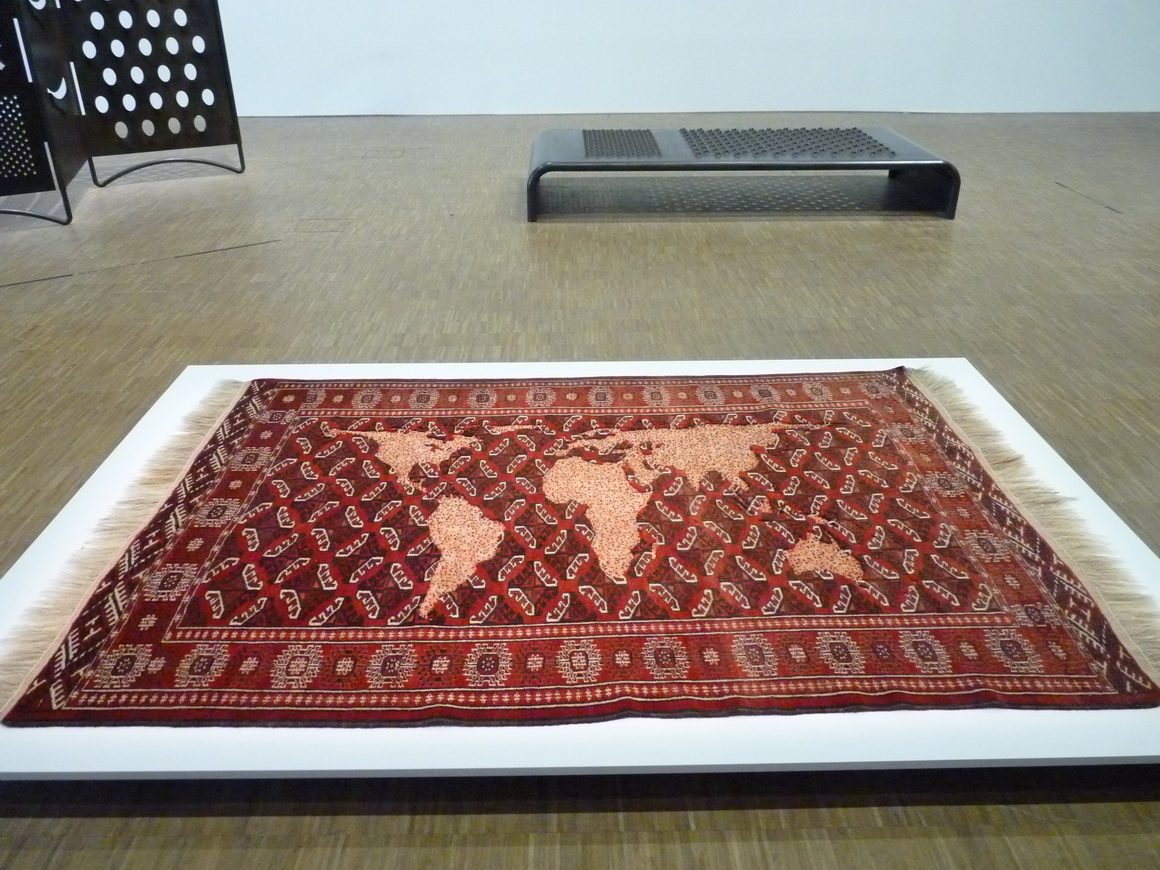
The artistic map of globalization: Like the struggle of global political and economic geography: Europe and America—called the West—South America—Asia—Africa—Australia, etc.
Anti-globalization. The biggest slogan of the left-wing anti-globalization movement is "believing that life itself is not a commodity." French sociologist Pierre Bourdieu had a passage in Firewall—Resisting the Invasion of Neoliberalism: We must end the dictatorship of experts, such as those at the World Bank or International Monetary Fund, who unconditionally force us to accept the judgment of the new monster (financial markets), unwilling to negotiate but only wanting to "explain"; we must break the historical inevitability promoted by liberal theorists; we must create new forms of collective political operation that can consider various necessities, especially economic ones, in order to overcome or even dismantle these necessities... The indoctrination of liberalism started long ago and continues unabated to this day. To this day, one can often see reports of American or British economic miracles appearing in all French news media every few days... This gradual indoctrination can produce profound effects. Therefore, in the end, neoliberal thought becomes like an unavoidable fact. They instill the following assumptions as taken-for-granted facts: The ultimate and only goal of human action is to achieve the highest (economic) growth rate, that is, optimal productivity and competitiveness.
French sociologist Alain Touraine also wrote, "We refuse to choose between globalization led by industrialized nations and the dictatorship carried out in the name of community rights, because these two forces are clashing everywhere on Earth today, posing a serious threat to the freedom of subjects" (Note 7). The situation is exactly the opposite. To break free from the "consumer hegemony" of economic liberalism, and also to break free from the "identity coercion" of cultural nationalism, we must continue to fight tirelessly on both fronts!
Facing the huge power of "economic liberalism," do not be afraid, because globalization is just an illusion; "there has never existed a society governed by a unique market"; facing fundamentalists, do not panic, because "collective actions attempting to seize power are already rare today." Duhan hopes that everyone combines conflicts happening around the world, learning from them the ability of social actors to intervene in public life. It requires a "global alliance" including youth, women, immigrants, minorities, and environmentalists to jointly construct a "new citizen-ethical society" based on the framework of "human rights-ecology."
Conclusion: Baudrillard believes we are in an era constituted by simulation, that is, a postmodern society determined by models, codes, information, and media. Simulation is no longer a simulation of real fields, nor does it refer to entities, because there is no distinction between model and reality; symbols themselves have life and self-appreciate. We have lost exact experience and criteria for reality. Baudrillard declared: "Reality has completely vanished in the fog of simulation and symbols," and further claimed: "Whatever was born of meaning has died of meaning." In the postmodern world, everything is void and meaningless, everything drifts in the void without anchorage, all possibilities are exhausted, and we can only play with fragment arrangements. Baudrillard believes we are like being in a state after the orgy of things; the game where the subject is superior to the object has ended, and the object—including the masses, information, media, commodities—has surpassed the control of the subject and even dominates the subject. He said: All we can do is adapt to this remaining time; and this time seems to have been hollowed out of all meaning by this reversal. At the end of the century before us, it is like an empty beach.