Stepping on a Landmine
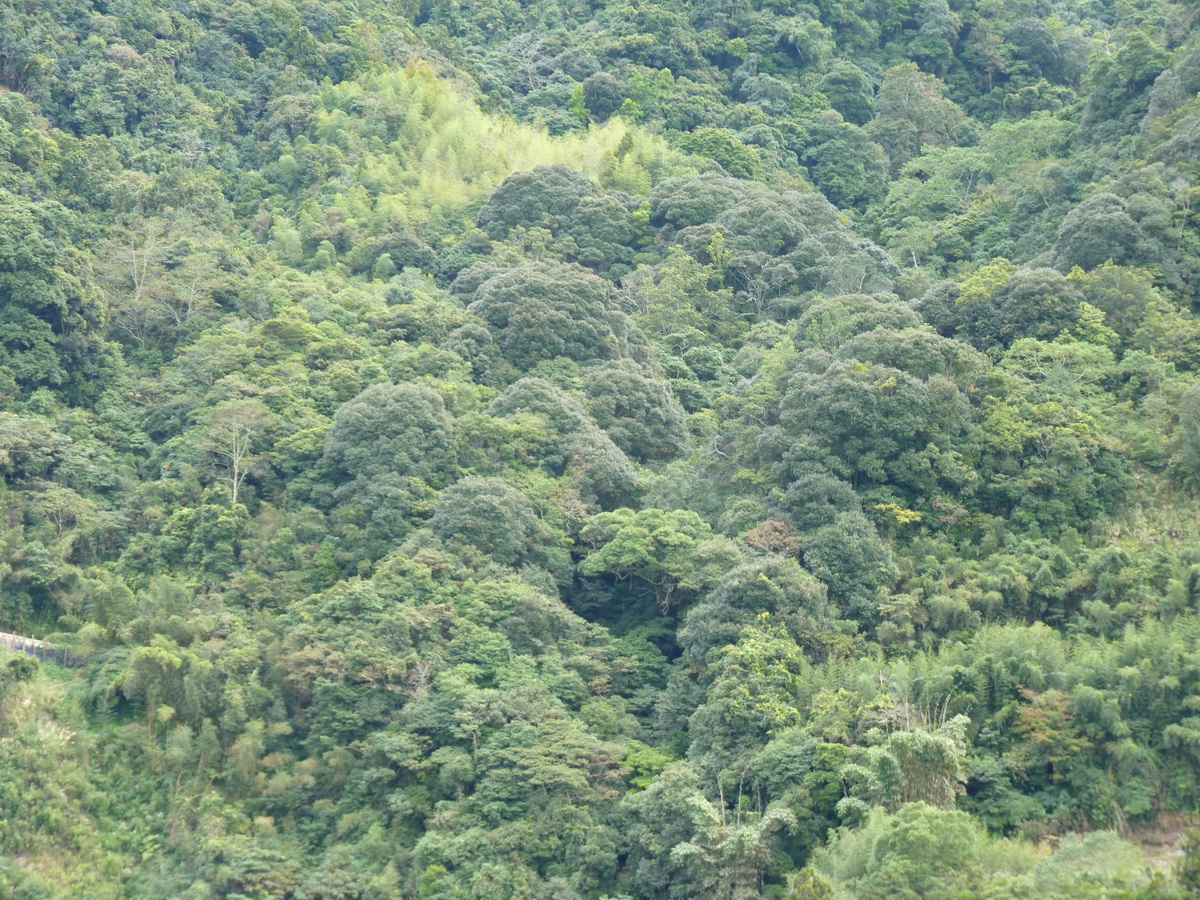
The lush mountain forests of Lushan Hot Spring Area, Ren'ai Township, Nantou.
Text and photos by Chen Chi-Hsiang. In Taiwan, local tour bus travel has become a widespread trend. It is common to see crowds of tourists and vehicles at Chiayi Park, with buses departing almost daily, mostly for day trips (especially early departures to Xiitou or Shanlinxi). These trips are often organized by groups or travel companies targeting retired civil servants with leisure time and money.
Apart from day trips organized by my qigong class, I rarely join group tours. At the end of this year’s autumn, upon returning to Taiwan, I accepted an invitation from friend Y to join them, particularly attracted by the curiosity of the mountain trip “Nantou Ren’ai Township Lushan Hot Spring and Bihu Walking and Maple Viewing.” Rarely signing up for community tourism company activities, I went with the mindset of a spring outing, expecting to walk through the green mountains in autumn to view maples, delve into the true face of Lushan, and witness the state of local Taiwanese travel firsthand without needing to predict.
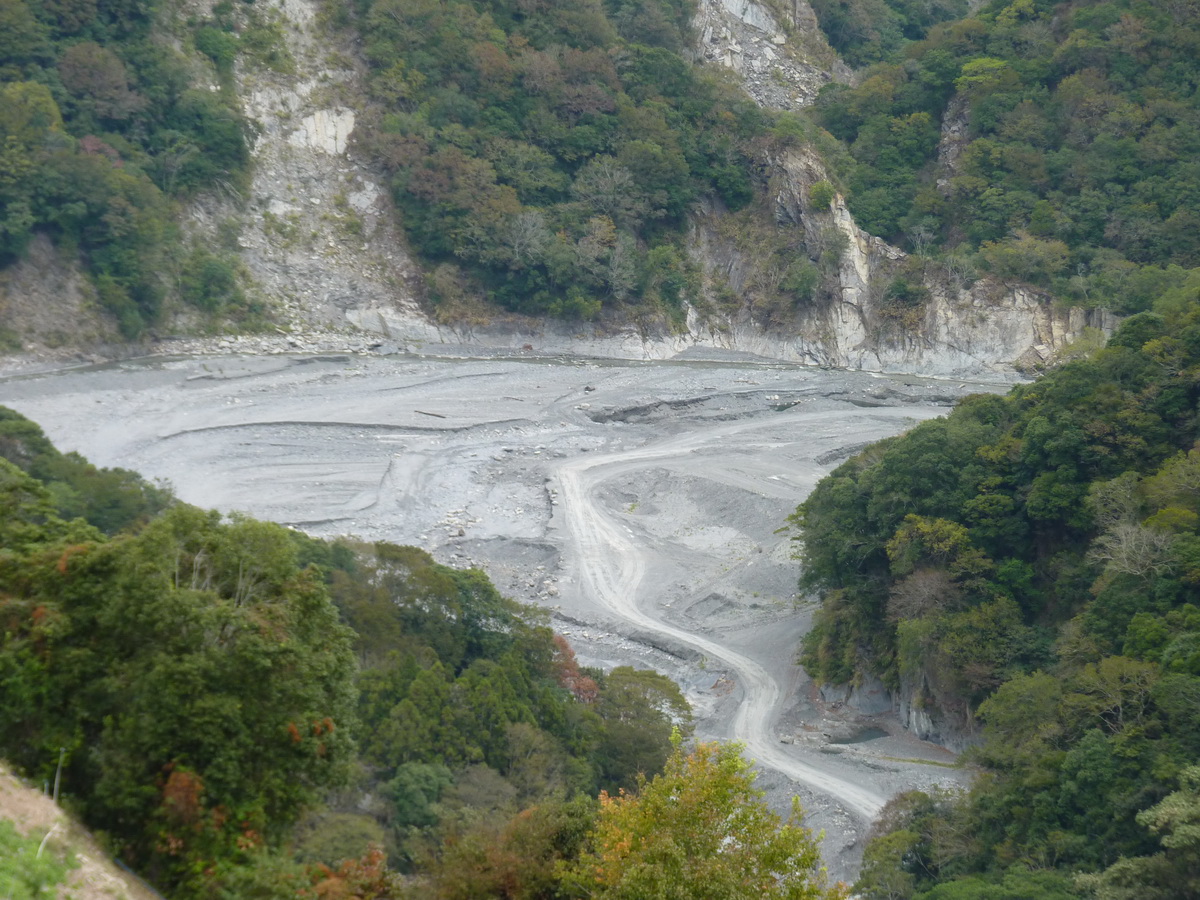
On November 25, we set off with simple meals, fruits, and tea. There were five comfortable tour buses; we booked in advance to avoid those with karaoke, preferring a quieter ride. The enthusiastic and considerate guide introduced us to the purpose of the community tourism company and the background and historical stories of this trip. Lushan is a hot spring area located beside a large valley stream. It enjoyed prosperity for a long time, but after years and natural disasters—earthquakes, typhoons, and floods—it no longer shines. The government plans to abandon repairing the impossible Lushan Hot Spring Area, even relocating villages elsewhere. (According to the guide) This trip to Lushan might be the final pilgrimage.
Without the consent of the tourists, the organizers unilaterally canceled the Bihu walking and maple viewing itinerary, changing it to a Lushan hot spring trip (giving everyone ample time to soak in the springs), without a single apology. It seemed like the best arrangement, but suddenly I felt deceived, thinking I had stepped on a landmine. A group of helpless sheep could only be at the mercy of the organizers as the outing began.
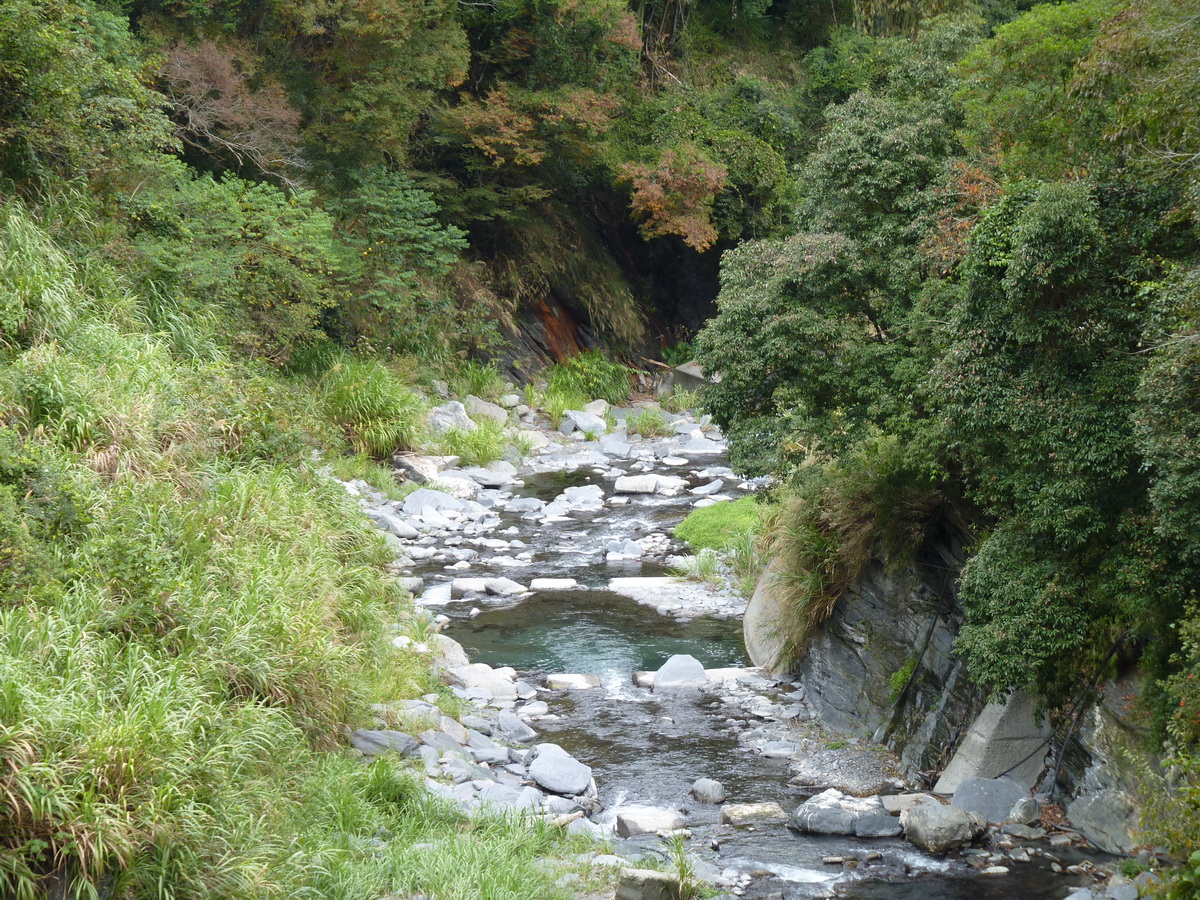
The scenery turned, with continuous beautiful peaks, clear mountains and rivers along the way, and scenes of lush forests like poetry and paintings following the rolling clouds. The tour bus crossed mountains and ridges, moving forward with the large valley. Closer to the Lushan Hot Spring Area, major construction was underway everywhere. Upon arriving at Lushan, there was a sense of vicissitudes and decline; the chaotic environment and the bustling charm of the tribal crowds were gone. Passing the swaying old suspension bridge, we entered the aging main street of Lushan, its colors lost. Old buildings dotted the landscape where luster had faded. Mocking tourists witnessed the lethargic Lushan, witnessing both the prosperity and the decline of Taiwan’s local leisure areas.
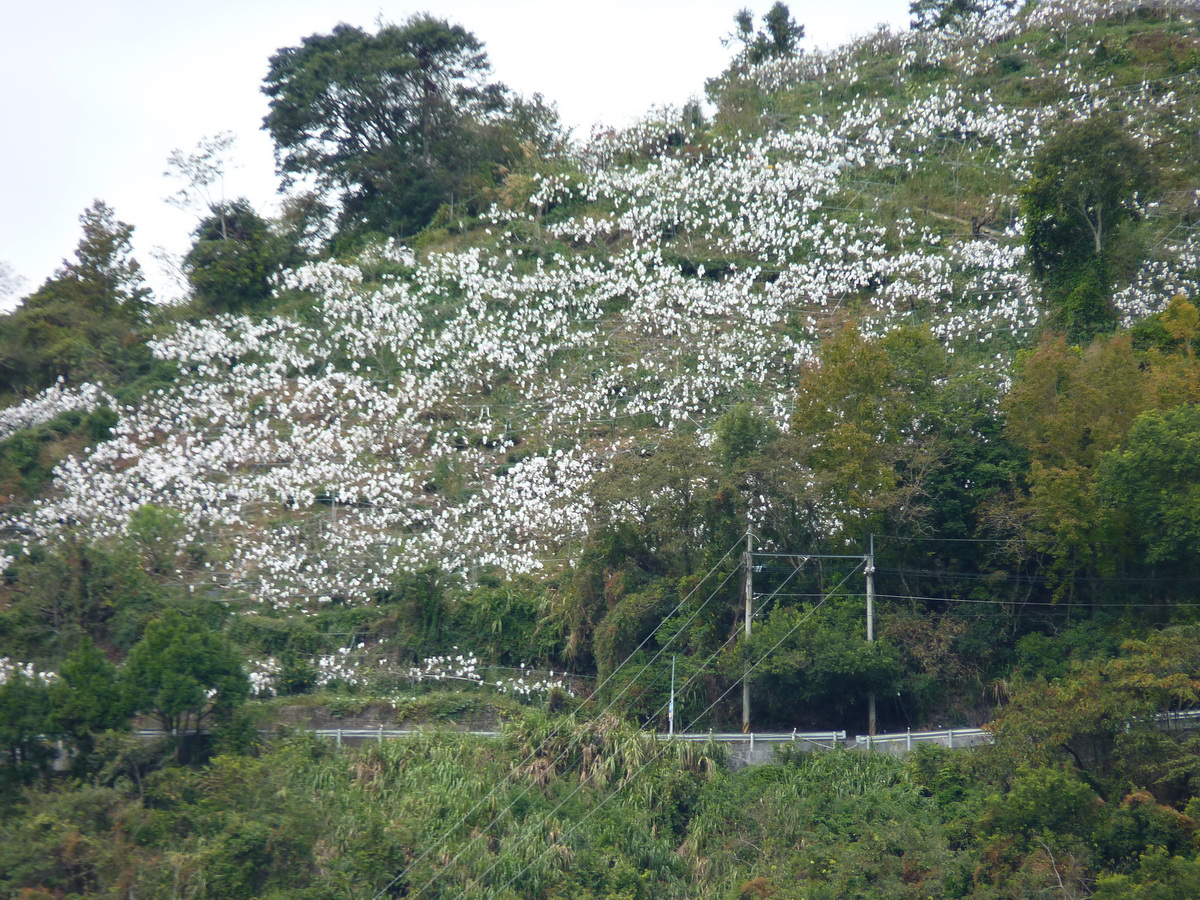
Of course, since we were here, we made the best of it. With ample time, a group of sheep followed the guide’s footsteps, strolling and roaming around the mountains of Lushan. We walked up the Machupo ancient battlefield hiking trail, chatting with friends in groups, following winding paths (was that hiking?). Immersed in nature, enjoying the breath of the mountain outing, we stopped and went, observing the natural scenery. Passing scattered villages and camping areas, following the rhythm of the path going up and down, we gazed at the dense forests and orchards in the distance. Passing Jingshan Villa, seeing another village behind the willows and flowers, the declining Lushan appeared again before our eyes after a turn. We circled around, walking for nearly two hours.
We discovered that walking in the Lushan mountains lacked landmarks and directional signs. Small groups continuously flowed onto the trails aimlessly (it seemed few intended to go soak in the hot springs). We could have returned to Lushan early but instead went back to another high point—the villa. Out of the owner’s kindness and goodwill, we were allowed to picnic on the outdoor dining table of the manor and gaze at the distant, bewildering mountain scenery.
After the meal, some friends, family members, and tourists hurried to soak in the hot springs. We slowly descended the mountain, confused. Closer to the village, the true face of Lushan was neither pleasing to the eye nor heart, resembling an abandoned tribe. There were few tourists or tour buses, highlighting the decline. Tourists could only pass the time idly. It seemed there were no cafes, so we wandered among scattered local fruit stalls and tea shops. For tourists coming from Chiayi, the hometown of Alishan tea, and places producing oranges, tangerines, and persimmons, did they buy fruit or tea? There was no coffee to drink here; one could only kill time. Some simply found a place in the rest pavilions to take a big nap or chat in groups (this extremely boring phenomenon is often the reality of day trips). Finally, I personally verified the quality of tourism in Taiwan and the effect of traveling while stepping on landmines. Leisure and pastimes also prove the humanistic and living quality of a place, don’t they?