Chen Hsing-Wan: The Art of Sincere Reflection
These images come from personal archives; they are large photographs personally given to me by Hsing-Wan, without dimensions or titles. Here provided for appreciation. "Life is a pure confession of the conflict between a person and his environment." In this conflict, people's weapons are their conce
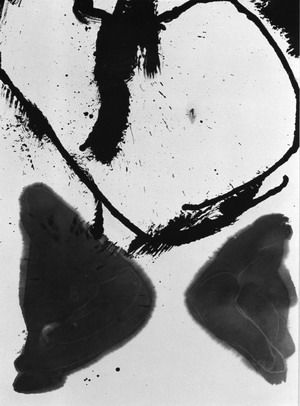
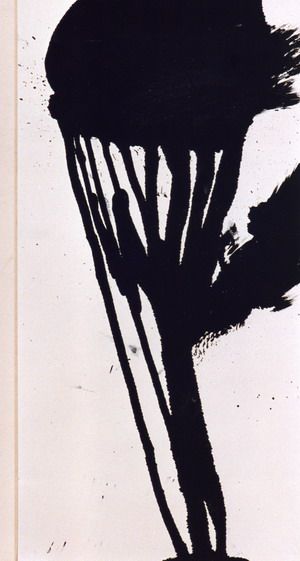
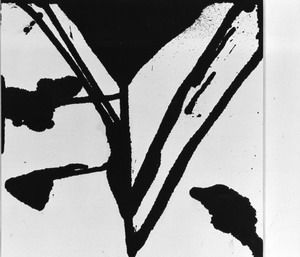
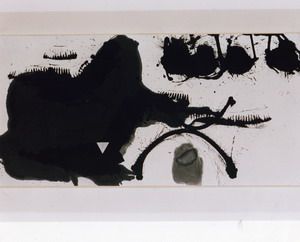
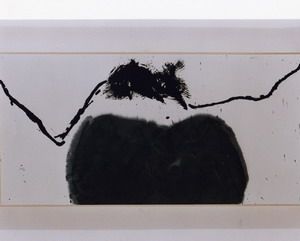
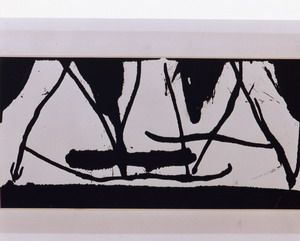
These images come from personal archives; they are large photographs personally given to me by Hsing-Wan, without dimensions or titles. Here provided for appreciation. "Life is a pure confession of the conflict between a person and his environment." In this conflict, people's weapons are their concepts (acquired externally) and beliefs (generated internally), and "Life is not given to us in ready-made form, but we must form it with our own strength" — Ortega y Gasset.
Preface: "Man can only exert his greatest ability after fully understanding his environment; through it, he communicates with the universe. Environment is that silent thing surrounding us, because our fate cannot be separated from it, for the environment is the world of our life." (Note 1) Artistic creation is based on this living environment, from which one lives, thinks, and creates. Art is a reflection of sincere confrontation with life; whatever consciousness of life exists, so too does the art. It is purely a confession of self-conscious life and a product of thought forms. When an artist faces a blank canvas, they also carry the subconscious background of the era. Through each artist’s familiar artistic language, symbols, forms, and appropriate material media, thoughts, emotions, and viewpoints are solidified amidst the shifting times and space. Chen Hsing-Wan’s art is an empathetic realization of sincerely confronting the troubles of social environments and surrounding things. She boldly extracts novel image symbols and the energy/will of matter itself through experimental materials, presenting spiritual states ranging from abstract, non-figurative, to figurative imagery.
From External Influence to Quiet Self-Acquisition: Hsing-Wan’s artistic creation over the past decade has been evident. Initially, her work leaned toward a novel subconscious form—the alienation of conscious structure combinations, constructing image states under open, decomposed forms. With bold, strong, vivid colors and characteristic materials (oil paint, acrylic, wooden strips, plaster, cloth, pulp, newspapers, advertising images, etc.), she applied various possible techniques (gluing, nailing, collage, dripping, thick impasto, etc.) to construct various possible images, highlighting the texture tension of the materials themselves. Early works seemed closer to American Pop Art, especially referencing color application or newspaper/magazine clipping methods, such as Johns’ Device (1961–1962), Field Painting (1963–1964), or According to What (1964). These were relatively rigid, staying in flat spatial arrangements and somewhat artificial. Material processing was neat, showing no traces of natural chance operations. Vivid flat colors clashed with each other within an alienated human structure, lacking natural vitality. Although taught by Mr. Li Chung-Sheng to explore the subconscious, this vital potential energy was not visible in 1982–1983. Overly aware of formal expression or trapped by material operation, works from this period were numbered without formal titles. This comprehensive media experiment quickly became skilled experience. In the 1984 Horizontal or Juxtaposed Series, flat vivid and murky colors interplayed with textured tonal mass. Natural, fluid images were no longer consciously constructed, unexpectedly becoming the source of vitality in the painting, bringing an unprecedented heavy, oppressive power.
The work titled Black and White opened a new situation. No longer artificially crafted pictures, they appeared much freer and more natural. Powerful contrasting colors complemented each other in form, with steady, calm painting power. These unprecedented explorations of material form quickly entered the climax of her painting core experiments. Driven by the thirst for knowledge and passion for art, in 1985, she and Cheng Yen-Ping arrived in Paris, the artist’s dream city. In this open, free artistic capital, she sincerely faced and thought, swimming freely in the various arts she loved: fascinated by film, theater, dance, music, painting, sculpture, literature, and art. Whether ancient or modern, Chinese or foreign, classical, modern, or contemporary, she attempted to grasp and understand everything. Wholeheartedly visiting museums, art galleries, large exhibitions, and traveling tirelessly, under the radical, passionate wildfire of art, she attempted to find an open path for her own creation. Oscillating soul, subversive spirit, sincere life, instinctual impulse, fighting soul, desperate artistic wildfire, vast creative desire and will—thus, she experimented with unprecedented series creations here. Under this spontaneous instinct, using many recycled materials and chemical raw ingredients, she satisfied her creative desires and impulses, soothing her soul. Unfortunately, these works were not preserved. This exploration of material media and life experience deeply influenced her entire lifelong creation, becoming a turning point in life and establishing her personal artistic viewpoint. Paris became her favorite artistic metropolis.
The Paris trip allowed her to understand the depth and aspects of Western culture. After the collision of civilization and art, her thoughts matured further, her persistence in art became more solid, and her approach to life became more sincere, granting her the courage to move forward. Art transformed into overall life and will, akin to her father. Returning to Taiwan from Paris was not without struggle. A crying soul and tiny life facing the political, social, environmental, landscape, and interpersonal conditions of the place, and facing real life, required full courage and willpower to eliminate unnecessary troubles and confusion about artistic creation conditions. Guided by artistic belief and impulse, relying on life’s endurance, she threw herself fully into artistic creation, battling through increasingly messy complex environmental affairs to the myriad threads of creative states. Baptized by European civilization, her inner essence changed. Viewing this from four aspects: Color: More internal, substantial, and emotional, different from past decorative characteristics. Instinctively mixed but clear colors carry strong emotion, radiating a connotation of spiritual state. Form: Unifying from alienated abstract structural forms into semi-figurative bodies, appearing more complete and powerful, forming recognizable or metaphorical human figures, entering the essential form where imagistic abstraction and figuration coexist. Materials: Richer and more mature, variable materials construct painting tension, simultaneously expressing mental state and instinctual sensibility, moving toward essential originality. Titles: Worth mentioning is that works no longer had abstract or numbered titles. For example, 1987’s Surprise, 1988’s Years, 1989’s Instant – Eternity, State of Things, Journey of Life, Tree Not Tree, or Covered by Sand. People can directly enter the thinking of the work through the title’s introduction, entering its spatiotemporal imagination, grasping the painting’s meaning or its subtle undertones. The selection of titles provides the connotation of struggling painting language, like the artist herself reflecting troubles in social environmental things, presenting a formal aesthetics of strong will, gradually building her unique style from external influence to quiet self-acquisition.
Radical yet grounded, she did not follow the results due to the gradual maturity of her style. She bravely tried and explored the most sincere freedom of art, seeking to liberate her creative consciousness. Earlier this year, through an opportunity for an exchange studio, she left Taiwan—the root base troubling her and her creation—and came to Basel, Switzerland, Europe’s human paradise. Transforming a drifting, alienated, contradictory psychological state: "A foreign land is either not my home or is my home." Unusually, she began trying ink wash creation. Let us not forget she never gave up calligraphy; this is a task she has always probed and practiced. Her reverence and implication of inherent Chinese culture opened the exploration of seeking roots in a foreign land. In this postmodern artistic situation, Hsing-Wan’s return to ink wash did not fall into exotic styles like many artists. Instead, she actively proposed possibilities of modernization and inclusiveness, or explored parts unfinished by Chinese modernism. The subconscious automatic techniques learned from Teacher Li Chung-Sheng were truly liberated and freed. Intimate, instinctual "black mass" vividly played out in "the ultimate load of ink wash," releasing material and image energy and temperament. Using China’s most traditional ink wash and Xuan paper seemed to express sensibility and instinct most thoroughly, creating novel organic images and essential artistic aspects. Forms created by the mind evolved naturally, divided into four developmental processes: One, seeking a natural, unadorned line as a starting point, using dripping ink on white paper, lifting it to flow freely in space to form shapes, adding contrasting burnt ink lines, forming something similar to organic plankton. Two, alternating dripping and spraying ink, lines crossing to create unstable, creature-like or human-like forms, displaying living organisms in the ultimate load space of black-and-white contrast. Three, comprehensively using splashing, throwing, spraying, and dripping ink, linear figurative body contours appear more substantial, and the dynamic momentum of splashing and throwing ink forms the painting’s intense explosive tension and energy. Four, expanding the canvas by juxtaposing several pieces into giant, freely associative human imagery, juxtaposition becomes active compositional elements for creation. Ink wash creation can be seen as compensating for the rigidity of past oil paints and comprehensive media. It is more direct, pertinent, free, and accidental, able to thoroughly express sensibility and instinct, allowing subconscious automatic techniques to stretch freely. However, overall, one can see its methods stem from the same track as past multi-media material methods. It is not contradictory, merely differences in materials and methods.
Subconscious Plea and Conscious Interweaving: Hsing-Wan’s artistic expression is the result of developing the interweaving of subconscious instinct and conscious awareness, lyrical and heroic, majestic and magnificent. Liberated from the application and processing of various material media, through her unique sensitivity and sensual painting language symbols, it deeply reflects the creator’s state of mind and deep-level conscious feelings. Her creative method lacks premeditated generalizations. Thoroughly guided by subconscious action creation construction, intuitively liberating the heart’s consciousness, galloping freely in unknown new worlds, subverting the constraints of inherent rational thinking, delving into unconscious states to plead, solidifying into form through the process of changing stars and shifting heavens. Thus, her works appear so naturally fluid. So! This subconscious expression form seeking liberation transcends the categories of human perception and experience, intending to grasp some extraordinary accidents and chances, forms, and novel free imagery. Elevating the primordial state of chaos through intuitive enlightenment, then organizing and constructing consciously, balancing forms, strengthening colors, and highlighting imagery, finishing touches as if made by heaven. Examples include 1984’s Black and White, 1988’s Surprise, 1988–1989’s Beauty and Sorrow, or 1989’s Instant – Eternity and Tree Not Tree. Subconscious operation serves as artistic liberation, as exploring humanity’s unknown deep inner world. Hsing-Wan’s art is this excavation of the self-facing deep consciousness, investigating knowledge and experiential states beyond human a priori, delving into realms unconstrained by reason, attempting to grasp the nature of life and the essence of art. Most notably in her recent ink wash series, under direct, spontaneous, and instinctual urging, completely released to probe the subconscious realm, unconstrained by time, space, reason, and habit, liberating self-existence, approaching ethereal artistic conception in a state of selflessness. The creator transforms into pen and ink, flowing freely in black lines and white mental spaces, roaming freely among organic plankton of burnt ink, dripping ink, spraying ink, throwing ink, splashing ink, heart-ink, and idea-ink. The form of "black mass" and the "ultimate load of white space" leap onto the paper’s universe, presenting continuous subconscious energy and tension.
Struggling Painting Language Like a Soul Oppressed by Social Environment: Artistic expression is a deep-level experience reflection of oneself in time, space, and social environment, and even more so, a call and confession from the bottom of the heart. The era background is exactly the root support force nurtured when artists sincerely face themselves. Through their sensitive instincts, sensibility, and reason, they indirectly or directly respond to their era. Thus, art becomes the intellectual and symbolic substantial product of every time and space, and a microcosm of human survival in the era. So! Hsing-Wan’s religious-like art is a pure portrayal of her own mental state. When the artist faces a blank canvas, she also sees her own shadow. This shadow is her sincere basic consciousness facing humanity’s existence in social environments. Obviously, her struggling painting language presents the inner battle’s essential appearance, like a crying soul oppressed by the social environment, comforting the inner deep soul through artistic creation.
Spanish philosopher Ortega y Gasset wrote: "Life is a pure confession of the conflict between a person and his environment," and "Life is not given to us in ready-made form, but we must form it with our own strength." Indeed, artists can only admit the historical time-space and social environment borne by life, converting this spatiotemporal consciousness into the driving force of artistic creation. Sensitively grasping multiple social environmental states, indirectly or directly creating and endowing them with special meaning and viewpoint. As Robert Longo said: "I really don’t like New York. Too many people, too dirty and chaotic, rich-poor inequality. Rich live upstairs, poor live downstairs, even on the streets. Society has considerable pressure, violence, unrest, materialism, and this city has an atmosphere of worsening corruption! But I can only feel social pressure in this state to create. This forms my art. I cannot say I like this city (New York), nor can I say I love living in a concentration camp?" (Note 2) This heavy pressure of maintaining vigilance toward the social environment becomes the tension and resolute fighting energy of artistic creation, to pacify the restless soul. I can perceive how Hsing-Wan, in this Taiwanese social environment state, faces her creation with what kind of endurance and courage. (As long as one does not pretend to be blind) frankly reflecting a confused, struggling will. This struggling art originates from her inner essence. Like her first letter sent to me after returning from Switzerland wrote: "Days returning from heaven to hell.... You can imagine my feeling, things around seem to get messier the more you try to sort them..." (Note 3) This struggling art language was early hidden in bright colors and alienated image structures, difficult to detect. But after the Paris trip, the more agitated soul, through sensitive and sensual social consciousness and deep introspection, presented a heavy, uneasy struggling image in bold and generous works. Bursting with unprecedented screaming tension and energy of painting and matter, intending to soothe and pacify the cries of the lonely soul deep inside. Works like 1987’s Surprise, 1987–1988’s Untitled (Work 4887), 1988’s Fold One (Work 2388), or 1989’s Game Method and Covered by Net all carry quite expressive strong images and explosive uneasy colors. Alienated, opposing structures imply unparalleled painting tension running through the canvas. Red and black’s violent confrontation reaches a tense saturated state, mutually shouting and clamoring to form the confrontation of mental will. Within symbolic, metaphorical, and figurative, semi-figurative, and even abstract inner expressive imagery, it transmits shocking poetic sentiment, emotion, and spatiotemporal spiritual state. Calm creation is moving toward mature personal style.
Note 1: Philosophy and Life, Ortega y Casset, 1957, Xin Chao Wen Ku, translated by Liu Da Bei, Zhi Wen Publishing, P115. Note 2: Interview Record of Robert Longo, Art Press No. 149. Note 3: Letter from Chen Hsing-Wan in 1990, "Days Returning from Heaven to Hell." Written in Paris, September 26, 1990.
Postscript: This essay "Chen Hsing-Wan: The Art of Sincere Reflection" was written in 1990 during Hsing-Wan’s solo exhibition in Taiwan, when she asked Qin Song and me to each write an article. At that time, this article was not mature; naturally, she adopted Qin Song’s article. Thus, today, 17 years later, this article has been completely rewritten according to its original meaning, streamlined to highlight its value, and enhance its readability, hoping to provide some insights into Hsing-Wan’s 1980s creation. Offering my shallow views on Hsing-Wan’s works, sharing them with everyone on this third anniversary, hoping to inspire more people to participate in researching and discussing Hsing-Wan’s art, and respectfully dedicating this to my sincere friend "Hsing-Wan."