European Young Artists "Metamorphosis" Group Exhibition
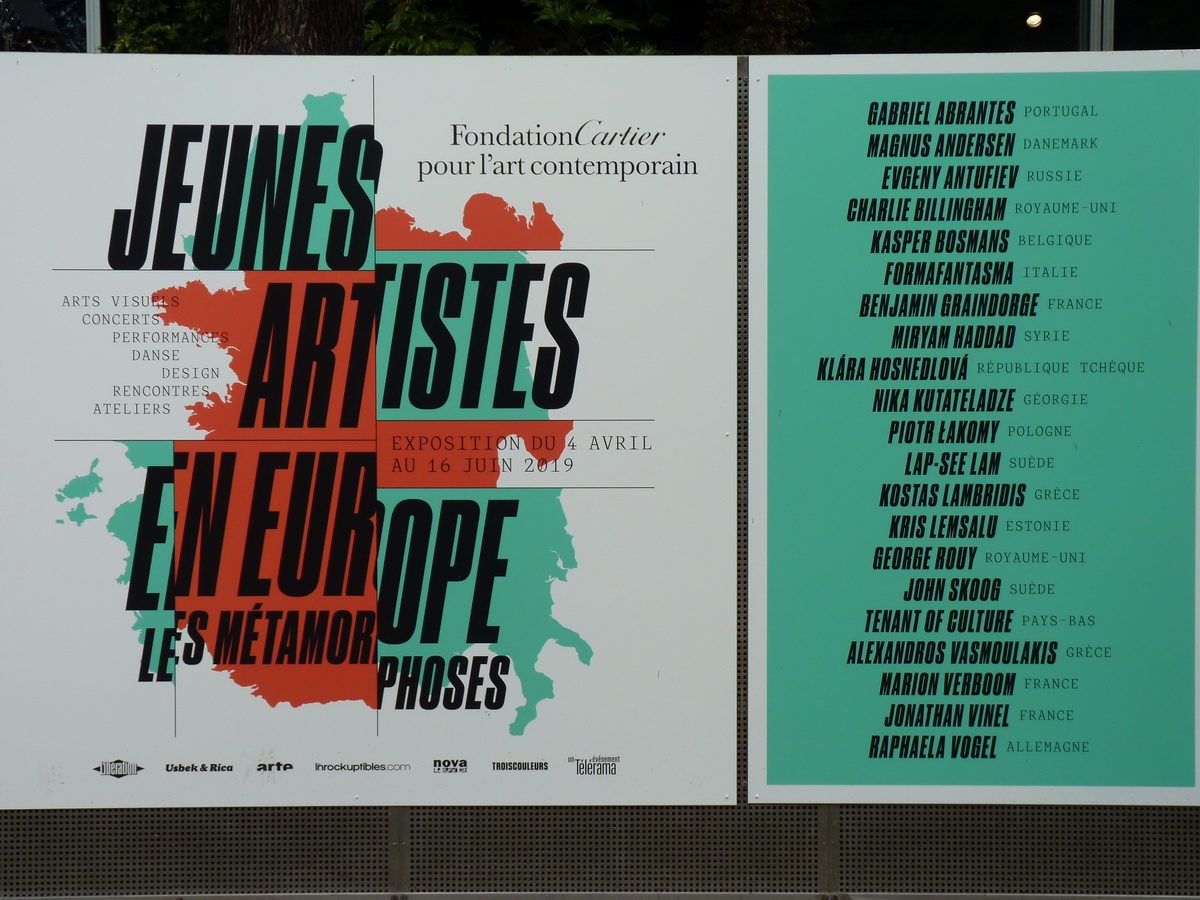
European Young Artists "Metamorphosis" Group Exhibition: Cartier Foundation Exhibits Exhibition Signage
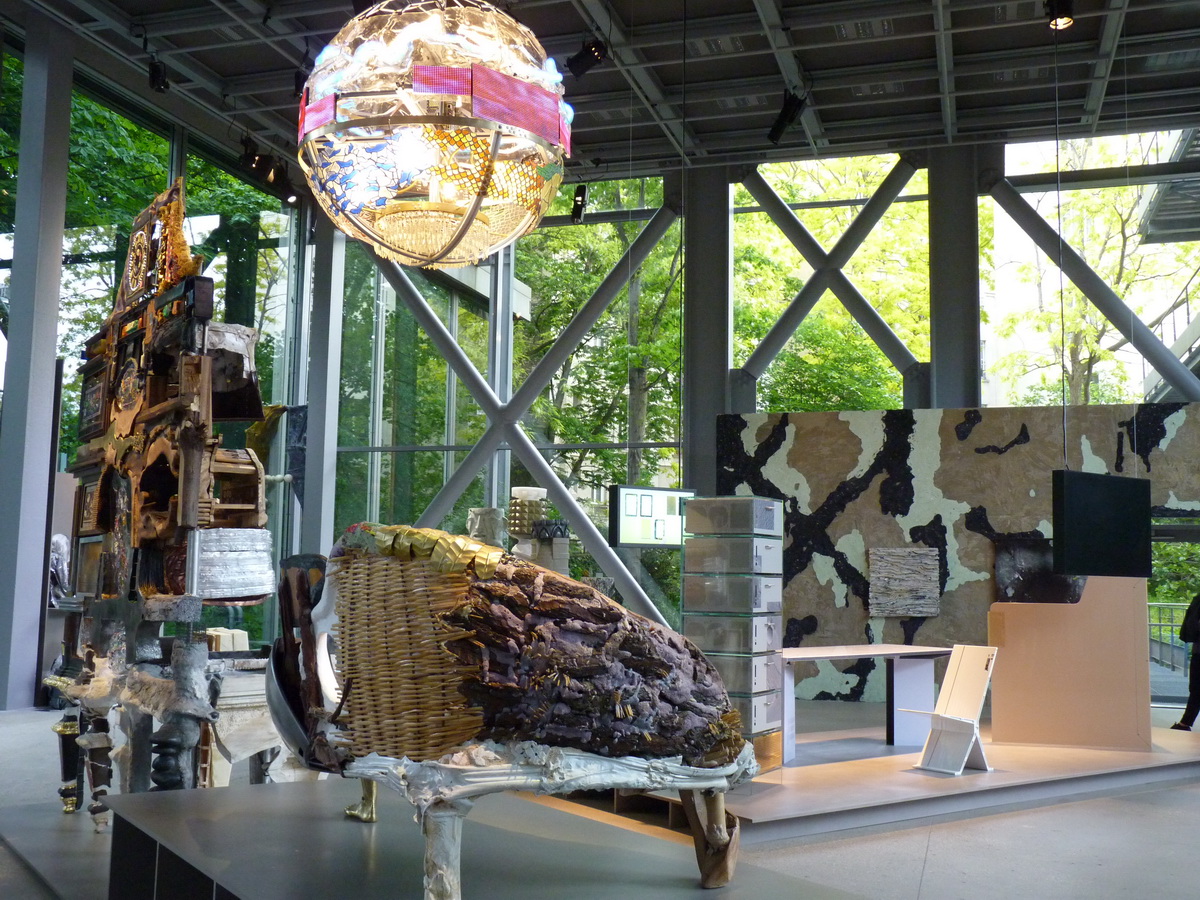
The basement exhibition space focuses on the intimate relationship between figures and space. The works presented depict humans in a transforming world with fluctuating identities themselves, considered the highlight of this exhibition.
Text/Photos by Chen Chi-Hsiang Time: April 4 – June 16 Location: Fondation Cartier The vitality of the future lies in the present.
This "Metamorphosis" exhibition, through conscious curation and integration of vision among the new generation, welcomes new energy for the future, bringing forth contemporary European artistic trends that keep pace with the times.
After a full year of searching, exploring, and visiting over two hundred artists across 29 European countries by the Contemporary Art Curatorial Team of the Cartier Foundation, artists from 16 countries across Europe were selected to participate in this gathering at the Fondation Cartier in Paris.
These young artists, born between 1980 and 1994, belong to the post-Berlin Wall generation of intense upheaval. As world maps and values shift and transform, time-space compression has formed a flat global village. They possess an optimistic passion and new vision for the world.
Notable are the artists produced by fine arts academies in various European countries; one-third are female artists, including those born outside Europe or immigrants to Europe, such as Syrian-born Miryam Haddad and Chinese-Swedish Lap-See Lam.
Through diverse expressions ranging from traditional painting to sculpture, fashion, design, image, and video, to digital art, they inject new energy into the European art scene, proving the extraordinary dynamism of the European art landscape, most having participated in international art institutions for the first time.
Generally, these artists base their creation on local heritage and cultural transmission alongside contemporary artistic trends, forging a path that connects past and future, broadening the creative vision and imaginative space for the new generation.
This globalized "cross"-generation no longer blindly worships avant-garde nor belongs to the rear-guard; certainly, after modernity, all possibilities are opened up—whether prehistoric or post-historic, modern or traditional, past or future, mainstream or marginal, global or local.
There is no single truth; everything is internalized into creative energy in their own way, undergoing "metamorphosis" through eclecticism and mixing. Their works often exhibit a fragmented aesthetic.
Equally curious about the past and future, equally interested in tradition or modernity, all becomes the foundation of creation.
As Belgian painter Kasper Bosmans says, "History has become for me a tool that helps me make aesthetic decisions." Possessing specialized skills such as molding, ceramics, or embroidery, artists can recombine forms through the collection and transformation of materials.
Immersed in tradition, their works show equal sensitivity to the past and future. French artist B.
Graindorge states, "By connecting old techniques with contemporary processes, reinterpreting old techniques, the futurist approach is the only solution to finding ways to create new fields." In the urgent matters of European new generation creation, we see: preserving and recycling materials, reinterpreting historical and cultural heritage, re-examining identity construction, and re-evaluating nature.
The resulting works, lyrical, pure, or wild, testify to a strong desire for mixed identities, cultures, and modes of expression.
With poetry, fantasy, and humor, this new generation of creators is shaping the face of Europe today and in the future. (Note) The first-floor exhibition space demonstrates an interest in issues of public or domestic architectural space; the exhibited works have an intimate relationship with the museum's architecture.
The basement exhibition space focuses on the intimate relationship between figures and space. The works presented depict humans in a transforming world with fluctuating identities themselves, considered the highlight of this exhibition.
The final room gathers artists who propose dialogue, spirituality, or blasphemy, particularly regarding the non-human world and animal imagery. (Note) European art stars are shaping a new face of European diversity with new energy and passionate creation, focusing on craftsmanship over concept.
They have found their paths and general stylistic faces, tending toward maturity.
Notably, they already possess substantial credentials for institutional exhibitions in major modern art museums or foundations in Europe and America, and most have professional gallery representation, indicating a high degree of professionalism.
The Paris Cartier Museum gives them another push; it seems a new situation has taken shape. Contemporary European new art assumes a new situation of carrying forward cultural traditions, welcoming the trends and new visions of their generation.
Among the 21 artists from 16 countries: three from France, two from Britain (both painters), two from Greece, two from Sweden, plus Germany, Belgium, Denmark, Czech Republic, Netherlands, Italy, Portugal, Poland, Estonia, Georgia, Soviet-Russia, Syria, etc. Why was Spain omitted?
This curatorial perspective seems somewhat implicit (new media such as interactive digital art, new technologies, and biotechnology are absent).
This can only illustrate the vision of the Cartier Museum; perhaps this is just the tip of the iceberg of the European new generation art scene, waiting for us to continue observing. The future will be proven by time.
Here, we describe the faces and perspectives of the new generation artists categorized by material and medium: New Generation Painting: New generation painting has strong postmodern characteristics, mostly figurative (with only one abstract), leaning towards literariness and anecdotal qualities in sensibility and poetry.
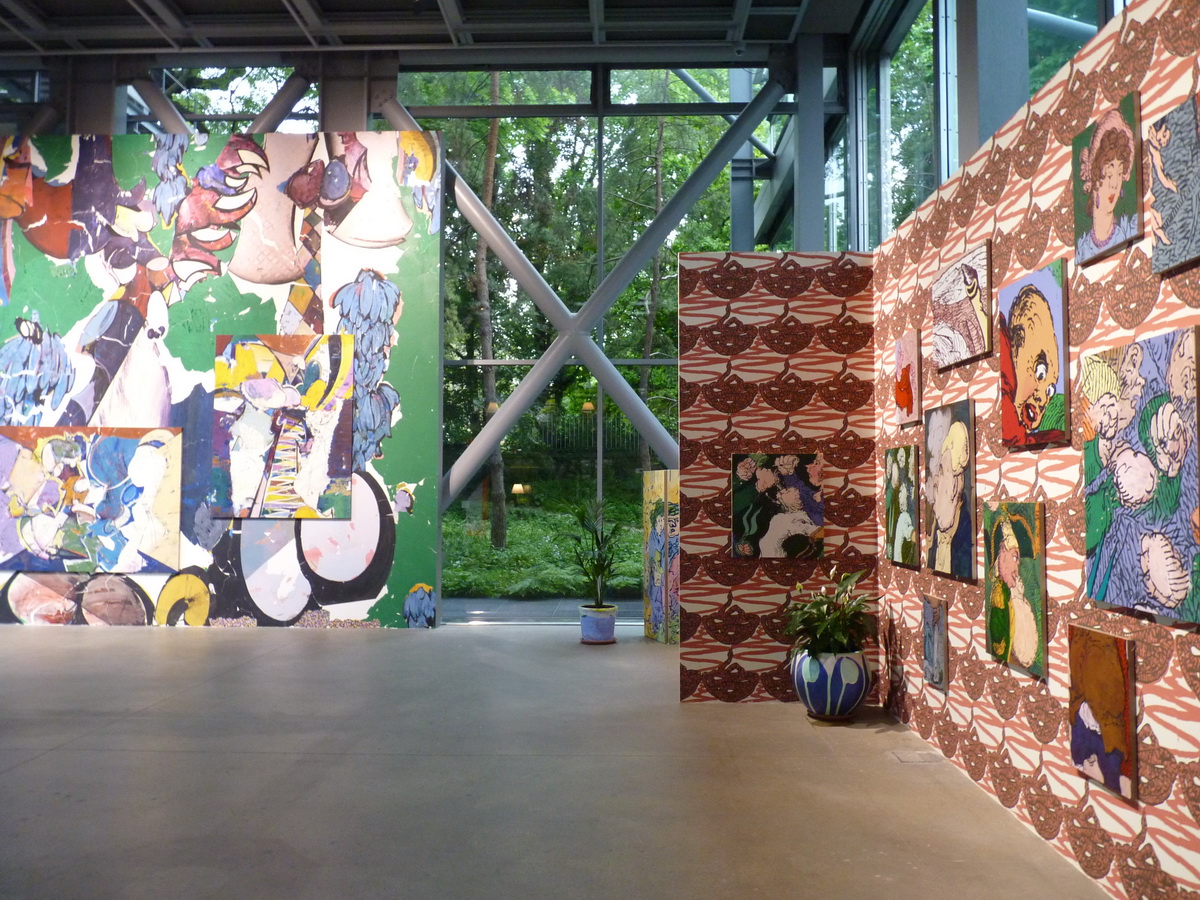
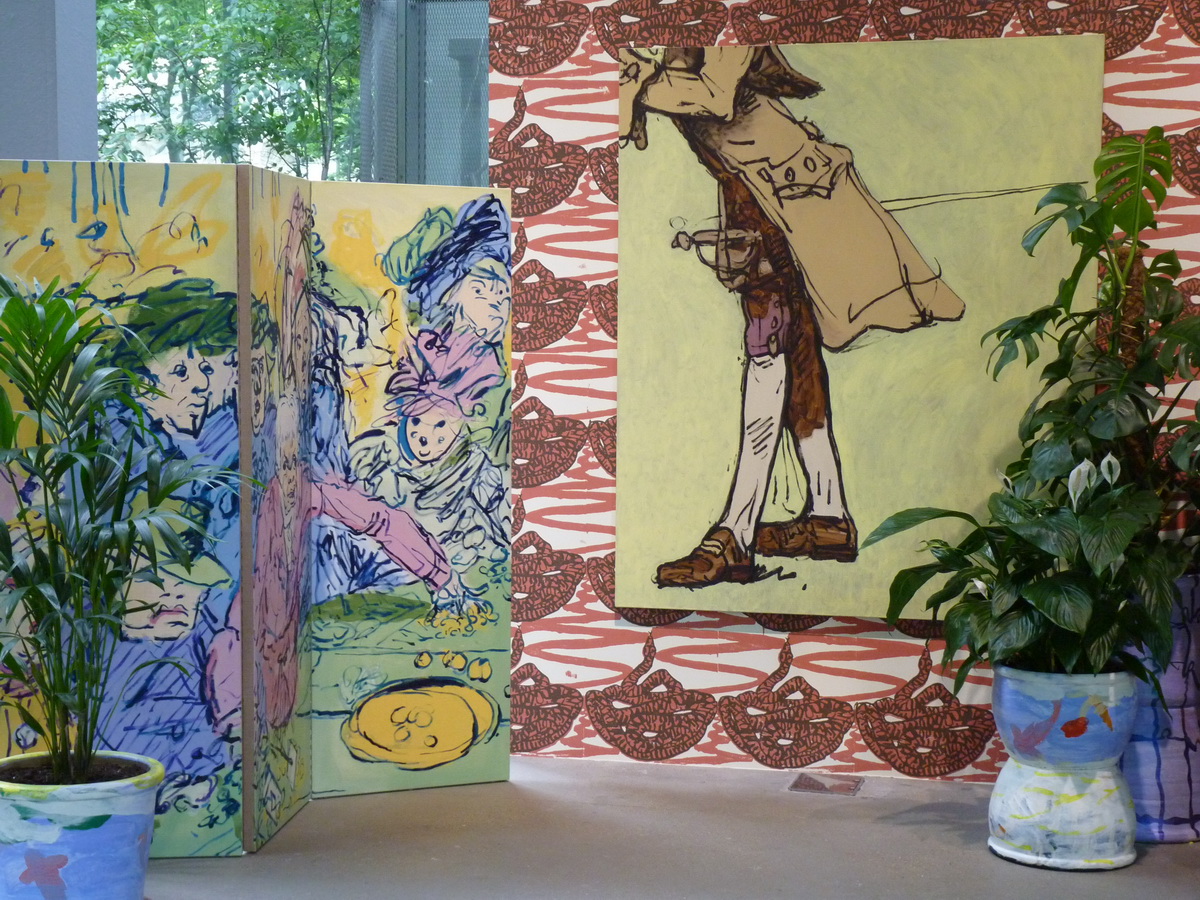
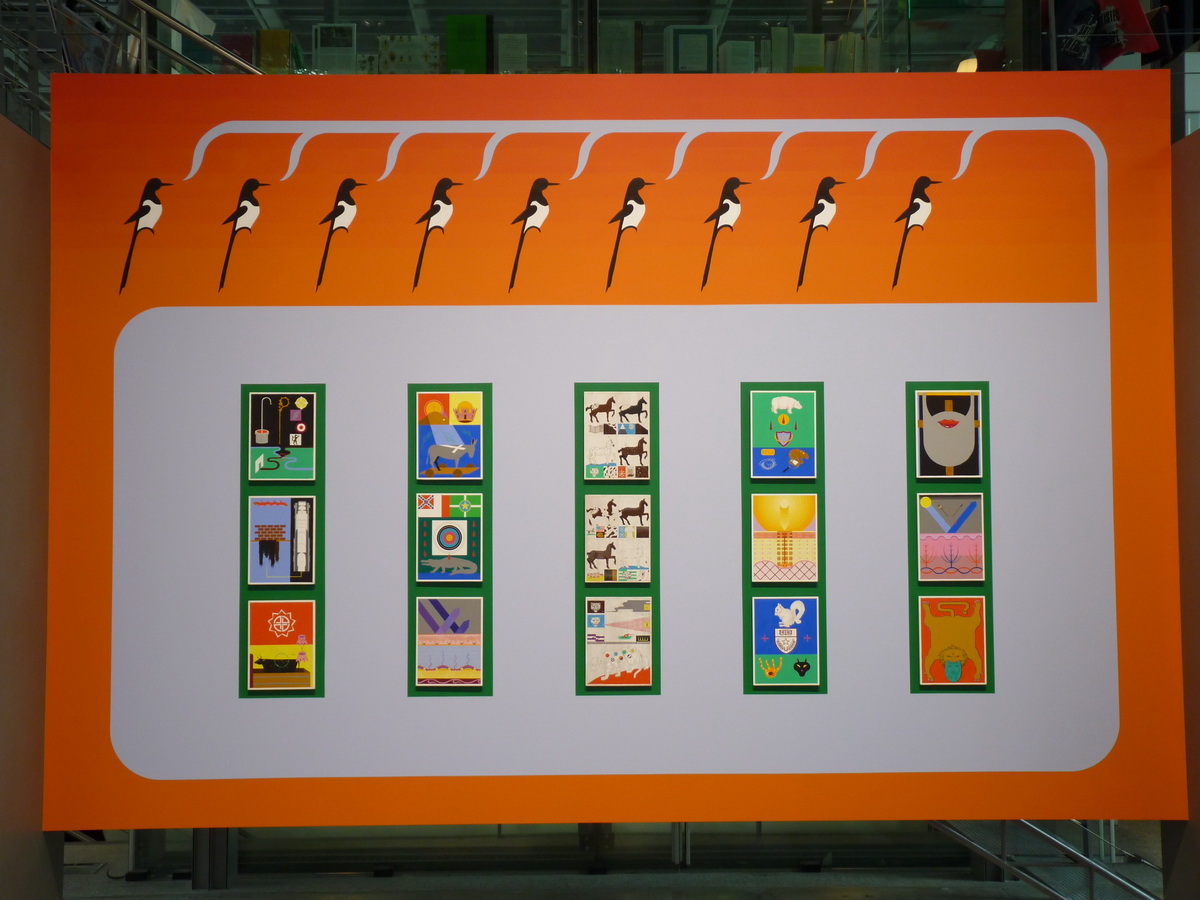
British painter Charlie Billingham (born 1984) created a series specifically for this exhibition, appropriating and transforming 18th-century British prints and engravings, reframing, enlarging, and reassembling them into paintings, installed on a wall he painted by hand—a vanity scene critiquing and mocking upper-class society, clearly using the past to comment on the present.
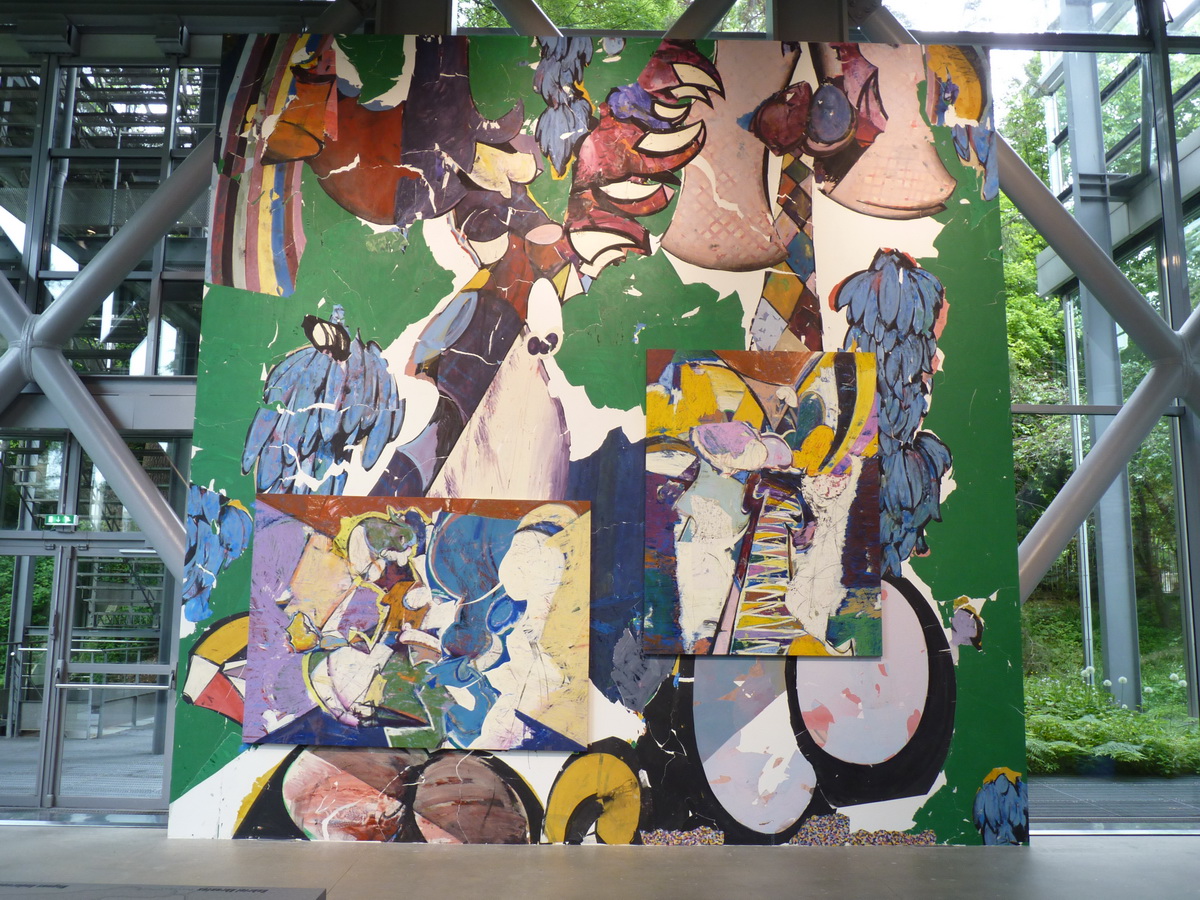
The only abstract painter, Greek artist Alexandros Vasmoulakis (born 1980), developed from past graffiti to powerful abstract painting today.
He says, "Graffiti and murals have always been my passion during adolescence and for twenty years, conveying a love for large-scale works." Thus, he used different skills (combining painting and collage or objects) to create a huge mural specifically for this exhibition, hanging two small torn-and-pasted paintings within the large one, becoming an instinctive and emotional deconstruction and reconstruction of free, liberated lyrical abstraction.
Belgian painter Kasper Bosmans (born 1990) tends toward design and pattern vocabulary in his painting, mixing narratives of the past and present.
Since 2013, he has established his most iconic legendary painting series, combining painting and design, presenting sharp issues of contemporary society (identity, immigration, environmental protection, nuclear disasters, etc.) in a five-panel format.
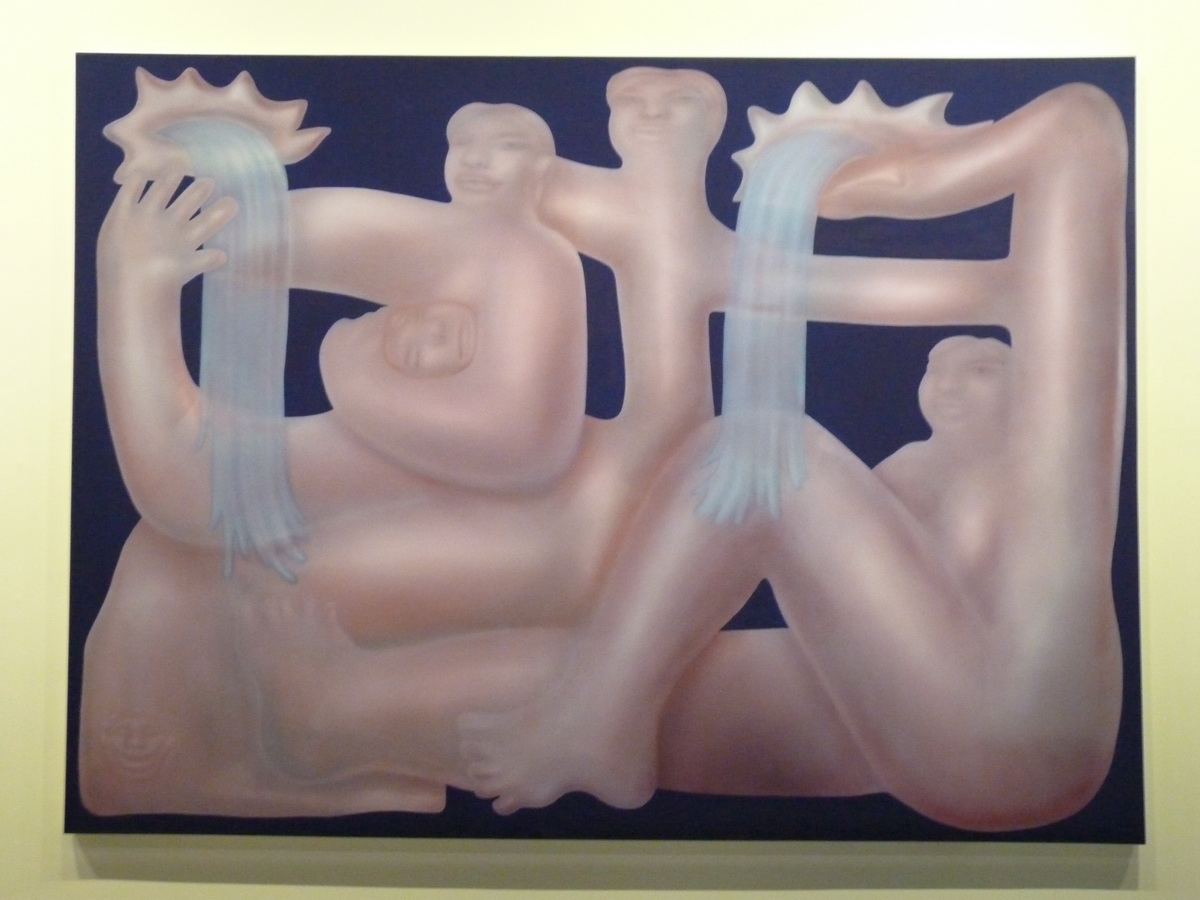
Passionate about local folklore, legends, anecdotes, and historical stories, he says, "History has become for me a tool that helps me make aesthetic decisions." As for British painter George Rouy (born 1994), his mixed figure paintings are quite simplified and flattened, full of a sensual, ethereal feeling outside of time, ambiguous images, often uncertain, strengthening a gradually disappearing personality, poetic and mysterious.
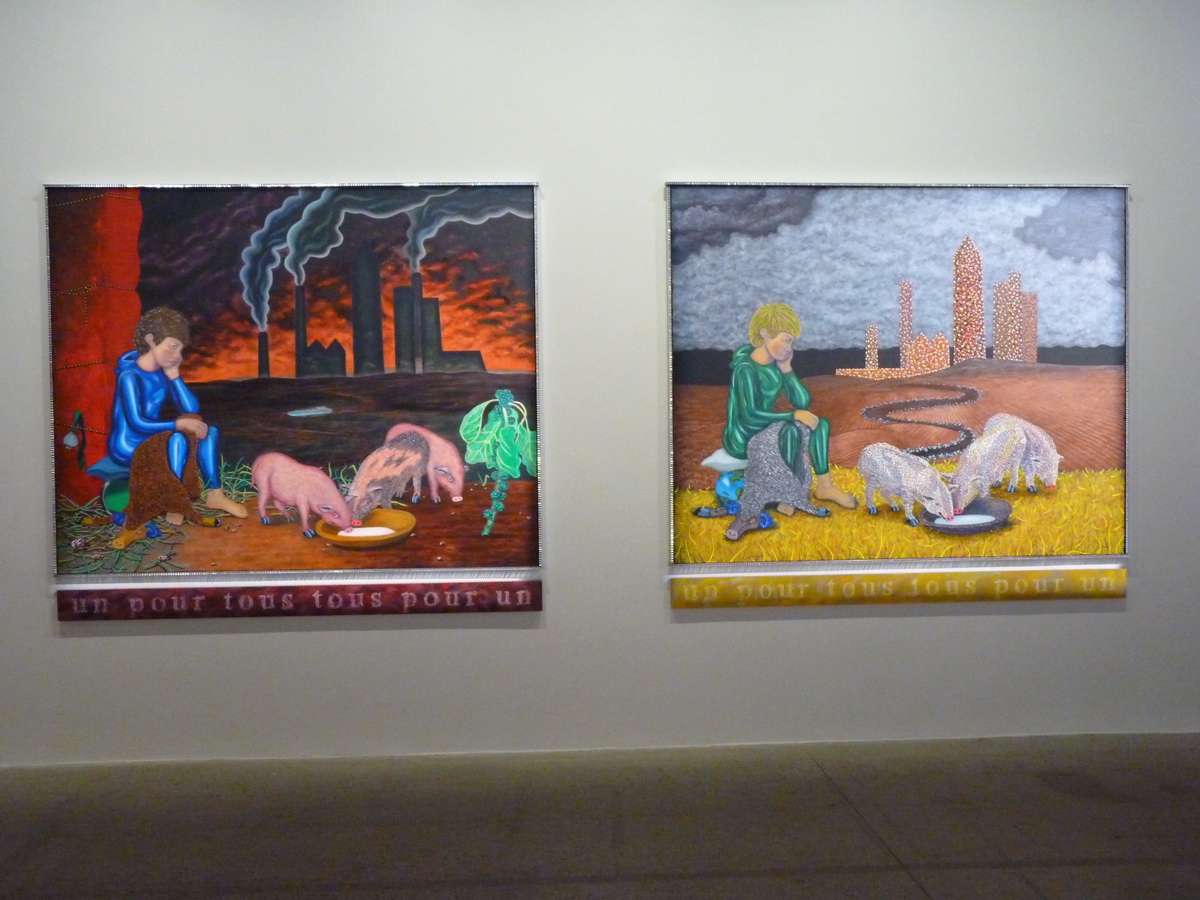
The painter asks, "If you close your eyes, what does love, hate, crying, fear, or longing mean?" Danish painter Nagnus Andersen (born 1987) creates around the theme of education, deeply contemplating educational issues for teenagers in society, possessing a narrative and didactic nature.
Here, he exhibits the "Local Education" series.
Against the backdrop of globalization, urbanization, and industrialization, he acts as a guardian caring for a herd of pigs, filled with metaphorical expression, elucidating the intrinsic characteristics of certain children's skills and the important role of education.
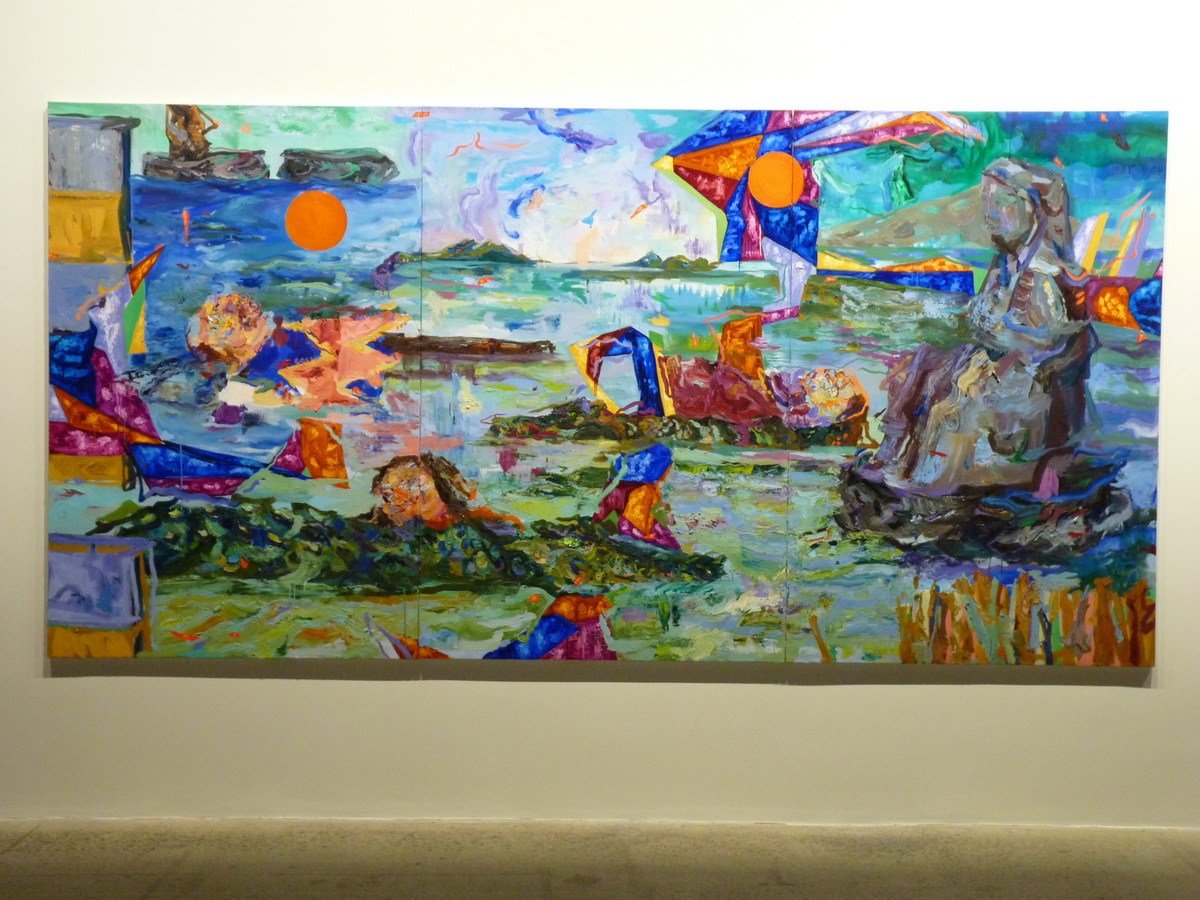
Syrian painter Miryam Haddad (born 1991) draws inspiration from local stories and legends, imagining figures like kings, wizards, or scarecrows.
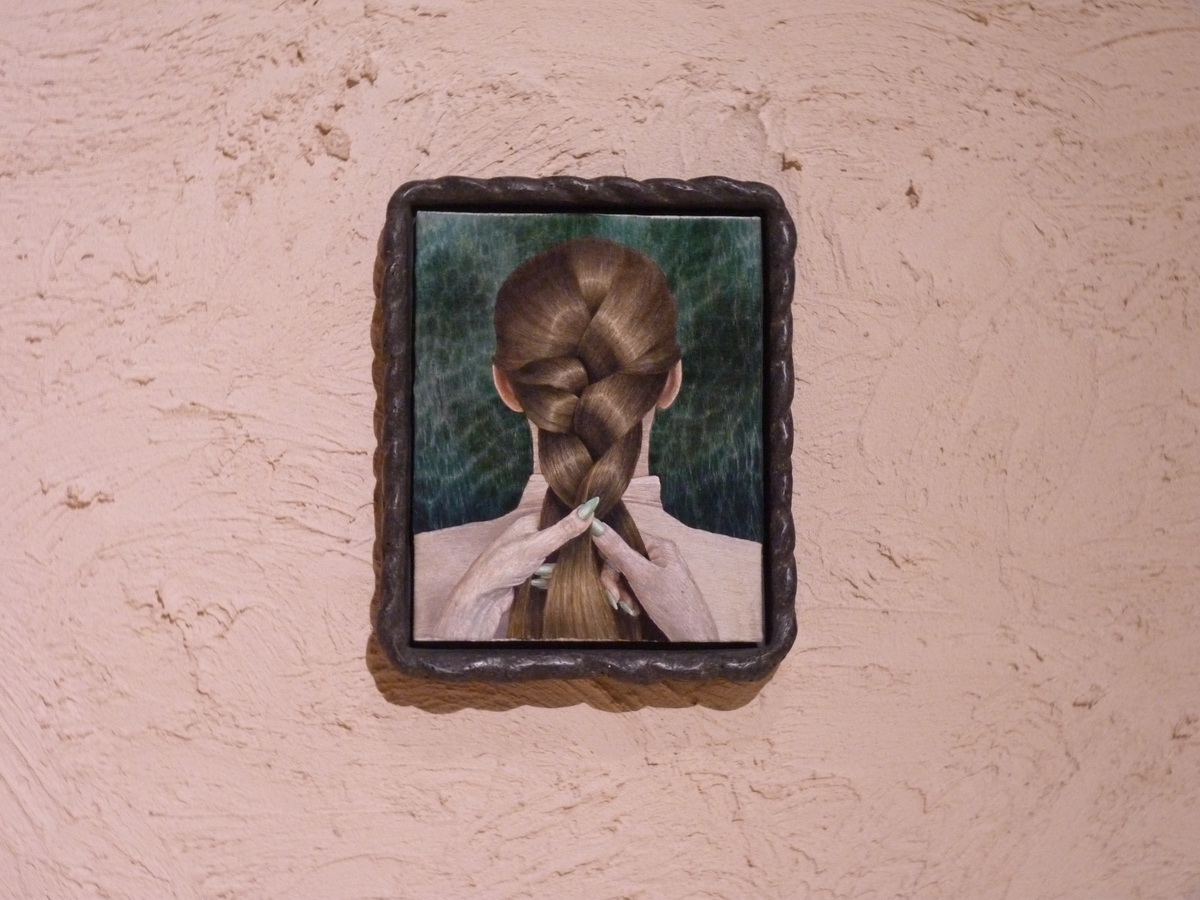
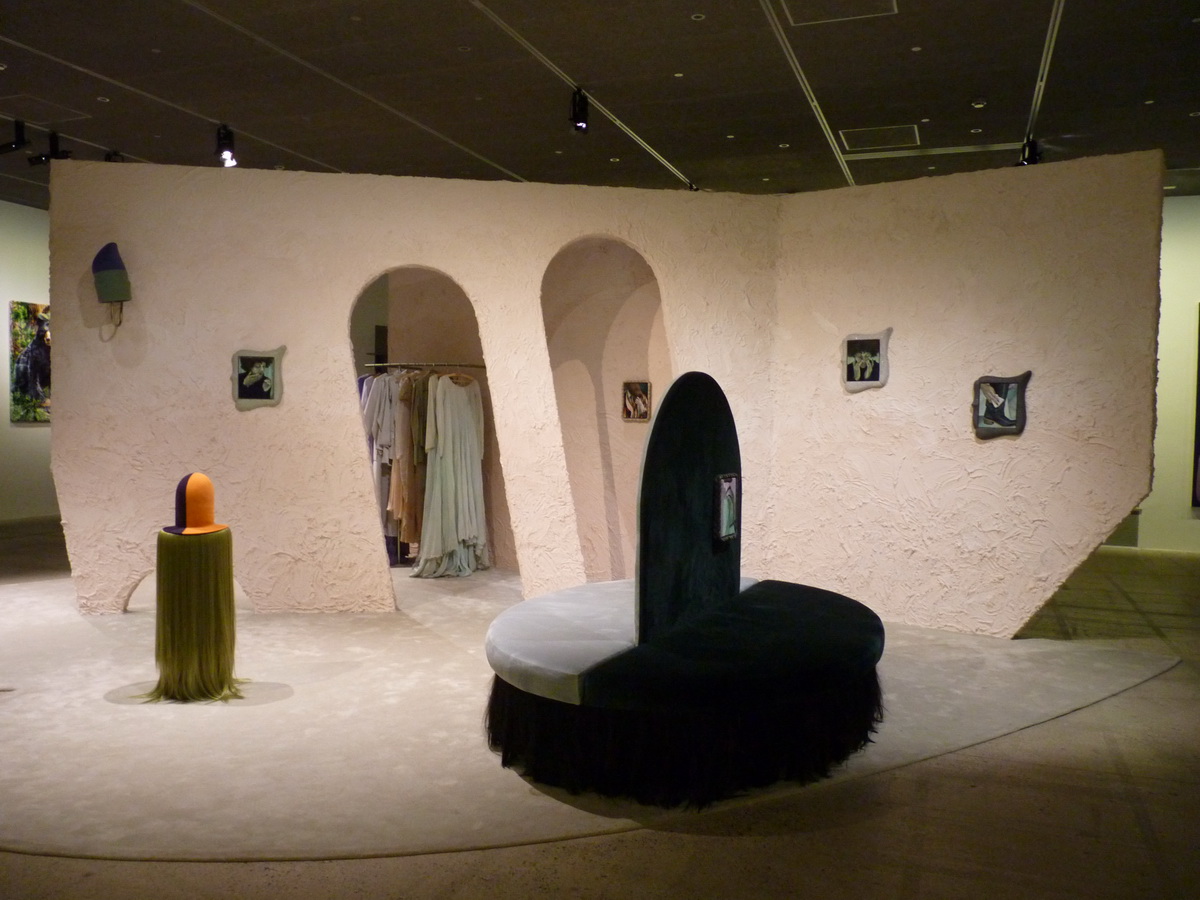
Under an instinctive form with strong sensual colors and expressive brushstrokes, she presents grotesque scenes of human desolation and tragedy. Czech artist Klara Hosnedlova (born 1990) turned early to traditional women's crafts like embroidery and weaving to replace painting.
Her notable, skillful realistic portraits often combine other objects such as vessels, furniture, and clothing through architectural spatial installations, revealing a feminine, intimate, domestic dramatic scene.
Sculpture, Object Spatial Installation: The objects of young artists feature strong appropriation, transformation, montage, collage, and constructive elements.
In the post-consumer era of mass production and waste, artists become post-producers, recreating received objects to bring them back to life, as Dutch artist Hendrickje Schimmel said, "As a post-producer, I select, modify, and assemble previously existing materials, thoughts, and ideas." As for sculpture, there is an intention to find back the soul of creation between tradition and modernity.
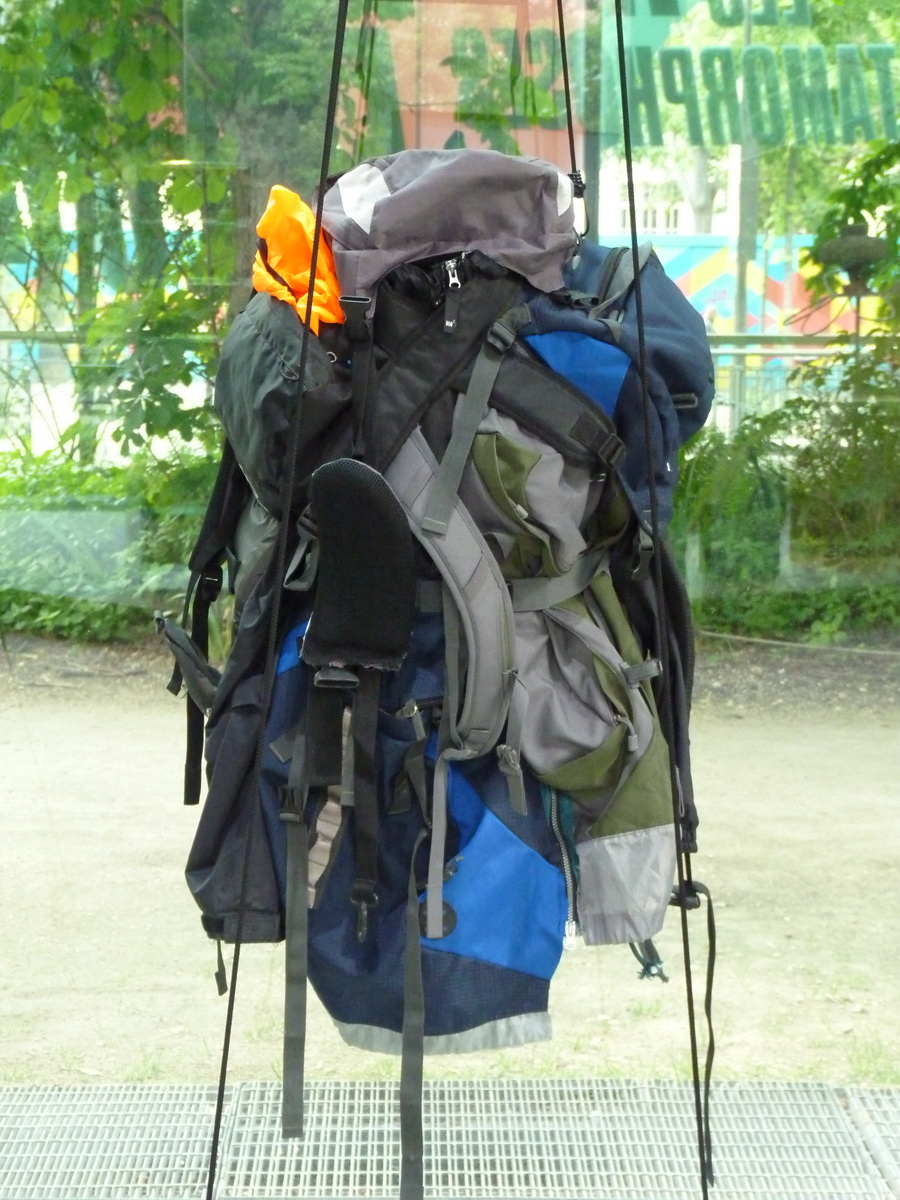
Dutch artist Tenant of Culture (Hendrickje Schimmel) (born 1990) adopts the concept of borrowing as daily creation.
Thus, he receives and appropriates large amounts of old, discarded clothes and sneakers, constructing based on material properties and color attributes: the "works and days" series is a montage of coats and backpacks of the same attribute; the "sample sale" series involves cutting and sewing garments into new ready-to-wear items.
Another object in the same series is composed of sneakers and objects; is it a sample "sale" or an "artwork"? These productions mix clothing, expressing an spectacular survivalism and pastoral nostalgia, revealing marketing problems behind the fashion industry.
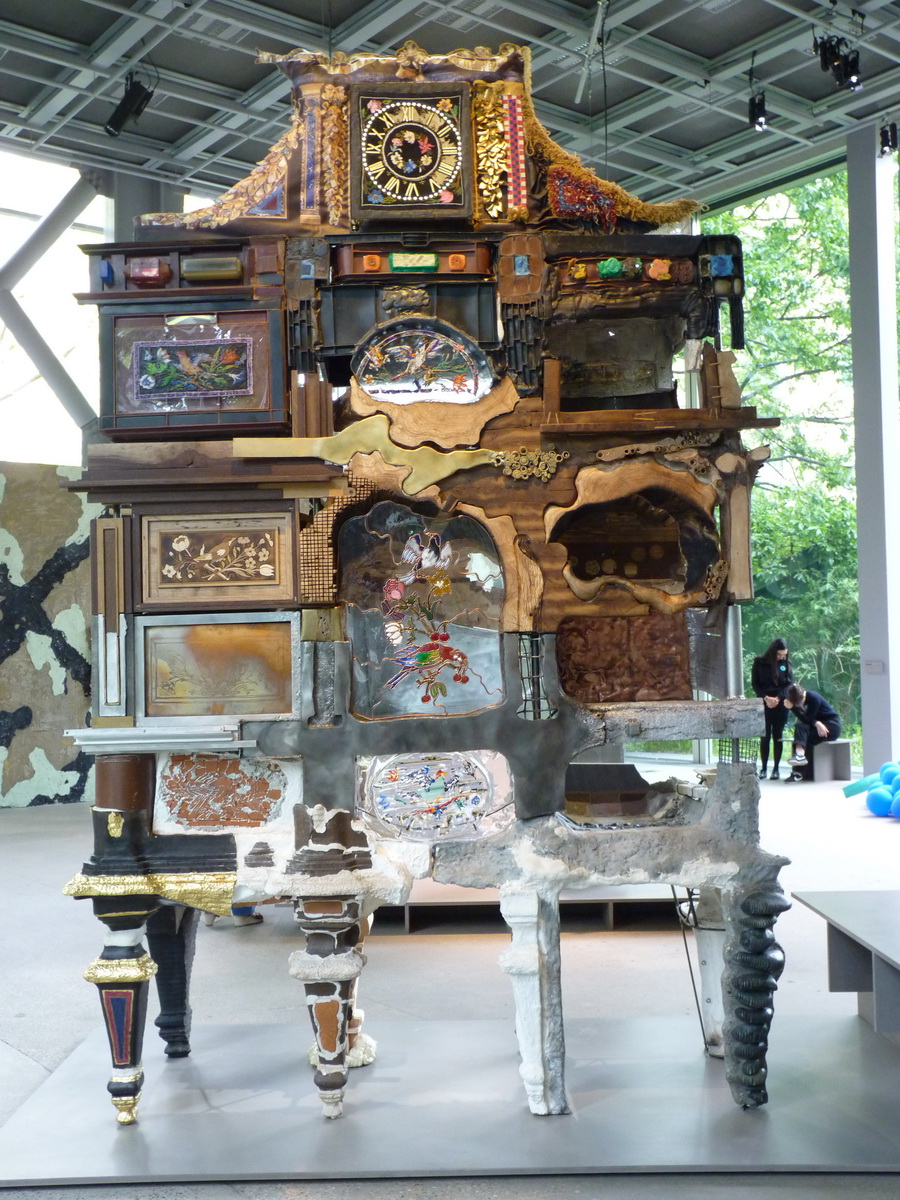
Greek artist Kostas Lambridis (born 1988), in the role of a post-designer, notably reinterprets "new display cabinet elements." He receives and appropriates partial display cabinets of the same attribute, assembling them into the beautiful decorative art of 18th-century Florence, Italy.
Its decoration is extremely exquisite and rich in materials, full of texture and layers, from the finest gold leaf, copper, iron to rough materials like glass, plastic, concrete, and pulp, replicating what he considers the perfect paradigm of sublime vanity.
Another work, "sofa bed elements," inspired by Mediterranean Baroque, develops furniture prototypes under the same logic. French artist Benjamin Graindorge (born 1980) tends toward modern design, with diverse creation between abstract and recognizable forms.
His design focuses on process, often entrusting craftsmen and experts to undertake manufacturing, whether traditional skills (pottery and glass) or the latest advanced 3D digital technology.
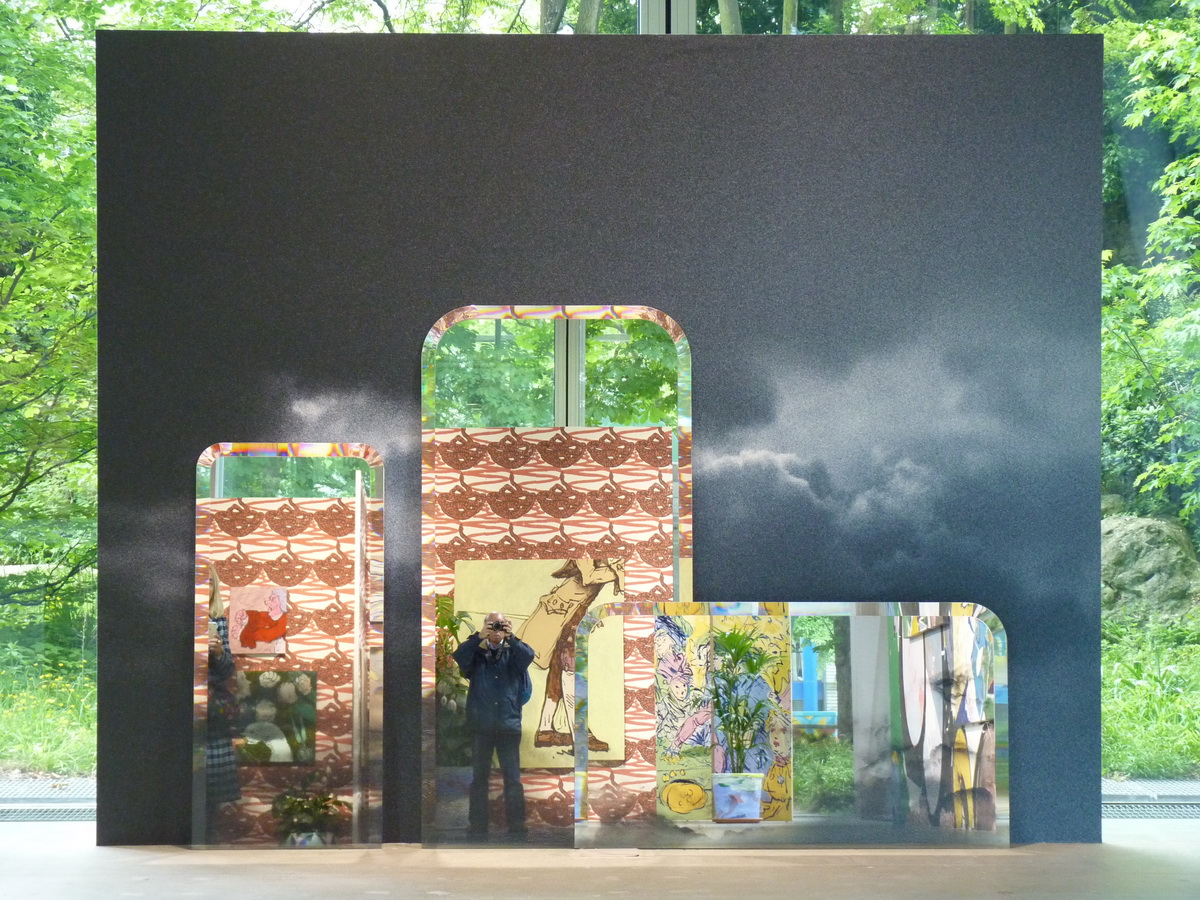
Thus, he says, "By connecting old techniques with contemporary processes, reinterpreting old techniques, the futurist approach is the only solution to finding ways to create new fields." For example, the "edalight" lighting fixture inspired by natural structures, or the spatial installation "mirrormirage" of three large mirror surfaces, where delicate cloud patterns blend with reflections of the surrounding space.
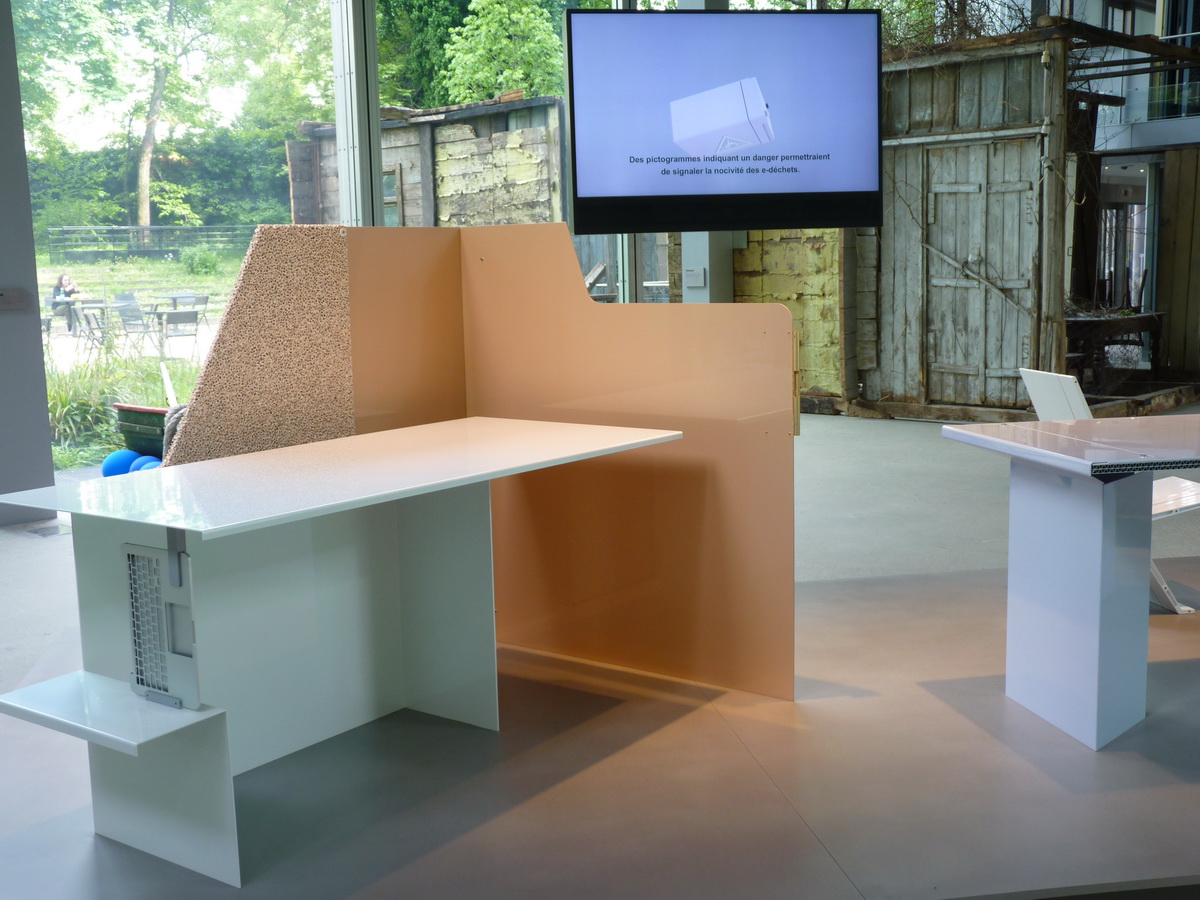
Italian art team Formafantasma (Andrea Trimarchi (born 1983) & Simone Farresin (born 1980)) derives creative elements from current electronic waste, valuing the recycling and regeneration of Earth's limited resources.
Under this ecological awareness, this exploration results in a series of office desks and chairs and electronic products (such as testing microwaves, phone boxes, or gold wire objects) combined to construct office desks and data cabinets, along with a trilogy of videos explaining their electronic waste concepts ((Disassembling), Taxonomy, and 3D animation titled "ore streams cubicle"), distancing themselves from usual images associated with recycling.
The artists say, "Our fascination with objects lies in their ability to represent human history and even possible futures." Polish artist Piotr Lakomy (born 1983) explores the relationship between sculpture and the human body, architecture, and environment.
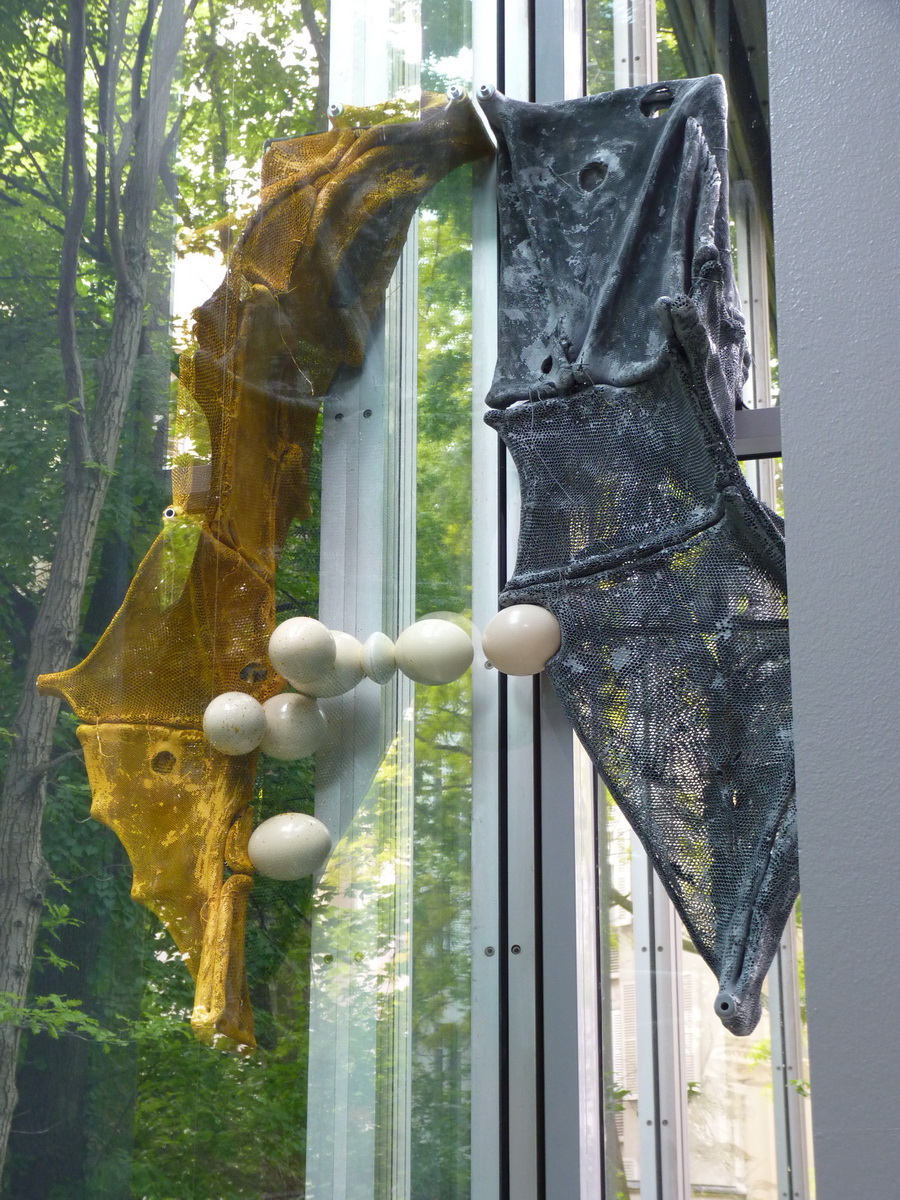
In this exhibition, he presents a set of two organic-form sculptures as an indoor/outdoor spatial installation separated by transparent glass, attempting dialogue between inside and outside, environment and building.
On the sculpture are several symbolic ostrich eggs; whether as basic architectural forms or spheres as shelters for life, one can imagine.
The artist believes, "Our only true home is our own body." French artist Marion Verboom (born 1983) develops forms through the history of sculpture and architecture, constructing analogies between natural forms and human creative substance.
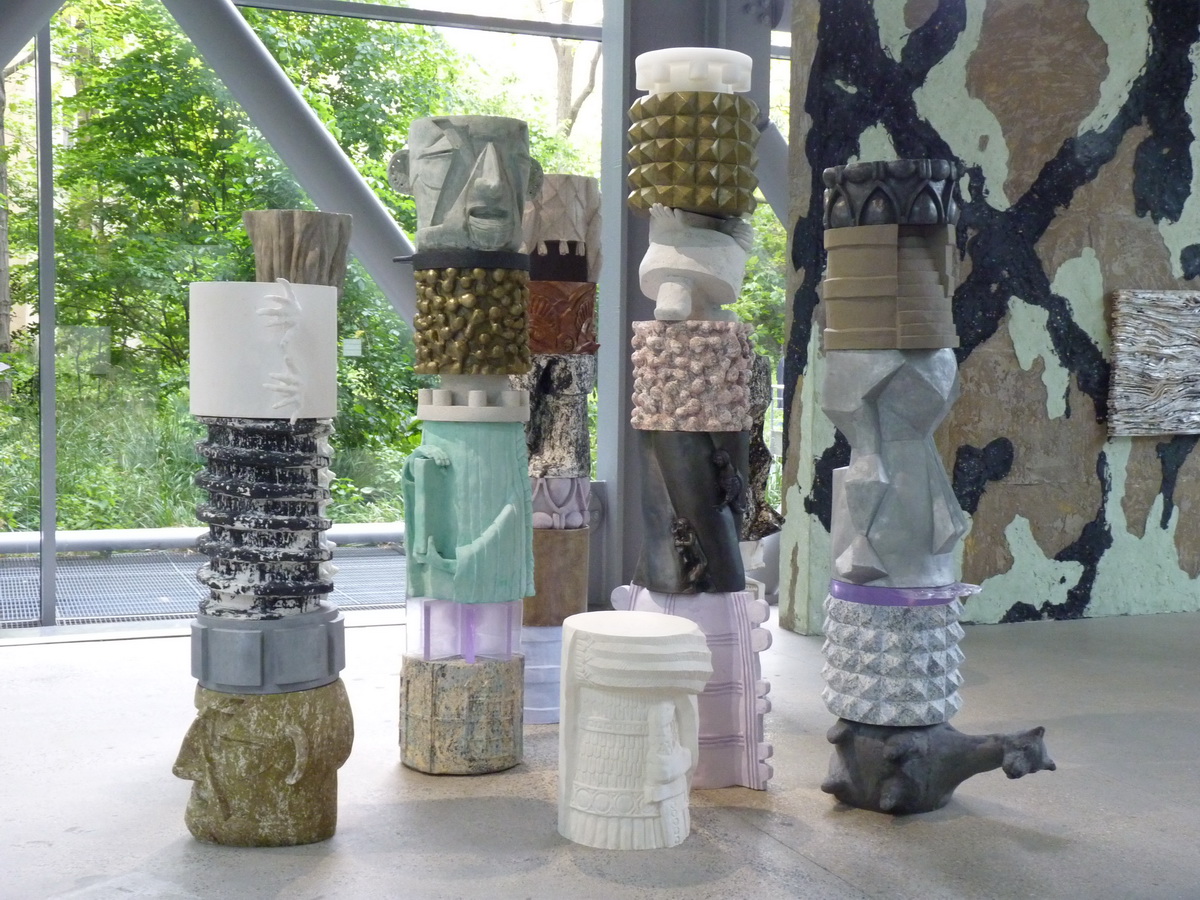
In this exhibition's "Achronies series," carefully assembled materials (resin, plaster, cement, copper, etc.) and colors, molded fragments of Egyptian pyramids, Gothic cathedrals, and Inca temple decorations are combined and constructed in cylindrical forms under analogy and comparison, deconstructing local traditions to form new vocabulary for metropolitan history.
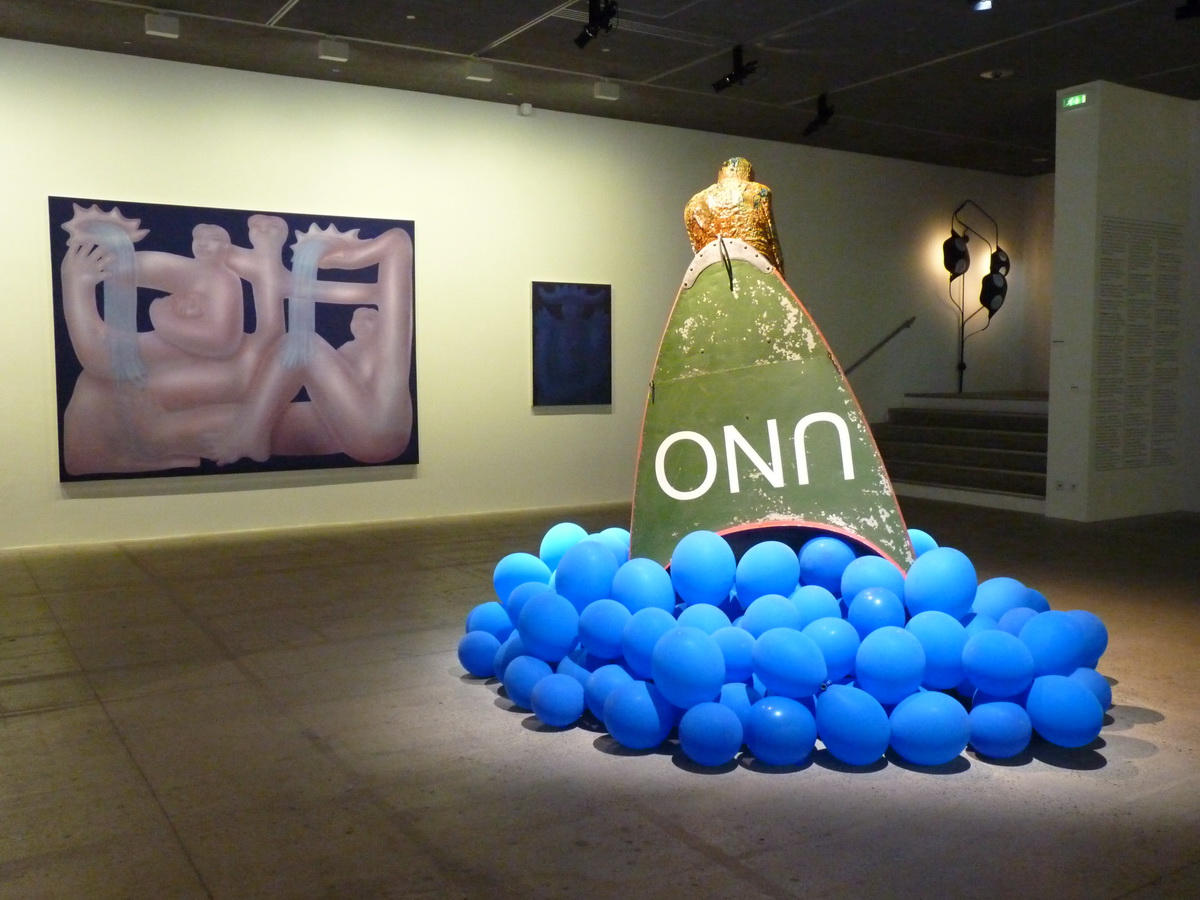
Estonian artist Kris Lemsalu (born 1985) contemplates states of existence and essence through object sculpture installations, performance, self-portraits, and photographs.
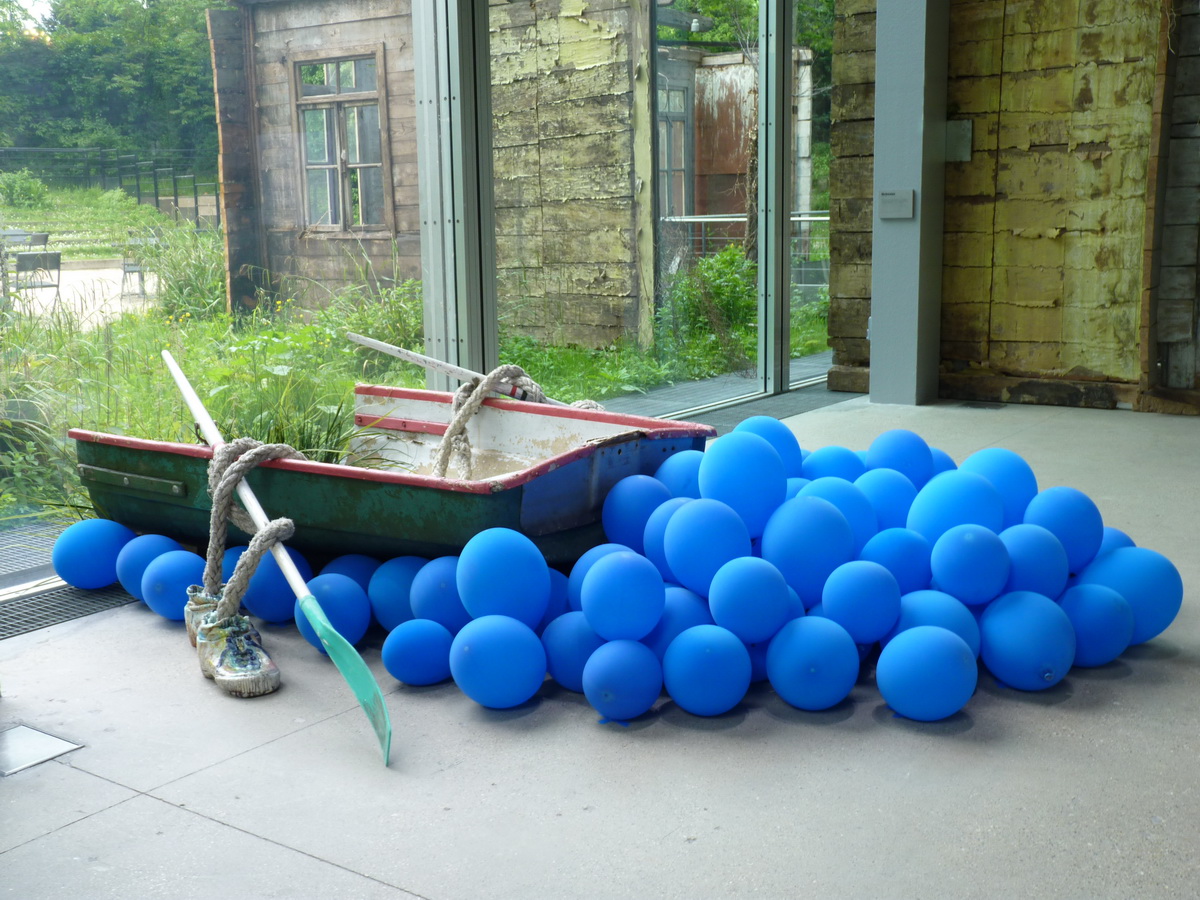
Skilled in appropriating and receiving objects to construct, she depicts an old wooden boat floating on a vast sea of blue balloons.
Half a wooden boat (two oars wrapped in ropes and a pile of old clothes and sneakers) relies against a transparent floor-to-ceiling glass window installation, intending to expand the space outdoors—the title "gently down the stream" and the image of a torso wearing sneakers playing a zither standing upright in the wooden boat before riding the wind and waves—"so let us melt and make no noise" (2017), elucidating various situations of life.
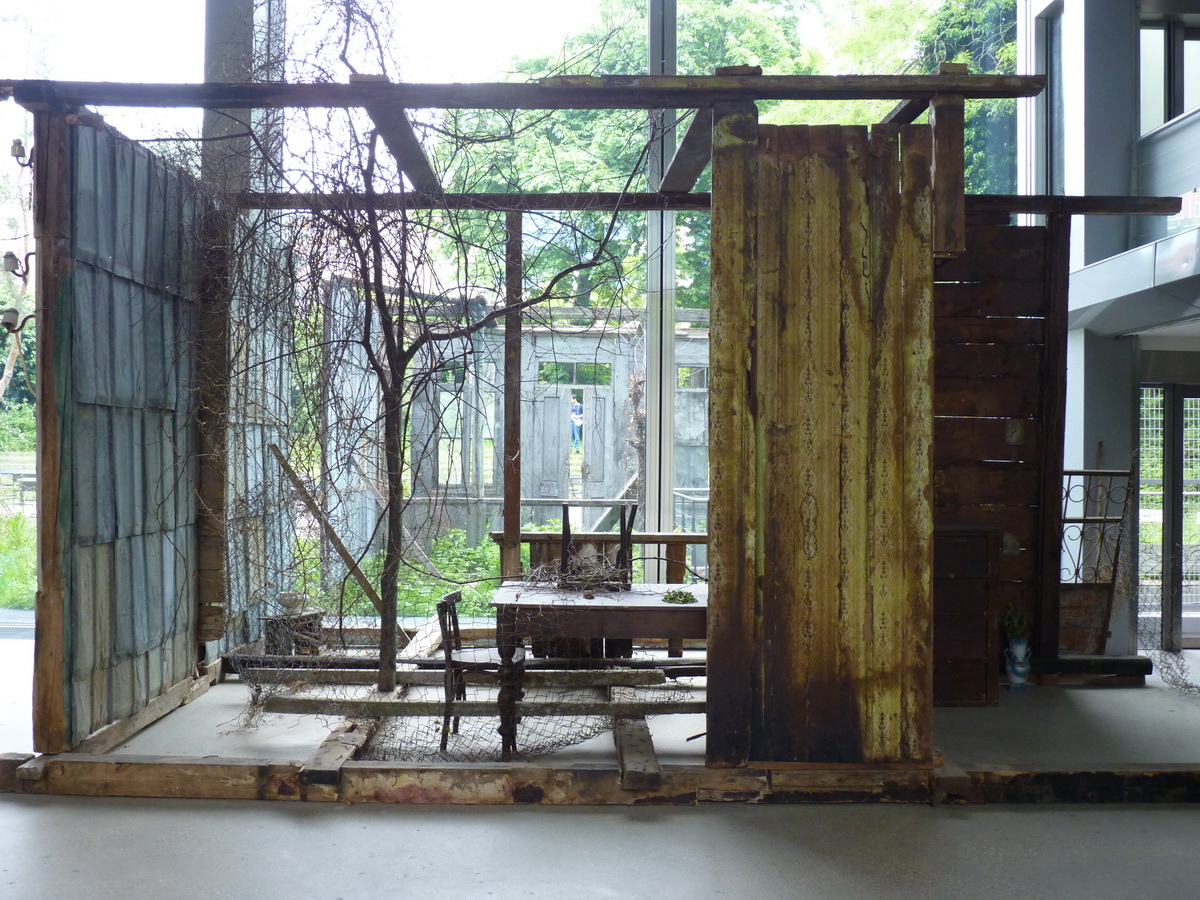
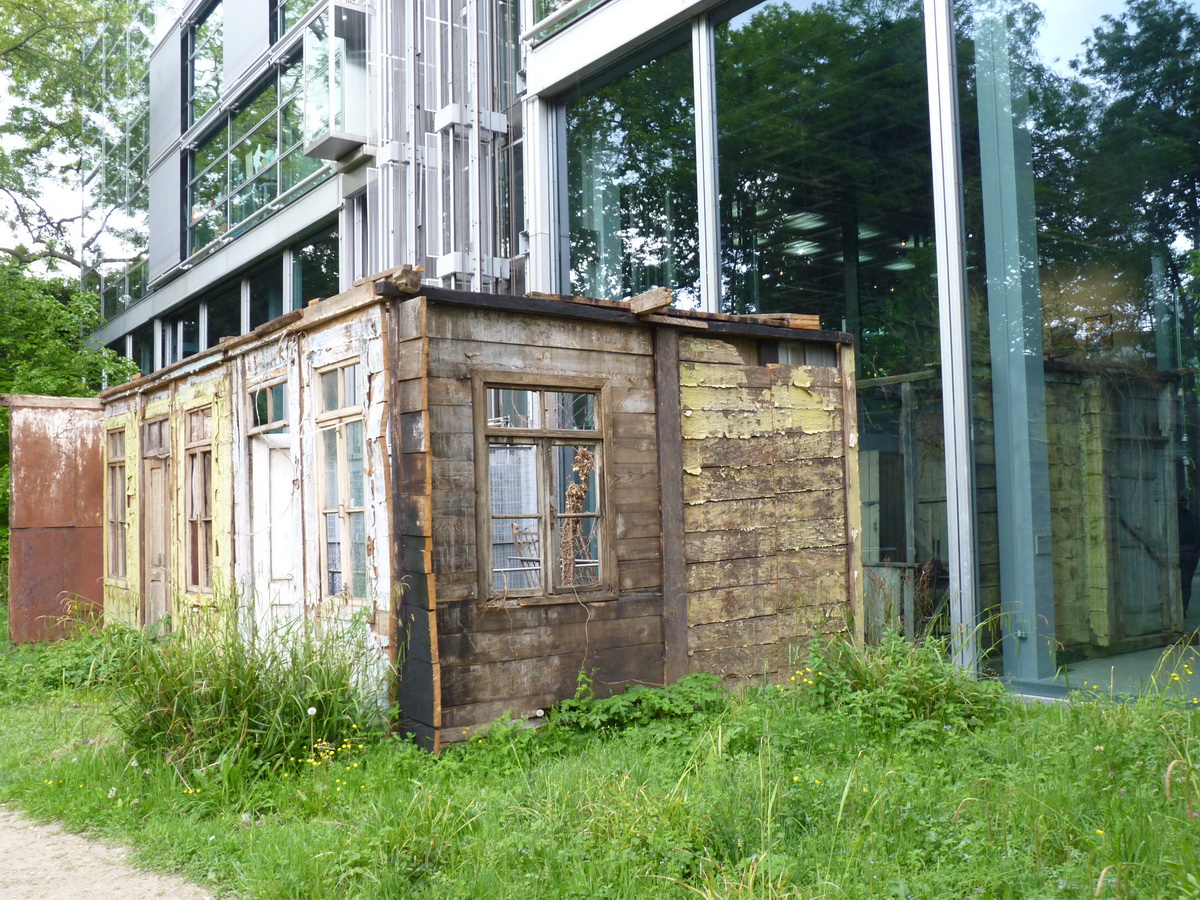
The artist says, "My recent work is more like looking for smoke signals of others at sea." Georgian artist Nika Kutateladze (born 1989), with an architectural background, chooses to face memory, using the concept of time-space displacement to reconstruct and place her hometown's dilapidated residential buildings in this exhibition, adopting indoor/outdoor environmental spatial installations.
Contrasting with the Cartier Museum's modern architecture and environmental space, she elucidates the artist's intimate and collective ethnic memory.
She not only detaches these spaces from different realities but also confronts them materially, seeing her country and society undergoing transformation.
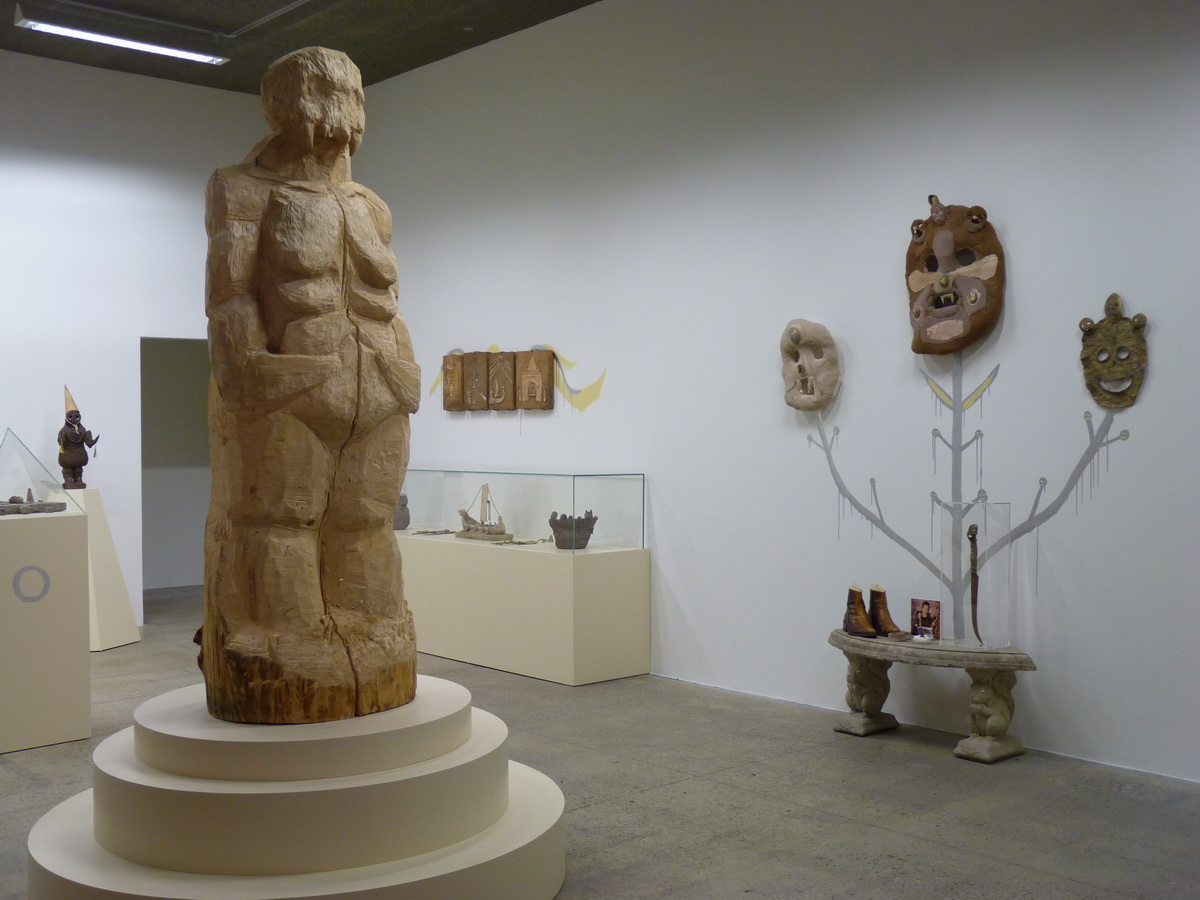
Evgeny Antufiev (born 1986), a Soviet-Russian sculptor from a remote area near Mongolia in southern Siberia, possesses exquisite skills and is adept at mastering traditional material mediums: wood, ceramics, stone, textiles, etc.
His instinctive and sensual works reflect his exploration of the permanence of primitive forms across eras.
Based on the repeated appearance of object types such as masks, pottery bottles, large and small figures, small animals, etc., he presents a fresh, pure, and naive demeanor, continuing a formal dialogue with the aesthetic heritage of civilization and great figures of the past, without temporal prejudice.
The artist says, "Ancient civilizations fascinate me; after they disappeared, culture became a brilliant and perfect crystal." German artist Raphaela Vogel (born 1988) creates spatial installations of diverse combinations, often mixing sculpture, video, sound, and found objects.
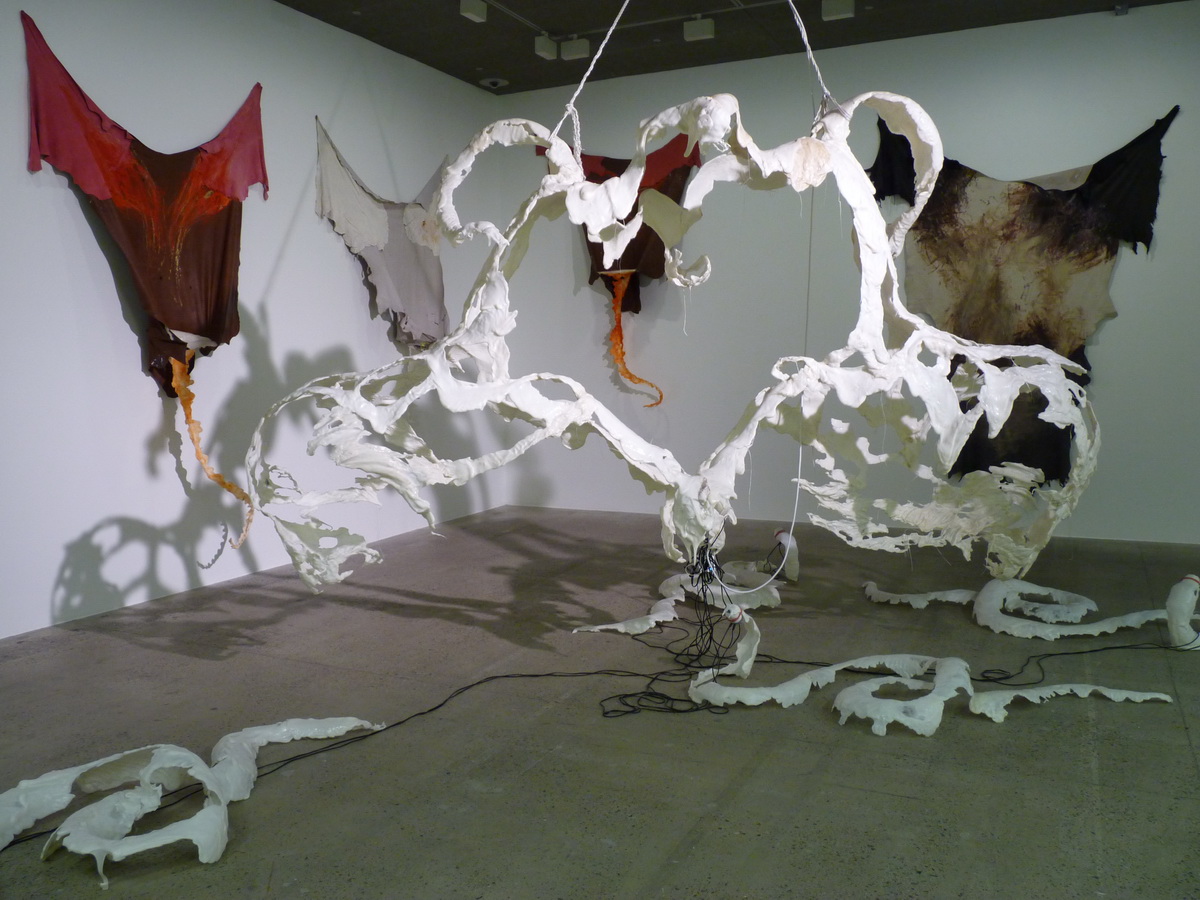
Her inspiring reflective domains stem from feminist theory, mythology, and symbolism. In this exhibition, she exhibits leather paintings and object-combination series.
For example, "Heart flies into pants -2" uses sensual line forms and painting texture traces on leather; "jessica" adds a snake-shed tail to a leather painting, full of magic, hidden violence, and imaginative space.
An extraordinary monumental spatial installation "firm hands -3" reproduces two lions deconstructed into contour line graphics resembling two snakes entwined.
One can still hear light music saying "we are still alive," exploring the opposing dynamics of strength and vulnerability, dependence and independence, courage and despair.
Video and Digital Video: Swedish-Chinese artist Lap-See Lam (born 1990) bases her exploration on investigating the ambiguity of identity and cultural construction and seeking roots through the history of overseas Chinese.
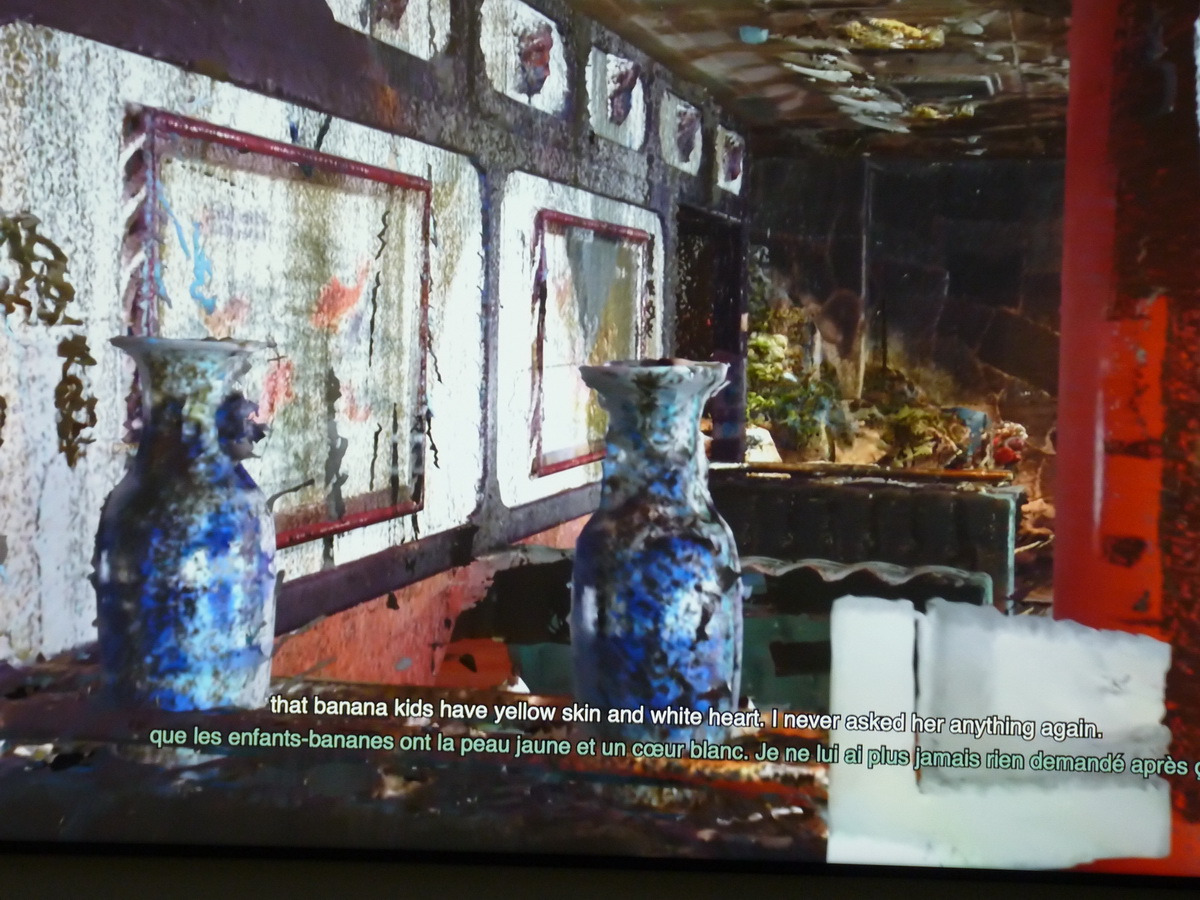
Her narrative virtual 3D animated video "Mother's Tongue" (2018) elucidates the identity constructed by overseas Chinese from their mother's native language.
Through scenes in a Stockholm Chinese restaurant and stories told sequentially by three (and three generations of) Chinese women regarding cultural friction, family, society, and new technology, it depicts the prosperity and decline of overseas Chinese amidst technological changes.
This work more strongly testifies to the cultural reality of migration phenomena, as well as the reproduction of identity and construction of variation over time.
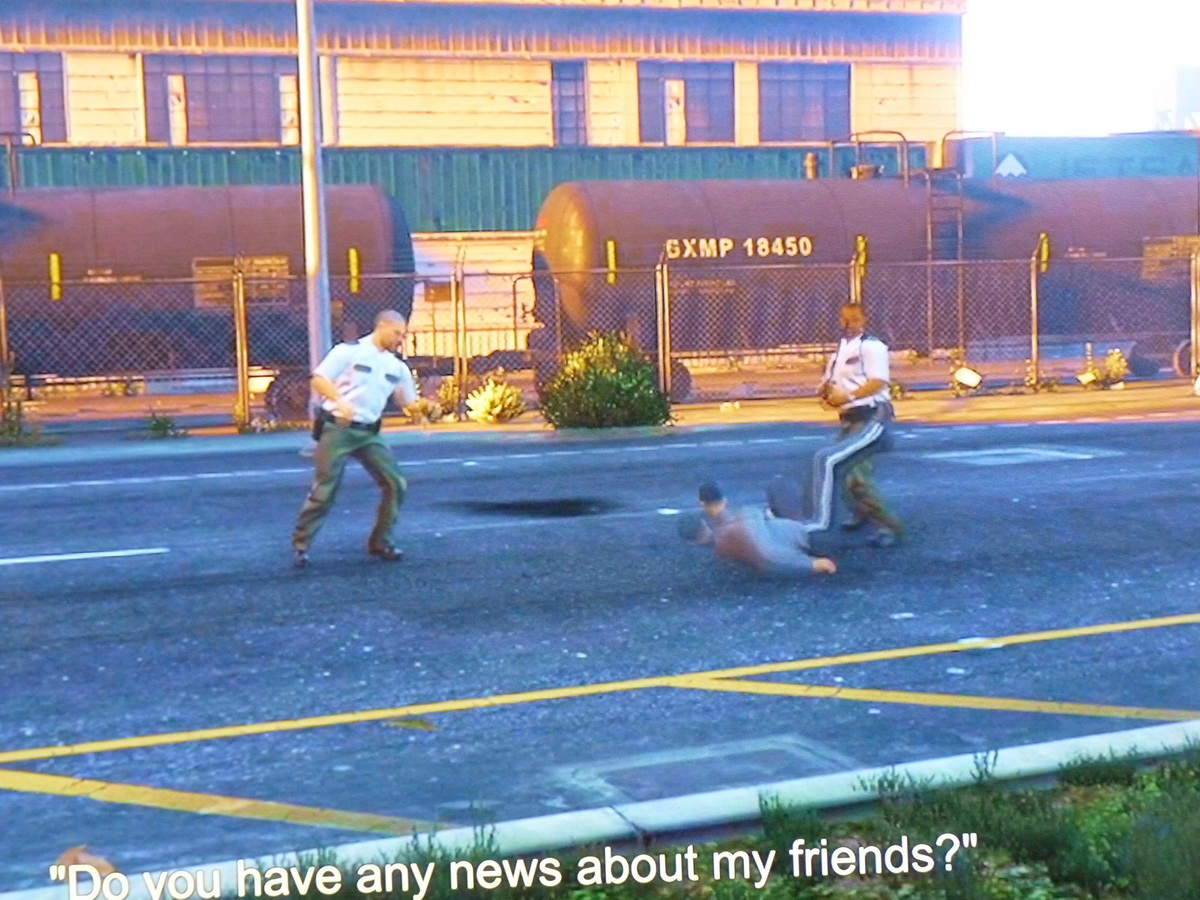
The artist says, "My work carries memory, identity, collectivity, language, and assimilation." Artist Jonathan Vinel (born 1988) draws creative inspiration from the virtual world video games favored by young people today.
"Crying Martin" (2017) comes from "Grand Theft Auto," narrating how Martin's tough friends suddenly disappear.
Swinging between teenage anger and romanticism, Martin desperately searches for them in every corner of the city, drifting step by step towards madness, ending in catastrophic destruction.
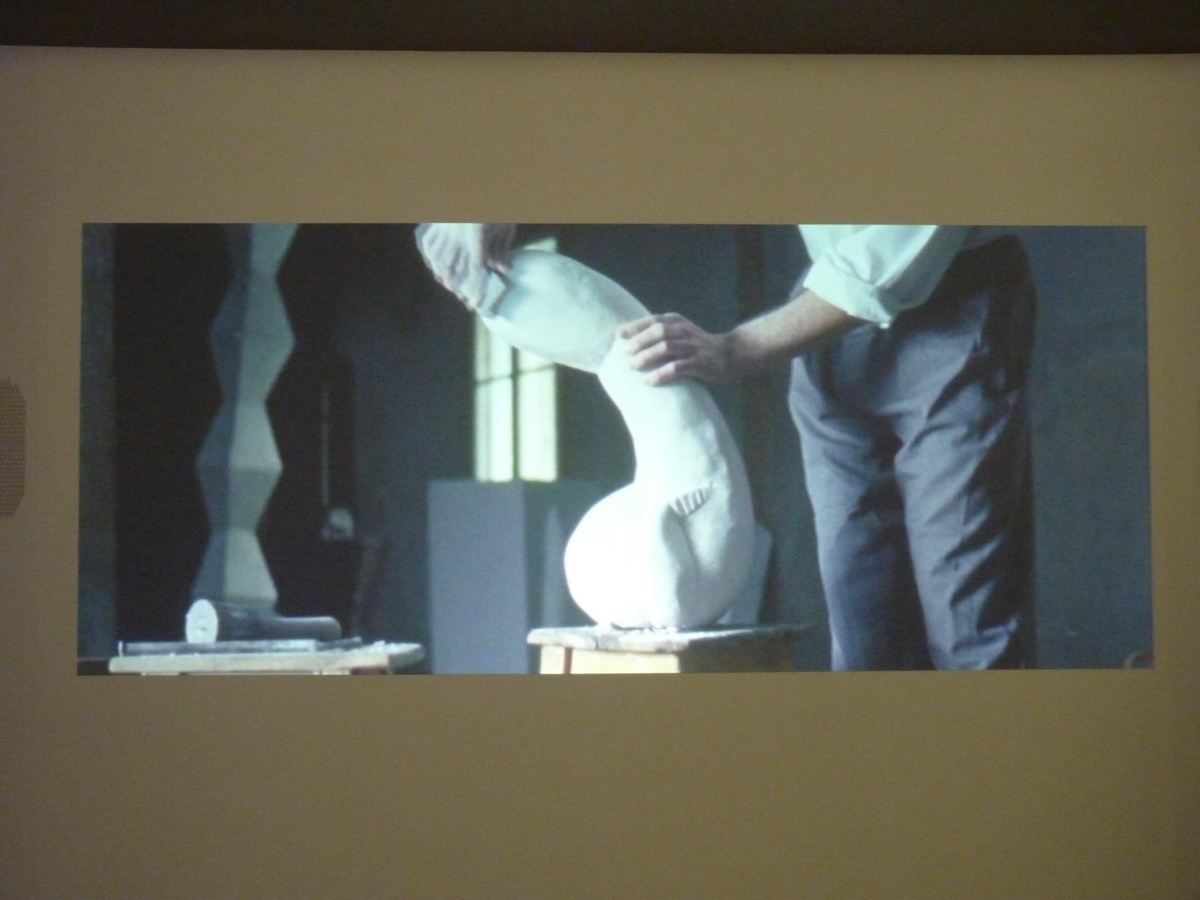
The artist says, "Video games gave me the taste of wandering." Portuguese artist Gabriel Abrantes (born 1984) makes wise and humorous films often reviewing important figures in European culture like Manet or Shakespeare, particularly exploring gender and identity issues.
Here, he reconstructs the origin of the iconic work of Romanian sculptor Brancusi, "A Brief History of Princess X" (2016). This abstract princess statue is very sensual (phallic imagination).
The princess is Napoleon's niece, a pioneer of French psychoanalysis, a portrait statue of Princess Marie Bonaparte, reflecting the nature of artistic creation and the dominant relationship between sexes.
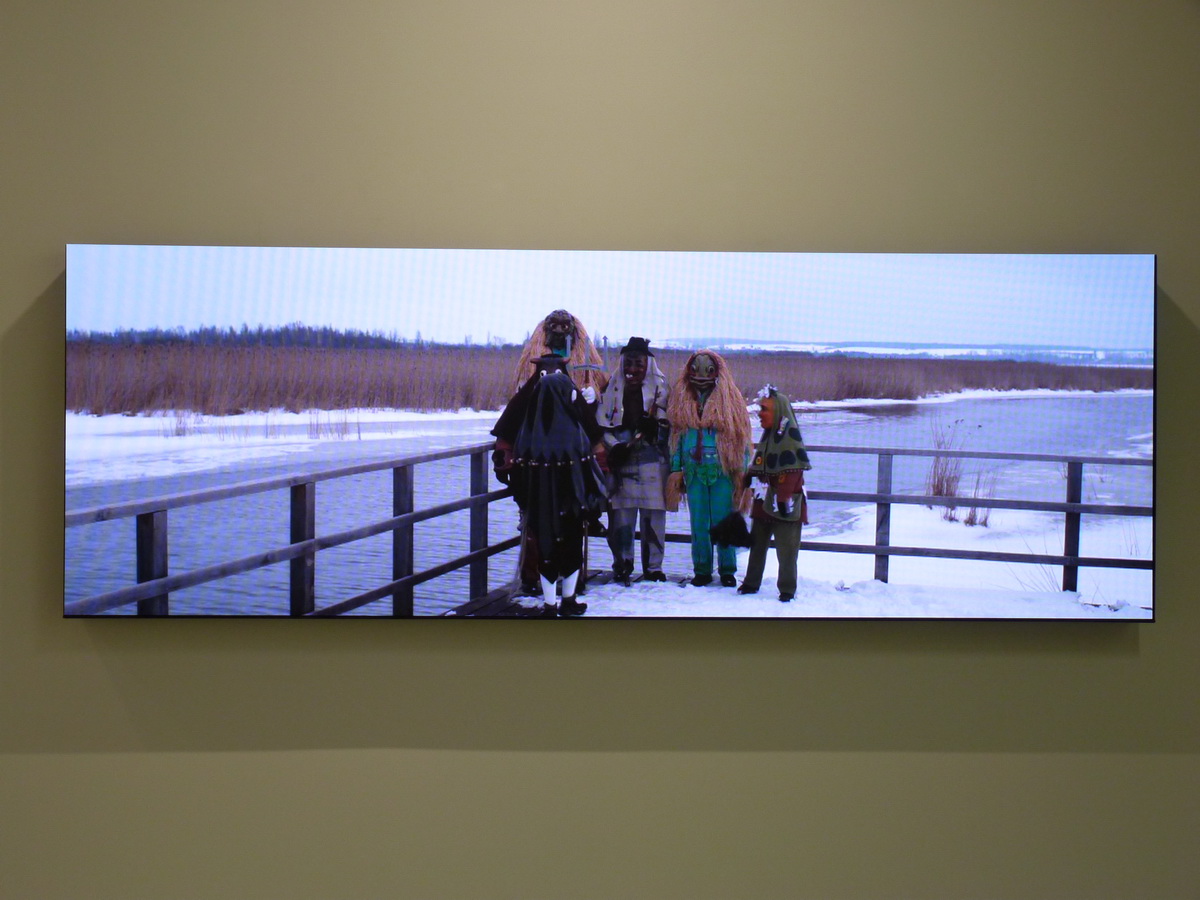
The artist says, "I am particularly interested in humorous anthropology and humor and satire as a form of political protest." Swedish artist John Skoog (born 1985) shows interest in human communities and territories, through collective and personal experiences and poetic or ritualistic projection.
"Portrait de federsee" (2013) uses documentary to explain the spring festival fasnet in the small village of Bad Buchau in the Black Forest of southern Germany, celebrating the coming spring by driving away winter demons.
In this activity, residents transform into primitive plant and animal images, exorcising evil spirits in a metaphysical form to welcome the awakening of the earth.
The artist says, "I try to understand the world through cinema and images, mine and others'." This article refers to the press release for the European Young Artists "Metamorphosis" Group Exhibition and includes statements by all artists regarding their own works.