The Revelation of Truth and the Exit for the Soul: Chen Chi-Hsiang's Solo Exhibition "C'est comme ça"
Non-Mental Image Series No. 21 - Look Here 162x130cm Acrylic on Canvas 2018
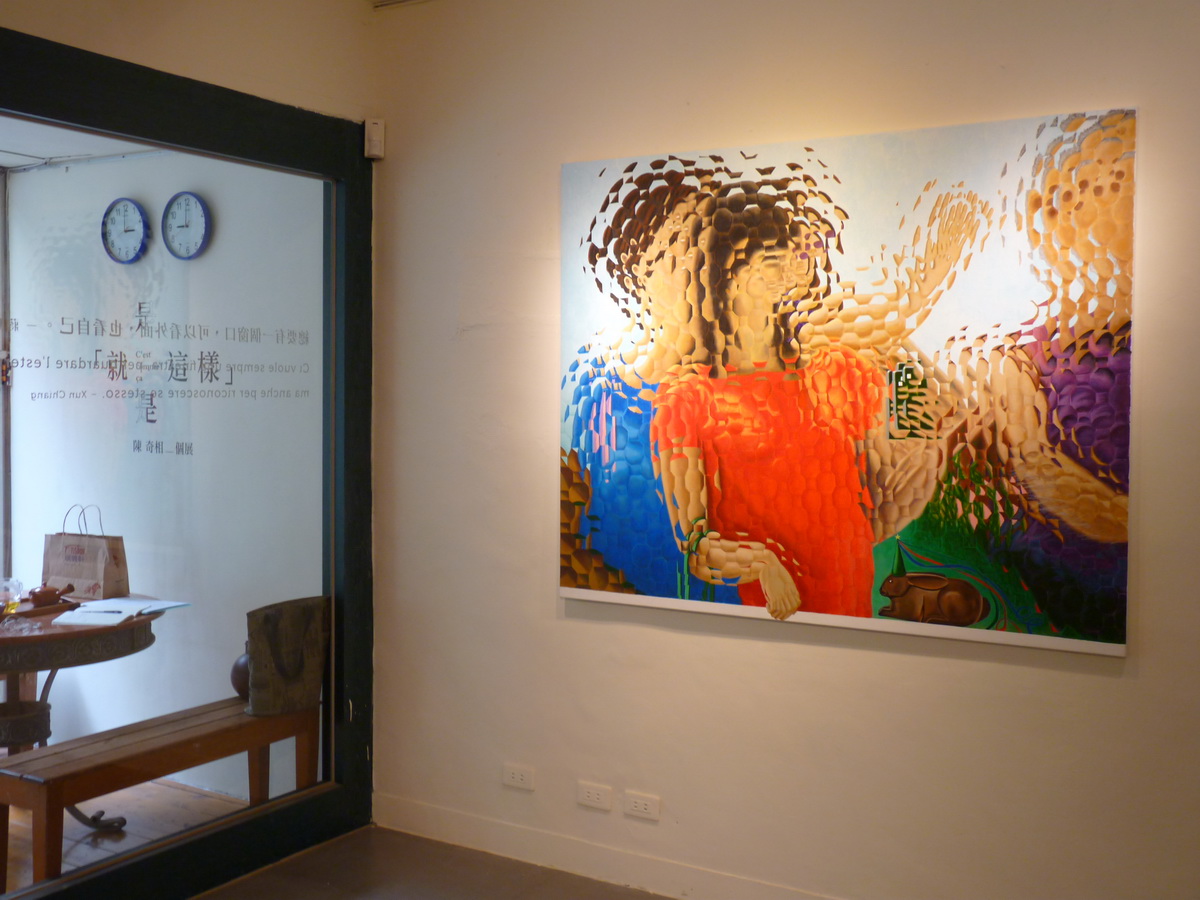
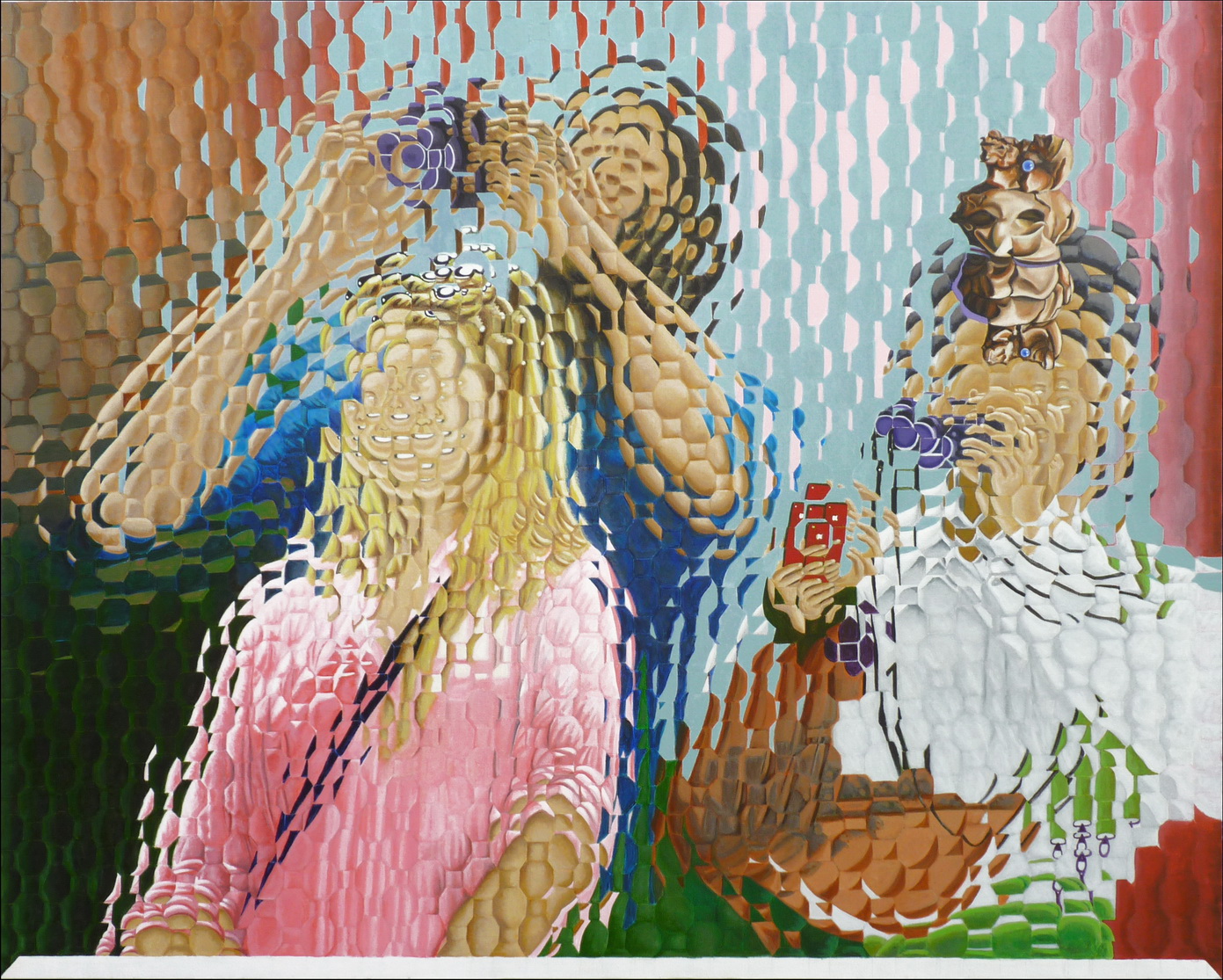
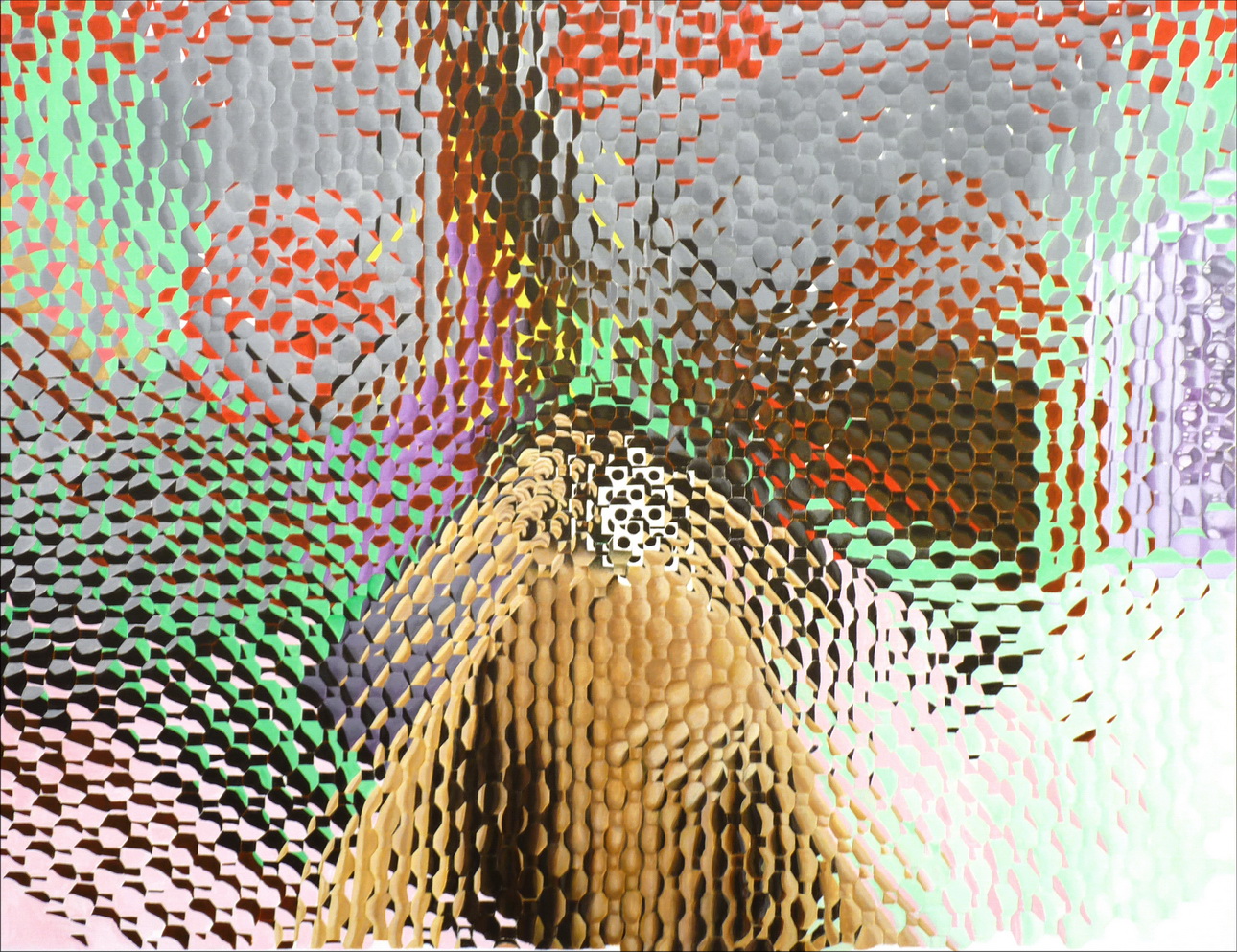
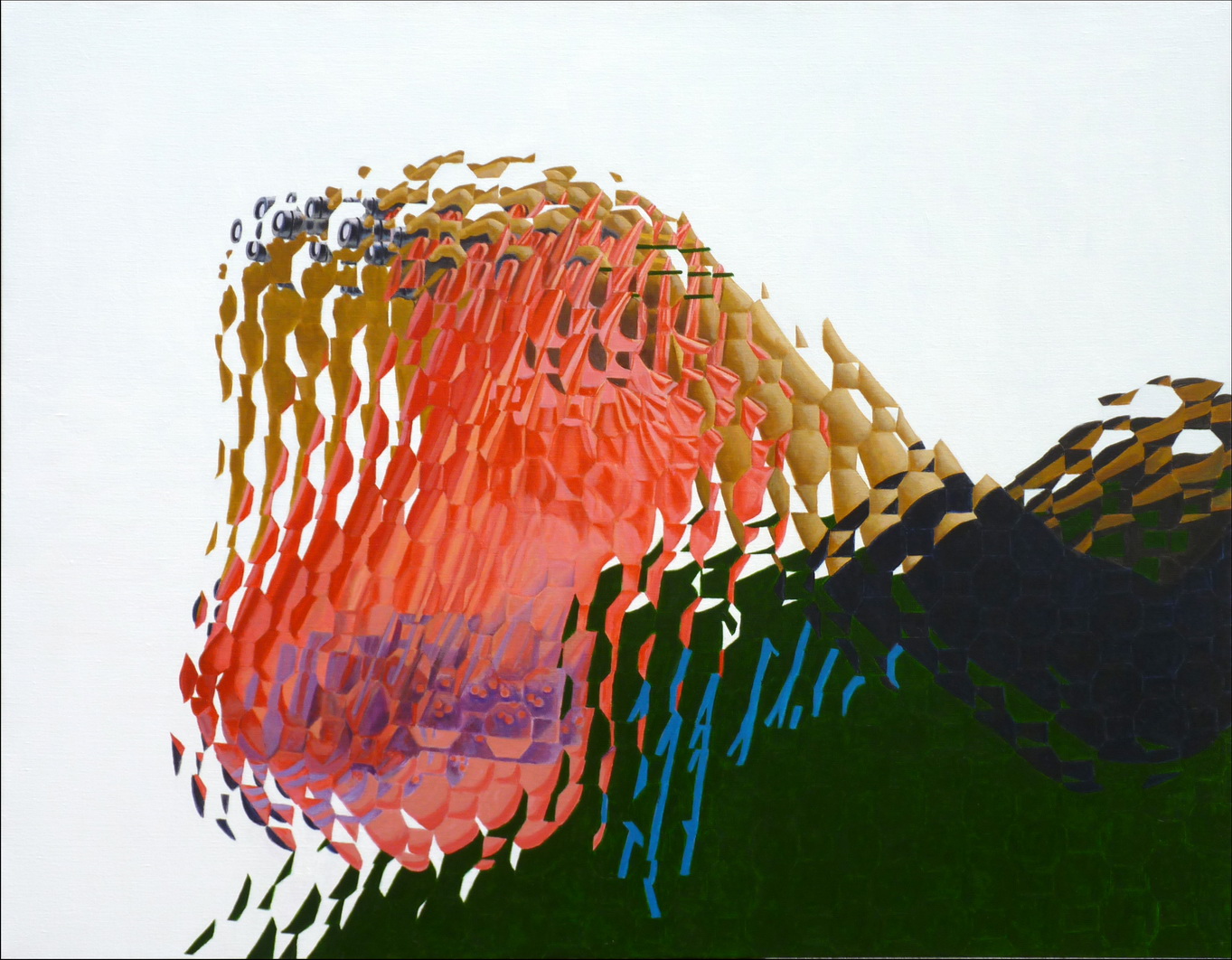
Text / Hsiu-Yun Fang (Natalia Brand) Images / Chen Chi-Hsiang The French-based artist Chen Chi-Hsiang, with over thirty years of creative career, currently has a solo exhibition titled "C'est comme ça" at Gallery Sun in Taipei, displaying his recent "Non-Mental Image Series," including five pairs of mirror-image diptychs and two single paintings. Upon first glimpsing this series, my immediate reaction was that it resembled scenes viewed through frosted glass, or like a honeycomb filled with cells. The uncertainty and unresolved nature of the compositional elements stirred up various possibilities; as a viewer, I suddenly became a voyeur, eagerly peering to find out what lies on the other side. Chen Chi-Hsiang’s work possesses such magic, and moreover, more secrets await our discovery.
The accumulation of architecture. The complex elements in the pictures distort reality, blurring into semi-abstraction, creating a barrier between the work and the viewer, approaching Alain Jacquet’s disguised images and Gerhard Richter’s questioning realism. Chen Chi-Hsiang explores the geometry of octagons and squares in groups, triggering chain reactions that evoke infinity, reflection, symmetry, non-unified perspective, truncation, polyhedra, and tessellated surfaces, comparable to M.C. Escher’s print patterns. His unpredictable geometric color planes, accumulated columns, and cones possess the spatial construction and weight found in Paul Cézanne’s observation.
However, the honeycomb-like structure of the picture is not merely flatly laid out upon closer inspection, but rather a diverse architectural structure with concavities and convexities that can catch light, featuring bright areas and projected shadows. With varying capacities, gradient washes, and mutual borrowing of colors, we feel different temperatures and humidity, even guessing at weather and seasons. Sometimes light and heat brew behind, suddenly seeping through gaps; following the grain, one can also encounter tree rings, as well as traces of weathering and corrosion. Here, we touch the countless manifestations of each geometric particle; no longer just paintings, but many carefully crafted sculptures. No wonder, looking at these works, it seems he has collected all the myriad changes of the world!
Such presentation is no longer just a technical issue or an immediate visual sensation, but a deep connotation, as the artist says: "An organic crystal, like the pattern of the flower of life, also symbolizing the relationship between relationships among cosmic lives, like biological chains and celestial bodies as a whole." The laying out of geometric patterns, the piled-up architecture, is biological, aesthetic, philosophical, religious, and implicitly contains profound artistic redemption.
What is the true face? Almost every work features a startling image—a skull. For example, the pair of hands with only skeletal structure in the corner of "Meeting Without Encountering"; the partially enlarged face in "Itch of the Century," resembling Picasso’s last self-portrait, depicting a face staring directly at death; the repeated skull pattern printed on the T-shirt worn by the young man in "Born of Death"; the face with hollow eyes as a character on the left rear side in "Action Starts"; the combination of yellow-brown and red in "Stillness in Motion" is a human face falling off, about to form the remains of an empty shell. This skull imagery has similar applications in Western art, reminding people of "Memento Mori." However, why does Chen Chi-Hsiang bring in this theme of life and death? As an artist, he does not hide in an ivory tower but goes out to observe contemporary human behavior and social phenomena, making analysis. Electronic virtual images, mobile phones, and cameras frequently appear in the pictures; characters frantically operate, addicted to the digitalized world. Their hollow eyes and stiff expressions reveal nothing but lost souls.
Worth mentioning is that in "Action Starts," the character on the right has a strange creature embedded with two small blue beads on their head, hinting that it is a surveillance camera. Here, Chen Chi-Hsiang perceives the current digitalized social context of "surveillance and governance." This immediately reminds me of George Orwell’s posthumous work "1984," written in response to increasingly terrifying large-scale surveillance phenomena. Like a prophecy, it accurately predicted the future direction of humanity. The omnipresent surveillance here, closed-circuit televisions everywhere, virtual images on the internet, and social media have become police controlling thoughts. People’s intoxication and worship of "Big Brother" have persecuted individual and independent thinking. Furthermore, fast and short information and images fragment knowledge and visual senses, causing people to lose judgment. In fact, what we face today is the corruption of human nature and ideology, a great catastrophe for humanity. Chen Chi-Hsiang’s works sharply reflect this dystopian real world.
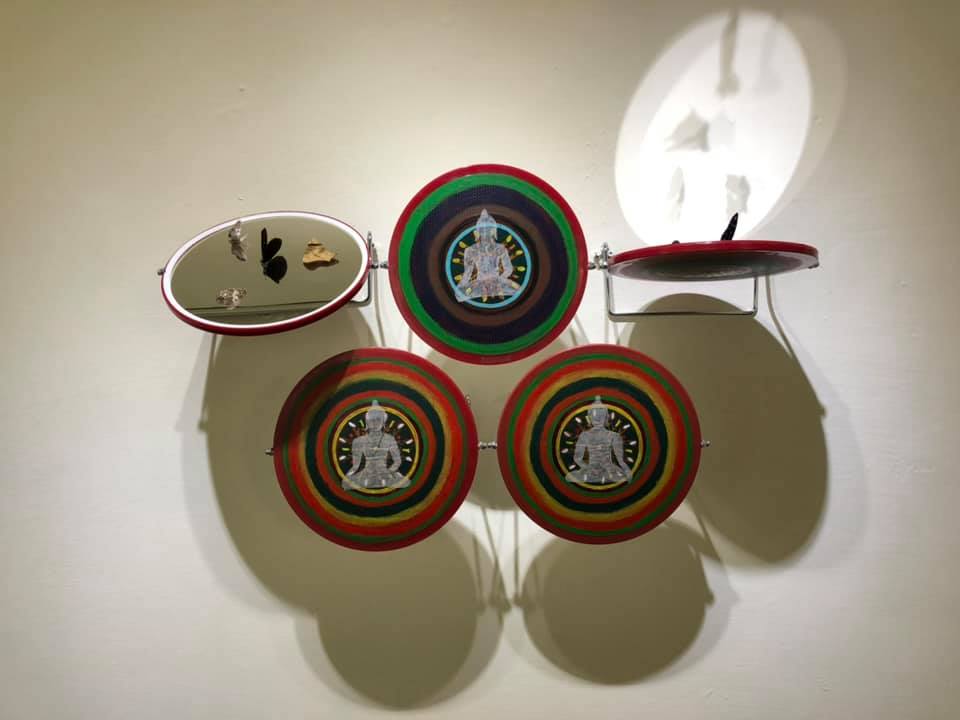
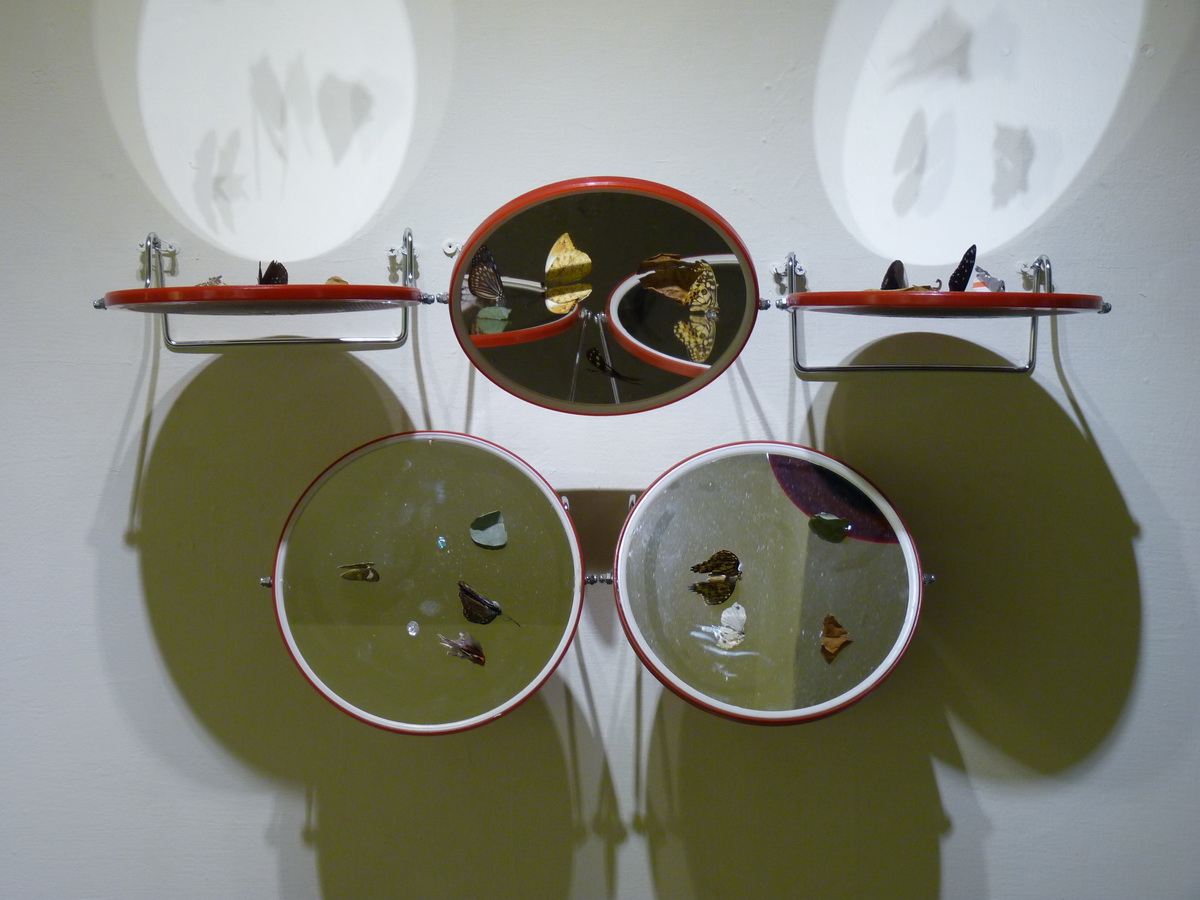
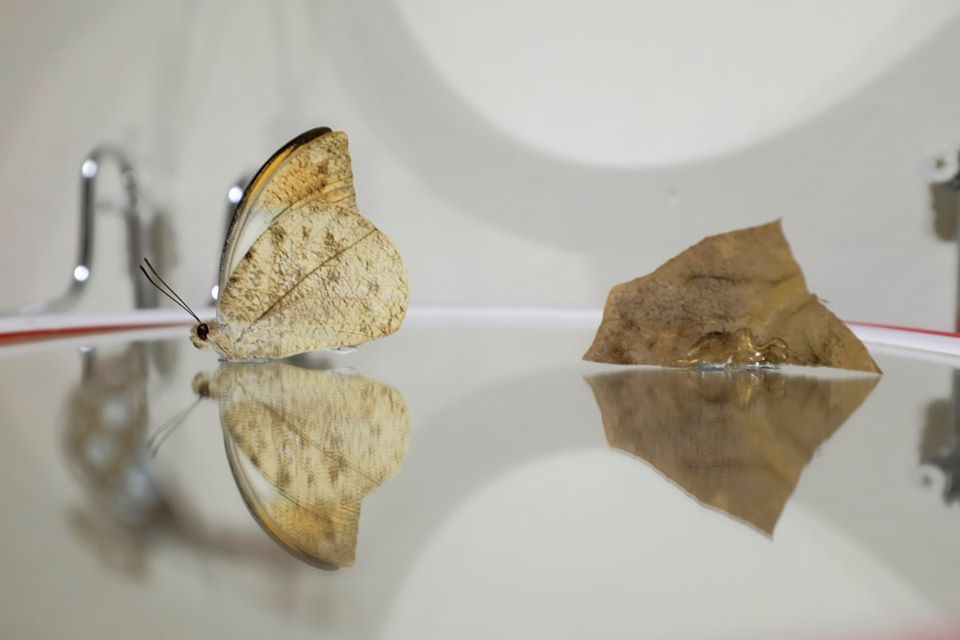
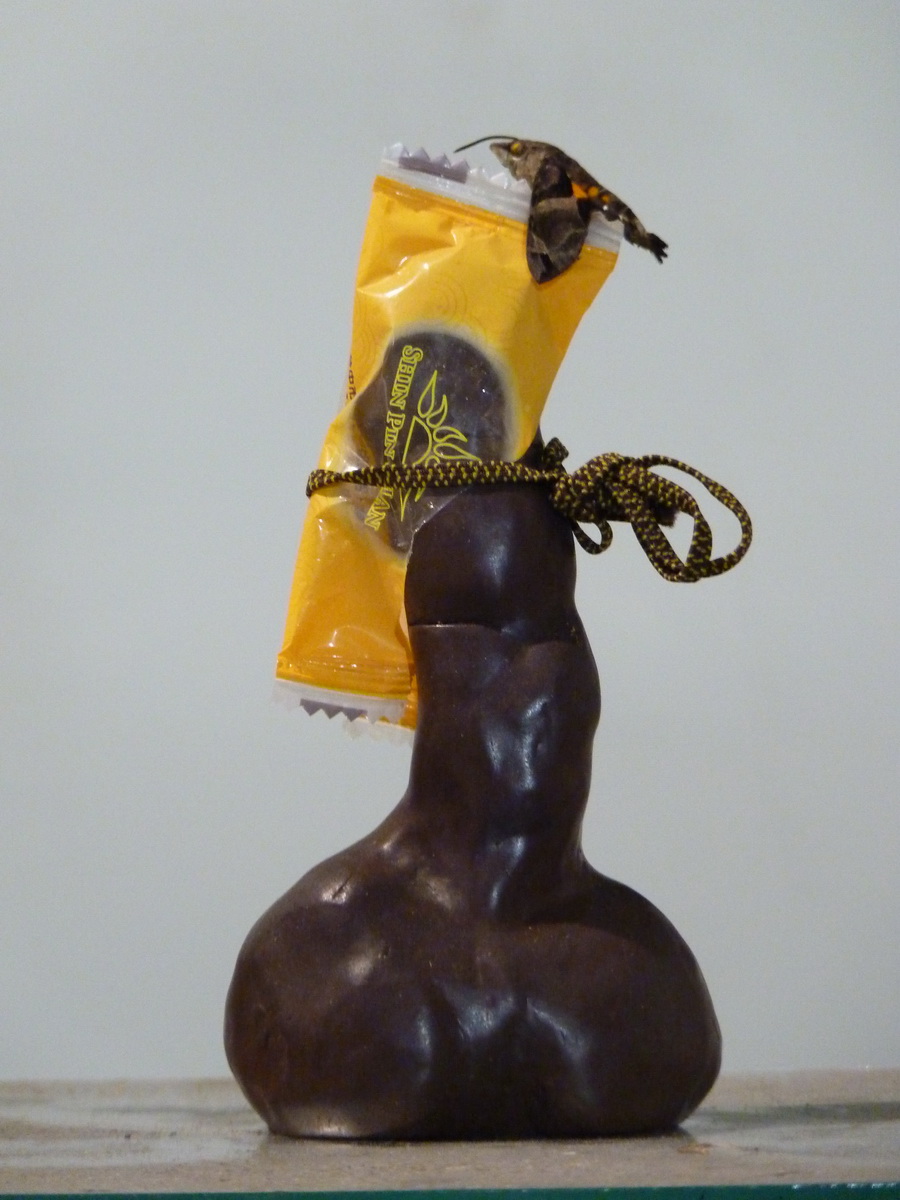
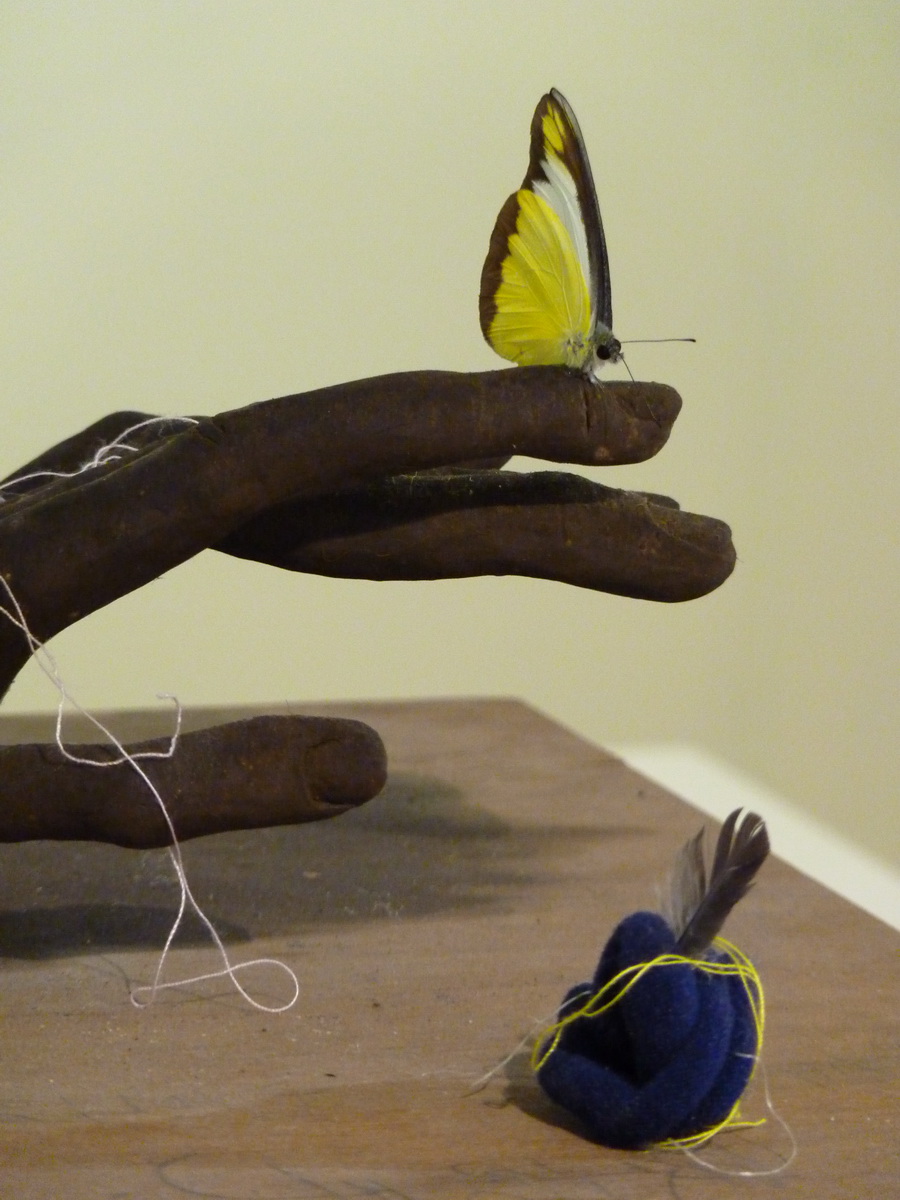
Flying butterflies. Also displayed are his "Butterfly Effect Series," which are mirror space installations and object works. In "Illusion of Life," viewers can change the space and light/shadow effects by rotating the mirrors and changing viewing angles, reflecting multi-faceted scenes and situations, embodying the Buddhist saying that everything in the world is impermanent. In "Dream of Life," delicate long-handled sculptures are accompanied by a purple-blue hair tie holding a feather and a pink candle, narrating the fleeting nature and hope of life. In "Desire of Life," an iron sculpture of a phallus wears a plastic cap top, where the fire of desire burns, becoming a source of motivation and creativity. The butterflies here remove indifference, injecting warmth and saturation; they are also symbols of youthful life and weapons to tame authoritarianism and human greed. Look! By introducing butterflies, the soul also flows in.
Chen Chi-Hsiang, from the 2000 "Common Memory of Rice," through "Observing the Mind, Surveying the Realm," "Mirror Flowers Water Moon," "Spring Dream - Non-Dream," "Realm - Original Homeland," "Original Image Like Appearance," "Like Mirror - Like Realm," "Dream Within a Dream," to the recent "Non-Mental Image," this extension of mirror images is the main axis of his aesthetics. "Non-Mental Image" and "Butterfly Effect" appear in the same field; microscopic particle vibrations reflect human poverty. Rarely, this artist knows how to break free, loosening the ropes binding the mind, turning towards macroscopic spiritual transcendence. A true artist is indeed someone who knows how to truthfully reveal the appearances of the world, yet can lead people to find the exit for soul elevation.
This article was published in Artist Magazine Issue 539 (April 2020) P.266 & P.267 Written by Hsiu-Yun Fang (Ph.D. in Art History, University of Edinburgh, UK)