Paris Horticultural History: Medieval Gardens
(Top) The rose garden dedicated to the Virgin Mary in the bishop's courtyard behind Rouen Cathedral in Normandy is a model of medieval gardens. (Bottom) One of Paris's most unique medieval gardens lies behind the Cluny National Museum of the Middle Ages.
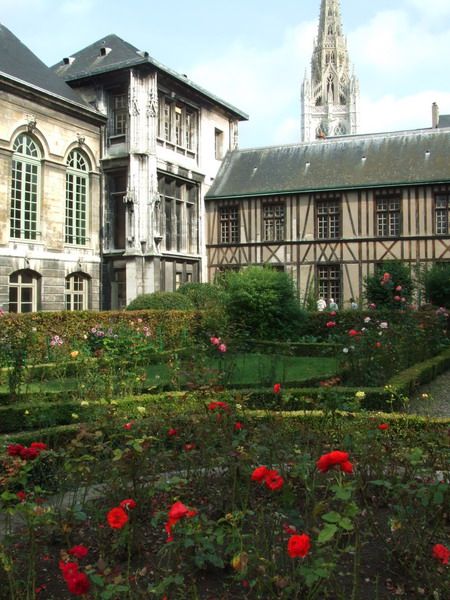
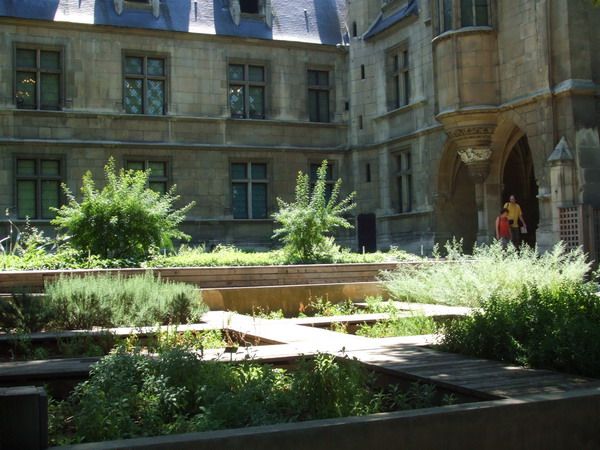
(Top) The rose garden dedicated to the Virgin Mary in the bishop's courtyard behind Rouen Cathedral in Normandy is a model of medieval gardens. (Bottom) One of Paris's most unique medieval gardens lies behind the Cluny National Museum of the Middle Ages. When mentioning French garden art, one immediately thinks of the magnificent Versailles Palace Gardens, Luxembourg Gardens, and Tuileries Gardens. These splendid royal gardens are all uniquely gathered in the capital city—Paris. Therefore, when people discuss the history of French garden art, narrowing it down further becomes the horticultural history of the capital city, which best represents the overall development of French garden art. From vegetable and herb gardens in medieval monasteries, through the dazzling gardens of the Renaissance, to the rigorous and perfect French gardens, the natural English gardens, and even today's modern urban gardens, everything is present. Thus, while French horticultural history is not merely the horticultural history of the capital, the latter is sufficient to reveal the evolution of overall French garden art.
Medieval gardens: The development of Western garden art was established on two major types of gardens from the Middle Ages; one type was practical and functional, such as the symbolic vegetable gardens in monasteries. The other type was aesthetic and served entertainment purposes, such as the gardens of feudal lords and the emotional gardens of poets. This concept of seeking an earthly paradise (Pays de Bonheur) originated from the Garden of Eden in the Bible. The capital city's gardens in the Middle Ages were no exception; within these powerful monasteries, surrounded by high city walls, there were vegetable gardens, herb gardens, and orchards. (One of Paris's most unique medieval gardens lies behind the Cluny National Museum of the Middle Ages; this is a garden reconstructed in the 1990s.)