The Historical Context of Mannerism
(Fig. 1) Portrait of a Woman by Pontormo, 1530-40, 89x70 cm, Kunstinstitut Frankfurt. (Fig. 2 left) Venus and Angels by Correggio, c. 1525-26, 188.5x125.5 cm, Louvre. (Fig. 2 right) Christ on the Cross by Gre…

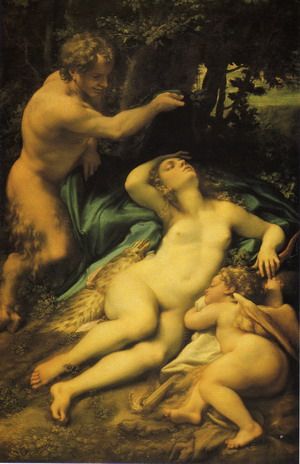

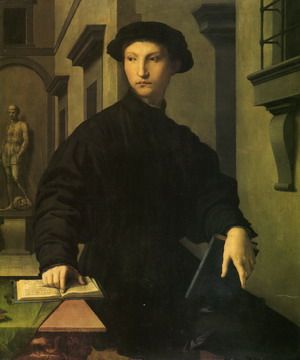
(Fig. 1) Portrait of a Woman by Pontormo, 1530–1540, 89x70 cm, Kunstinstitut Frankfurt. (Fig. 2 left) Venus and Angels by Correggio, c. 1525–26, 188.5x125.5 cm, Louvre. (Fig. 2 right) Christ on the Cross by El Greco, 1585–1590, 260x171 cm, Louvre. (Fig. 3) Portrait of Ugolino Martelli by Bronzino, c. 1541, 102x85 cm, Staatliche Museen Berlin.
The development of Mannerism was closely related to the social, political, and religious beliefs of the time, as well as shifts in intellectual understanding. Many artists, literati, intellectuals, and religious figures experienced significant spiritual crises amidst these epochal developments in politics, religion, and intellect, and within a fundamentally transformed worldview. The sixteenth century marked the West’s great discoveries (such as new sea routes to the New World and circumnavigation of the globe), but it was also a time when Westerners began to question established truths (as intellectual enlightenment led to scientific verification clashing with faith). The spiritual unrest and nervousness caused by the Protestant Reformation and Counter-Reformation, along with associated wars, contributed to Europe’s birth pangs.
The Florentine Mannerist school was deeply influenced by Savonarola’s religious reform movements. General characteristics of Mannerist painters include: 1. Distortion of form; 2. Simplification of color; 3. Sexualization of imagery. Key features of the Mannerist style include deep perspective, contrasting effects, emotional anxiety, nervous colors, and ornate effects. (Comparing Raphael’s works with those of the Mannerists may yield further insights.)
Most representative Mannerist painters include Francesco Salviati (1510–1563), Giorgio Vasari (1511–1574), Andrea del Sarto (1486–1530), Lorenzo Lotto (1480–1556), Rosso Fiorentino (1494–1540), Pontormo (1494–1556), Domenico Beccafumi (1486–1551), Primaticcio (1504–1570), Agnolo Bronzino (1530–1572), Parmigianino (1503–1540), Jules Romain (1499–1546), Correggio (c. 1489/1494–1534), Nicolò dell’Abate (1509/1512–1571), Giuseppe Arcimboldo (c. 1527–1593), and the Spanish artist El Greco.
The pioneers of Florentine Mannerism were Rosso Fiorentino and Pontormo. The second generation of artists who succeeded them included Bronzino, Vasari, Salviati, Bandinelli, Cellini, Beccafumi, Ammannati, and Giambologna (sculptor).