French Local Elections - The Left Makes Significant Gains
Paris re-elected mayor Bertrand Delanoe, image from www.20minutes.fr
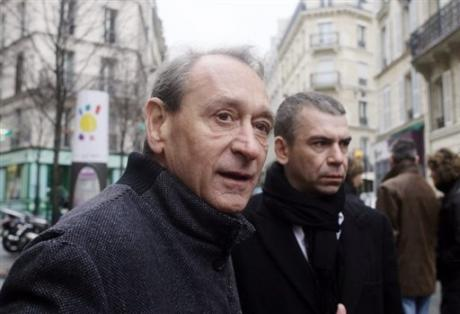
Paris re-elected mayor Bertrand Delanoe, image from www.20minutes.fr
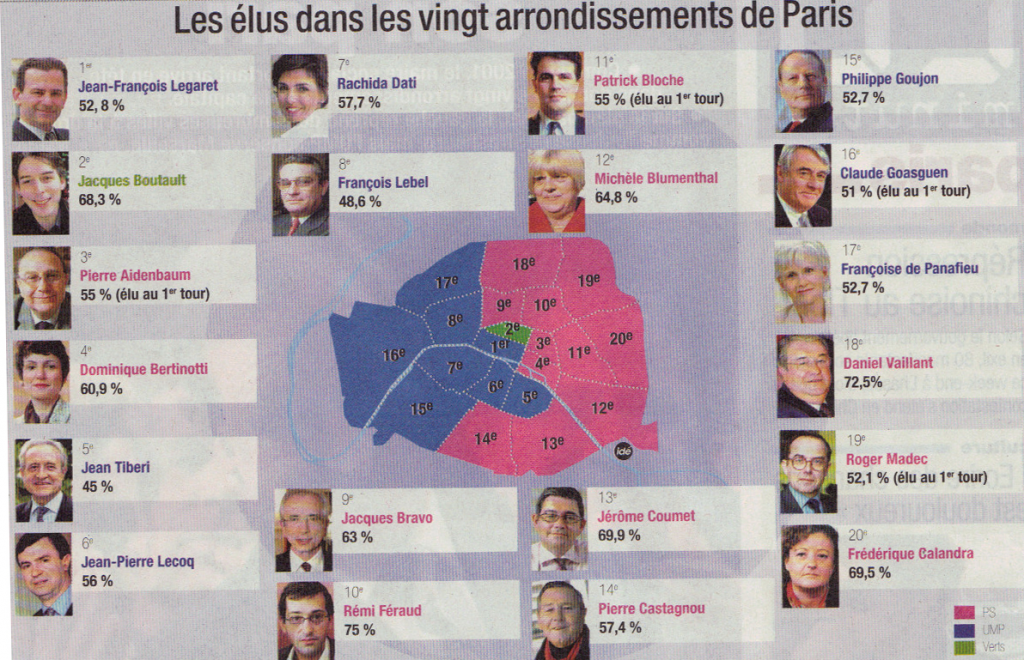
Chart of mayors elected in Paris's 20 arrondissements: blue for right-wing, pink for left-wing, image from www.20minutes.fr:
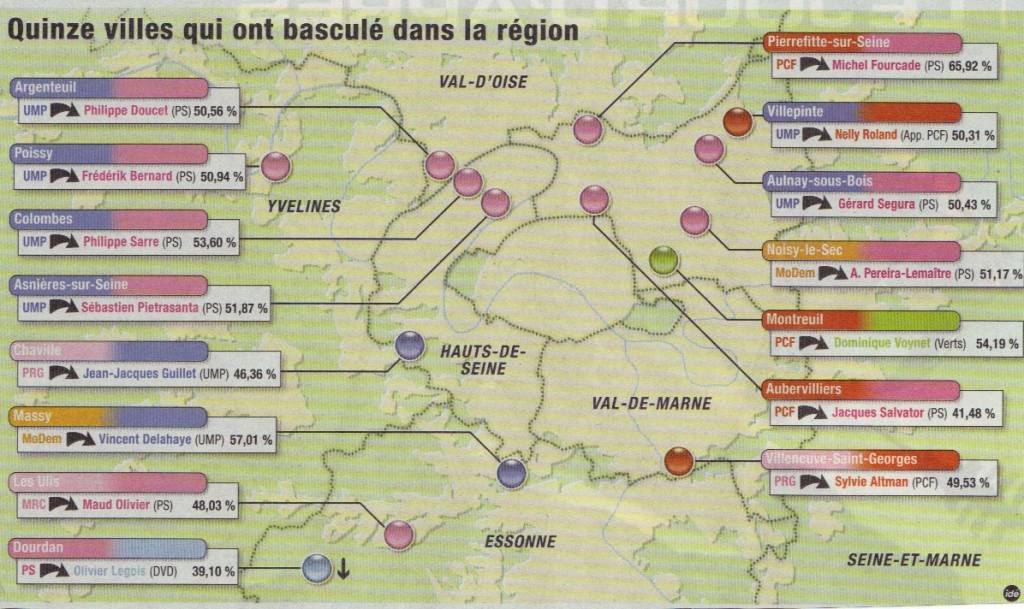
Chart of results from the greater Paris region, image from www.20minutes.fr: Since President Nicolas Sarkozy and the new government of Francois Fillon took office, these first local elections have served as a test of satisfaction with the government's governance. Clearly, the president's personal conduct and governing attitude have hit rock bottom in the polls. Under the fatigue of the prime minister's government reforms, it seems difficult to unfold a grand political blueprint. The people have begun to feel a sense of powerlessness and exhaustion regarding the president's pre-election promises and the government's reforms.
Under the influence of the US subprime loan financial storm, the world economy has softened, with economic growth forecasts for Europe and America being downgraded. Oil prices have exceeded one hundred US dollars per barrel, coupled with soaring prices, reduced purchasing power, shrinking wallets for the middle class, and the lower-middle class struggling to get by. The French seem to have a bleaker outlook on the future.
These French local elections appear to directly reflect these livelihood issues, or the dissatisfaction with the president and government's governance and the disillusionment with vitality. Under these conditions, the left's socialism, localized economic policies, and humanized issues clearly resonated with people, especially as local elections are directly related to one's own life, involving various problems of the individual, community, and urban metropolitan life.
In these French local elections, the left or left-wing alliances captured 14 cities with over 30,000 inhabitants from the right. Nationally, the left obtained 49.5 percent, while the right obtained 47.5 percent. In the first round, the Socialist Party made significant gains, successfully holding onto 57 metropolitan areas with over 30,000 people, while the right held firm to 47. Of course, in the intense second-round showdown between left and right, the left recaptured many traditionally right-wing metropolitan areas from the right, such as Reims, Amiens, Toulouse, Strasbourg, Metz, Caen, Angers, etc. These gains were long anticipated.
Paris and the greater Paris region were no exception, with the left achieving great and brilliant results. The incumbent mayor of Paris, Bertrand Delanoe, won the election handsomely and was re-elected. The greater Paris area became a sea of Socialist Party pink, with the blue sky—the right-wing UMP—routed and losing its traditional strongholds.
The political map of Paris is divided in two: the eastern part extending to the core middle-class areas is a blue sky (traditional right-wing territory), while the western part, expanding from the core south to north, blooms into a riot of pink (the socially popular left-wing territory). The left achieved a certain majority. Comparing this, it seems unshakable and inviolable in reality, much like the political landscape of 2001. From these Paris local elections, it is clear and certain that this middle-class consciousness in Paris is evident. Pink has become the ideology of the majority of Parisian citizens.
Certainly, the reforms of the incumbent and re-elected mayor Bertrand Delanoe have had their due effect. With wise choices, the citizens of Paris not only affirmed his governance achievements for the metropolis but also entrusted him with the sacred mission of reform to continue cultivating the Paris metropolis.
After winning the election, Mayor Bertrand Delanoe stated: "This extraordinary score is unprecedented for our Paris team. We will devote all our energy to social justice in housing, serve a modern populace, and connect all generations within the confirmed metropolis." "Renew and win the battle for all employment and develop sustainable growth. Finally, do not forget the passion for culture, etc."