A Stroll at the Paris Municipal Museum of Modern Art
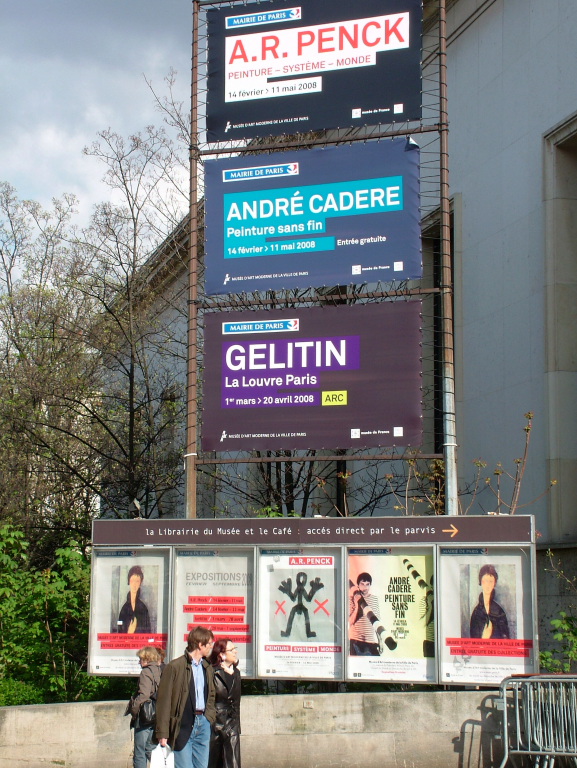
Exhibition signage at the Paris Municipal Museum of Modern Art
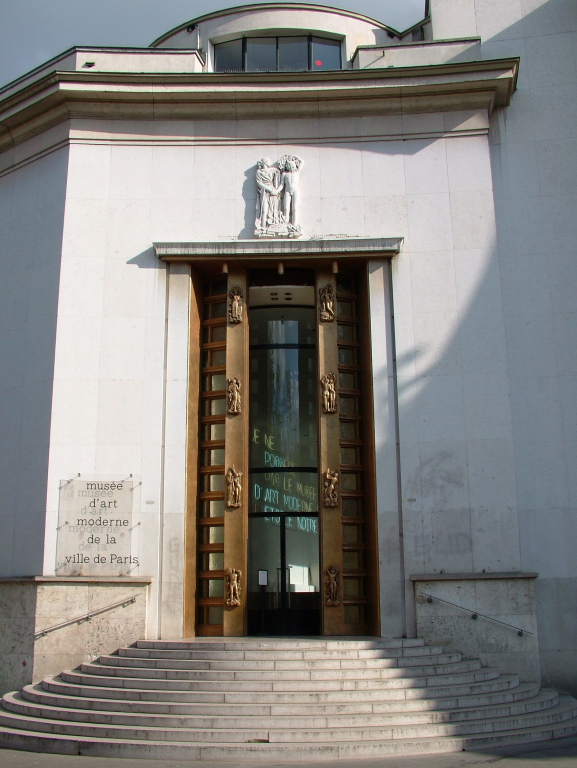
The Paris Municipal Museum of Modern Art regularly visits various museums in Paris to relax, absorb cultural spirits, and appreciate the aesthetic beauty of art and humanities. Particularly for venues showcasing contemporary art, one goes not only to relax but also to explore new or current artistic dimensions. People living in the present should have an understanding of contemporary art, as it presents comprehensive aspects of contemporary life and existence. Whether positive or negative does not matter, because this constitutes the whole; lacking any part is impossible. The positive inspires people, while the negative warns them; transcending all these reveals the true face of art itself. Do not be deceived by appearances; intuitively grasping nature and essence allows one to transcend human dualism. Everything is conditioned, isn't it? Artistic creation is no exception. Life is holistic; the non-conscious world seems even more boundless than consciousness.
The Paris Municipal Museum of Modern Art is currently hosting a retrospective of "Painting-System-World" by German Neo-Expressionist artist A.P. Penck from the 1980s. A.P. Penck is not unfamiliar to me, and I have written about him before. I appreciate the intuition and instinctiveness of German artists, as well as their visual explosiveness, which are characteristic features of expressionism. Approaching his systematic retrospective works from a purely appreciative perspective, I attempt to approach these instinctive written symbols, probe the semiotics of plastic art codes, and enter the depths of life to decode them. Savoring the wordless truth of art, I relax within a silent forest of images, accepting the baptism of artistic patterns and absorbing the spirits of art.
I often have the opportunity to visit large retrospectives and frequently sigh that artists work hard for thirty to forty years, yet viewers finish the exhibition in two or three hours (based on my experience, there is always a temporal aspect, but every good exhibition leaves endless aftertastes). Of course, retrospectives are always conclusions, presenting things systematically and clearly, always looking back. This allows people to make greater unexpected discoveries.
After viewing A.P. Penck's retrospective, I casually visited the permanent collection exhibition downstairs, where Andre Cadere, a pearl overlooked by modern art history, was exhibited in the special exhibition "Infinite Painting." I am glad that history can re-affirm past omissions. I think this is what later historians should handle and affirm, because current matters are often shrouded in a fog of social tactics and interests, making it difficult to truly understand their true faces. For example, commercially successful films are not necessarily understood as good films. Seeing this special exhibition made me understand the present more sincerely and investigate it more cautiously. I hope not to be confused by the smoke; only by polishing our eyes and maintaining a spirit of seeking truth is it possible to clear the clouds and see the moon. Regarding reviews of these two exhibitions, please visit the Art section.