Protests Have Become a Daily Occurrence
High school students march in protest against staff cuts. Image from www.20minutes.fr photo-credit-SIPA
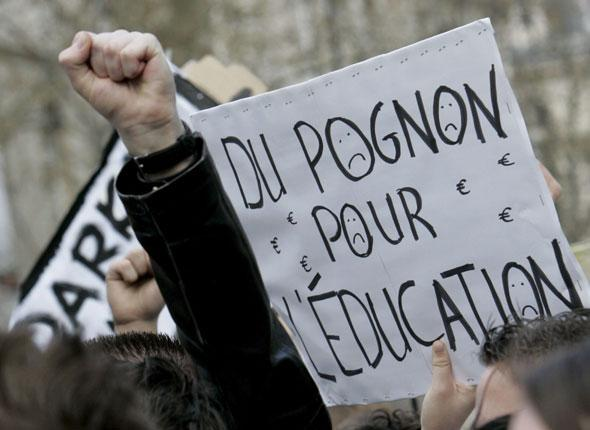
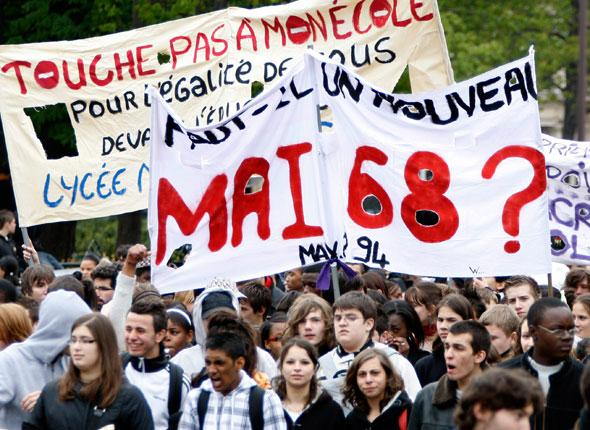
Student demonstrations on the 60th anniversary of the '68 unrest. Image from www.20minutes.fr photo-credit-REUTERS. Amidst the current global financial crisis, soaring oil prices and rising basic food costs, sluggish economic growth, inflation, and widespread hardship have created a bleak outlook everywhere. Governments worldwide face this massive social problem, with reports of protests over skyrocketing oil and food prices emerging constantly. France is no exception; following fishermen's strike demonstrations, farmers, freight and taxi operators, and even ordinary consumers rose up to defend their industry's survival and purchasing power. Furthermore, the French government's proposed streamlining of the civil service—staff cuts—to address national debt and budget issues, along with reforms to public education institutions, the 35-hour workweek, pensions, social insurance, primary and secondary school systems, courts, environmental protection, and employment, has made protests and strikes a daily occurrence in France. Almost every day, people fight to the end for their future under union and association support, unwilling to lose their rights. However, everyone knows that reform driven by changing circumstances is inevitable, yet facing a dim outlook, this social battle seems likely to continue endlessly.
Over these past few months, primary and secondary school workers, fishermen, farmers, laborers, disabled persons, retirees, and civil servants have taken to the streets in turn, revealing the entire society's resentment and dissatisfaction with the government. No wonder President Sarkozy's poll numbers are so low. Even undocumented laborers went on strike, attempting to gain leverage for negotiating reforms with the government, but prospects seem dim under the strong-handed government policies. On June 10, another nationwide strike by French civil servants (tax officials) and the railway company occurred. Primary and secondary schools, post offices, tax bureaus, and numerous administrative agencies closed their doors. Of course, the railway company and metropolitan transit networks affected commuters' travel. While most people could understand the inconvenience caused to the public given the current situation, there was no avoiding this scene, leading to resignation. Additionally, convoys of trucks blocked all major avenues into the city in a "snail-like" manner, and car manufacturers continued to surround oil depots, attempting to pressure the government through action, hoping for subsidies for high-energy consumption. As the social battle intensifies, another large demonstration and strike by French civil servants is scheduled for next Tuesday, the 17th. Protests and strikes have become a daily routine in French social battles.