Post-Impressionism: Bridging the Past and Future
Cézanne - Still Life with Basket, 65x81 cm, c. 1888-90, held at the Musée d'Orsay, Paris


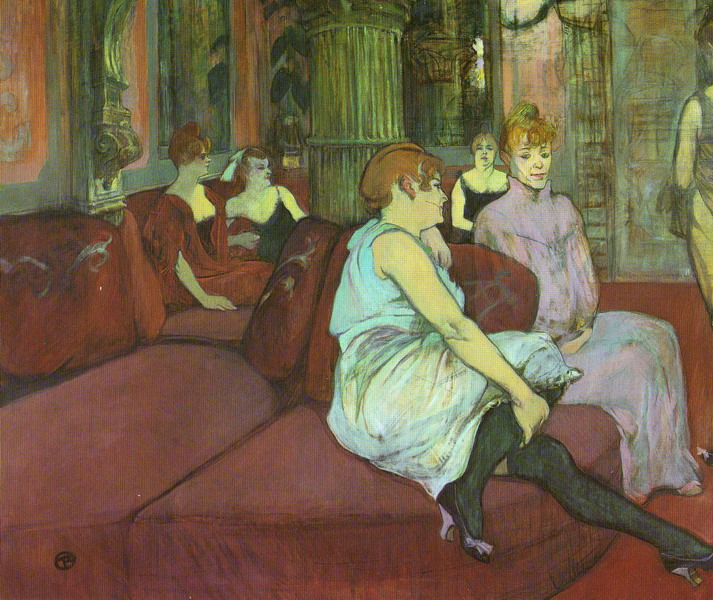
Toulouse-Lautrec - Salon on the Boulevard de Montmartre, 111.5x132.5 cm, 1894, held at the Toulouse-Albi Lautrec Museum. Impressionist painters broke free from the subtle brushwork of the Barbizon School, moving toward bold, open, free brushstrokes, harmonious bright vivid colors, and clear light. Their painting art also revealed the new spiritual shift of humanity in a new era.
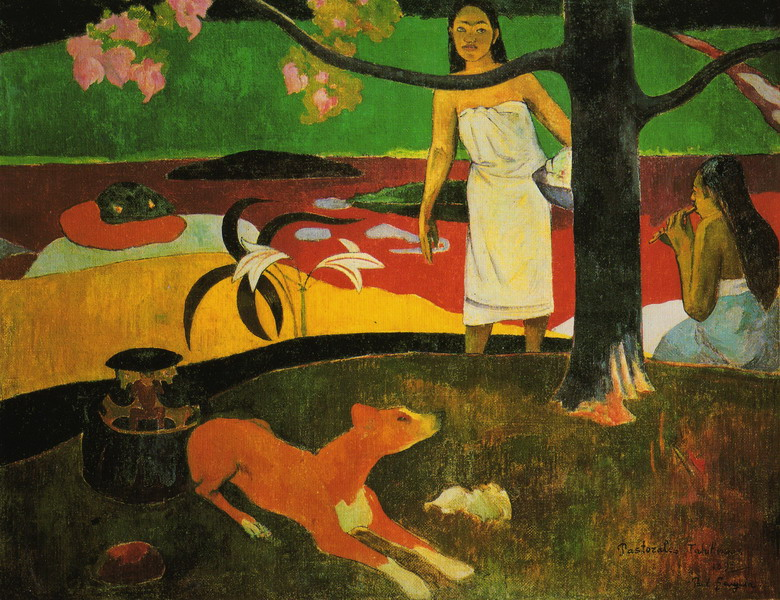
As for Post-Impressionism, which carried forward the past and opened up the future, it more subjectively stepped away from the Impressionists' excessive focus on light and the intention of color decomposition. Turning from external material to the manifestation of inner spirit, they were thoroughly liberated from the imitation of nature, creating self-consciousness subjectively. Cézanne created modernist art by opening up multiple visual perspectives and organizational forms of structure in painting art. Van Gogh transformed his intense inner emotional surges into color paintings through strong personality, accelerating the painting of modern subjective consciousness. Gauguin strengthened lyrical color planes, invested in emotions of subjective consciousness, and liberated modern painting consciousness. All of these accelerated the subjectivity of painting itself and opened up rich and diverse artistic sources for 20th-century modernism: such as Cubism, abstract art, and Neo-Plasticism under Cézanne's rational construction; Expressionism leading to Abstract Expressionism and Fauvism under Van Gogh's sensibility; and Fauvism or color abstraction arising from Gauguin's color consciousness.