The European Narrative of Art as a Battlefield
Eduardo Arroyo, Spain's Tricks, 1970. Collection of the Centre Pompidou, National Museum of Modern Art.
_El_caballero_espagnol_1970_resize.png "010_eduardo_arroyo_ne_1937_el_caballero_espagnol_1970_resize")
_Figure_descendant_dun_Siege_69_resize.png "011_adami_ne35_figure_descendant_dun_siege_69_resize")
Bewtiful_et_Stwomg1971_resize.png "012_petes_saulne1934bewtiful_et_stwomg1971_resize")
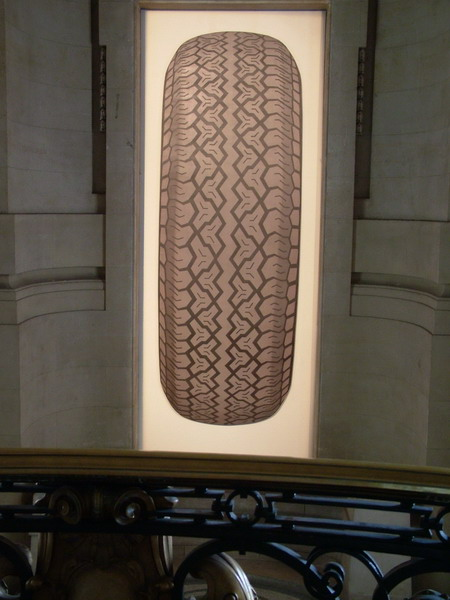
Peter Stampfli, Monumental Form M301, 1970. "Narrative Figuration (Figuration Narrative) Paris 1960-1972" Special Exhibition: Displayed at the Grand Palais in Paris from April 16 to July 13. Exhibiting artists include Adami, Aillaud, Arroyo, Bertholo, Bertini, Cueco, the Spanish Cronica team, Erro, Fahlstrom, Fromanger, Klasen, Monory, Rancillac, Recalcati, Saul, and others. Foreword: In the 1960s, a novel new figuration emerged in Europe as resistance to avant-garde artistic traditions. It opposed the trends of modernist formal art movements, rejecting emotional and geometric abstraction, Op Art, Nouveau Réalisme, and Pop Art, thereby liberating itself from the shackles of formalism. By utilizing mass media images from contemporary consumer society, it transformed into a new figuration that imposed an anecdotal ideology filled with social combat through obvious literary narrative aspects. They turned to American Pop Art imagery for political and social critique, making painting a tool of combat for the will to resist. French art critic Gérald Gassiot-Talabot defined Narrative Figuration thus: "It is all figurative works that cite a representation of the real in time; through their technique and composition, they are not necessarily narrative in the literal sense" (Note 1).
Narrative Figuration: At the beginning of the 1960s, as subjective abstract painting declined across Europe, a new trend emerged following French Nouveau Réalisme: a distinct European Narrative Figuration. On September 28, 1963, the Third Paris Biennale was held at the Paris Municipal Museum of Modern Art, curated by young critic Gérard Gassiot-Talabot, which specifically accepted updated figurative painting. Young participating artists included Gilles Aillaud, Erro, Bernard Rancillac, Eduardo Arroyo, Henri Cueco, Jean Voss, and British Pop artists David Hockney and Peter Blake, among others, debuting a unique form of Narrative Figuration. Critic Norbert Lynton described this characteristic: "They indulge in pleasurable images, introducing a rational content... They oppose recent formal art movements (namely unbridled, overly subjective, or disconnected abstract expressionism)... Vividly opposing recent international art trends, particularly its severe critique of current political and artistic acts as ideals for art" (Note 2).
In 1964, the Fifteenth Salon of Young Painters was held at the Paris Municipal Museum of Modern Art, gathering many new figurative painters such as Gilles Aillaud, Eduardo Arroyo, Henri Cueco, Paul Rebeyrolle, Antonio Recalcati, and Joel Kermarrec, who were left-wing radical painters. The salon quickly became a field for political struggle and ideological combat regarding new figurative painting. Critic Jean-Jacques Leveque realized: "The unsettling shadow of Bacon has arrived." Later that year, painters Peter Foldés, Bernard Rancillac, and Hervé Télémaque co-curated the group exhibition "Myths of Everyday Life" at the Paris Municipal Museum of Modern Art. This grand event invited 32 artists from around the world: Arroyo from Spain, Recalcati, Bertini, and Pistoletto from Italy, Dodo from Yugoslavia, Berni from Argentina, Fahlstrom from Sweden, Brusse from the Netherlands, Buri from Switzerland, Foldes from the UK, Klasen and Voss from Germany, Télémaque from Haiti, Golub and Saul from the USA, and eight French artists: Arnal, Bettencourt, Monory, Rancillac, Raysse, Raynaud, Niki de Saint-Phalle, and Requichot, among others. European Narrative Figuration gradually became a surging trend.
In the Sixteenth Salon of Young Painters in 1965, new figurative painters took more radical stances of subversion and challenge. Nineteen committee painters decided each to exhibit a two-meter square green painting, proposing a tribute to "Green," displaying double audacity akin to "friendly slaughter," strongly countering the Paris School of Lyrical Abstraction. Later that September, Arroyo, Aillaud, and Rancillac jointly created eight collaborative works titled "Living and Letting Die, or the Tragic End of Marcel Duchamp," which attracted considerable attention when exhibited at the Galerie Creuze in Paris under the theme "Narrative Figuration in Contemporary Art." They sought to liberate painting and flaunt its anecdotal nature, attempting to symbolically end the avant-garde tradition through "The Tragic End of Marcel Duchamp" as resistance to avant-garde artistic traditions, thus creating European Narrative Figuration. They considered Duchamp's creative act to be sheer audacity, even shameless cynicism. When Duchamp declared, "I prefer display to work," these three inspiring young artists argued, "Painting without signing is better than signing without painting" (Note 3). In the autumn of that same year, at the "Fourth Paris Biennale," Narrative Figuration formed a powerful lineup. Critic Gassiot-Talabot wrote: "Today artists feel compelled to introduce into their work a concept of narrative content, plot, or temporal progression" (Note 4). In 1966, amidst the Cultural Revolution in China, fierce anti-Vietnam War demonstrations, Charles de Gaulle's announcement of France's withdrawal from NATO, the Third World Revolutionary Congress held in Cuba, and the US Civil Rights Movement, the Seventeenth Salon of Young Painters added radical artists like Schlosser and Velickovic. Later that June, the ARC at the Paris Municipal Museum of Modern Art held the socially topical group exhibition "Questionable World."
In 1967, critic Gérard Gassiot-Talabot organized the group exhibition "Cartoons and Narrative Figuration" at the Musée des Arts Décoratifs in Paris, writing in the catalogue: "Painting, painting; traditional painting in the 1970s was not flattened by the strong avant-garde of modernism, but rather fought within the will to resist avant-garde artistic traditions, standing firm, explicitly opposing the dogmatism of post-war subjective and emotional abstract expressionism... More strongly resisting the nihilism of past avant-garde art and the escapism of some cynics from social reality... Narrative Figuration restores a 'retinal' figurative painting and becomes the life will and social 'combat form' for Narrative Figuration artists."
Most of these Narrative Figuration painters were born before World War II, experienced post-war colonial wars, underwent the baptism of the Chinese Cultural Revolution, and directly participated in the European student uprisings of May '68, standing on the front lines. For them, art was a tool for participating in political and social reform, with their creations targeting contemporary society, politics, and culture. All their works were narrative; they unhesitatingly chose to depict time, and such works confirmed this political bias. Similarly resolute, they approached these narrative paths with a spirit of social participation. These artists expressed intent rather than mere reportage. However, practicing a realistic adaptation to conform to their own interpretation requires establishing a difference, a gap, a shift between such social facts and the works themselves (Note 5).
During the May 1968 student uprisings, European artists took more radical stances, particularly Narrative Figuration, notably exhibiting the "Red Room for Vietnam" at the Young Salon. The exhibition decided that paintings would submit to the urgent needs of current political and social situations, critiquing various themes. Politics, like society, was clearly stated in the catalogue published by the Paris Municipal Museum of Modern Art: "The people's war is the only consistent link in these paintings" (Note 6), clearly indicating that ideology and social struggle became the intentions and combat goals of Narrative Figuration. Many painters directly threw themselves into the battles of the student uprisings. In the 1969 and 1970 Salons of Young Painters, group exhibitions titled "Police and Culture" and "Who Killed?" were proposed, actively responding to the desire to expose social truths. Painters became warriors; the art world was like a battlefield. Their paintings resembled movie posters, stirring participation in combat through simple satire, mockery, and rebellion.
Of course! Political and social combat art only yields greater benefits through aesthetic pathways; otherwise, it easily becomes displaced, becoming a vassal of politics and a historical illustration of trends. As critic Bernard Noel wrote about Rancillac's politically intended paintings: "He frequently reuses and questions, due to uncertain understanding, whether what he perceives is the thickness of real reality or the falling petals of illusion?" (Note 7). This dilemma applies to all Narrative Figuration painters, especially when facing factual truth blindly under ideology. Naturally, many painters were involved in class struggle or utopian illusions.
Note 1: Artistic Movements Since 1945, by Herve Gauville, published by Hazan, Paris, 1999, p. 95. Note 2: 25 Years of French Art 1960-1985, published by Larousse, Paris, 1986, p. 110. Note 3: French Contemporary Art, by Catherine Millet, published by Flammarion, Paris, 1987, p. 65. Note 4: "Narrative Figuration," by Jean-Louis Pradel, published by Hazan, 2000, p. 26. Note 5: Translated from the preface of the 1967 exhibition catalogue "Cartoons and Narrative Figuration" at the Musée des Arts Décoratifs in Paris, written by critic Gerard Gassiot-Talabot. Note 6: "Artistic Schools and Movements Since 1945," by Herve Gauville, published by Hazan, Paris, 1999, p. 93. Note 7: 25 Years of French Art 1960-1985, published by Larousse, Paris, 1986, p. 138.