Paris Palais de Tokyo - "From One Revolution to Another" Thematic Exhibition (1)
1917-1939 Sound Z: Boris Yankovsky's earliest graphic sound studies, 1931. Image from exhibition press release.

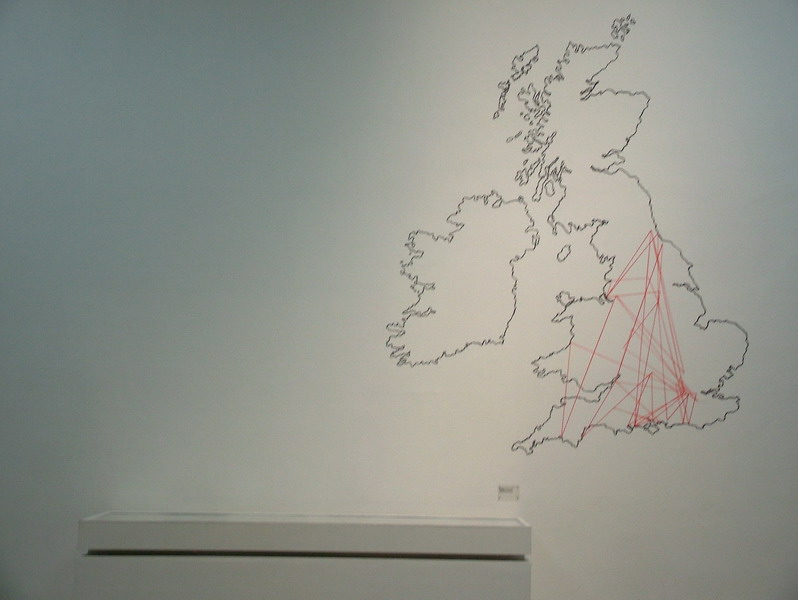

British famous wrestler Adrian Street and his absentee father in a photo, 1973. Photographed by Dennis Hutchinson. Image from exhibition press release.
Preface: "From One Revolution to Another": Exhibited at the Palais de Tokyo in Paris from September 29 to January 18, 2009. A revolution means a change of dynasty, using force to change the political system, more precisely, a major transformation of social systems, economic structures, or cultural frameworks. There have been several major revolutions in the evolution of civilization history. The French Social Revolution or the Soviet Great Revolution involved overthrowing existing systems by force, belonging to social and political revolutions, with considerable comprehensive impact. Since the 18th century, the Industrial Revolution, through technological revolutions to industrial revolutions, has reversed the universe/situation of Western modernization, completely changing the Western social world and altering human history, bringing Western civilization into an unprecedented new system and an extraordinary modernist vision of progress. Industrialization, urbanization, informatization, liberalization, and democratization gave birth to Western capitalism. With the evolution of industrial society came labor-capital relations, trade unions, urban issues, and the working class; socialism also emerged naturally. Diverse thinking and perspectives formed an unprecedented yet not necessarily unique emerging ideological revolution.
The Industrial Revolution began in Britain. From the first technological revolution in 1820 entering the steam age, the establishment of steamships and the first railway (1821), handicraft industries were brought into a modern industrial era, shocking the conditions of general productization and human life in the 19th century, breaking away from past overall social systems and order. It continued to innovate all technologies, triggering a second technological revolution: electricity, oil, engines, etc. The British Empire, where industry and commerce monopolized the head and prospered like the sun never setting, became a model for European industrial development. Soon, in 1848, the whole of Europe entered the prairie fire of modernism.
Under the boiling liberalism and continuous democratization in Europe, within the prosperous British society, a vigorous and energetic new culture emerged—the birth of rock music. Through Soviet electronic music and the emergence of French rock, Ed Hall’s union march banners, and William Scott’s personal virtuality, the exhibition "From One Revolution to Another" is positioned between this Industrial Revolution and the Rock Music Revolution. It attempts to expand the field of contemporary art while questioning the possible relationship between industrial and cultural revolutions. Obviously, this uncategorizable exhibition is quite alternative (numerous photos and documents, objects, paintings, sculptures). Curated by the popular British artist Jeremy Deller, it sometimes tries to avoid the definition of artists; the objects exhibited here are not always artworks. The entire exhibition mixes collective and personal historical memories on the boundary of contemporary art, anthropology, and history.
1999-2005 Folk Archive: Folk Archive was composed of Britons Jeremy Deller and Alan Kane, exploring its foundation in fine arts and anthropology, offering an alternative view of British culture, half-proven, half-revered. Here they display archives of folk rituals and events collected over six years, including photos, folk objects—sculptures, videos, etc.—presented through thematic combinations to prove contemporary social folklore: a dramatic mechanical elephant made of Snowdrop leather holding an umbrella, a vagrant, a skull-patterned motorcycle helmet, a scarecrow full of imaginative space with Burry Man costume patterns, and in the video, people see this scarecrow participating in folk parade festivals, a series of painted clown figurines, a cigarette-shaped memorial flower paying highest tribute to Marie Ellis, a pair of bright red wrestling trunks, humorous entertainment face-making contests, and videos of fire fence competitions, etc., all proving widespread dramatic forms originating from ancestral traditions passed down through generations. Under such modern adaptations, this ensures the survival of tradition. This deep exploration of traditional roots becomes today’s most unique creative work locally or in Britain, responding to the individualistic lifestyle of contemporary Britons.
1986-2008 Ed Hall "March Banners": Ed Hall is an architect at the Lambeth Borough Council Construction Department in London, then became secretary of a general workers' union. Obviously, unions protect the welfare and rights of laborers and staff. Starting from the significant political changes in Britain during the Iron Lady Thatcher era in 1980, Hall participated in social battles and began making these protest-marking march banners. Unique march banners became a form of art representing social struggle. Here hang commemorative or protest banners made over 12 years for various local groups, workers, staff unions, political groups, victims of police injustice, etc. They are often placed at the front of parade teams or in the center of demonstration crowds. These colorful banners carry clear messages of participation and evidence special moments, such as "Anti-Racism, Anti-Nazi, Black and White Unity," "Poets Pray for Peace," "Justice for Palestine for Jews," "Expedition Against Global Warming," "Sex Workers Unite - We Strike Hunger for Sex," "Don't Close Our Schools," "Battle Against Racism, Anti-Bosnian Ethnic Division, Multiculturalism," and "Public Archives - History Shows Unity is Strength." Colorful flags combined with these powerful short slogans are more confusing, direct, and touching than conceptual art. These clearly narrate the battle process of recent British social and political resistance movements.
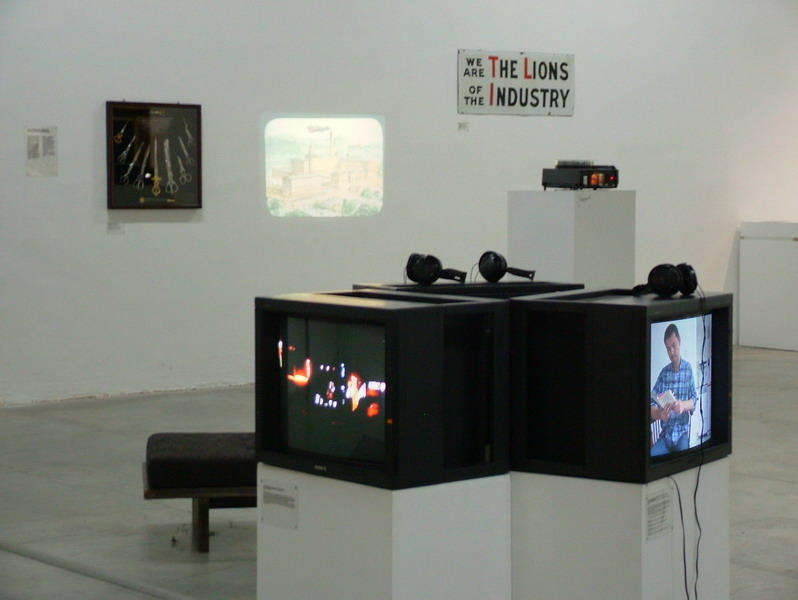
1962-2001 The Beginning of French Rock: Here, explicitly through a series of newspaper and magazine clippings, photos, letter collections, plus instrument studio scene installations, and accompanied by documentary films of French rock performances, an unforgettable and brilliant history of Parisian rock is presented under extraordinary audiovisual effects. These materials come from the former Traditional Folk Art Museum (now changed to the Mediterranean and European Civilizations Museum). Depicting French rock, more precisely Paris's Golf Drouot, which was once a place for Parisians to drink tea and dance. Due to poor management, it was converted into a small golf course but still failed to attract enough consumers. Waiter Henri Leproux cleverly transformed it into a Juke-box-Seeburg apartment hall. From 1959, famous French rock singers Eddy Mitchell and Johnny Hallyday frequently visited here, becoming a preferred place for young musicians to relax. In 1961, Golf Drouot broadcasted the latest French trendy music (including Gilbert Bécaud, Nancy Holloway, Eddy Mitchell, Chaussettes Noires band) to young people via television for the first time. The following year, the Golf Drouot springboard trendy pop concert hall was established here, becoming the cradle and dissemination space for Parisian rock. Amidst this novel and pleasant progressive spread of rock music, Drouot participated in a decisive development of pop music until the 1980s when it ended; rock music had become a widely popular value in French society. The history of French rock exhibited here focuses mainly on the activities and materials of Golf Drouot over nearly 20 years, elaborating on the universal values of emerging culture within the scope of sociology and anthropology.
1917-1939 Sound Z: From one revolution to another, after the Soviet social revolution in 1917, a series of cultural revolutions triggered in the Soviet Union. Under the radical innovative vision, Soviet avant-garde art constructed a new society and world. The Sound Z exhibition presents this unprecedented revolutionary situation, exploring innovations in mass media, audio-visuals, and images, serving as another revolutionary historical witness. The novel exhibition theme "Sound Z," the letter "Z" foreshadows the symbolic nature of this extraordinary era. "Z" as text curves and rays symbolizes energy, metaphorically referring to radio transmission and information dissemination, power sources, and lightning. "Revolutionary fires erupting with omens," explicitly reflecting the characteristics of the spirit at that time. Simultaneously, it shows the connection networks of these parallel lines, and under the extraordinary oppressive force of vertical lines (regimes) at that time, their development was instead suffocated.
The "Sound Z" unit exhibits a series of visual and auditory materials, including pattern designs, articles, photos, videos, and sound image exploration documentaries. Overall materials and objects come from the Theremin Center in Moscow, an institution presenting the overall development of 20th-century Soviet Russian music and audio-visual technology, now belonging to the Moscow State Conservatory. Curator Andrei Smirnov strives to present "historical restoration and how avant-garde fine arts culture in the 1910s and 1920s faced totalitarian regimes, this radical creative energy was entirely suppressed and leveled by the regime until the 1930s." In this exhibition, people discover for the first time several pioneering figures in this extraordinary era, such as Nikolai Bernstein or Boris Yankovsky, further understanding their diverse and avant-garde explorations in sound and visual imagery, elaborating on the multi-faceted impact of these audio-visual revolutionary explorations on 20th-century modern communication.
1760-2008 "All That Is Solid Melts Into Air": This theme comes from a quote in the Communist Manifesto by Karl Marx and Friedrich Engels, reflecting capitalism's sustainability until its adaptation and until it surprises us. Obviously, the 18th century was the Enlightenment and Industrial Revolution in Europe. From this ideological revolution and industrial revolution, the West entered the century of modernization. Thus, 1760 is a year with specific reference. We can imagine all technological and scientific innovations and rapid industrial progress, prosperous societies, under the universal trend of freedom and democratization, up to today's globalized information media and knowledge new generation.
Industrialization, urbanization, capitalization, class stratification, and commercialization. Capitalism and economic growth brought prosperous societies, but negatively exacerbated wealth inequality and class stratification, triggering social unrest, leading to the emergence of Marxist socialist thought. This exhibition unit specifically points out the dual trauma of the Industrial Revolution and chaotic cities. Because under the ideals of social reform and socialist struggle, it allowed for the creation of a favorable living environment up to the appearance of British rock. This exhibition reproduces historical elements: industrial objects, historical paintings, video art, rock icons, photos, and family chronologies. These novel industrial objects come from the past Blackbuene industrial city and the 1951 London Great Exhibition. Through these objects and images, it attempts to elaborate on the emerging culture after the Industrial Revolution—the birth of rock music.
William Scott "A Good Man": William Scott (born 1962) is a black artist born in San Francisco, USA, working at the Growth Art Center in California. This fine arts studio was established in the early 1970s by a group of mental health artist associations. Here Scott exhibits a series of emotional portraits and sculptural figures, centered around self-portraits or figures from his black community, inspired by what he sees and hears in daily life around him. He often juxtaposes individuals within complex social situations, transforming them into personal biographies and hallucinations. Ordinary portraits are somewhat alternative, deeply rooted in personal experience, questioning universal identity, black community, faith, etc., challenging everyday life where we all confront our reality's exploration. For the past five years, William Scott has worked on the San Francisco metropolitan reconstruction plan. His residential old area will be rebuilt. He carefully plans through new blueprints and metropolitan visions to create new architectural models. Driven by this ambition, optimism, and deep human expectation, he constructs a new blueprint for San Francisco.
Conclusion: "From One Revolution to Another" is a revolutionary exhibition, spanning fine arts, anthropology, sociology, and history, wandering between the past, present, and future. It does not see the provocation, flashiness, or current mainstream consciousness of large exhibitions; rather, in its ordinariness, it highlights the purest consciousness of art and effectively conveys thematic messages, appearing even more precious in today's globalized market-driven artistic trends. Even if not by artists or not defined as artworks in the usual sense, within this established contemporary art hall, what is restored is not just history, but social artistic consciousness. It spans Duchamp's premise that "anything can become an artwork" and Beuys's "everyone is an artist," pointing to anything with creative potential can be art. This exhibition carries the intention of expanding the concept of art, suggesting that revolution is built upon humanity's inherent creativity.