The Artistic and Academic Life of Hou Chin-Lang
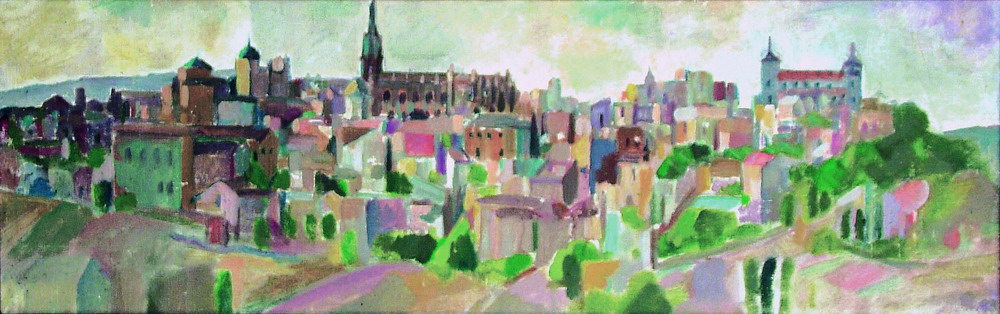
Painted by Hou Chin-Lang during a trip to Spain in Paris - Tolodo 30x92cm Oil on canvas 1969
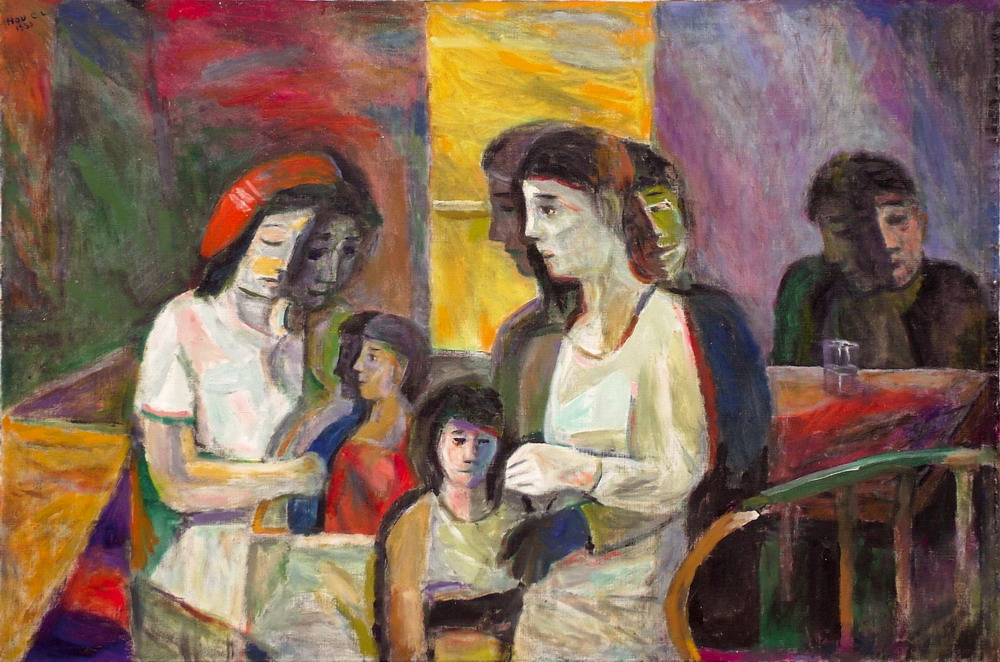
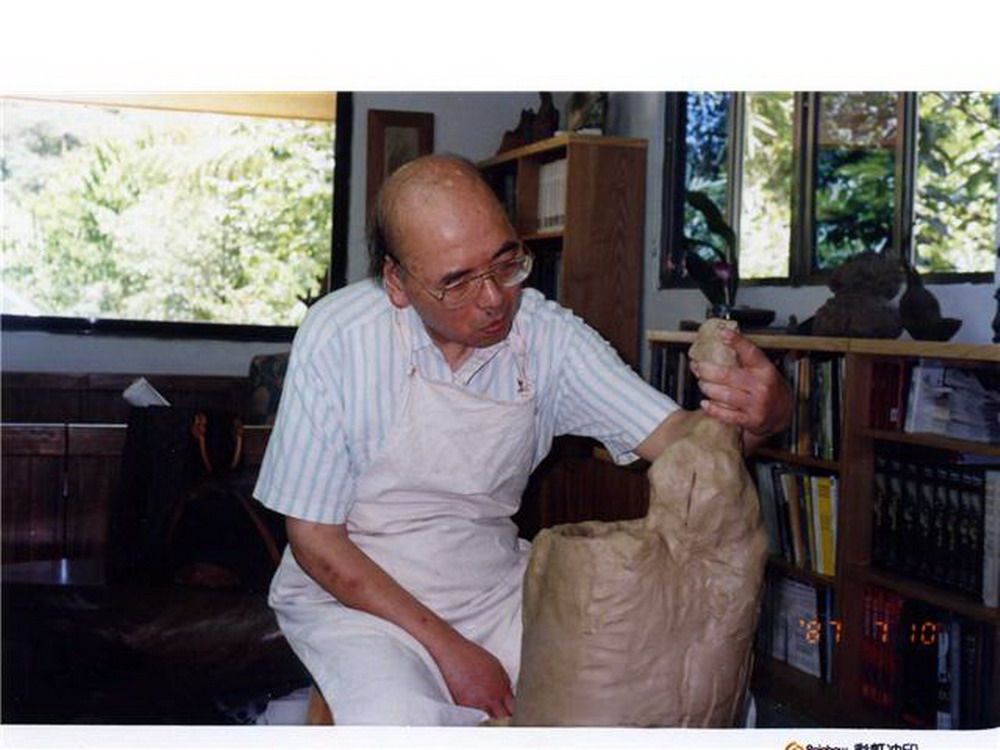
Hou Chin-Lang was fully absorbed in sculpting clay pottery at the Ci Yang Kiln, expression captured in 1998 – photographed by Lin Zhenlong, owner of the Ci Yang Kiln. The three major fields Hou Chin-Lang cared for and cultivated throughout his life were: First, the academic field: covering Buddhist and Daoist art, Dunhuang studies, as well as research on Chinese art and portraiture, alongside studies on folk religious beliefs in Taiwan. Second, art: painting and clay sculpture. Third, the democratic movement in his hometown.
Born in 1937 in Xiashuangxi Village, Liujiu Township, Chiayi County. He graduated from the Art Department of Tainan Normal School in 1956 and returned to teach at his alma mater’s elementary school for three years. His self-portrait at age nineteen. In 1959, he entered the Fine Arts Department of National Taiwan Normal University. Works include Man with Heart in the Tundra (1960), Return (1961), and Run (1962).
In 1967, encouraged by Professor Max Kaltermark, a renowned French authority on Chinese Daoist thought, he went to France and entered the École pratique des hautes études. During his stay in France until 1984, he focused primarily on academic research. His fields covered Buddhist and Daoist art, Dunhuang studies, Chinese art and portraiture, and Taiwanese folk religious beliefs. During this period, he occasionally created paintings, specializing in the Impressionist expression of light and color. His last masterpiece before leaving China was Portrait of My Grandmother (1968), followed by Notre-Dame de Paris (1969), Versailles – Marie Antoinette’s Hameau and Distant View of Dordogne (1971).
In 1971, he worked at the Musée Guimet in Paris, conducting research on Chinese painting. In 1973, he received his PhD from the École pratique des hautes études; his dissertation was titled Concepts of Spirit Money and Treasury Coins in Chinese Religion. In 1976, he was hired as a researcher by the French National Centre for Scientific Research.
From 1984 to 1985, he suffered from a brain tumor and underwent two major surgeries, resulting in damage to his brain, right hand, and right foot. After two years of rehabilitation in 1986, he picked up the paintbrush with his left hand and devoted himself to painting. In 1988, shifting from observing still lifes to portrait painting, such as Rebirth, he incorporated his personal experiences into his work. “Rebirth” is not only about the meaning of life but also represents a new life, vision, and concern in art.
In 1989, he returned to his long-missed hometown, which he had always yearned for. With excitement, optimism, and a progressive spirit, he forgot his physical disability. His painting witnessed the warmth of home life returning to the fragrance of his hometown’s soil and concerns over issues such as worry, legends of Mazu, and disputes. Starting with the work Life and Death, multi-faceted figures appeared, endowing characters with a new appearance that became his personal style.
In 1992, he held a solo exhibition at Apollo Gallery. This journey to his hometown witnessed Taiwan’s economic prosperity and free democracy. Between 1993 and 1994, his painting creations revolved around themes of freedom and democracy in his hometown: Full Cup Heart-to-Heart Talk, Three Generations Offering Flowers to Flower Father and Flower Mother, Protests of the Vulnerable in the Hall of Democracy, and Anti-Nuclear Fourth Reactor Struggles, among others.
From 1995, he traveled to Tucheng Ci Yang Kiln to create ceramic panels and bottles. Through experimentation with new materials and the development of painterly qualities, he gradually entered the creation of three-dimensional sculptures in clay. In 1996, with skilled techniques, he began folding ceramic panels into standing figure sculptures, often preserving the natural texture of the clay. In 1997, he truly sculpted distinctive figure statues from ceramic bottles and jars, occasionally mixing in animal forms, and began adding glaze colors to complete the works.
By 1998, after four years of intermittent effort, almost all his outstanding ceramic sculptures were completed that year. Like fighting against his will and his own disabled body, he produced volumes and sizes beyond imagination through considerable physical effort. Works like Self-Portrait Statue and group sculptures became monuments of his life, bringing ceramic sculpture art to its peak. He held his third solo exhibition, Reconstructing the Amnesiac Homeland, at the Taipei Fine Arts Museum.
He underwent several surgeries between 2002 and 2008. He passed away in Paris on May 1, 2008.