Song of the Wanderer - Fangliao Chapter (1)
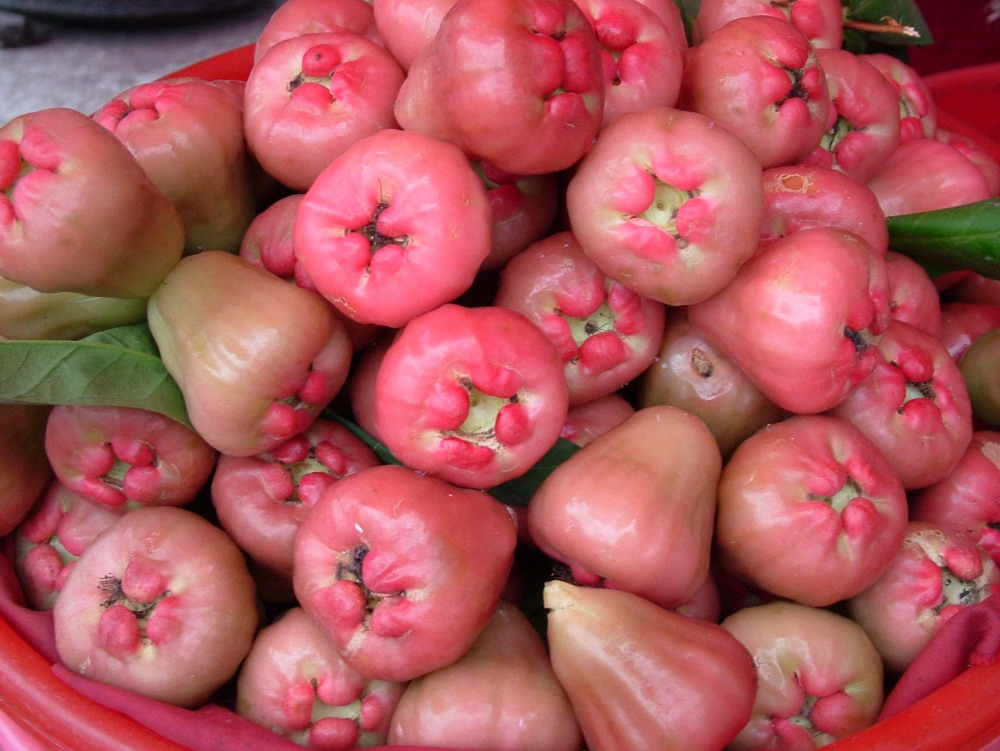
Pingtung's Fangliao black pearl, "Wax Apple," is the world's sweetest. Once you taste it, you'll know.
Text and images by Chen Chi-Hsiang. My hometown, Fangliao, is a place of beautiful mountains and clear waters. Located at Taiwan’s tail end in Pingtung County, it has the Dahan Mountain range of the Central Mountains stretching behind it to the north, and the green waters and vast sea of the Taiwan Strait before it. There are also patches of verdant fields and shimmering fish ponds. The ancient Hengchun recently drew attention with the film Cape No. 7, and Fangliao benefited from this (the film used students from Fangliao Junior High as background, and three old banyan trees in Shuidilao as a market). Fangliao was once the last stop of the Taiwan Railway Administration at the southernmost tip of Taiwan, and is now the starting station of the Southern Link Railway.
Fangliao has a small fishing port and an art village that exists in name only. In the township lies the Ocean Bird Forest, a grand name that is now regrettably forgotten and abandoned, leaving only the facade of a large seagull at the entrance. This is puzzling amidst today’s tourism development; indeed, many things about my hometown are baffling. Fangliao Township’s industry is primarily agriculture and fisheries. In the past, farming was the mainstay, with picturesque patches of emerald rice paddies, banana groves, and sugarcane fields. When rice matured, golden waves of grain swayed in the wind, a sight too beautiful to behold. Coconut-lined avenues along the Cross-Island Highway formed a unique southern landscape. These accompanied my growth, deeply imprinting on my young heart as unforgettable memories, which have since become the source of my artistic creation.
Time passes, but Fangliao remains Fangliao. The rustic farm scenery has changed; roads are more complete than before, yet villages fade, lacking the expected progress of the times. With the decline of agriculture, natural landscapes lie barren, and crops have shifted. Under modern agricultural techniques, the pale wax apple has turned into a bewitching deep red. Not only juicy and sweet, Fangliao has become the hometown of the "Black Pearl" or "Black King Kong Wax Apple," famous throughout Taiwan. Another specialty is the wu-zai fish (small, transparent fish). Today, there are also mango trees laden with fruit on the hillsides. Past sugarcane fields have become pineapple plantations, alongside rare afforestation efforts, creating lush forests along the mountain roads.
The coastal area of Fangliao has become a vast expanse of fish farms, forming an extraordinary water town. However, the coastline has been irreparably damaged, becoming dirty and chaotic, and land subsidence due to excessive groundwater extraction causes great heartache. The simplicity and diligence of Taiwanese people are visible virtues. On provincial roads nationwide, betel nut stalls are prominent, becoming part of Taiwan’s local culture. In Pingtung’s Fangliao, however, they are rare (only a few in Shuidilao). Local fruits and specialties are sold along the coast: water caltrop stalls in Linbian, watermelon and coconut stalls in Jiadong, numerous Black Pearl wax apples and golden mango stalls in Fangliao, and onion stalls along Fenggang and Hengchun. A spectacle is the mobile coffee shops along the coastal road in Fenggang, attracting tourists passing through Kenting National Park, creating a unique local landscape and livelihood.
I have been away from home for over thirty years. I studied in northern Taiwan during university, and one year after graduation, I rushed to Paris, France, the city of art I longed for. Most of my trips back to Taiwan were centered in Taipei, with occasional visits to Kaohsiung and Pingtung to see my father and relatives. Recently, I have often stayed in Tainan, the ancient capital, which has become my favorite place to live upon returning. Its humanistic and urban environment makes me feel free and fulfilled. I rarely have the opportunity or genuine motivation to visit my hometown, Fangliao. Occasionally, I go down to visit my former art teacher at Fangliao Junior High, return alone to my birthplace, Shuidilao, to reminisce, or sit in the pavilion at Fangliao Port to watch the sea and gaze at the distant mountains. I seem to have a special affection for the sea, yet the mountains of my hometown often call to me.
I always feel somewhat alienated from my hometown, yet it constantly entangles my heart. Walking on the soil of my hometown evokes feelings so profound that language cannot describe them. Unknowingly, amidst the shifting times, people, and events, I feel strange, becoming a stranger in my own hometown.