Paris Art Exhibitions This Summer - Centre Pompidou
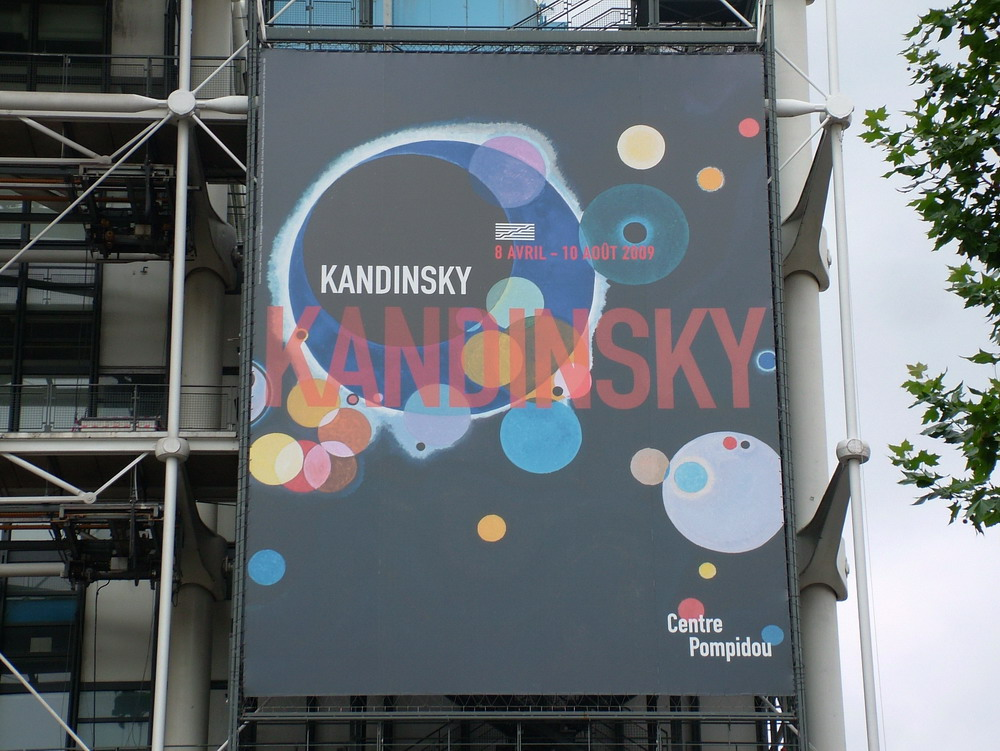
Large poster for the "Kandinsky Retrospective" on the exterior wall of the Pompidou.
Text and photos by Chen Chi-Hsiang. Every time I return to art-centric Paris, I always make time to sneak away for an art tour; this has become a ritual of my life as a Parisian. Whether large or small exhibitions, seeing everything comprehensively is satisfying. Of course, it cannot be finished in one go; skimming through brings nothing. Each viewing is another learning experience, another tasting, entering a journey of the soul. Twenty-seven years of art tours and witnessing in Paris have opened my eyes, immersing me in the world of art, bringing me endless joy.
Having just returned to Paris, I accompanied Taiwanese photographer Xiao Xia and visited the Centre Pompidou with them, thus beginning my art tour. The Musée national d'art moderne is currently exhibiting "Elles," which explores contemporary art centered on new women. The museum also features a special exhibition of "100%" female creative works. This showcases artistic expression from the Western feminist movement starting in the 1960s to the present. Here, it is not solely about new feminism; there are also aesthetic experiences developed from a female perspective, along with numerous critiques of contemporary society and politics. Such permanent exhibitions have become a common method for many modern art museums today. Because I was accompanying friends, I did not watch very attentively and need to arrange time to visit carefully later.
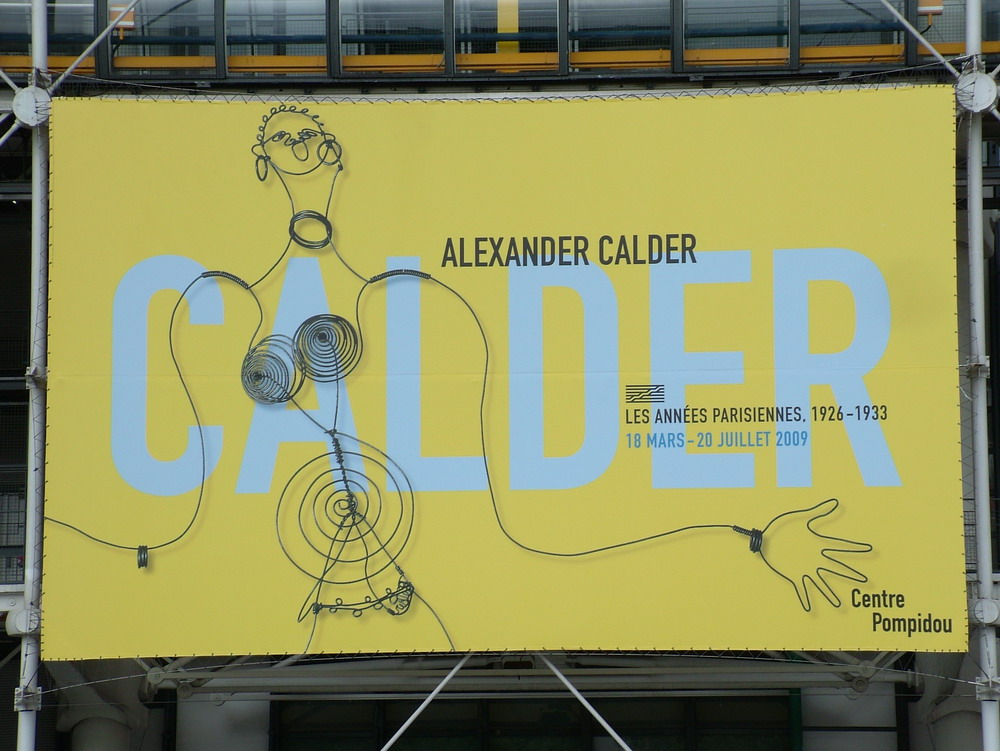
Clearly, recent large-scale exhibitions at the Centre Pompidou lean towards box-office strategies, having lost the exploratory nature of the past in the operation of the current cultural consumption market. On the 6th floor's large exhibition hall this summer, "Calder in France" (March 18 to July 20) and the "Kandinsky Retrospective" (April 8 to August 10) are being exhibited. These two grand exhibitions have been shown at the Pompidou before; does their re-exhibition seek other extraordinary meanings? It is unclear, but they seem to be exhibitions suitable for all ages among general art lovers, which is not bad and should have an effect in promoting modern art. Accompanying friends from Taiwan, I also took the opportunity to appreciate them again. The exhibitions were undoubtedly brilliant. Clearly, good works are not bound by time; each viewing is a new experience, and the immediate experience cannot be replaced by past experiences. Good art transcends space and time and is always a validation and realization of the present.