Tasting French Aesthetics of Living - Musée des Arts Décoratifs (1)
This is an exhibition scene of decorative and utilitarian furniture - chairs from the 60s-70s.
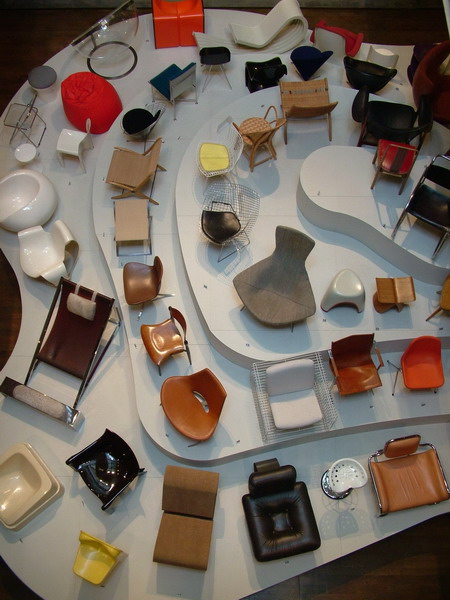
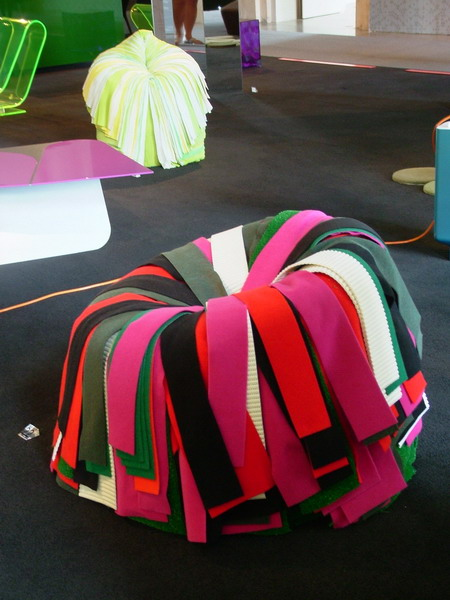

Text and photos / Chen Chi-Hsiang. Summer vacation is a time with a higher density of travel and visiting activities. Since the Musée des Arts Décoratifs was renovated and renewed, I visited again and now share this new decorative museum online with everyone. For more information, please visit the Musée des Arts Décoratifs website - www.lesartsdecoratifs.fr.
The Musée des Arts Décoratifs is a museum of French aesthetics of living, housing many precious art objects of daily life from past dynasties to the present. It can be called the Louvre of decorative arts, located in the Pavillon de Marsan on the Rue de Rivoli side of the north wing of the Louvre. The Musée des Arts Décoratifs was founded in 1897 by the Union Centrale des Arts Décoratifs. Its collections are divided into four main categories: decoration, fashion, textiles, and advertising. The Musée des Arts Décoratifs also includes the Musée Nissim de Camondo.
The primary purpose of founding the Musée des Arts Décoratifs was not only to preserve these fine objects but also to promote the decorative arts in the lives of the French people. It further hoped to open in the evenings for decorators or students to come for further study and observation, thereby preserving traditional folk crafts, enriching necessary knowledge for further development, and achieving the inheritance of the past for the future. Today, the museum still maintains workshops for decorative crafts such as gold and silverware, woodwork, pottery, glassware, and copperplate printing.
The collections of the Musée des Arts Décoratifs are extremely rich, spanning from the Middle Ages through the Renaissance, Baroque to Rococo, Neoclassical to Art Nouveau, to 20th-century modern decorative and utilitarian objects. It has everything one could expect, presenting the entire range of household items that reflect the complete aesthetics of living in France or the West, such as tableware, gold and silverware, faience, glassware, furniture, ornaments, jewelry, fashion, textiles, toys, paintings, sculpture, prints, dining rooms, and living rooms. This allows people to gain an in-depth understanding of the artistic roots of French domestic life and to systematically understand the lifestyle forms and taste development of each era.
First floor: Displays magnificent living rooms and elegant bedrooms from the early 20th century, fashion and textile design; of course, various thematic exhibitions are also held here. Second floor: Research, jewelry, and toy galleries, an exhibition of paintings donated by the painter Dubuffet, fashion and textile design. Third floor (the visit starts from the third floor): Begins a series of historical exhibition rooms on the aesthetics of decorative living, from the Middle Ages-Renaissance, the 17th and 18th centuries, and finally Art Nouveau from the end of the 19th century and early 20th century; another section is the advertising gallery. Fourth floor: 17th century, 18th century, 19th century, Art Nouveau, and Art Deco.
After visiting the fourth floor, please take the elevator directly to the ninth floor. From there, proceed down through the Art Deco of the 40s on the ninth floor, then down to the Art Deco of the 50s on the eighth floor, down to the Art Deco of the 60s-70s on the seventh floor, down to the Art Deco of the 80s-90s on the sixth floor, and down to the contemporary Art Deco of the 2000s on the fifth floor. This way, one gains a clear understanding of the aesthetics of French living.