"2007 French Presidential Election" Part IV: I Have a Question for You
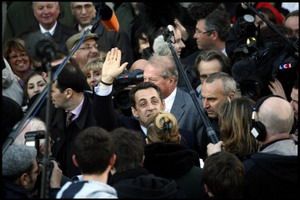
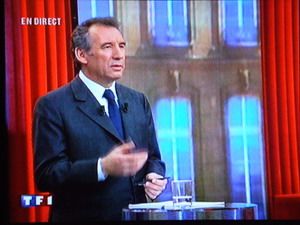
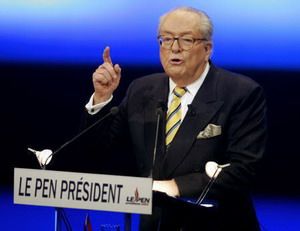
(Top and top-right images from segoleneroyal2007.net) My "I Have a Question for You" TV political debate program, (top-right image Nicolas Sarkozy from his website) UMP presidential candidate Nicolas Sarkozy, top-left image Socialist Party presidential candidate Ségolène Royal, (bottom-right image J

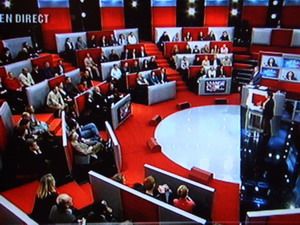

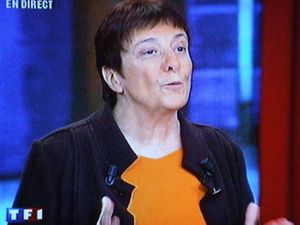
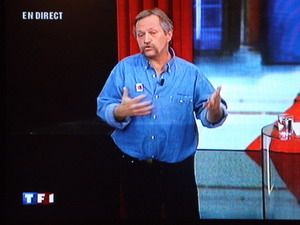
The political program "I Have a Question for You" (J'ai une question à vous poser) on France's first television channel is the most distinctive political program of this year's French presidential election. Unlike all previous political commentary programs, it does not merely broadcast directly; instead, it allows a hundred members of the public from various strata of French society to ask questions directly to the presidential candidates. In traditional political commentary programs, such questioning is typically conducted by political reporters (professionals). These questions are closely related to the daily lives of people across different social layers, lacking professional theoretical frameworks or strict logical structure, yet being more grounded in everyday life and highly relevant.
The program was divided into several sessions, with time allocated proportionally based on each party's polling percentages. UMP presidential candidate Nicolas Sarkozy and Socialist Party presidential candidate Ségolène Royal occupied the entire evening (three hours). Centrist presidential candidate François Bayrou and far-right National Front presidential candidate Jean-Marie Le Pen each received half the program's time (one and a half hours), while other minor candidates had only thirty minutes. During February, these four sessions aired every Monday night during prime time. The first session began on February 5th with the most formidable UMP presidential candidate, Nicolas Sarkozy. Under his excellent performance, he engaged in orderly dialogue with the public, arguing his viewpoints with strong and clear perspectives rooted in French-style free capitalism. His key slogan, "Work more, earn more money," aimed to break the 35-hour workweek limit and offered tax relief to the middle class. He received enthusiastic applause from supporters, boosting his momentum and leading the polls significantly ahead of the Socialist candidate.
On February 12th, the far-right National Front candidate Jean-Marie Le Pen took the stage. Consistent with his stance of prioritizing the French people, he elaborated on contemporary issues regarding globalization, the economy, and social employment. He argued that almost all of France's current social problems are the result of poor political management of foreign immigration over many years—in other words, blaming foreign or illegal immigrants. Although this year's election saw his daughter's beautiful packaging through mass media often exposing his flaws, given his long-standing political and social influence, his impact cannot be ignored.
On February 19th, the Socialist Party presidential candidate Ségolène Royal appeared, an event eagerly awaited by the French public. Most anti-Socialist citizens watched with a theatrical mindset, hoping she would face embarrassment. Unexpectedly, this maternal presidential candidate constructed her hundred policy proposals with affinity and a humanized social stance, policies that had not been truly understood before. Through her gentle explanations and repeated citations of the benefits of her policies, she clarified her intentions and viewpoints. Her performance was extraordinary; after the show, she went downstage to greet the audience, especially those with disabilities. This was not typical politician behavior but a visible, humanized, maternal approach to politics. Following this political commentary program, the polls shifted dramatically. In the first round of voting, she gained an advantage with 29%, and in the second-round runoff, she tied with the right-wing candidate at 50%. This demonstrates the immense influence of contemporary televised political debates.
The final session on February 26th featured centrist presidential candidate François Bayrou. Appearing as the third presidential candidate, his poll numbers indeed rose steadily from 9% to 17%. The centrists were a minority party in parliament; now, many centrist MPs who held the majority had abandoned their party leader to join the right-wing UMP. In the presidential campaign, François Bayrou seemed to fight alone (accompanied only by some loyal members). His political stance wandered between the left and right (remembering that past centrists automatically leaned right). He sought to end the left-right confrontation of the Fifth Republic, believing that the current predicament of French politics lies in endless opposition between these two sides, preventing national renewal. He attempted to attract voters from both the right and the left, which explains why he faced ruthless attacks from both sides. For instance, right-wing government spokesperson Jean-François Copé stated, "His political discourse is neither left nor right, leading to a deadlock."
The February "I Have a Question for You" political commentary program achieved unprecedented success. It allowed presidential candidates to directly answer public questions and face-to-face elaborate on their policies and viewpoints regarding issues closely related to people's lives. This made politics more grounded in all aspects of life, no longer just the "self-justifying language" often seen. The first session featuring UMP presidential candidate Nicolas Sarkozy attracted an unprecedented 8 million viewers waiting in front of their TVs to listen to his policies. Who would have thought that the French people, usually indifferent to politics, would become so passionate? The second session featuring far-right National Front candidate Jean-Marie Le Pen was watched by 6.4 million people. The third session featuring Socialist Party presidential candidate Ségolène Royal surprised everyone, attracting nearly 9 million viewers, peaking at 10 million curious and enthusiastic viewers, unexpectedly establishing the charm of Socialist political commentary. The final session featuring centrist presidential candidate François Bayrou also attracted 6.8 million viewers. Who says French voters are indifferent to politics? Is this a reaction to the 2002 French presidential election where the far-right entered the second-round runoff? Who knows.