Xu Ruo's Past: A Discontinuous Art History of the Former Eastern Bloc
Thea Djordjadze Pompeii Object Construction 2006
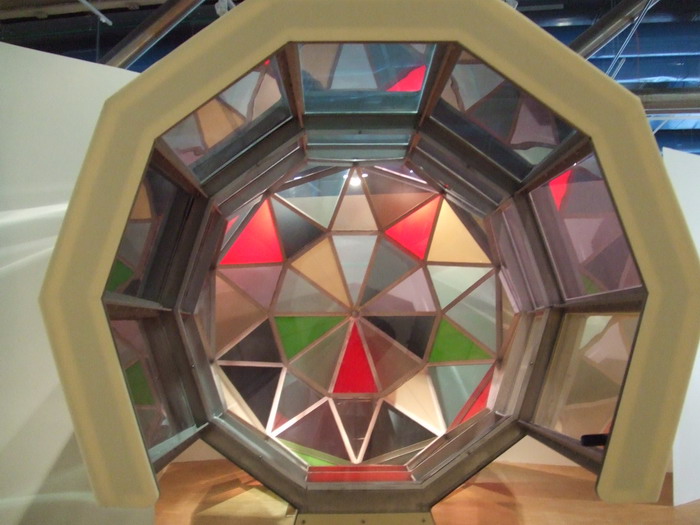
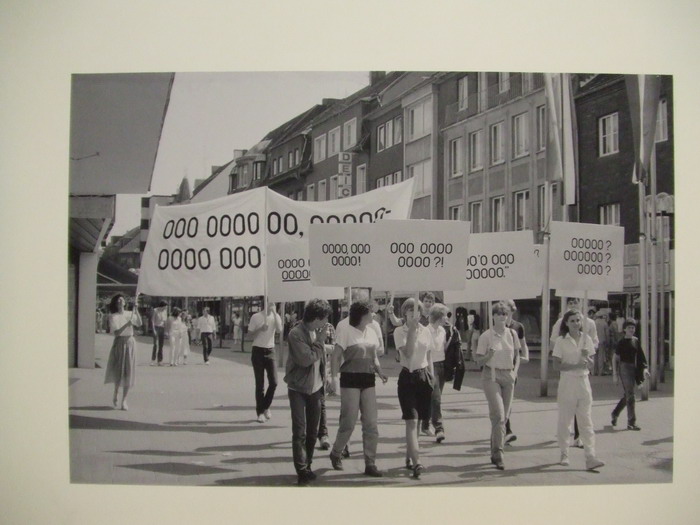
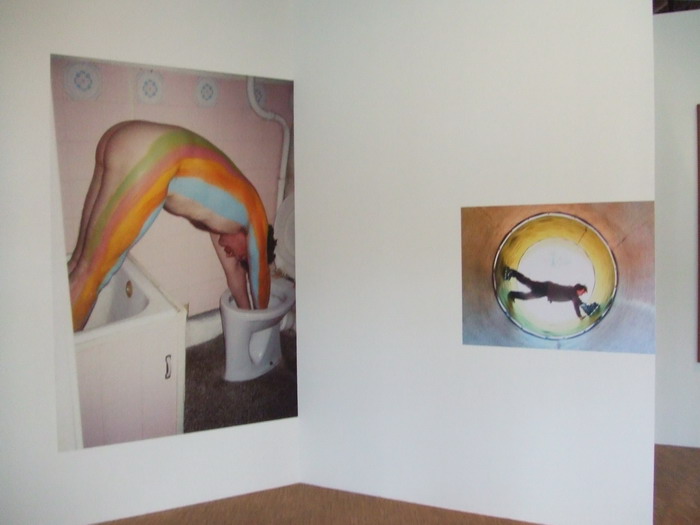
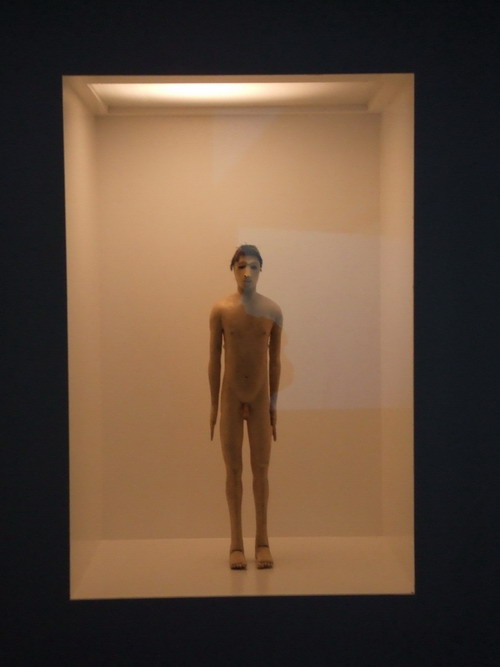
"Xu Ruo's Past: A Discontinuous Art History of the Former Eastern Bloc" special exhibition: April 14 to July 19 at the South Gallery, Centre Pompidou. The Centre Pompidou commemorates the twentieth anniversary of the fall of the Berlin Wall with this special theme, or more precisely, elucidates the contemporary art trends under the democratic liberation of Eastern European societies. It re-examines representative avant-garde artists from the former Eastern Bloc under the communist bloc and their art history, as well as the connections for the new generation of artists continuing this legacy. The exhibition includes over fifty mid-to-young artists from all Eastern European countries, presenting a comprehensive view of the diverse faces of Eastern European avant-garde art.
The exhibition borrows philosopher Walter Benjamin's theme to explicitly point out this concept of discontinuity, while affirming current occurrences and unfinished possibilities—meaning the past can continue to be revitalized in the present. In the modernist era, the concept of art history was seen as linear and continuous time; in contrast, the fragmented Eastern European context adopts a new polyphonic musical landscape.
The entire exhibition rhythmically presents six major themes within a series of large theatrical spatial structures designed by Polish artist Monika Sosnowska:
In the Utopia of Modernists: Communism or socialism itself is a political utopia, manifested in the grandiose and impractical ideals of many rulers, ultimately becoming totalitarian dictatorship. Re-examining Eastern European modernist plans, numerous illusions shattered like nightmares. For example, in 1970, Romania under Ceaușescu's most despotic and harsh rule engaged in grandiose construction projects, building a series of Stalinist-style magnificent architectural complexes in the capital, Bucharest. Ion Grigorescu documented how this regime's utopia squandered national resources and power regardless of people's livelihoods, forcing cities into dead ends. Forty years later, young Cypriot artist Gaillard records and elaborates on the collapse of Eastern European modernism, raising questions about such symbolic nostalgia.
This modernist utopia continued to spread positively in Eastern Europe. New generation artists David Maljkovic from Croatia and Thea Djordjadze from Georgia successively delved into this issue of modernist aesthetics. Most concretely, in 2000, in Albania—the poorest country in Europe at the time—Edi Rama, the mayor of the capital Tirana, proposed an extraordinary plan to improve urban aesthetics, asking artists to renovate dilapidated modern apartments and office buildings, revitalizing the city. This plan deeply rooted in Eastern European traditions used artistic intervention to change society and even transform the world.
Totalitarian Illusion: Was the total illusion of communist society a dream come true or a disillusionment? Artists often became tools for regime propaganda, traditional guardians, with changing the world as their vocation. Official art became the system; those excluded were marginalized. True artists found it difficult to express their sensibility, retreating into spirituality and constructing parallel worlds. Hungarian artist Miklos Erdely was a pioneer in this, combining social critique with spiritual exploration. Soviet poet-artist Dimitri Prigov was no exception, becoming a vanguard of Eastern European conceptual art in the 1970s using mysterious symbolism. Of course, there was also Czech artist Julius Koller, one of the most representative artists of the 1970s-90s, creating images of alternating worlds. Polish artist Pawel Althamer played the role of a shaman, while Hungarian artist Attila Csargo explored mathematical connections to cosmic resonance.
Anti-Art: A series of anti-art trends emerged in the Western art world in the 1960s, especially radical Italian artist Piero Manzoni and French artist Yves Klein, as well as the international Fluxus group. This trend quickly permeated Eastern Europe. Encouraged by modernism, the most notable was the appearance of the Gorgona art group (members Mangelos, Josip Vanista, Julije Knifer, etc.) in Zagreb, the capital of former Yugoslavia's Croatia, in 1950. Driven by avant-garde spirit, they actively practiced and explored possibilities for new plastic arts. Czechoslovak artist Julius Koller painted "anti-pictures," deeply influenced by his environment, conveying the necessity of alternative feasibility, especially under frequent regime threats and bans, seeking autonomy in the realm of plastic arts. Poland's most representative artist Edward Krasiński also established art revolutionarily within this extreme modernist behavior and attitude.
Public Space – Private Space: Public and private spaces were completely distorted under pre-communism, with interpretations entirely different from the West, especially regarding the harsh surveillance of public space. Isolated creators were good at hiding themselves, or could only take refuge in private, hidden spaces. Maintaining distance from the systemic realm, they cleverly transformed private spaces into creative public spaces.
In the 1970s, Czech artist Jiří Kovanda cleverly realized his subtle actions in public spaces, intending to criticize the loss of freedom. Hungarian artist Tibor Hajas created works that confused the boundaries between public space and private intimacy. Croatian artist Mladen Stilinović questioned the role of the artist with humor and irony. Contemporary new generation artists Roman Ondak and Ciprian Muresan continue to explore and deepen this discussion between limited public and private spaces.
Women – Feminism: With the rise of Western feminism and sexual liberation in the mid-1960s, revolutionary Eastern Europe saw numerous discourses surrounding women's issues in the 1970s, with some active women adopting a new female attitude. Most notable during this period was Polish female sculptor Alina Szapocznikow, close to French Nouveau Réalisme, whose works connected body and eroticism, developing the female body in a humorous way. Former Yugoslav artist Sanja Iveković used video to emphasize the intense discourse of the 1970s mass media turning women into objects. Meanwhile, Polish artist Ewa Partum boldly held multiple feminist actions in public spaces. Czech female sculptor Maria Bartušová questioned women's issues, especially through the image of eggs.
Micro-political Actions and Institutional Critique: Under despotic totalitarian communism, some still risked their lives to critique politics and systems with wit. In Hungary in the late 1960s, especially around the Prague Spring, amidst a wave of desire for freedom and democracy, Hungarian artist Tamás Szentobó, based on conscience liberation, entered this path of institutional and political critique, eventually being expelled. Former Yugoslav Bosnian artist Braco Dimitrijević, or another Hungarian artist Tibor Hajas and Endre Tót, were no exceptions, unquestionably proving this courage and conscience. Contemporary new generation artists continue to delve deeper into this political and institutional critique, even more radically, such as Romanian artists Dan Perjovschi, Daniel Knorr, and Mircea Cantor, who target critiques of the plastic arts system or nation-states.
Revisiting Utopia: Contemporary Eastern European contemporary art exploration, under the general atmosphere of globalization and influenced by strong Western art trends, also comes from nostalgia for local past ideologies (non-official systems): the tradition of micro-political actions, faith in modernist utopias, and the basic social role of artists have all become sources for current new art exploration. This tradition transcends generations and belongs to geographical products. Understanding Xu Ruo's past is understanding future possibilities.
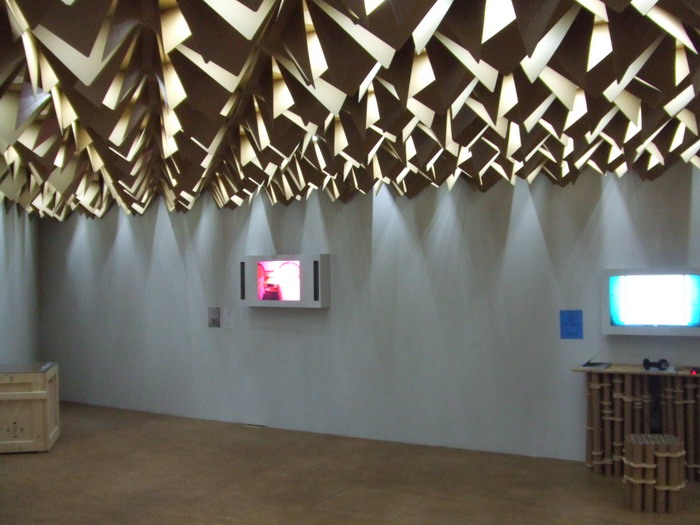
315 Exhibition Space is a Data, Archive, and Film Exhibition Room: The 315 Exhibition Room was designed by Czech artist Tobias Putrih. Within an overall eco-friendly cardboard architectural structure field, through rhythmic and streamlined spaces, Eastern European past data archives are orderly presented: documents and visual materials, videos, films, photos, and image files, etc. These archival materials clearly clarify the background and conditions for exhibiting these works. These precious records of artistic actions and performances are like history; additionally, one can specially see valuable image materials such as the intimate interactive relationship between the Paris and Eastern European art scenes in 1960 and 1970.