"Exploring the Category of Productivity - 2" Exhibition
(Top) Daniel Firman, left image "Jerome" 2006, right circle left "Butterfly n2" 2007 and right "Clementine" 2006. (Upper second) Elodie Lesourd "Dyonisos" series 2006. (Middle) Pascal Pinaud, right image "Serre a dessin" 2000, left image "Kebab a voeux" 2001.
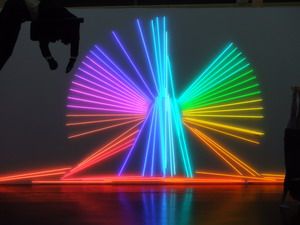
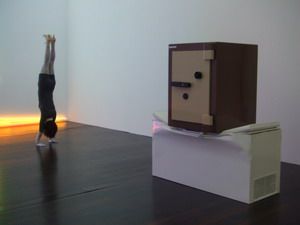
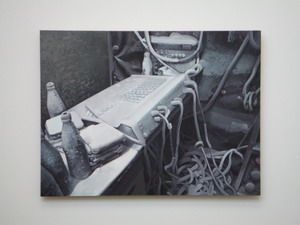
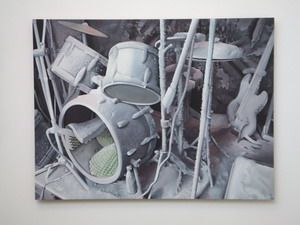
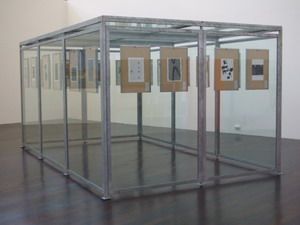
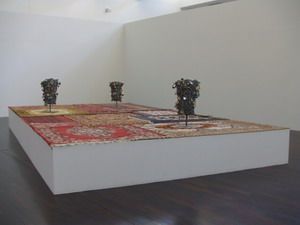
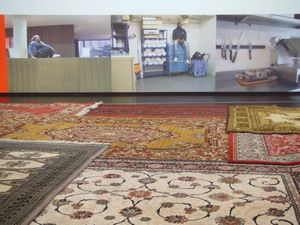
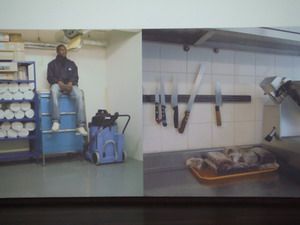
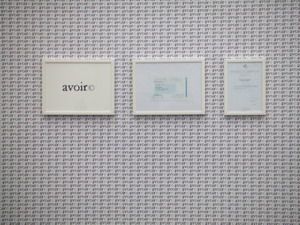
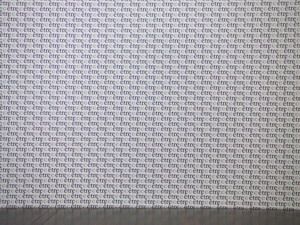
(Top) Daniel Firman, left image "Jerome" 2006, right circle left "Butterfly n2" 2007 and right "Clementine" 2006. (Upper second) Elodie Lesourd "Dyonisos" series 2006. (Middle) Pascal Pinaud, right image "Serre a dessin" 2000, left image "Kebab a voeux" 2001. (Lower upper) Alain Bernardini "Tu m auras pas" series 2006-07. (Lower) Raphael Boccanfuso, left image "Copyright - papier peint" 2007, right image "Copyright - papier peint" 2007. The "Exploring the Category of Productivity - 2" exhibition (Zones de Productivités Concertees - 2) was held from February 2 to April 29, 2007, at the Musee d'Art Contemporain du Val-de-Marne in the southern suburbs of Paris. This is the second installment of an innovative series exploring the category of artistic productivity regarding the relationship between art and economy. Art often serves as a reflection of various aspects of society; artists contemplate their era, their tasks, and their roles within society. The relationship between art and economy constitutes an innovative language. These exhibitions are not intended to develop this theme but rather invite viewers to engage in analysis through the exhibition. Naturally, questions, concepts, and thoughts regarding the economy are treated as permeating contemporary artistic practices. While this special exhibition series emphasizes its thematic focus, it remains independently consistent in its approach to art-economy analysis.
The second installment invited six young artists: Sandy Amerio (born 1973), Alain Bernardini (born 1960), Raphel Boccanfuso (born 1964), Daniel Firman (born 1966), Elodi Lesourd (born 1978), and Pascal Pinaud (born 1964). Elodi Lesourd creates hyper-realistic paintings that present scenes of music recording studios covered in layers of dust, with time accumulating in space, inspired by the "Do it yourself punk" philosophy. Sandy Amerio employs narrative video art, featuring images of industrial zones and oceans near New York, ranging from aerial views to close-ups, accompanied by literary narration to depict contemporary social symbols, analyzing indeterminate social phenomena and mechanized worlds constructed through shared unconsciousness. Alain Bernardini uses video and object installations to present non-working states through images of museum staff in work settings, contemplating the imagery of artistic production within social symbols: who owns these images? What is their value? He questions the artist's position within culture and economy. Raphel Boccanfuso centers his installations on the French words "Etre" (To Be) and "Avoir" (To Have), attempting to reveal structures invisible to ideological machines, intervening like a corrosive toxin in regulated society and imagery. Daniel Firman examines the relationship between social consumer objects and bodies within their evolving spatial contexts, evoking mnemonic spaces—physical, social, psychological, metaphysical, or active. Pascal Pinaud questions the field of painting through objects within industrial and mechanical products, conducting polymorphic explorations of various possibilities of formation.