The Advancement of Abstract Painting Art
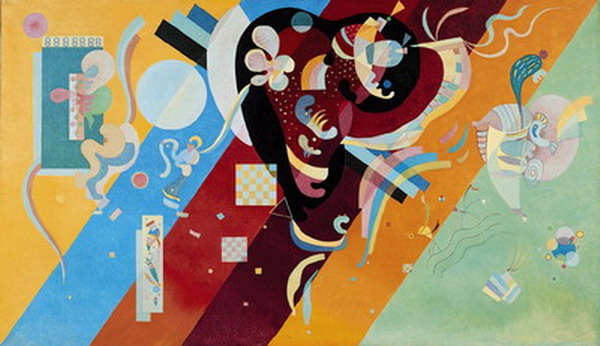
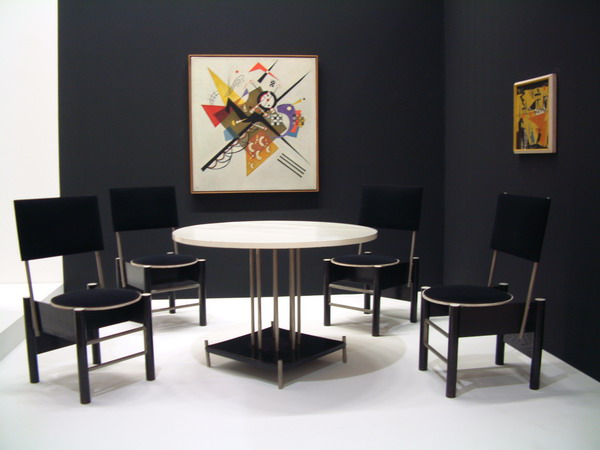
Kandinsky, Composition IX, 113x195cm, 1936, Collection of the Musée d'Art de Saint-Étienne, France
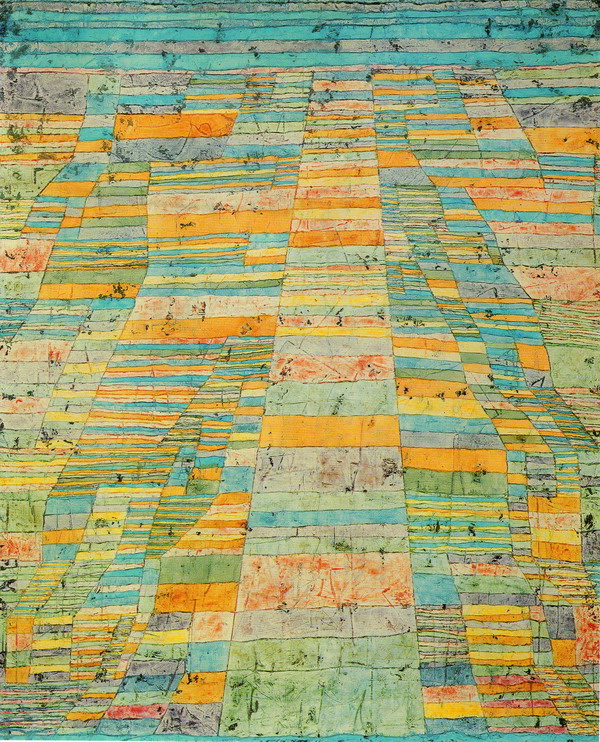
Starting with the Impressionists’ exploration of capturing light, through the Neo-Impressionists’ application of scientific principles to decompose light, and into Post-Impressionism: the unique artistic viewpoints of Cézanne, Van Gogh, and Gauguin all helped construct the future world of abstract painting. Cézanne’s unique principle of natural planning simplified natural forms into basic painting languages of circles, cones, and cylinders, directly influencing the birth of Cubism. Van Gogh’s intuitive perception from natural forms expressed inner imagery directly through the subjective, emotional colors of Northern Europeans, embodying a form of Abstract Expressionism. Gauguin’s primitive, emotional sensibility, subjective simplification of forms, and distribution of color blocks became a modern visual language that carried forward the past and opened up the future, pushing painting art toward the abstract world.
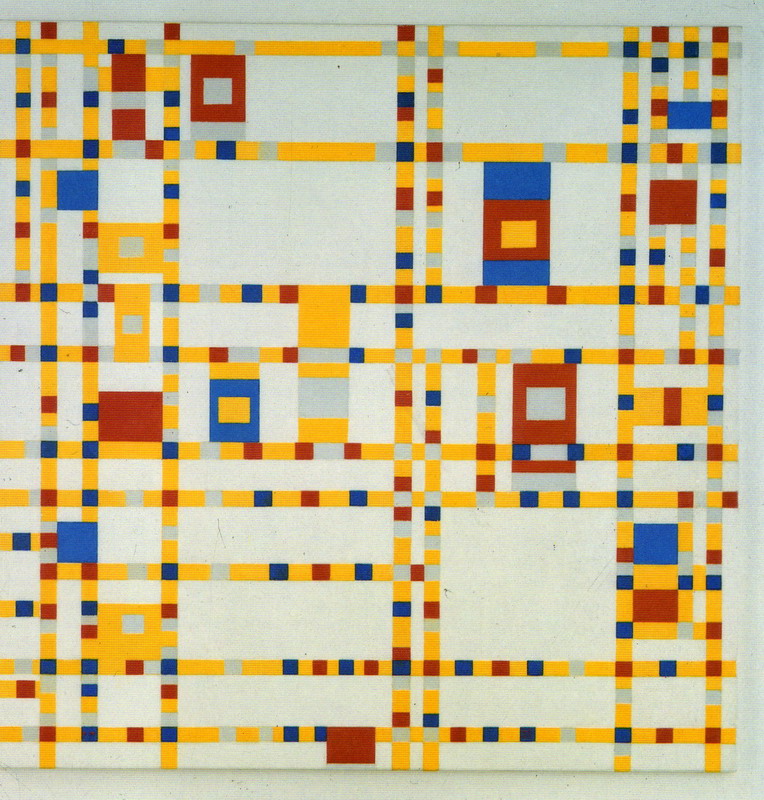
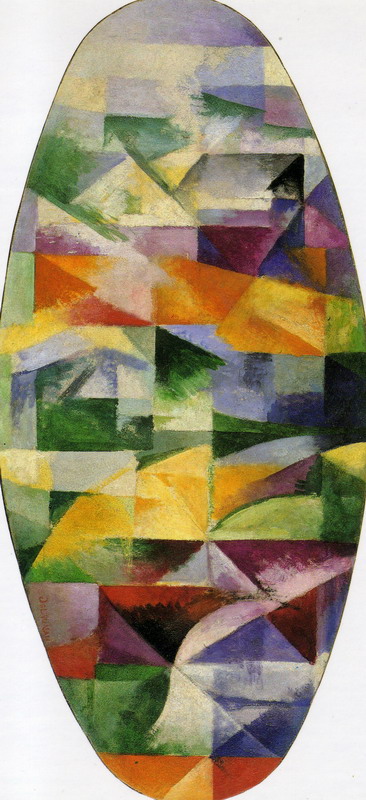
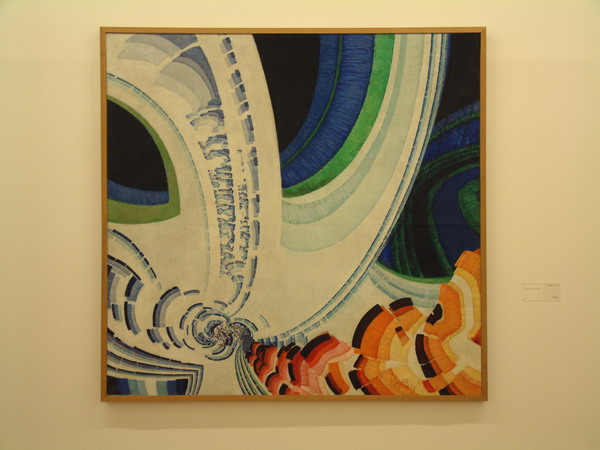
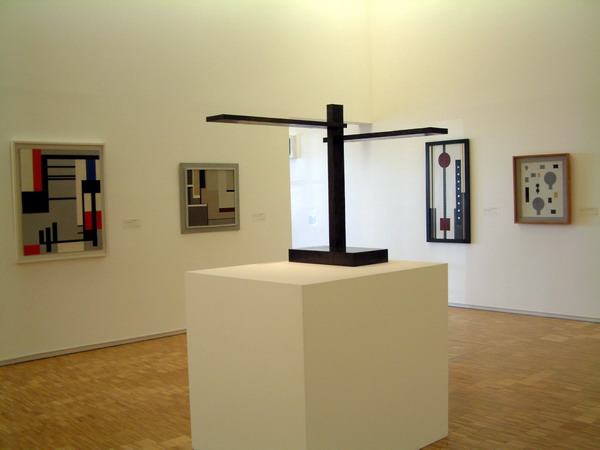
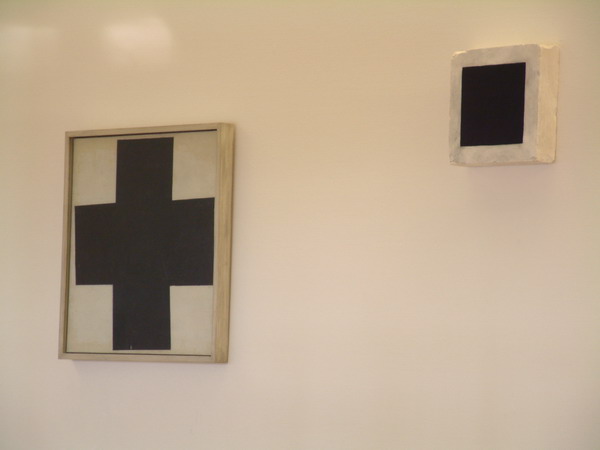
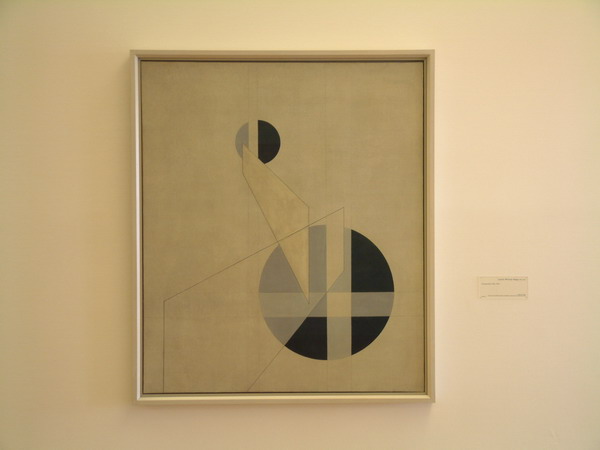
However, the development of Modernism saw the birth of Cubism when Picasso and Braque grasped Cézanne’s natural forms. They simplified images, decomposed nature, and reconstructed forms under multiple viewpoints. In Picasso’s Les Demoiselles d’Avignon (1907), the illusionistic space of Western art since the Renaissance was dissolved, marking a new era in art history. Subsequently, the Futurists’ motion forms combining speed and time reorganized natural images, as seen in works by Boccioni or Duchamp. Overall, Cubist and Futurist works led more or less to the edge of abstract art. On the eve of World War I, Western painting history underwent a radical shift akin to the October Revolution in Russia; heroes on all sides accelerated the liberation of natural forms, freeing painting from natural shapes: "Creating a work is equivalent to creating a world" (Note 1). Kandinsky’s spontaneous, improvised expression developed lyrical abstraction. Mondrian’s new plastic forms derived from vertical and parallel lines in the natural world formed rigorous geometric abstraction. Delaunay’s exploration of simultaneous color and light constructed the pure abstraction of Orphism. Kupka explored painting between seeing and hearing, pioneering musical vertical line abstraction. Soviet avant-garde artists made unprecedented reforms in Western painting history. Following Kandinsky, amidst the socialist revolution, Malevitch’s radical Suprematism was born: a black square on a white canvas, or absolute black on black, white on white. Subsequently, Constructivists Rodchenko and Tatlin radically expanded the field of abstract formal composition. Gabo and Pevsner moved from absolute painting construction to exploring new materials for modern sculpture, pushing Western art forms to unprecedented heights. In 1917, artists like Mondrian and Van Doesburg founded De Stijl. This was followed in 1921 by the Bauhaus, founded by architect Gropius and others, who continued these explorations, realizing their idealistic utopias in the aesthetics of daily life. By World War I, flat painting art in Western history seemed to have reached an unprecedented state. With the liberation of form and color, individual imagery unfolded freely; painting’s visual language was no longer constrained, allowing the inner essence to be displayed through free will. Then came Dadaism, which overturned art during the war. Like the war itself, this artistic revolution operated on the spirit of destruction as creation, condemning pre-war art, politics, and society. Archipenko declared: "Art should not be realistic, nor idealistic, but must be true." The consciousness here is that no matter how one hides it, natural imitation of any form remains a lie. In this sense, Dadaism provided a new stimulus for truth; Dada was the turning point where abstract capability transformed into a continuous, great international artistic movement (Note 2). Duchamp announced his abandonment of painting, engaging in artistic revolution using readymade objects (1913 bicycle wheel placed on a chair, 1914 bottle rack). Sacred art subsequently became vulgar. Picabia’s mechanical drawings of abstract forms, Arp’s organic forms in paintings and sculptures, and Schwitters’ reception, collage, juxtaposition, and composition of objects further developed environmental installation art from object paintings. This established method of positioning installations had a profound influence on the art of the 1970s. During World War I, French Fauvism, exemplified by Matisse’s hedonistic art, was no exception, boldly liberating natural forms and colors in abstract works: for example, the 1914 painting Window at Collioure. Matisse’s later cut-outs were prescient; within this conscious imagery and concrete metaphor lay an abstract essence that directly influenced the 1950s abstract painting world. Like the abstract pioneers Kandinsky and Mondrian, they achieved similar effects. Klee, the most unique artist in modern art history, also participated in this abstraction of inner imagery. He wrote: "Art does not reproduce the visible; rather, it makes visible." Klee emphasized the subjectivity of the artist’s inspiration, depicting through painting elements—points, lines, planes, and space—which are principles of abstract painting. Like Kandinsky’s artistic philosophy, they believed in the existence of a spiritual or mental reality that can only be understood and communicated through a visual language, composed of non-figurative symbolic signs (Note 3). Thus, the symbols in Klee’s painting world were the organic development of his feelings, within a musical, lyrical abstraction.
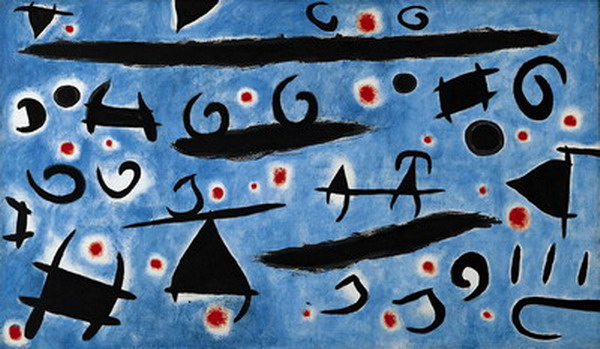
Following Dada, Surrealism gathered its group under Breton’s centripetal force, employing psychoanalytic unconscious automatic instinct techniques for artistic creation. This was another liberation of inner consciousness. Their intent was to express the true process of thought, regardless of other methods, distancing themselves from any rational control, and establishing independent records of thought free from aesthetic or moral prejudices (Note 4). Future painting was liberated from rational consciousness, galloping freely within inner imagery or subconscious images, roaming the world of humanity’s original face. These ideological orientations opened new fields for future abstract painting. Although pure formal abstraction was not visible within the Surrealist group (of course, Arp’s organic forms were the most abstract; in Miró’s artistic world, those biological-symbolic signs were not completely or purely abstract; Ernst, Masson, Matta, Tanguy, etc., were no exceptions), within these instinctual images of automatic technique, they generally used symbolic or metaphorical object images, or else dream-like natural images like Dalí and Ernst. Of course, Masson occasionally produced works closer to inner imagery (such as the sand drawing series). Otherwise, in Miró’s Blue Series No. 2, we clearly see the essential display of poetry. However, these works were created after the storm of the 1950s abstract trend (made in 1962); were they also influenced by the abstract world’s storm? We must examine this with some skepticism. Of course, after World War I, artists like Kandinsky, Mondrian, Delaunay, Kupka, Matisse, and Klee, as well as Picasso and Braque, continued to develop their mature works, with many masterpieces still appearing. Duchamp had already married off to the New World of America before the war (1913) to open up new territories.
However, world trends, situations, politics, economy, and society, after restructuring following World War I, did not last ten years (1929) before the global financial collapse. The European continent became unstable like the New World of America. Under political and economic shocks, society entered the turbulent era of the 1930s amid depression. Artists, driven by social momentum, participated in the battle of essence. German Expressionist painter Beckmann wrote: "We must participate in the impending catastrophe; we must open our hearts to accept the cries of the oppressed. As artists (though we may be overly arrogant), we face them with the goals of the people and adjust our existential value" (Note 5). Painters like Dix, Grosz, and Kokoschka presented the emotion and testimony of this historical stage. Amidst social depression, Hitler’s Nazi Party took power in Germany, Fascism governed Italy, and military dictatorship ruled Spain, among others. Picasso’s masterpiece Guernica, following Les Demoiselles d’Avignon, was the deepest expression of the Spanish Civil War. Picasso said: "Painting is a combat tool used to attack or defend enemies." It exposed social conscience and moral art, which was not hedonistic. In these historical processes, until the outbreak of World War II, a new era arrived for art history. Europe, exhausted by World War I, suffered again; the transfer of modern art’s vitality was severely damaged by the shift in European politics and economy. The New World of America became the core of Western politics and economy and the new territory for modern art.
The New World of America, especially New York, became a refuge for European exiled artists during World War II, making New York’s art scene even more active. One could learn from the list of visitors to Mondrian (who died in February 1944) or participants in his funeral that many artists were present: Duchamp, Ernst, Léger, Archipenko, etc., and naturally including Breton, the guardian of Surrealism, and his companions: Masson, Dalí, etc. Under such dynamic cultural conditions, the undamaged Americas, impacted by the world wars, accelerated modernization. The takeoff of industry, society, and economy, along with a thriving society full of modern democratic vitality, provided a hotbed for modern art (thought). Especially as European innovative artists arrived on American soil, spreading their avant-garde artistic thoughts and ideologies, assuming the responsibility for the future new art world with liberated intellect. The United States seemed ready to welcome future art, opening the arrival of a new era—the rise of post-war Abstract Expressionism.
(Note 1): Reference Centre Pompidou Modern Art Museum Guide Card - Kandinsky Card. (Note 2): Reference History of Modern Painting, page 117, by Herbert Read, translated by Li Changjun, published by Dalu Bookstore. (Note 3): Ibid., pages 144 and 180. (Note 4): Ibid., page 132. (Note 5): Reference Taipei Fine Arts Museum, Modern Art Issue 38, Shock of the New World, Chapter 6 On the Edge of Society, page 83, by Robert Huglie, translated by Zhang Xinlong.