Yan Dingsheng - Revealing the Mysteries of Life: "Boundary" Solo Exhibition
Magpie and Hua Mountains in Autumn Scenery No.1 162.5x122.5cm Acrylic on canvas 2010
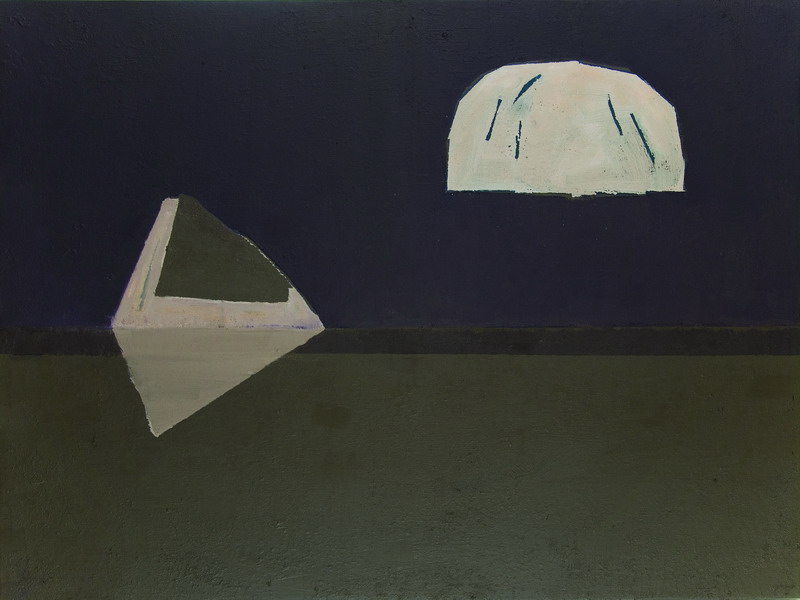
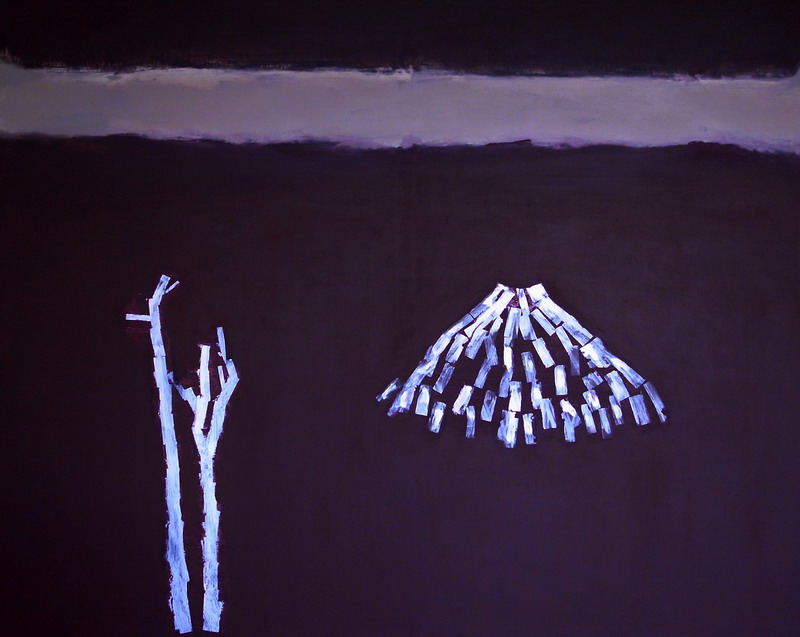
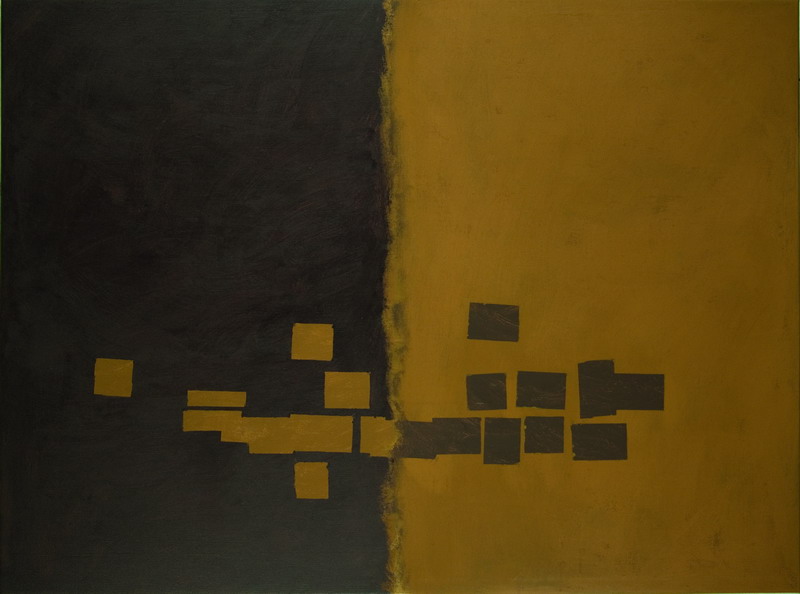
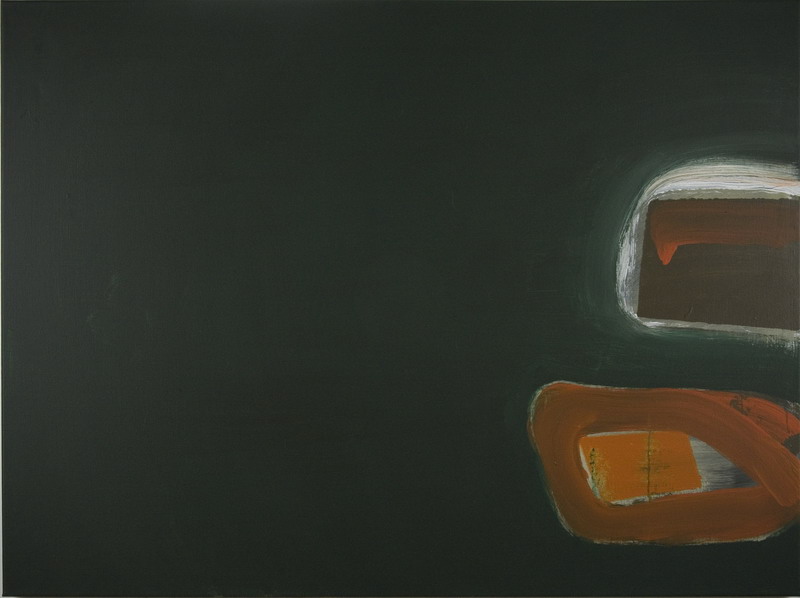
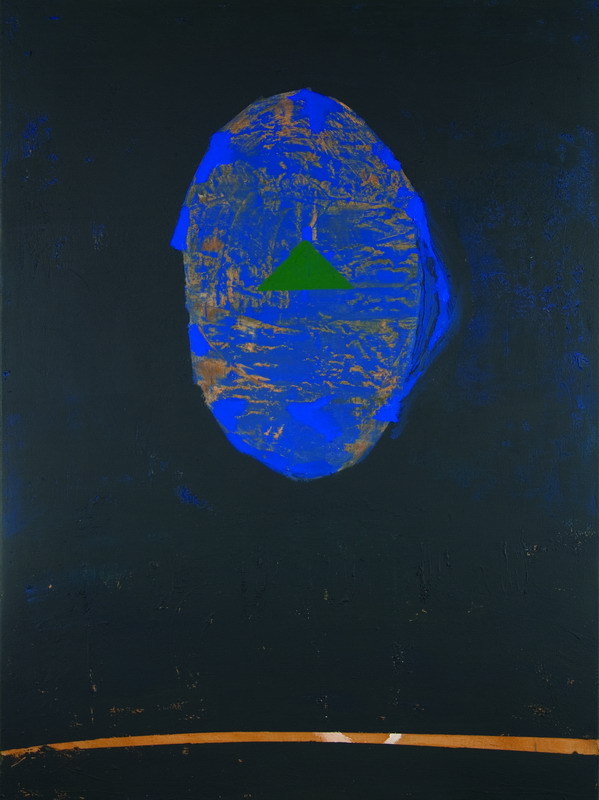
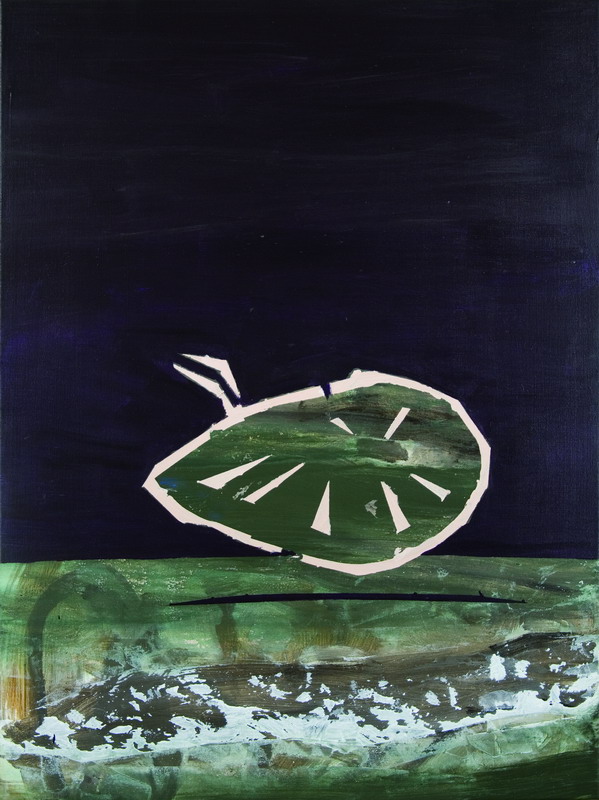
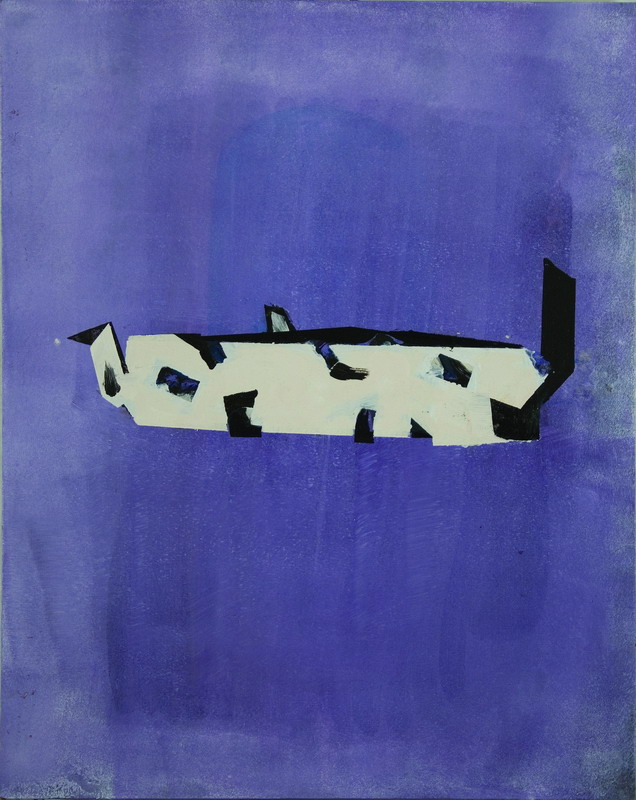
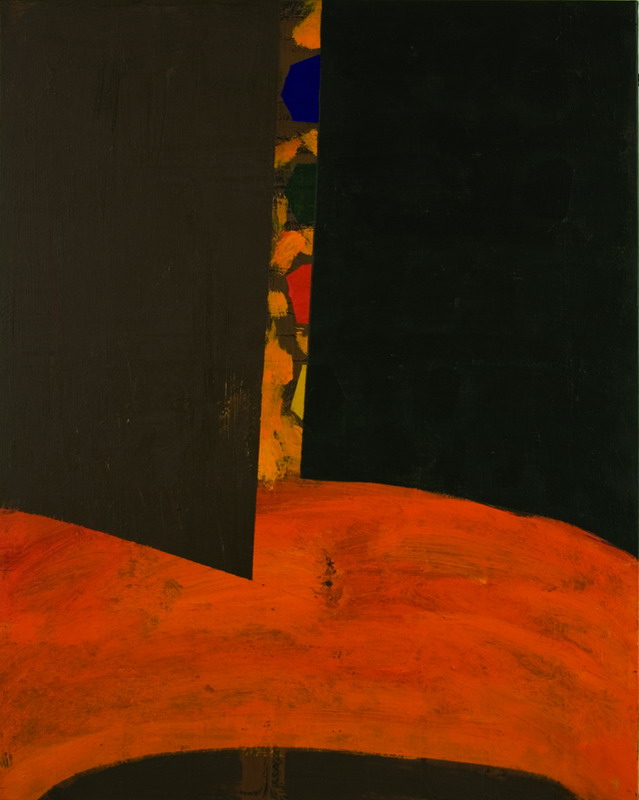
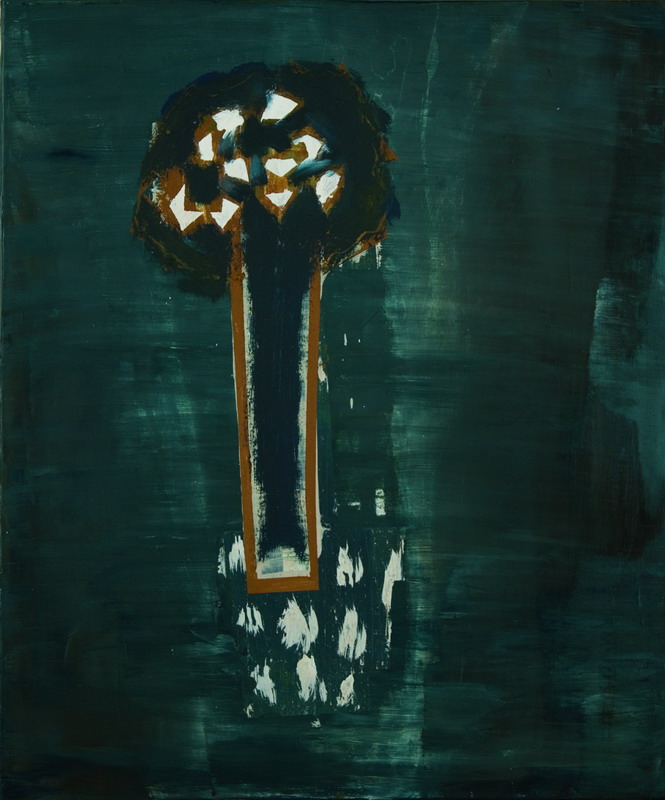
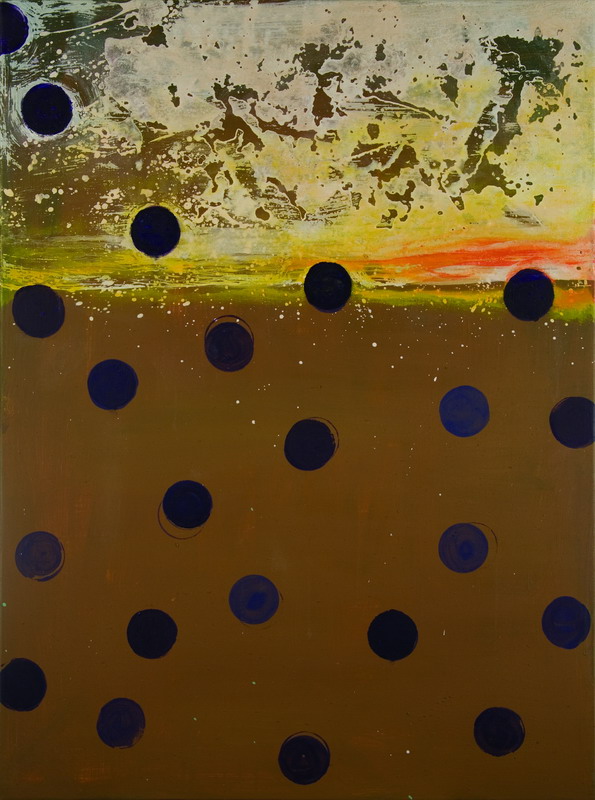
Field of Time and Space 97.5x130cm 2010 Yan Dingsheng - Revealing the Mysteries of Life: "Boundary" Solo Exhibition: Taiyu Meixue Tang / October 23 ~ January 09
Boundary. Life has edges, but existence is boundless. The edge is the situation, the boundary is the field. Art has boundaries but no edges; consciousness reaches everywhere. The boundary touches upon mysterious space. The boundary reveals the mysteries of life.
Yan Dingsheng is a painter with a unique style who was active in the 1980s, and was one of the early painters belonging to the New Style of Southern Taiwan. His creative era coincided with the West's entry into a postmodern artistic context. Amidst various returns to tradition and cultural consciousness everywhere, local cultural traditions became the source of creation and the foundation of interpretation, forming a multi-subjective cultural consciousness that expanded into today's globalized pluralistic situation. Following political liberation and the deepening and awakening of subjective consciousness in the Taiwanese art world, there was a return to local contexts and development from the roots of native local culture, forming a new force and constructing the diverse face of the present. Speaking of the Southern Taiwan-New Style, using current globalized terminology, it is a paradigm of a purely local (metaphysical) artistic style that exhibits a strong sense of autonomy.
Yan Dingsheng is not only one of the most independent artists of the Southern Taiwan-New Style, but also insists that artistic creation and life are an inseparable whole—the whole of life. His selfless concern for the local natural environment and human condition embodies his own ideals for art and life philosophy. In Taiwan, he is a rare person who firmly believes that "life is art, art is life." When his artistic creation wanders in the deep inner conscious world of his personal life, and he examines the people, events, and objects in the environmental space with a sharp eye, especially the relationship between humans and nature, through the internalization of subjective imagery and intuition, moving effortlessly between the representational and the abstract, it possesses a particularly novel poetic sense and a strong humanistic quality and appearance.
"Boundary"; refers to the outer edge of a certain range, or a dividing line that splits something in two, that is, an intermediary and meeting zone. By definition, it is also a fence, a marker on both sides, a limit or a line. Geographically defined, it is called a boundary; an intermediary line divides the inside and the outside. But from which direction is the inside and outside pointed? The inside and outside are determined by the position of the one who establishes them. Where is the boundary of life or art? Is it having edges but no boundary, or having a boundary but no edges? It could even be said that there are no edges to define a boundary, or that there are no edges and no boundaries. The boundary implies a spatiotemporal realm, and is also a new creative situation, a place of new opportunities, the true place where creation begins. "Boundary" has become the new starting point for Yan Dingsheng's artistic creation after years of dormancy. The boundary, as a marker realm for self-transcendence in art and life, arriving at the boundary implies infinite possibilities, because the boundary plays the key role of both endpoint and starting point. Crossing the boundary suggests the adventure of life, and is also a point of growth in perception beyond the physical. Points gather to form lines, lines build to form surfaces, shaping the entirety of life, within which the boundary naturally disappears. Here, the artist perceives the "boundary" as the horizon for the expansion of artistic creation based on life's realizations. The horizon always stands there in the unreachable distance, always representing the target of distance. Boundary? It seems to become the origin of the expansion of the vast universe and the ripple of life's existence. Revealing "the state of mind that fluctuates with the sound of the tide in art, able to disappear along with it after the tide recedes." Yan Dingsheng, who carries a certain traditional literati aura, presents the completeness of life with elegance and creativity in reality. (Note 1)
In the past, the active Yan Dingsheng almost disappeared from the art world for nearly a decade, resolutely searching for the origin of his personal art and life, persistently attempting various possibilities, delving into states of life with the intent to break through the bottlenecks of personal creation and life growth. He also returned to Southern Taiwan to find the horizon of his creation, and was fortunate to glimpse the native scenery of life under the guidance of Teacher Xiao Qin, gaining a reborn artistic vision. In recent years, plus the exploration of existence in recent years, delving into Buddhist classics, tea ceremony, natural medicine, and quantum physics, what expanded was not just the field of life and spiritual context. It also deeply changed his attitude towards creation. As he once felt, his past painting creation was like a warrior, tensing all nerves to engage in fierce battles, with a spirit of "success or death," feeling deeply that creation was exhausting and uncomfortable. In recent years, he has adjusted art to be like daily life, natural and spontaneous. Artistic creation is an occurrence, no longer deliberately manipulated or forced for expression; going with the flow yet without deliberate action, what should happen will happen naturally. Thus, in what seemed like a desperate situation of doubt and hesitation, he happily found a new vista, releasing a new atmosphere for life and creation.
Yan Dingsheng's new works, brewed for many years, are more affirmed and at ease, with a fresh appearance. A particularly striking form: clarity between the ambiguous forms of abstraction and representation, internalized into intuitive image symbols, entering a refreshing lyrical abstract domain and metaphysical world, highlighting the artist's extraordinary perception of imagery. Thus, the past expressive new manifestation brushstrokes, and the subconscious disturbance of calligraphic lines and textures at the bottom layer have disappeared, replaced by generously affirmed subjective color planes.
Color: Coming from a family of traditional Chinese medicine practitioners, Yan Dingsheng has a unique approach to using color. Although he primarily uses acrylic paints, he often mixes special pigments from Chinese medicinal materials into the high-chroma acrylics. This changes not only the chroma of the color but also enhances the richness and density of the color, creating a special hue that is abundant, profound, and substantial. In his recent works, he has developed new material pigments: mineral red halloysite (red earth), animal oyster shell (white and gray), and plant indigo powder (deep blue). This strengthens the materiality and color sensation of the pigments, forming color energy and imaginative space. For example, "Drifting with the Tide" has a magnetic deep purple, or "Quiet, Govern, Point, Grind" has a profound blue approaching black. The new works are not only abstract but also color-field and flat.
The spatial concept is more metaphysical than before, with only "Yellow Ocean" carrying a traditional spatial imagery. The space of "Gap" is the most subtle, adopting a formal contrast relationship to construct an extraordinary imaginative and psychological space. "Spitting Floss" leans towards the ethereal quality of Lao-Zhuang philosophy, beautifully revealing a metaphysical space. "Finite yet Boundless," "Night of Sound," "Floating," and "A Kind of Freedom" are all inner landscapes, using color-field contrasts or lines to reveal poetic spaces, interwoven with another time and space. "Field of Time and Space" and "Gaze" possess vast cosmic fields and imaginative spaces. "Magpie and Hua Mountains in Autumn Scenery No.1 and No.2" use color fields and composition to create minimalist Chinese poetic landscapes, displaying a magnificent field space and humanistic situation. "Transformation" and "Drifting with the Tide" possess meditative spaces. The intuitive "Quiet, Govern, Point, Grind" unusually elucidates a suggestive structural space.
Recently, Yan Dingsheng has also delved into natural medicine, simultaneously exploring physical therapy and quantum physics. Thus breaking into a new field of quantum mechanics painting, utilizing metaphysical symbolic image codes, such as "Field of Time and Space" and "Gaze," to expound the boundless energy of the vast universe. Through instantaneous chain reactions of quantum and molecular transformation, diffusion, intertwining, juxtaposition, and condensation into density, they compose an energy body without beginning or end. Scientifically, energy and matter are basically considered one. The artist, with his infinite creativity, uses vision to imagine, turning abstract quantum physics into concrete forms as the reality of energy.
The new works have a unique insight into color and graphic energy, and a more precise and inherent structure, both tending towards a beauty of simplicity, strengthening an essential painting vocabulary.
Furthermore, the new works have a particularly strong sense of life exploration. There are many referential philosophical-poetic painting themes that were not present in the past, not only intending to strengthen the depth of thought and art but also echoing implied meanings. For example, "Quiet, Govern, Point, Grind," derived from Buddhist scriptures, symbolizes the stages of life cultivation. "Field of Time and Space" deals with quantum and physics, revealing chaos and existence. "Gaze" deals with introspection-quantum mechanics, mutually constituting a whole. "Transformation" and "Gap" elucidate the relationship between matter and energy. "Finite yet Boundless" comes from the book "Soul and Physics," emphasizing a visual perspective. "Spitting Floss" explores the heaven and earth within the exhalation and inhalation of Taoist introspection. "Margin" is the catalyst between the virtual and the real, hinting at a finite yet boundless horizon. "Night of Sound" is the situation in the quiet of the deep night, turning auditory sense into visual. "Night and Day Coexist" is the spatiotemporal realm where the starry night and daylight coexist. He continues to explore the relationship between humans and nature, as in "Magpie and Hua Mountains in Autumn Scenery No.1 or No.2," which uses concise forms to elucidate Chinese landscape fields. "Floating" and "Drifting with the Tide" come from Osho's concepts of self and non-self, galloping in the imaginative space of personal freedom.
Note 1: From the "Boundary" press release.