The Edge of Globalization or the Metropolis
At the crossroads in front of the Paris Botanical Gardens, a hidden space for Parisian vagrants to hide.
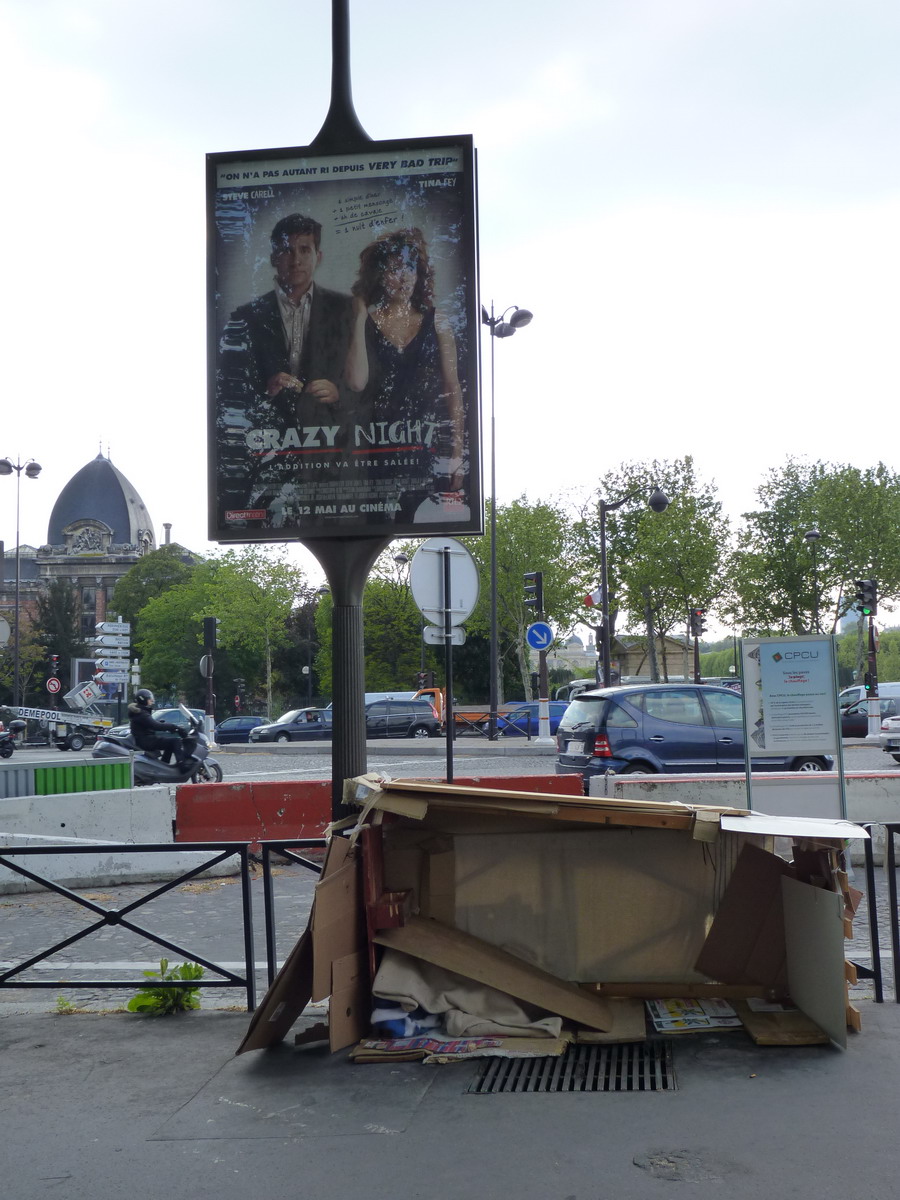
Globalization is a political reality. It has developed recently with commercial consumption, forming a liberal market economy under the economic and interest liberation of international multinational corporations and transnational capitalism dividing the globe. It is omnipresent in daily life—food, clothing, housing, transportation, and entertainment—and even in general systems of thought. It shapes informatization, economization, consumerism, institutionalization, standardization, colonization, or sub-colonization.
Globalization also clearly trends toward urbanization. Cities become financial cores for each region and hubs for commerce and industry, leading to population concentration. Globalized factories migrate nomadically across the world seeking cheap labor, exploiting natural and industrial resources and economic benefits everywhere. Assets gradually concentrate among specific classes, everything measured by economic costs, commercial prices, and output values. Under transnational corporations and capitalism, everything becomes more asset-oriented. Humanistic concerns become victims of current globalization; the imbalance in social resource distribution widens the gap between rich and poor, forming an irreparable social chasm.
We often hear in Taiwanese mass media about sky-high-priced luxury mansions in certain districts of Taipei, so expensive they are unimaginable. Could an ordinary office worker, working day and night for several lifetimes, ever dream of owning such a mansion? I wonder if there are any in Taiwan. Currently, in Paris, it is rare to find poor people who have jobs; not only can they not afford to rent houses, they cannot find rentals at all, and many sleep on the streets of Paris. One truly wonders what era or generation this is. No one can imagine that flowers are so filled with artistic atmosphere and beauty, so beautiful as to make one shiver with cold.
With the offshoring of industries and changes in working conditions, coupled with the global financial crisis and social disorder, jobs are hard to come by, and unemployment surges. Clearly, under globalization, vulnerable groups are marginalized. This is most evident in metropolises: whether in the Flower City-Paris or in the corners of streets and beneath commercial buildings in Taipei, Taiwan, opening your eyes reveals lost marginal figures. In Paris, the most common sight is vagrants asking for money in the subway; recently, people rummaging through trash cans in front of restaurants for food are frequent, and there are also many vagrants sleeping on the streets.
Returning to realistic Taiwan, during the day these people seem to become invisible, unseen in the bustling metropolis, which is too beautiful. When the lights first turn on, or late at night when the city is quiet, we often see uncles and aunties collecting cardboard boxes and newspapers along the streets, clinging to existence with their last breath. It is said that many people sleep at Taipei Station late at night; Longshan Temple is another base for Taipei’s vagrants. The lost often become invisible; occasionally seen in street corners, life is unimaginable. How does it feel to exist on the edge? Only one knows the warmth and coldness of life. Marginality is not a test of life, but an encounter of existence. Lost existence, existence is also lost within luxury mansions—who knows?