Encounters on Taipei Streets - Graffiti on Walls
An encounter in Taipei's Ximending - graffiti on walls. A masterpiece by the artist Candy Bird.
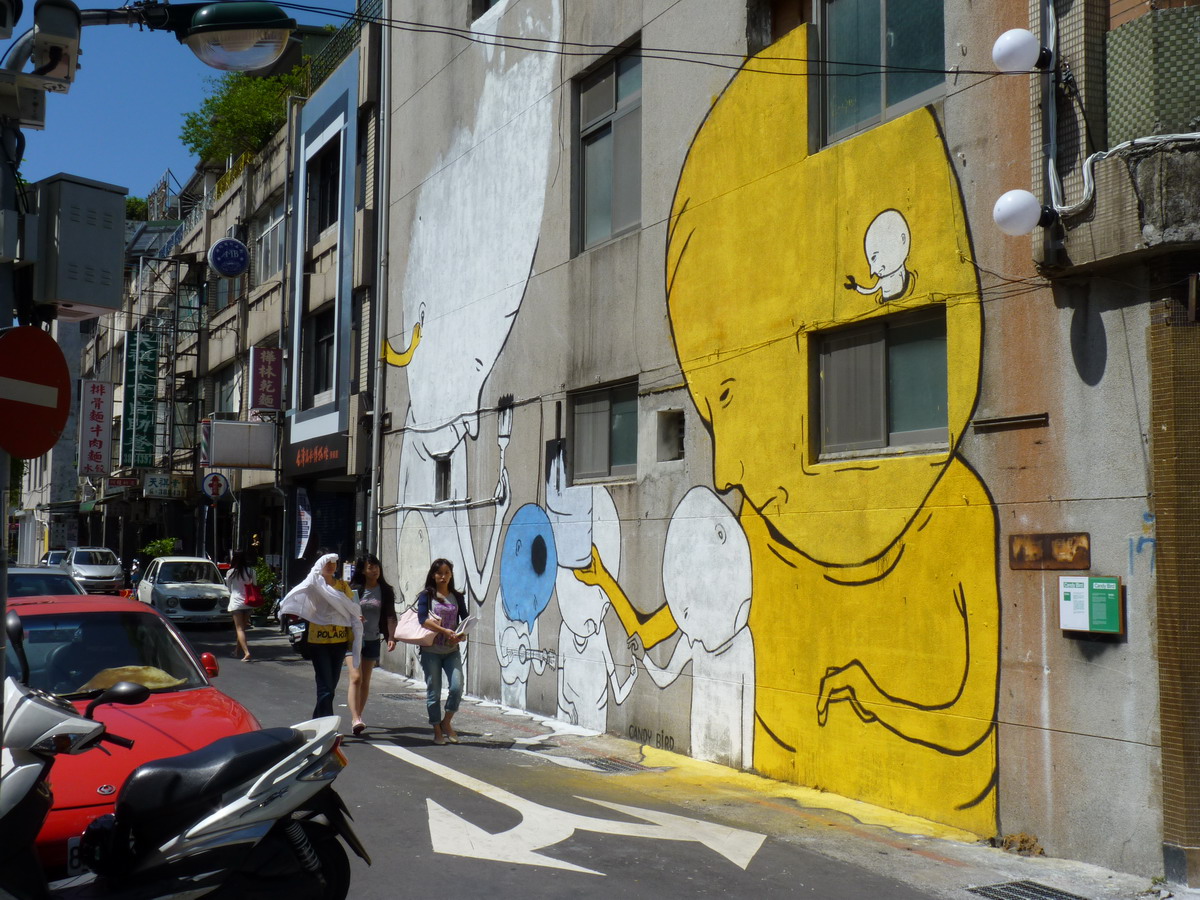
Graffiti is a global social and artistic message, hidden in the edges and abandoned suburban spaces of major metropolises. It represents a latent social energy released by the new generation—perhaps personal muttering, yet always aiming to convey collective consciousness and viewpoints. This information arrives unexpectedly, bringing wonder to passersby; even a fleeting glance conveys its message and impact. In this era of ubiquitous internet information, graffiti remains closer to the public than other channels, more direct and tangible. Because it is not virtual but challenges societal rules, its provocative nature is ineffable.
Every time I travel to a place or city, I walk with full curiosity, making it an integral part of my life. Arriving in Taipei, both familiar and strange, I was no exception. With camera in hand, I wandered aimlessly, always eager to explore, especially in urban alleys and marginal areas, or wherever fate led. Regardless of destination, a new perspective and experience were inevitable, as every accident and chance occurrence enriched life and existence.
Greater Taipei is filled with skyscrapers, resembling a concrete jungle where surprises and accidents frequently occur. One day, while organizing an exhibition in Taipei, I accompanied a friend for a stroll in Ximending. Near the Taipei Contemporary Art Center (TCAC) building, I encountered a series of graffiti that resonated deeply. For instance, the large mural graffiti series featuring characters like "MoMo," who resembles someone with dementia, created by the artist Candy Bird, expresses autistic muttering, leaving messages only for strangers. Nearby, on old, weathered walls, there were confusing political cartoons such as "Gan - Politics" and anti-communist graffiti, highly stylized and strongly expressing the collective consciousness of Taiwanese people at that moment. Compared to much contemporary Taiwanese art, these works are more direct and powerful, appearing more substantial within the weak and exhausted arts community.