Reflections on the Flora of Taiwan's Treasure Island
The wild ginger is the most fragrant flower species on Taiwan's treasure island.
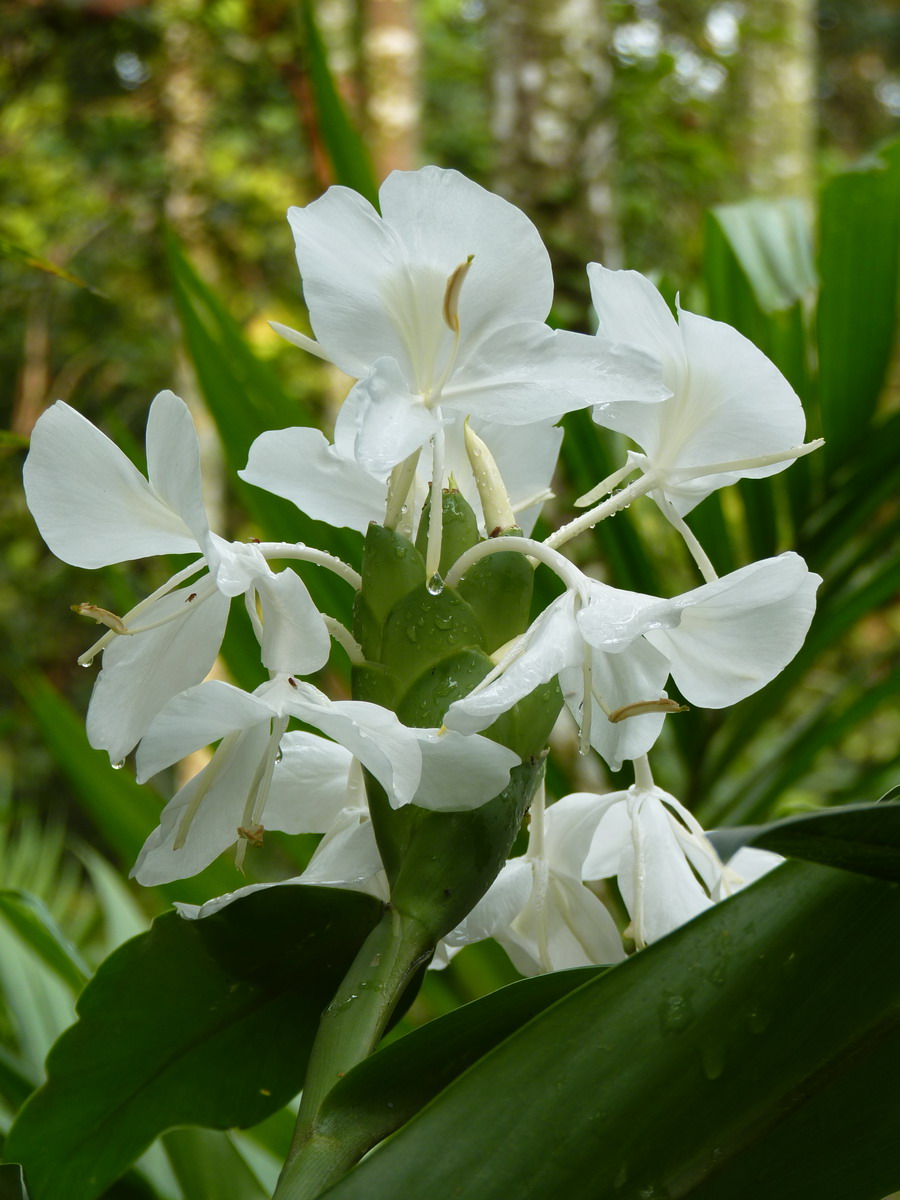
Taiwan, the "Treasure Island," boasts mountains and rivers, with breathtaking scenery everywhere. From south to north, forest parks abound; from Yangmingshan to Kenting, the flora exhibits remarkable variety. Urban gardens in Taiwan are not particularly unique, as many important parks date back to the Japanese colonial era, such as Taipei Park, Chiayi Park, Taichung Park, and the 228 Peace Memorial Park. Taiwanese perspectives on gardens and parks are largely pragmatic; for instance, parks serve as venues for morning exercises. Strolling for leisure is a different matter.
Clearly, the Taiwanese people's largest "back garden" is neither their private home courtyard—since private gardens are rare—nor public parks. It is common to hear friends say they are going hiking or strolling in the mountains. This is often less about appreciating the view and more about group exercise or mountain climbing. People go up mountains to brew tea, eat local produce or game, or even sing karaoke deep in the wilderness. Of course, some seek tranquility, bathing in the high-altitude forests to wash away the week's fatigue. No wonder the trails in the Treasure Island's "back gardens" are so numerous and well-developed, attracting crowds every weekend or holiday.
Taiwanese people love flowers and plants, evident in the potted plants that are indispensable on balconies and in front of homes. This reveals an alternative aesthetic of life among the island's residents. Due to a lack of green spaces and parks in urban areas, the government has recently begun to value residential quality, exemplified by projects like Da'an Forest Park in Taipei and Cultural Park in Chiayi.
Regarding Taiwan's "back garden," the sprawling Central Mountain Range, with altitudes ranging from 0 to over 4,000 meters, encompasses almost all plant ecosystems from tropical to cold zones within the Treasure Island. Taiwan's unique mountains and terrain have created a botanical garden of ecological diversity that is nearly unique globally. This is Taiwan's most precious asset. If the residents of this beautiful island realize this and properly protect its valuable ecological resources—including forests, flowers, trees, grasses, and wildlife—it will become a rich resource for UNESCO World Heritage status and a world treasure. The name "Treasure Island" is well-deserved.