Hsiao Chin – "Realm of Tai Qi": 75-Year Retrospective
Hsiao Chin – "Realm of Tai Qi": Homage to the Masters Series Hsiao Chin 75-Year Retrospective
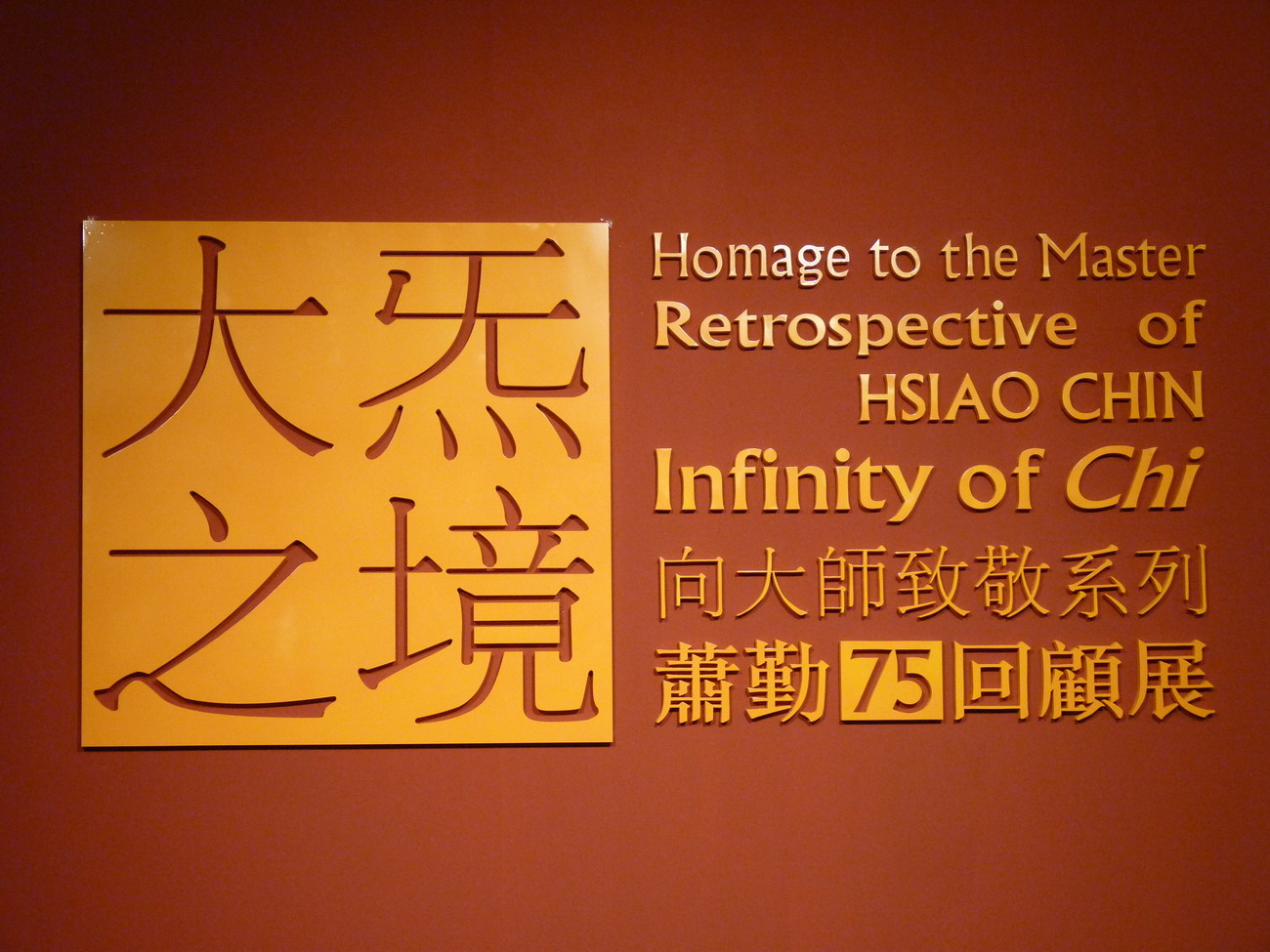
Hsiao Chin – "Realm of Tai Qi": Homage to the Masters Series Hsiao Chin 75-Year Retrospective Kaohsiung Museum of Fine Arts: 2010/10/9-2011/03/13
"Painting is something of the inner spirit."
Leonardo da Vinci
Preface: In today’s era of globalization and the global village, social change, rapid shifts in values, shortened time-space and distance, blurred regional differences, homogenization of material consumer society, cultural homogenization, converging lifestyles, and even the gradual standardization, superficiality, and virtualization of life. The erosion of matter, qualitative changes in culture, emptying of the spirit, and dominance of commerce—all measured by economic value. In this raging materialistic world, art becomes a sensory and superficial spiritual symbol; based on the auction market, artistic value becomes price, and true artistic value vanishes. Shockingly, it is claimed that art has ended, that painting is dead. French cultural sociologist Pierre Bourdieu stated that "the love of art" is a betrayal and abandonment (Note 1); French artist Ben wrote: "Art is useless, go back!" (Note 2); Theodor W. Adorno, a master of the Frankfurt School, explicitly wrote in Aesthetic Theory: "What is taken for granted today is that nothing concerning art can be taken for granted: art itself, the relationship between art and the whole, and even the right of art to exist are no longer self-evident" (Note 3). So, what remains of art? What reason do we have to believe that "art" still holds value? If the external world is turbulent, changing in an instant, and overwhelming, what can we rely on? When the external world is almost completely destroyed, Pandora’s box retains one reliance: that is "hope." A glimmer of hope for art rekindles the possibility of believing in art again, because art possesses something deeper: spiritual and numinous creation. Artistic creation stems from the inexhaustible inner energy of the mind and is an activity of the deep consciousness of life’s intellect and spirituality. Returning to the true care of life and the meaning of existential value, taking essential and pure values as the refuge of creation, through the inherent Eastern awareness of contemplative observation, entering into clarity of mind and seeing one’s nature, returning from inner spirituality to the essence of art, the nature of life, and the true form of all things. Leonardo da Vinci said: "Painting (art) is something of the inner spirit." The inexhaustible inner energy flows from the endless spiritual light of the universe. Art is observed, embodied, and verified under this aspect of life cultivation involving introspection, revealing the subtle mysteries of cosmic existence.
Hsiao Chin, who attains the Dao through forms: Hsiao Chin (born 1935) is one of today’s painters who delves deeply into inner spirituality, using art to comprehend life and explore its mysteries. He was a prominent member of Taiwan’s famous "Orient Group" in the 1950s. Possessing a macroscopic vision and rich cross-cultural experience, moving from East to West and then returning from West to East, he integrated Western modernism into Eastern spirituality through cultural fusion and internalization. He explored the spirituality and numinous creation of Eastern art, engaging in joyful intersections and intellectual dialogues with contemporary Western art.
Hsiao Chin deeply felt the vastness and profundity of Chinese artistic culture and philosophical thought. His overall artistic creation is built upon Laozi, Zhuangzi, Buddhism, and Chan (Zen) studies. He comprehended that life is essentially Daoist philosophy, beginning with the self-awareness and enlightenment of idealistic life. Through contemplative observation and verification of life cultivation, he used novel Eastern codes or ontological forms to dominate the concepts of "binary opposition" and "binary balance" within the state of mutual generation and coexistence of Yin and Yang. This corroborates the Daoist principle: "The Ultimateless gives birth to the Supreme Unity; the Supreme Unity gives birth to the Two Powers; the Two Powers give birth to the Ten Thousand Things." In the universe, all matters and things correspond via Yin-Yang magnetic fields; Yin contains Yang, Yang contains Yin; extreme Yin generates Yang, extreme Yang generates Yin, achieving harmony and balance in life and the universe. In the most profound aspect of existential meaning, it echoes humanity’s deepest spiritual consciousness. Returning to the original face—the essence of art, the nature of life, and the true form of all things—under clarity of mind and seeing one’s nature, through purely artistic creation, it embodies and verifies the feast of life. Transcendent, sublimated, meditative, and gripping, it shares the eternity of the moment and spiritual luminosity in clear tranquility. This extraordinary "attaining the Dao through forms" embodies the sublime aesthetics of Eastern existence.
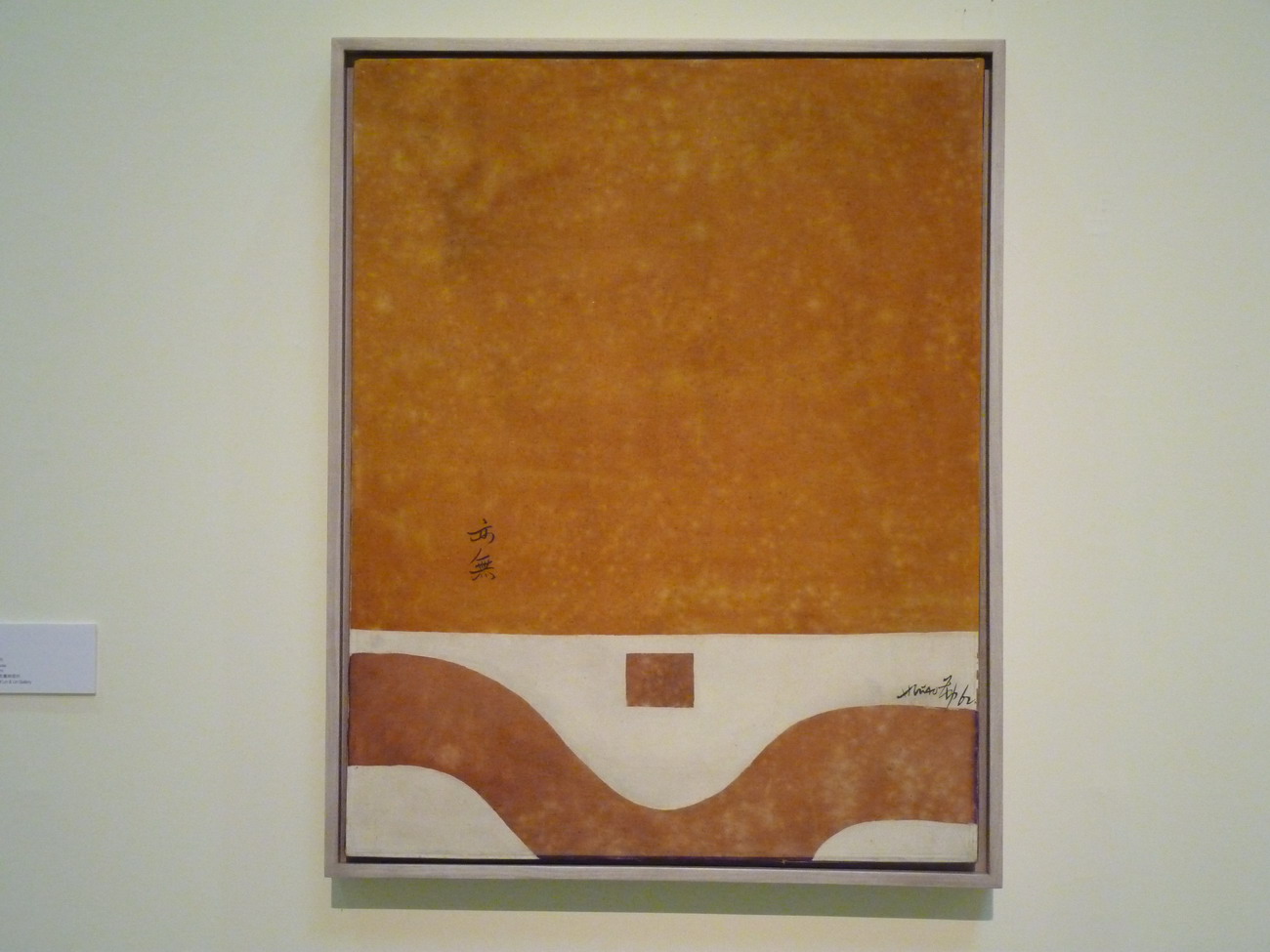
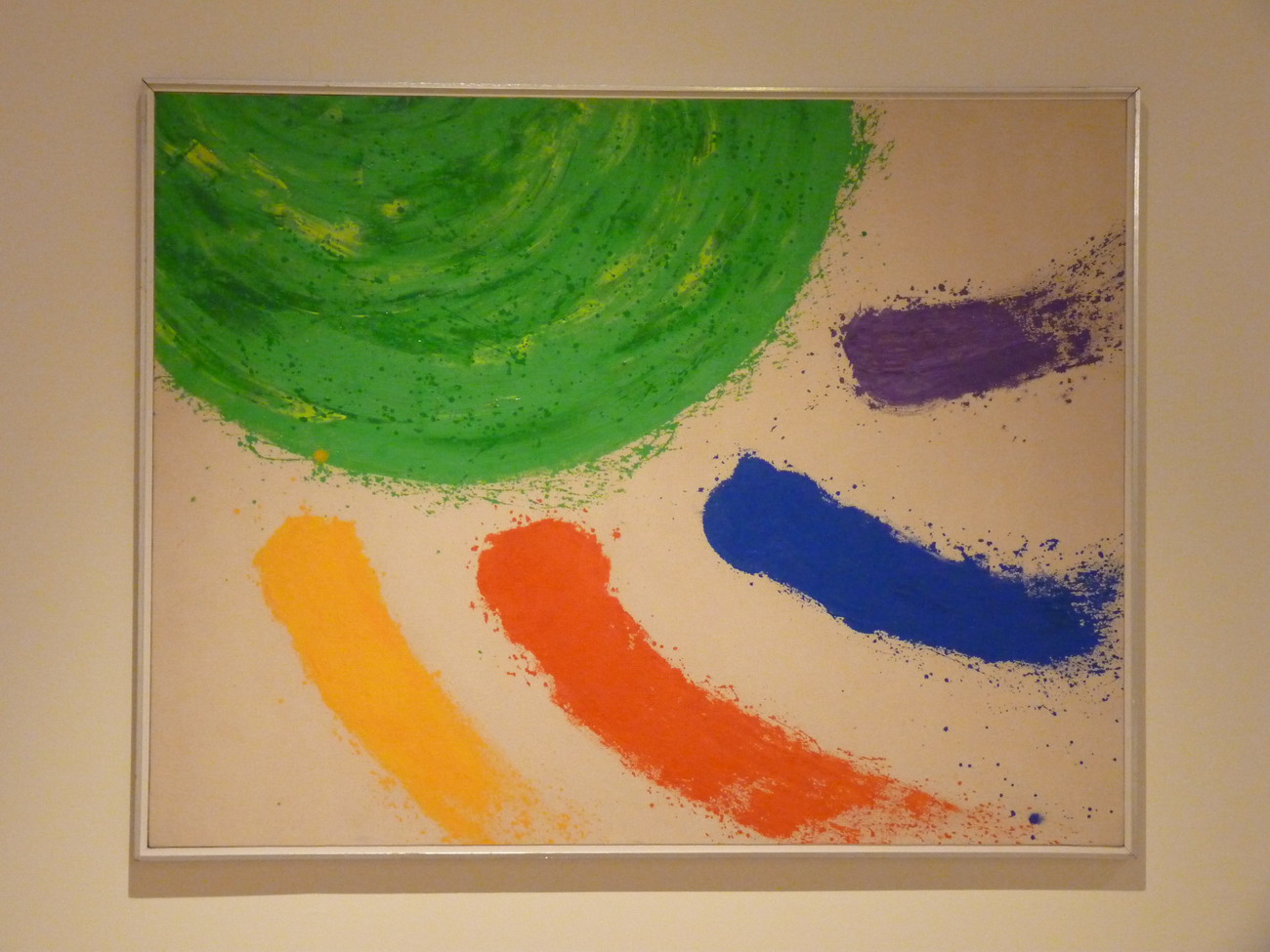
Exploration of Life Comprehension: After returning to his autonomous culture due to cultural shock during his overseas stay, Hsiao Chin began exploring the mysterious Daoist thought of Laozi and Zhuangzi in 1960. He embodied the imagery calligraphy abstraction of Eastern thinking, finding his unique stylistic appearance within the combination and construction of Taiji Yin-Yang and void-solid thinking. From 1963 to 1966, transitioning from sensual instinct to rational structure in the "Sun Series," he entered Western geometric color-plane abstraction, with colors gradually becoming more vivid. "Sun" signifies the subject of the universe, a mysterious symbol, providing eternal contrast between constant stillness and constant motion, elucidating the great power of the universe, deepening and integrating into the grand map of modernism. Early on, emphasizing the characteristics of ink lies in its natural wateriness; Hsiao Chin believed that "the spreading of water possesses 'accidentalness' and 'randomness.' Taking the heart as the main body of creation, 'the hand follows the heart,' so all formed images are the result of 'heart transformation'" (Note 4).
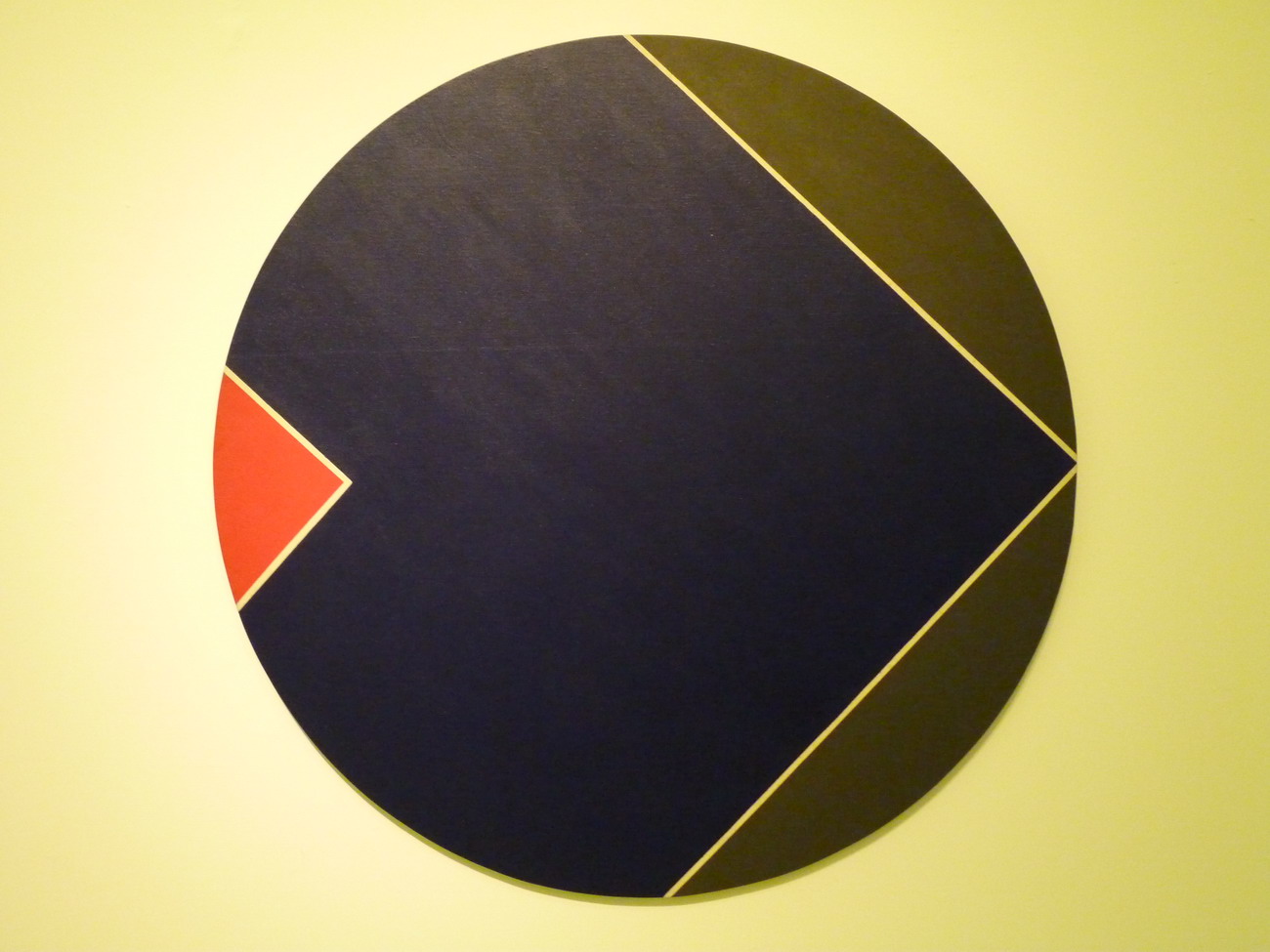
In early 1967, Hsiao Chin’s first trip to New York deeply shook him with American industrial civilization. He pioneered new minimalist color-plane abstraction with "hard-edge" techniques. The artist stated: "Western 'hard-edge' techniques and 'Minimal Art' are the direction after the sublimation of rational structure. For me, it is still intuitive modeling..." (Note 5). Colorful acrylic paints replaced ink tones. This quiet, restrained, concise, and powerful exploration of color-plane abstraction continued for ten years before ending.
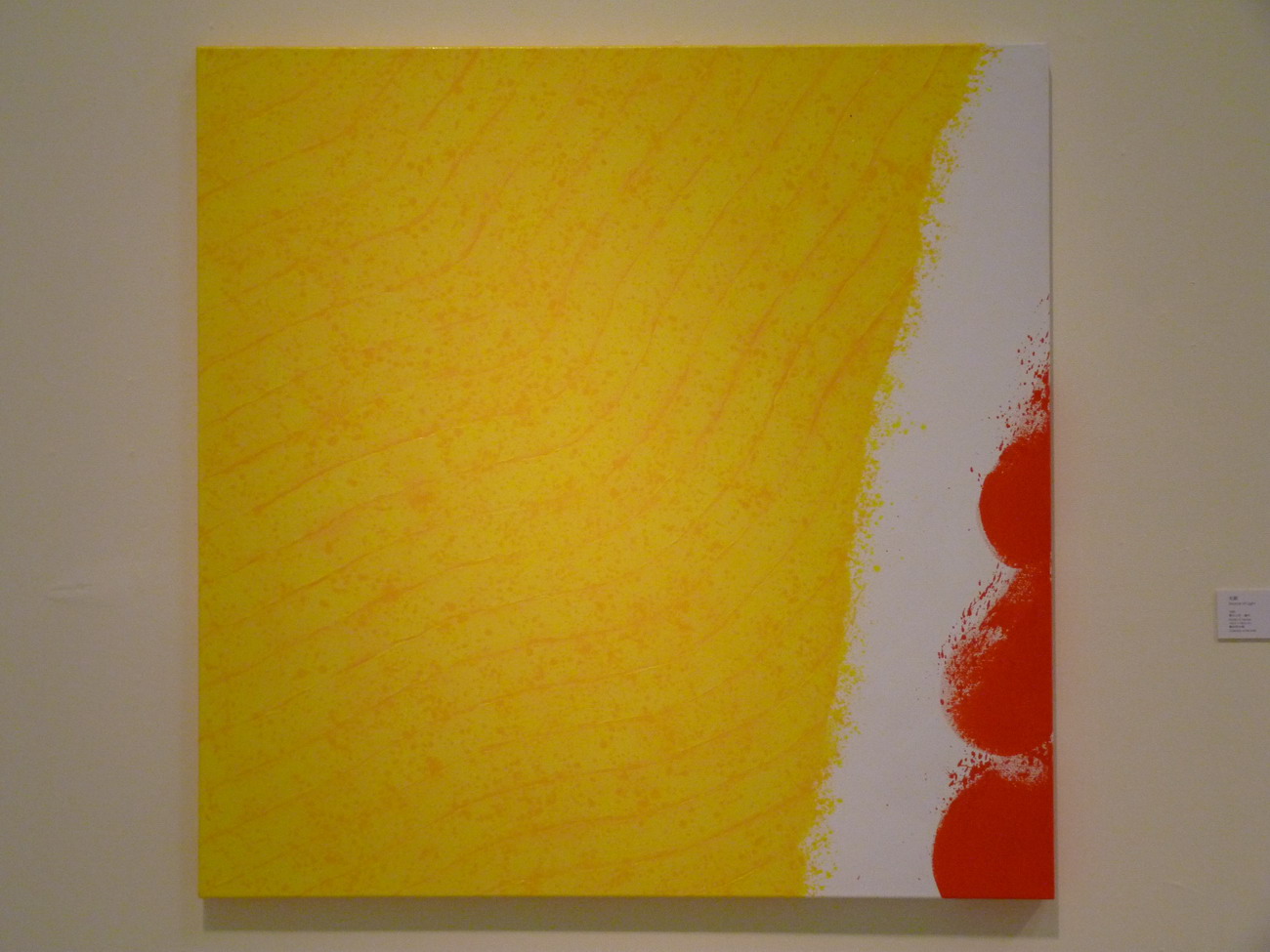
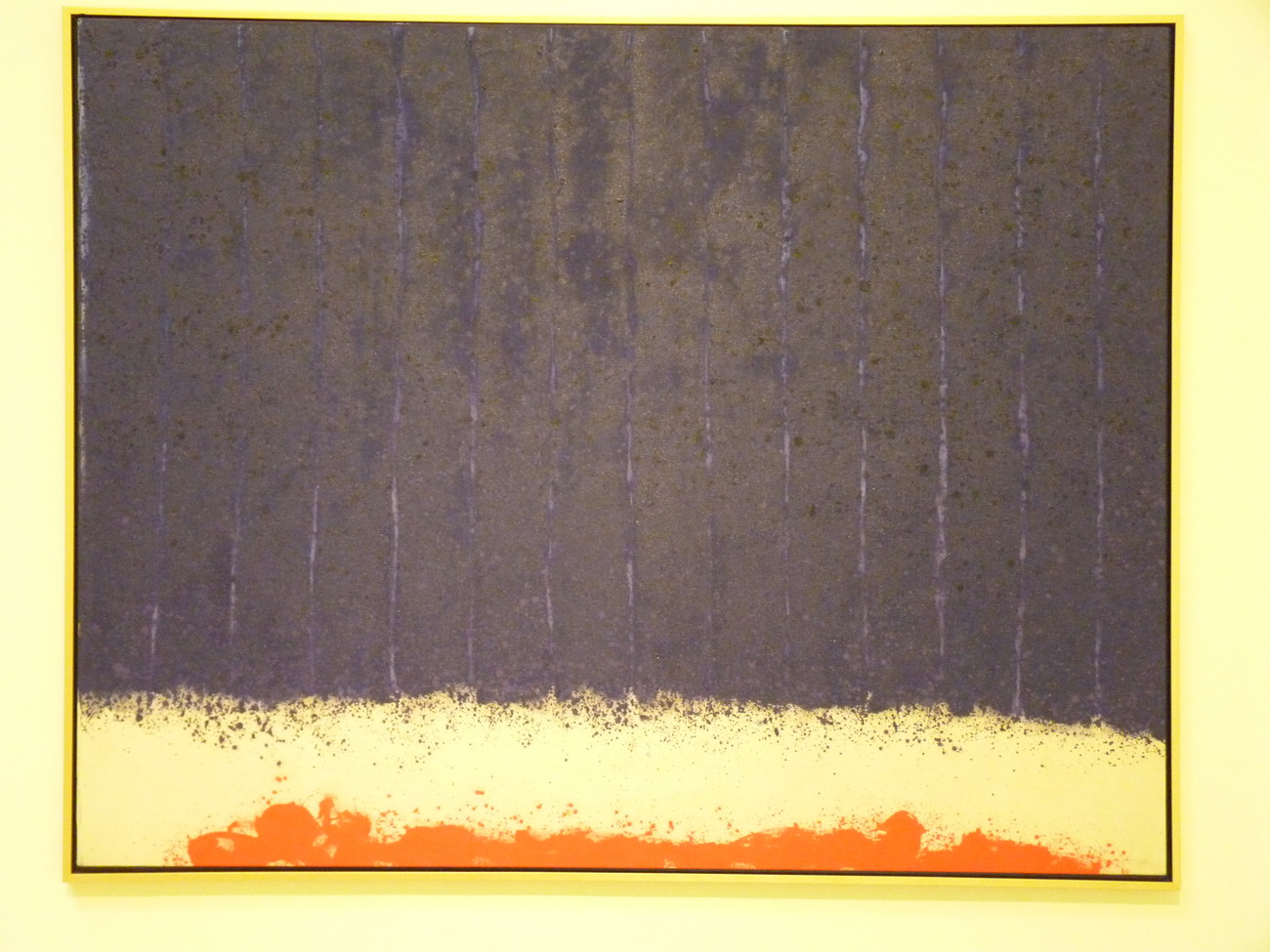
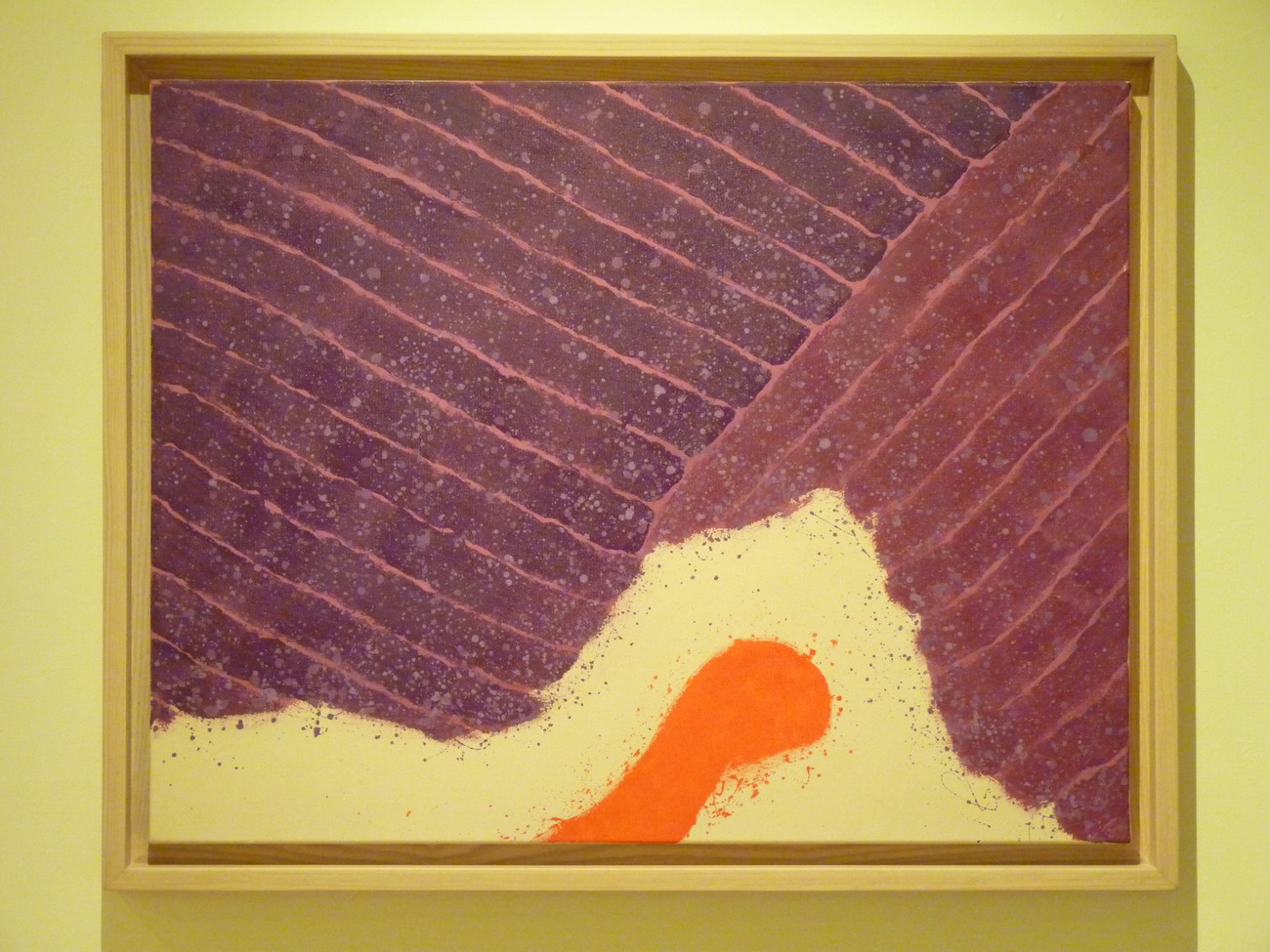
Is there anything more important than returning to the value and meaning of life? In 1977, Hsiao Chin reached another peak in creation. Driven by inner forces, he returned to explore the primordial origins of Dao and Chan, realizing "Dao is always non-action yet accomplishes everything," arriving at following nature, selflessness, and emptiness. As poet T.S. Eliot wrote: "We shall not cease from exploration, and the end of all our exploring will be to arrive where we started and know the place for the first time" (Note 6). Returning to the sacred origin of his own culture, he calmly contemplated the realms of "Chan" and "Qi" (vital energy). With free and easy forms, restrained and full ink tones and colors, and concise, powerful compositions, he excelled at using painting to highlight unpainted areas. Large areas of blank space (void) became the substance of the painting. The interaction of void and solid energies embodied an extraordinary ethereal state and aura. He sometimes inscribed the characters "Chan" and "Qi" on the canvas, and occasionally signed them, under Zhuangzi’s concept of "achieving the realm of nothingness through a mind without intent."
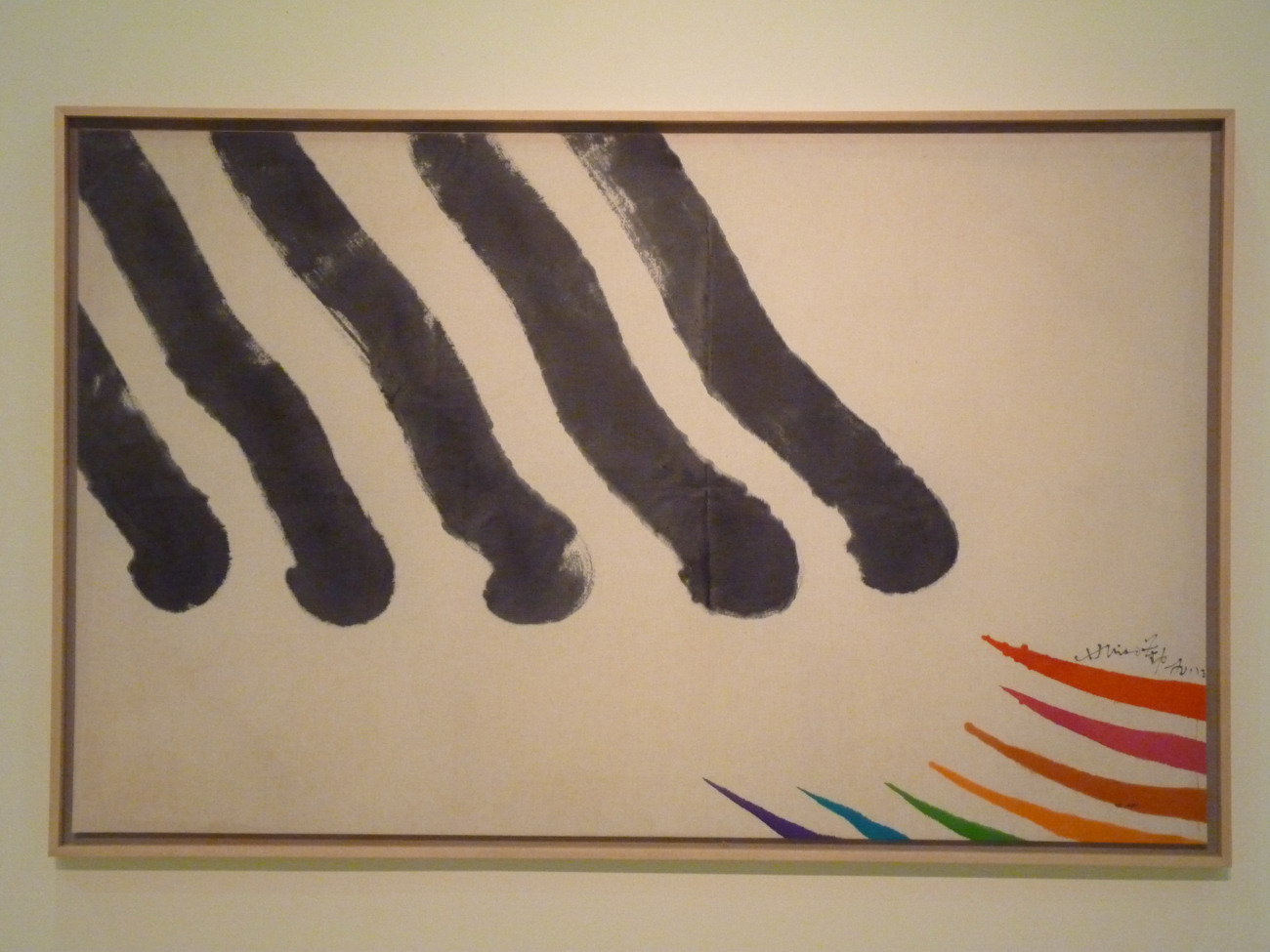
Life comprehension and growth involve complete acceptance and naturalness. Under mental understanding, acting according to one’s heart, doing nothing yet accomplishing everything. The 1980s were even more liberated and free; roughness contained elegance, chaos contained order, brilliance contained scenery, black and white contained radiance, seriousness contained humor, becoming more natural. Works like "Chaotic Beginning" (1985), "Great Thunder" (1985), "Cosmic Wind" (1986), "Sea Waves" (1986), and "Sublimation to Infinity" (1987) burst forth with brilliant colors, releasing the infinite great energy of the universe. In 1990, Hsiao Chin’s beloved daughter Samantha died unexpectedly. The artist was heartbroken and deeply realized the impermanence of life. Supported by artistic spirit, he accepted whatever happened. Hsiao Chin reaffirmed his spiritual beliefs, trusting that human existence can break through the present world to reach eternity. Finding inner peace from faith, he created the "Samantha Sublimation" series to mourn his daughter. The following year, he created the high-saturation color series "Crossing the Limit" (1991) in the form of a monument. Subjective lyrical color-plane combinations, vibrant poetic colors, overflowing sensual energy, and meditations on saturation all directed toward the purity and praise of color. In these brilliant colors, he realized life and death in the human realm, ferrying his daughter to the other side. A very calm and sensitive heart sensed the great power and love of the universe.
Transitioning from "Crossing the Limit" to "Journey to the Eternal Garden" (1992) and "Eternal Garden" (1993) series, with clear introspective color forms, resembling hymns from the depths of the heart, hinting at the pure land of life and Eden, revealing that the cosmic ontology is like a colorful garden, the eternal field of life. Following this, the "Limit" (1994) and "Beyond the Limit" (1994) series continued lyrical geometric color planes, where color became the body of painting and sensual life, sailing toward the mysterious world of existence. Using the Chinese Daoist cosmology of heaven round and earth square, he displayed a remarkable new visual image—the "Birth of a New World" (1996-97) series. In 1996, circular paintings with square frames had large brushstroke commas at each of the four corners; in 1997, rectangular canvases featured circular shapes offset left or right, plus large brushstrokes along the borders. Under magnetic color-field domains, infinite imaginative space was stimulated, revealing extraordinary mental realms.
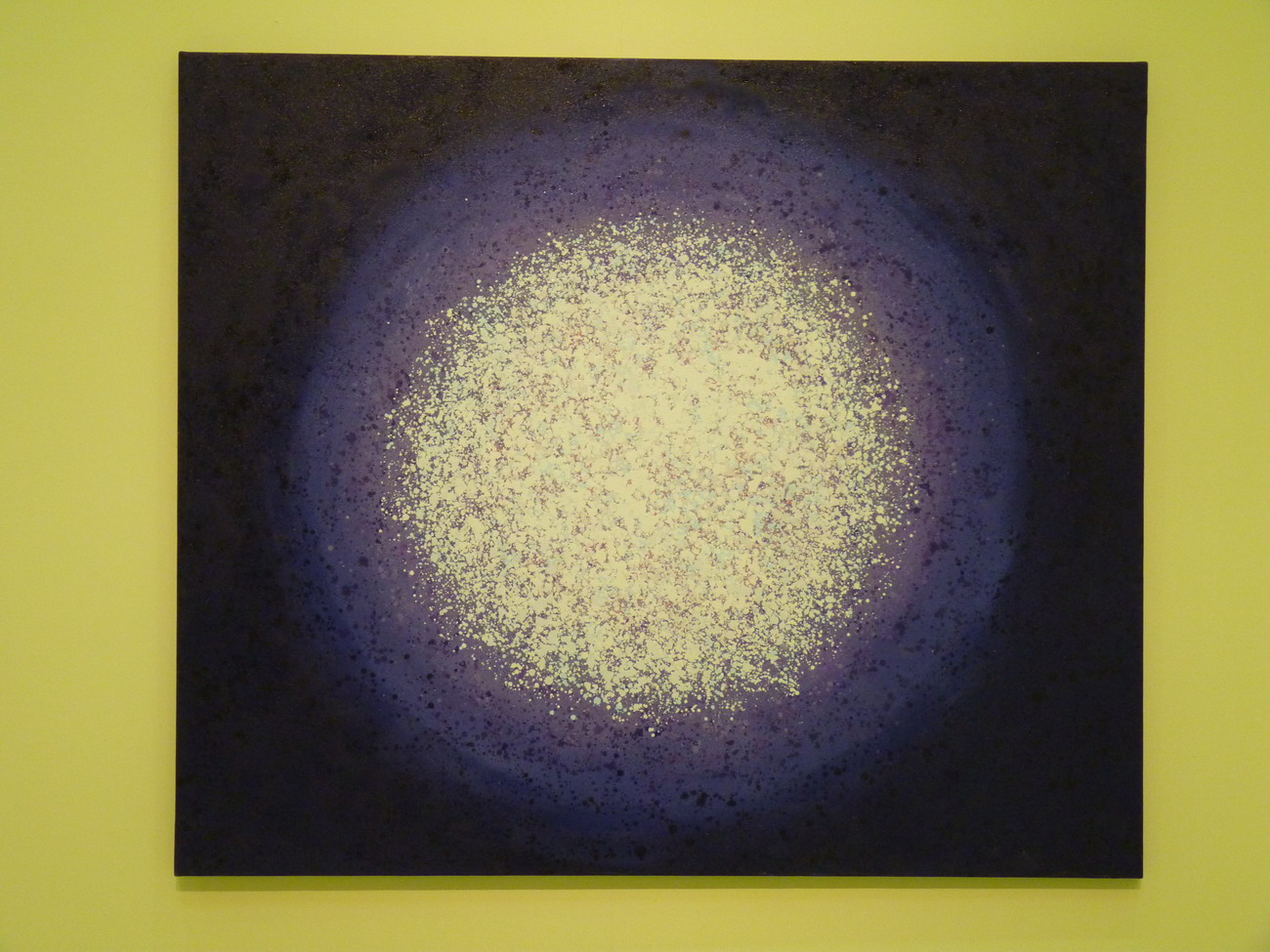
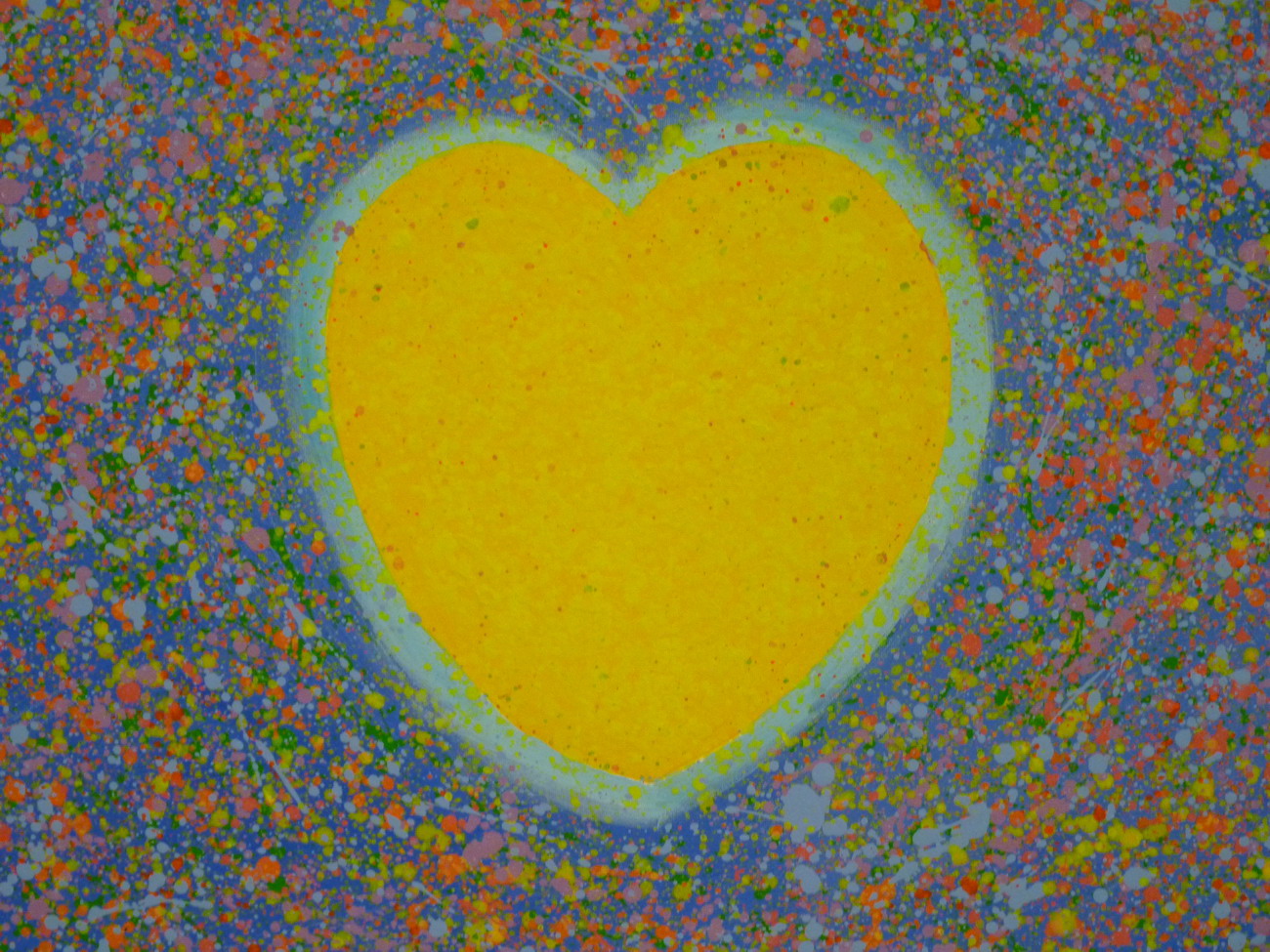
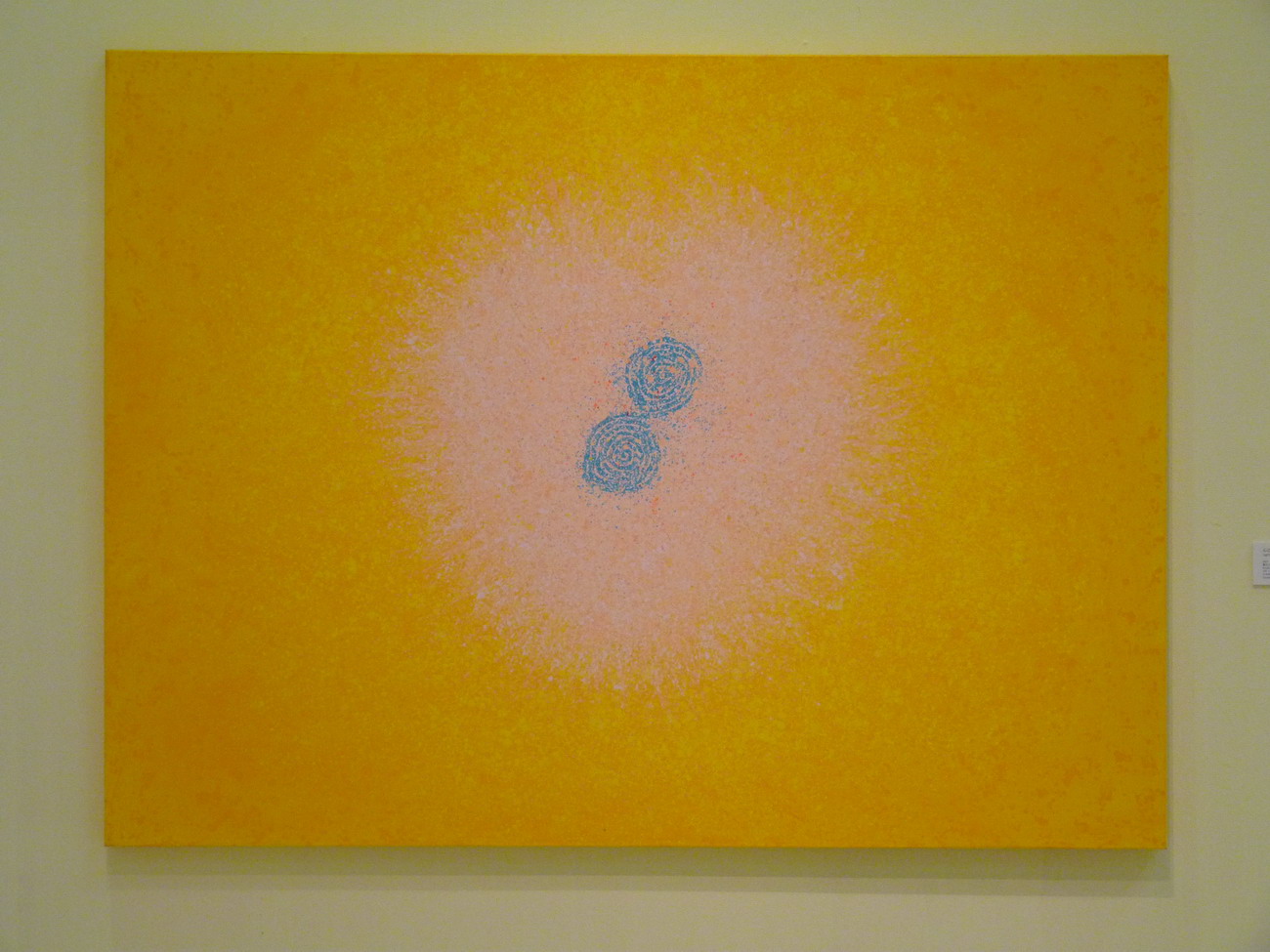
Comprehending the emptiness of life and realizing existence, "Samadhi Ground" (1999) and "Joy of Life" (2000) strengthened formal tension and used color forms to describe immeasurable energy. Post-millennium creations entered the Yogacara core theory of the universe, such as the "Divine Light" series (2001), which used contrasting warm and cool tones to depict magnificent galactic focal light sources and flickering spiritual lights, inviting reverie. The "Cosmic Expansion -3" series (2001) depicted the magical white holes of the universe—a ball of hot white light glowing with purple rays, stimulating infinite imaginative space. "Homage to the Sun" (2002) symbolically expressed intense cosmic energy, praising the mystery of existence. Starting in 2004, reflecting on the ontology of life’s existence, he entered deep inner consciousness to explore unknown worlds of humanity or the universe. "Birth of the Universe," "Universe in the Heart" series (2004), "Universe in My Heart" series (2005), and "Universal Love" (2006) all used romantic and sensual heart-shaped creations. Within contrasting warm/cool color temperatures and saturation changes, they elucidated the great power of "love" in the human realm, the dimension of the "heart," and extraordinary strength. "Universal Love Energy" and "Light Energy of the Heart" in 2007 were variations of the heart, experiencing that boundless cosmic great power and infinite strength.
Multiple Dimensions of Form and Color: Hsiao Chin’s lifelong creation can be described not just as deepening Western modernism inwardly, but also as simplification, flattening, color-planification, and abstraction, due to his unique thinking and perspectives. Situated in the major trend of Western hard-edge, color-field, and minimal art in the 1960s, he rejected Western formalism with Eastern thinking, intending to develop multiple dimensions of form and color. These are divided into three main types:
First: Based on the intuition of dependent origination and emptiness, under mental understanding, he developed transcendent iconic symbols of "Dao is always non-action yet accomplishes everything." Concise and powerful compositions, through natural accidentalness and randomness, constructed fluid, free, and natural forms. Restrained and full ink tones and saturated colors, with large areas of blank space, presented boundless space, embodying the ethereal state and energy of Daoism and metaphysics. Between Yin and Yang, void and solid, soft and hard, geometric and non-geometric, he experienced the great power of the universe.
Second: Transitioning from Eastern subjective lyricism to Western modernist mathematical geometry, ink tones were replaced by brilliant acrylic colors. Blank spaces were covered by infectious vivid colors, entering hard-edge art with clear boundaries. Connecting from the frame to the interior, through contrasting warm/cool color field structures and internal color-plane relationships, he aroused unusual emotional and tense qualities. In concise, powerful, and orderly geometric structures, color became form and content. Finally, sublimating into the color-field domain of Minimal Art, color became absolute value. Malevich believed: "The reality of art is the sensual effect of color itself" (Note 7). Paintings from this period were flat, absolute, pure, quiet, and restrained, extraordinarily displaying the energy of color fields, suggesting a new spiritual symbolic connection to religious meditation.
Third: After forty years of confusion and fifty years of knowing destiny, Hsiao Chin arrived at a detached state of thorough enlightenment regarding art and life. Artistic spirit is trans-temporal and trans-spatial, transcending worldly mind, thought, emotion, and desire, even crossing birth, aging, sickness, and death, pointing directly to the nature of life, the excellent essence of art, and the true form of all things. Following nature, doing nothing yet accomplishing everything, under clear introspection and intuition, attaining the Dao through forms, "Art is the ultimate meaning of life, the call of life’s spiritual energy" (Note 8).
Cross-boundary fusion of profound Eastern thinking and Western modernism unfolded a novel, diverse stylistic appearance. Fluid, free, diverse forms and variable states, expressive brushstrokes, demonstrated majestic momentum and extraordinary energy, deep and steady, creating iconic and unique symbols. Colors were richer and more varied than ever, brilliant and dazzling. Perceptual intensity of color was both form and theme, highlighting color hue, saturation, and energy, all directing toward the purity and praise of color. Form and color became the absolute substance of painting, realizing the aesthetics of life. Internally exquisite, profound, and ethereal, within the pure spiritual structure of quiet contemplation and autonomy, it elucidated the great power of the universe and macroscopic love, experiencing that art itself naturally manifests the ontology of life.
Primordial Qi: "Qi Theory" offers extraordinary insights within the Eastern cultural atmosphere: "Heaven and Earth have righteous Qi, variously imparting form" (Note 9). In life, there is weather, atmosphere, air, and temper. In Chinese martial arts, there is Qi movement and Qi fields. In Daoist inner observation, breathing in and out the Qi of heaven and earth, Qi is energy. Japanese Aikido pursues harmonious Qi, generating "Dao" through harmony. The greatest secret of Tai Chi or Tai Gong is relaxation, stillness, and nature. Gentle, long-flowing soft Qi emphasizes overcoming hardness with softness. "Qi of Heaven and Earth" is the energy and kinetic force of continuous life and existence. Then, in traditional Chinese aesthetics, through the application of brush and ink, art pursues "Qi, Rhyme, Vitality, Movement." Without Qi, there is absolutely no vitality. Only fluent momentum, liveliness, and rhythm in visual perception can embody the essence of art and the realm pursued by the individual.
Great sound has no noise, great form has no shape, great Qi has no form; everything is an aggregation of energy. Traditional metaphysics and Daoism believe that the universe is nothing but the operation and transformation of Qi. The universe is a great kinetic force of constant change, alternating between constant motion and constant stillness. Whether Qi or matter, they never stop moving. Motion becomes the infinite energy of cosmic rebirth and destruction. This motion contains constant motion and sudden motion, constant change and abrupt change. This is called the Heavenly Way being constantly active, and all dharmas being impermanent. Motion is Yang energy, but within constant motion, there must be a core point. This core point is stillness, which is Yin energy. Yang energy is the Way of Qian, Yin energy is the Way of Kun. Qian and Kun compose this universe and this heaven and earth (Note 9). Hsiao Chin’s overall works comprehend the truth of life from Qi resonance and kinetic energy. "Primordial Qi" and "Realm of Great Qi" verify his profound cosmic view and the perfection of life.
Artist as Messenger of Cosmic Information: Where does life come from, where is it going? What is the meaning of existence? How did human civilization arise? Where does creation come from? Humans are part of nature, and nature belongs to the cosmos as a whole. "Life" sails toward the mysterious world of existence; the mysterious path leads inward, into magical and unknown realms. Open life existence has various possibilities and potential infinite energy. Creativity is often astonishing and explosive. The true meaning of "creativity" is to view the universe and life with an absolutely open attitude. Therefore, true creation comes from emptiness, inspiration comes from the Great Self consciousness, and artistic masterpieces should come from divinity (supernatural power? or spiritual movement?), surpassing personal weak power. A magical spiritual energy, through the practice of the small self, makes the artist a messenger of cosmic information.
Hsiao Chin said: "For me, the primary importance of painting is not 'painting,' but exploring the source of my own life, recording experiences and feelings, and expressing future prospects through painting" (Note 10). Furthermore: "The word 'creation' currently holds little significance for me. What I create is not my personal creation, but the life force of the universe directly made through my heart and hands. I am not a creator, but merely a transmitter" (Note 11). This corroborates Paul Klee’s statement: "Painting is a living organization that does not operate or dominate, but conveys" (Note 12). Humans are inherently endowed with perfect divinity, i.e., "the Self is." Realizing one’s infinite potential. Art presents not only itself but also the artist’s overall life consciousness or the meaning of transcendent existence itself.
Not All the Same Are Identical: Since ancient times, different regions, races (or ethnic groups) have had different views on life and the universe. Differences in cultural perspectives and viewpoints are inevitable. Most obviously, like linguistics categorized globally, French contemporary artist Ben believed in the 1980s: "The next artistic innovation: is to bear its own language, culture, and race" (Note 13). Ben considered racial "difference" to be an indispensable element in current art. In his concept of the relationship between life and total art, the new and the different are primary values. Difference becomes the most valuable key in globalized art and cultural industries.
Human ethnic groups and regions each have their cultural perspectives. The same moon has different stories; the same sun has different insights; the same sunset has different contexts. The same existence has different energies. Not all the same are identical; the same has categorical implications. Everything exists within the atmosphere of individual autonomous cultures, customs, and environments. Difference becomes real value. Twentieth-century great writer D.H. Lawrence wrote: "Each continent has its own great local spirit, each nation has its local character, that is home, that is homeland. On this earth, different places have different vitality, different oscillations, different chemical smells, different stars, different characteristics. You may call it what you will, but the local spirit is a great reality."
The East has its unique thinking and cultural perspectives. Hsiao Chin and his partners in the Orient Group incorporated inherent Chinese culture (or broadly, Eastern philosophy) elements, challenging Western Eastern aesthetics, intending to create abstract forms and spirits distinct from Western modernism. They strengthened inherent cultural differences and diverse thinking, uniquely creating a novel new style and paradigm, looking forward to new cultural horizons. Intending to express themselves individually under current globalization, elucidating inherent cultural subject consciousness, and dialoguing with the world. Using current vocabulary, this is the international appearance and demeanor of "glocalization" (local globalization) and "global localization."
Notes: (Through this text, I pay highest respect to my master - Hsiao Chin.)
Note 1: Pierre Bourdieu and Alain Darbel, 1990(1969), The Love of Art – European Art Museums and their Public. Stanford: Stanford University Press. Note 2: "Quotations - Question Forum," written by Ben Vautier, published by Centre Pompidou and Zeditions Paris, 1991, p. 18. Note 3: "Anti-Aesthetics," Postmodern Cultural Collection, translated by Lü Jianzhong, Taiwan Tuxu Publishing House, Republic of China Year 87, p. 14. Note 4: Taipei Fine Arts Museum - The Process of Hsiao Chin: 1953-1994. Xiao Qiong-rui - Flowing Life - Hsiao Chin Who Attains the Dao Through Forms, p. 14. Note 5: Taipei Fine Arts Museum - The Process of Hsiao Chin: 1953-1994. Xiao Qiong-rui - Flowing Life - Hsiao Chin Who Attains the Dao Through Forms, p. 17. Note 6: Taipei Fine Arts Museum - The Process of Hsiao Chin: 1953-1994. From Gazing and Scattering to Meditation on Void - Tracing Hsiao Chin's Painting Style. Ye Weilian, p. 35. Note 7: Malevich Exhibition Guide Card, Centre Pompidou Modern Art Museum. Note 8: Chen Shih-Ming "Truth Revealed - Practice and Transmission of Still-Gazing Contemplation" solo exhibition catalog, Esprit Gallery, 2000. Note 9: Laozi, Zhuangzi, Sun Tzu (Practical History Series: 160), written by Chen Wen-de, Yuanliu Publishing House, 2001. Note 10: Taipei Fine Arts Museum - The Process of Hsiao Chin: 1953-1994. Xiao Qiong-rui - Flowing Life - Hsiao Chin Who Attains the Dao Through Forms, p. 19. Note 11: Taipei Fine Arts Museum - The Process of Hsiao Chin: 1953-1994. Xiao Qiong-rui - Flowing Life - Hsiao Chin Who Attains the Dao Through Forms, p. 19. Note 12: Paul Klee Exhibition Guide Card, Centre Pompidou Modern Art Museum, Paris. Note 13: "Quotations - Question Forum," written by Ben Vautier, published by Centre Pompidou and Zeditions Paris, 1991.