Yen Ting-Sheng "From the Very Beginning" Small-Scale Retrospective
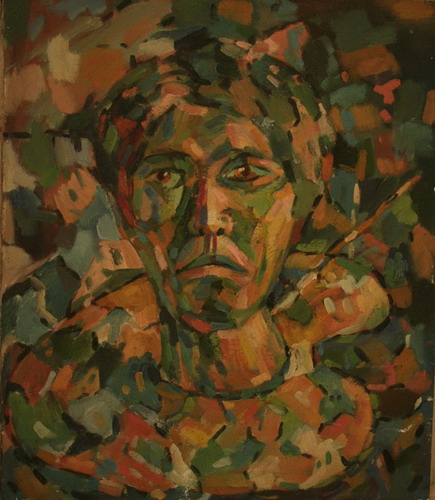
Art College Period - Yen Ting-Sheng, Self-Portrait, 51x43cm, 1981, Oil on canvas.
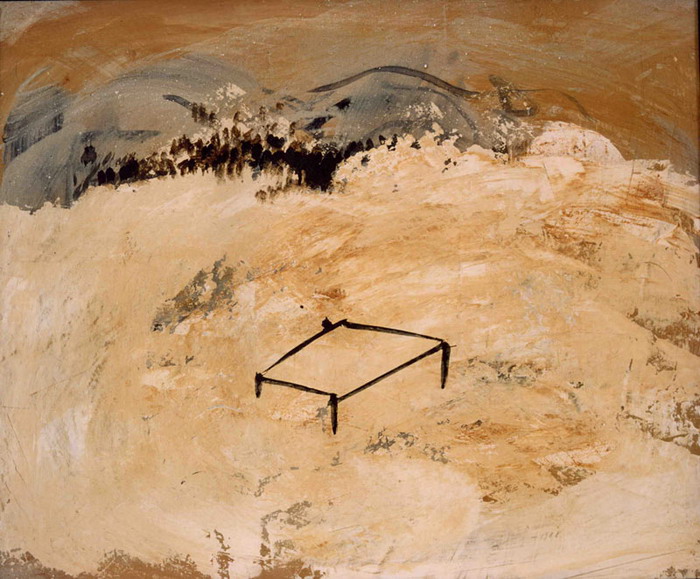
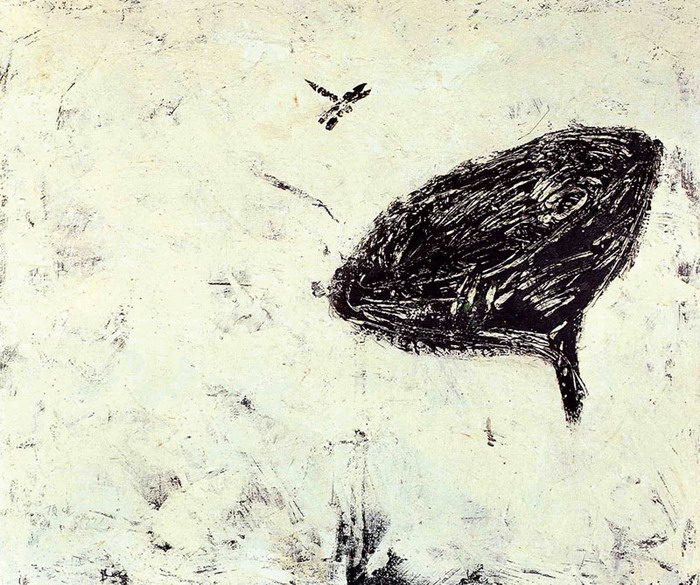
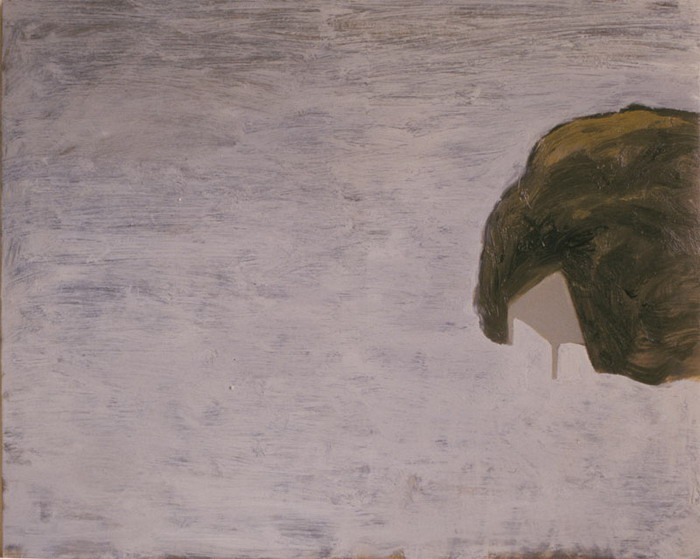
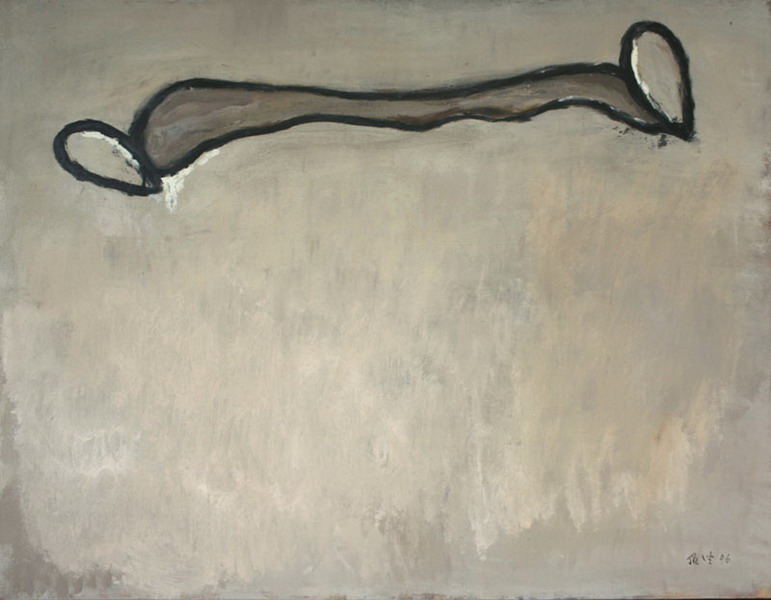
Images and Text / Chen Chi-Hsiang Venue: Chiayi Taiyu Meixuetang Dates: June 11 to July 17
The initial is not necessarily the beginning. The beginning must be the initial. Everything starts from the initial beginning. The beginning initiates the origin of everything. Completion ends at the original starting point. The primordial lies between the beginning and the end. Time plus space revolve in cyclical motion. Between exhalations, breath begets life. Consciousness navigates, life begets life ceaselessly. The present is always the primordial beginning.
Preface: The origin of life or the myriad things of the universe all begin from the chaos of the great primordial opening. "The initial" raises the curtain on the reality of an individual's existence, entering the vast world, slowly revolving and operating within the realm of time and space along the long river of time. From the very beginning, it signifies each present life situation and perception; each creation is a primordial thought, navigating with consciousness into the metaphysical spiritual field, marking a point in time and space, leaving behind an eternal moment. Life, through each present moment, streams into the long river of existence, weaving the screen of life consciousness, walking through the plot of each artistic creation stage, compiling the script of a lifetime of artistic creation. Yen Ting-Sheng's "From the Very Beginning" is his first small-scale retrospective. Starting from the initial decision in his second year of high school to pursue artistic work, it presents his nearly thirty-year journey of rich and wonderful creative development: the learning stage at art college, the establishment of a personal new Southern Taiwan style, the Eslite Gallery period showcasing personal character, the crisis-turned-opportunity stage of confusion at Tainan National University of the Arts, to the present mature Taiyu moment of personal style. From these representative series of works, one can see without omission Yen Ting-Sheng's thoughts, situations, and states of consciousness at each stage. It begins with the art college stage's initial exploration of the mysteries of modern art, slowly taking shape starting from figuration, passing through purification and internalization, creating an instinctive personal rich symbolic vocabulary, situated between figuration, imagery, mental imagery, and abstraction. Gradually delving deeper into the fields of consciousness and life, enriching not only the picture surface but also solidifying the artistic substance.
Influenced by Three Mentors: In a person's life, many encounters and opportunities that are sought but not guaranteed accompany personal growth, elevating, transforming, or transcending individuals, leading them into deeper consciousness, creating a person's abundant life. Artists are no exception. The guidance and personal example of renowned teachers, beyond intellectual enlightenment, establish not only artistic vision and scope but also stimulate the will to live and creative attitude, subtly and deeply influencing the artist's entire life.
In Yen Ting-Sheng's artistic career, he was deeply influenced by three teachers, broadening his artistic vision and intellectual field, stimulating his life energy and artistic creative attitude: During his art college years, learning under the personal example of teacher Chen Shih-Ming expanded not only the vision of modern and contemporary art but also internalized artistic inspiration, planting new artistic seeds, deepening artistic substance and existential consciousness, pointing directly to one's nature, returning to the contemplation of life. Teacher Chen's teachings on life and art, such as "Art cannot solve the inner anxiety and hardship of life," "Art is the ultimate meaning of life, the call of life's spiritual energy," or Teacher Chen's famous sayings "You are the original of your work," and the viewpoint "One beauty, all beauty," all indicate that art is merely an outlet for life energy, comforting the human heart, but not the ultimate end. Delving into the subjects of art and life, investigating the root meaning of existence, all gave students a feeling of being struck awake, deeply influencing Yen Ting-Sheng's lifelong creative attitude, not only artistic but also an enlightenment of life.
After graduating from art college, Yen Ting-Sheng returned to his hometown Tainan, continuing to explore the profundity of art. His chaotic creations found no boundaries, wandering at the crossroads of creation. By chance, he came to the studio of teacher Yeh Chu-Sheng (in Kaohsiung), who had just returned from studying in Spain, to apprentice and seek a personal creative path. Teacher Yeh advocated for the diversity of art and an attitude of tolerance and openness, commendably affirming artistic individuality, the exploration of painting materials, and the experimental development of diverse forms. Under the liberation of various artistic possibilities and forms, he enlightened Yen Ting-Sheng's artistic creation. Yeh Chu-Sheng's studio became a gathering place for new talents in Southern Taiwan art, converging into a new vitality. Soon after, the New Southern Taiwan Style Painting Association was established.
Finally, what deepened Yen Ting-Sheng's creation was his graduate studies period at Tainan National University of the Arts. Yen Ting-Sheng did not choose the discourse and trends of contemporary art fashion. Chen Shih-Ming's artistic and life subjects continued to ferment. Sincerely, he chose to follow teacher Hsiao Chin's guidance for his thesis. Teacher Hsiao Chin has always used art to comprehend the exploration of life, investigating art that explores Eastern spirituality and spiritual creation, echoing humanity's deepest spiritual consciousness within the most profound aspects of existential meaning. Returning to the origin, the essence of art, the nature of life, and the true form of all things, under Zhuangzi's "using no-mind to achieve the state of nothingness." For example, an unusual piece of advice from Teacher Hsiao: "Life does not die," deeply influenced him. Clearly, Yen Ting-Sheng's artistic creations after TNNUA more or less resonate and respond unusually to Teacher Hsiao's grand and broad perspective on humanity and creative attitude.
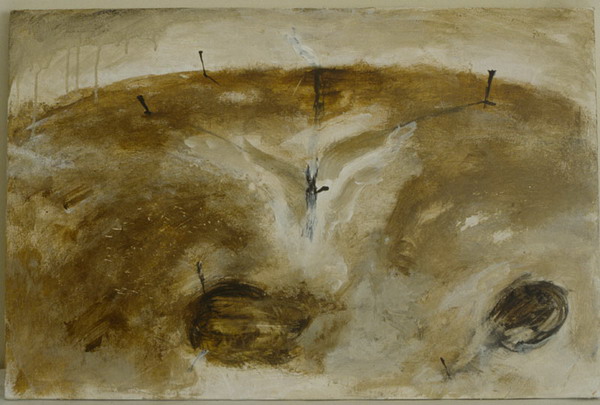
Creative View Under a Family Background of Traditional Chinese Medicine: As a descendant of a family of traditional Chinese medicine practitioners, Yen Ting-Sheng grew up surrounded by medicinal herbs, participating daily in the heavy processing and complex manufacturing of herbs. Thus, he developed a special sensitivity and affinity for natural materials. Medicinal herbs have their unique colors and textures, naturally becoming the medium for his artistic experiments with mixed media. He explored this unique material early on. In works from the New Southern Taiwan Style era, such as "Horse in the Moon (Bird in the Wind)" (1988) or "Seedling" (1992), which incorporated porcelain clay into acrylic paint, are clear examples.
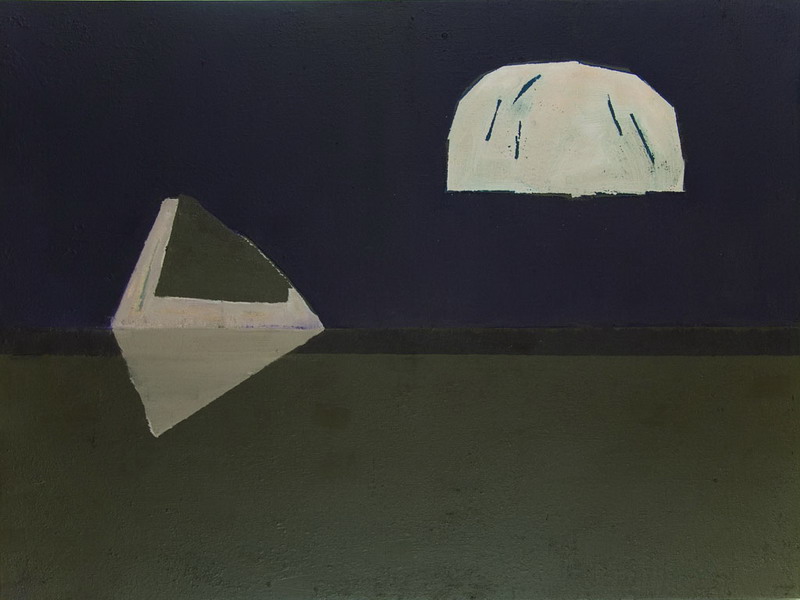
Yen Ting-Sheng has a particular insight into the colors and textures of Chinese medicinal herbs. He adopted their special colors early on, often mixing the unique pigments of medicinal herbs with high-chroma acrylic paints. This altered not only the chroma of the colors but also enhanced their density and thickness, creating a special hue—rich, profound, and substantial—extracting the meaning and perspective of color: for instance, "Night and Day Coexist" and "A Kind of Freedom" (2010) use large amounts of the mineral red ochre (red earth) as the tone; "Exhalation" (2009) uses animal oyster shell (white and gray) as the background; the deep purple-blue background in "Drifting with the Tide" (2010) is the plant indigo (deep purple-blue). Strengthening the materiality and color sensation of the paint, constructing color energy and imaginative space, attempting to experience the profundity of traditional Chinese medicine through this, thereby discussing the relationship between nature, land, and life. Because art is the intimate relationship between humans and nature and the land, art must be grounded in life; without life, there is no art.
The Alchemy in Creation: "Calligraphy": Yen Ting-Sheng has unique feelings and views on Chinese calligraphy. Calligraphic art is the purest, most direct, and unique among all arts. From the density of ink, various types of paper, brush usage, lightness and heaviness, turns, strength and angle, round brush, wet brush, broken brush, and freehand brush forming lines that are full, clean and sharp, dry and elegant, etc., it is not only a transformation of the body but also of the mind, not only physical but also involving very delicate feelings, vividly manifesting the present state, experiencing life's trials and the meaning of cosmic existence.
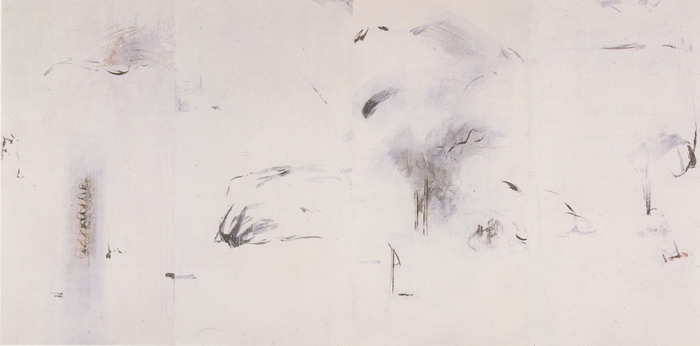
In Yen Ting-Sheng's paintings, highly skilled calligraphic forms and patterns, symbols of yin-yang cadence, and expressive brushstrokes frequently appear. It is clear this was not achieved in a day but is the result of long-term practice and writing. For example, in the work "Four Directions" (1989), the square is written with centered brushstrokes. The expressive "Black Seeds" (1991) is constructed from numerous broken, dry brushstrokes. The poetic "Wind Walks Seeds" (1994) consists of a series of black seeds painted with round, wet brushes. In recent works, such as the white tree branches and leaves in "Autumn Colors on the Que and Hua Mountains (II)" (2010), are clearly written with calligraphic brush techniques, etc.
People have never seen Yen Ting-Sheng's calligraphy. That he practices calligraphy is truly surprising. Does he copy models or create? What script does he write? How long has he been writing? No one knows; it's somewhat mysterious. Calligraphy is indeed another important practice in Yen Ting-Sheng's artistic career, like the alchemy of creation, a long-held pleasure. Whenever he has time, he diligently practices calligraphy, leaning over his desk, using water as ink to write on newspaper, sheet after sheet, stack after stack, writing all kinds of scripts. After the water dries, no characters are visible; it's still just newspaper. It's puzzling. No one has seen a single calligraphic work. Who is the calligraphy written for? No words, no form, cannot be viewed or read. What is calligraphy? What is calligraphy? Writing becomes the alchemy of the artist's soul. It is cleansing the body and mind, entering meditation, and releasing life energy. The mind is the subject of creation, exploring a primordial selflessness and emptiness, roaming through time and space to comprehend life. Through intuitive understanding, doing nothing yet accomplishing everything, verifying Zhuangzi's "using no-mind to achieve the state of nothingness."
Keyword in Creation: "New Southern Taiwan Style": Yen Ting-Sheng is a painter active in the 1980s with a unique style, and one of the early painters belonging to the New Southern Taiwan Style. His creative era coincided with the West entering the postmodern art context, enveloped in the grand trend of international "postmodernism," returning to respective traditional roots: American Bad Painting, German Neo-Expressionism, Italian Transavanguardia, emphasizing craftsmanship, instinct, and expressiveness, stressing expression, metaphor, and symbolism, returning to the premise of traditional painting and sculpture. Coupled with the broader artistic environment in Taiwan at the time, notably, the painter Lin Shou-Yu, residing in England, returned to Taiwan in 1982, having led the enlightenment and vision of Taiwanese contemporary art then. In 1983, the birth of Taiwan's first art museum, the establishment of the Taipei Fine Arts Museum, ushered in an unprecedented museum era. That same year, three major exhibitions in Taipei deeply influenced this young artist: the Chao Wu-Chi retrospective, the Sui-Tang Buddhist Stone Sculpture Exhibition, Lin Shou-Yu's solo exhibition at Lung Men Art Gallery, and, under an unprecedented new atmosphere of freedom before the lifting of martial law, opened a new era for Taiwanese art.
The New Southern Taiwan Style was established in 1986, on the eve of the lifting of martial law (July 15, 1987, Taiwan entered an unprecedented new era). With an air of freedom permeating Taiwan, it advocated for local sovereignty and the awakening of cultural consciousness, bringing impact and new thinking. The New Southern Taiwan Style Painting Association was established under the leadership of Huang Hung-Te. Members were mainly Southern artists (especially from Kaohsiung and Tainan), including Huang Hung-Te, Lin Hung-Wen, Yen Ting-Sheng, Chen Jung-Fa, Yeh Chu-Sheng, Hung Ken-Sheng, Yang Wen-Ni, and Tseng Ying-Tung, as well as member Chang Ching-Feng who had just returned from New York, USA, etc. "Southern Taiwan" signified distinction from the Northern mainstream, attempting to showcase a unique local style, oriented towards modernist exploration under instinct and expressiveness, creating forms and substance belonging to this land. The characteristics of the ambitious and adventurous New Southern Taiwan Style were experimental, material-focused, autonomous, internalized, and transformative fermentation, attempting to propose a novel new form and unique perspective to dialogue with mainstream culture, situated between figuration and abstraction, imagery and mental imagery, material and interpretation, local and international, modern and postmodern.
After countless collective and individual exhibitions, passionate discussions and high-level dialectics, two years later the New Southern Taiwan Style Painting Association concluded, transforming into the New Southern Taiwan Style Biennale, intending to expand new artistic territories. It also held two biennales at the Tainan Cultural Center before concluding its mission.
In 1988, members of the New Southern Taiwan Style, feeling the lack of exhibition platforms in the South, established the alternative Southern Taiwan gallery - Up Gallery through fundraising. Up Gallery was the earliest repurposed space exhibition venue in Southern Taiwan, becoming a place for the interpretation and dialectic of Southern Taiwan artistic elites and trends, seemingly finding a platform to express Southern sentiments and showcase, intending to compete and dialogue with the mainstream Taipei art scene.
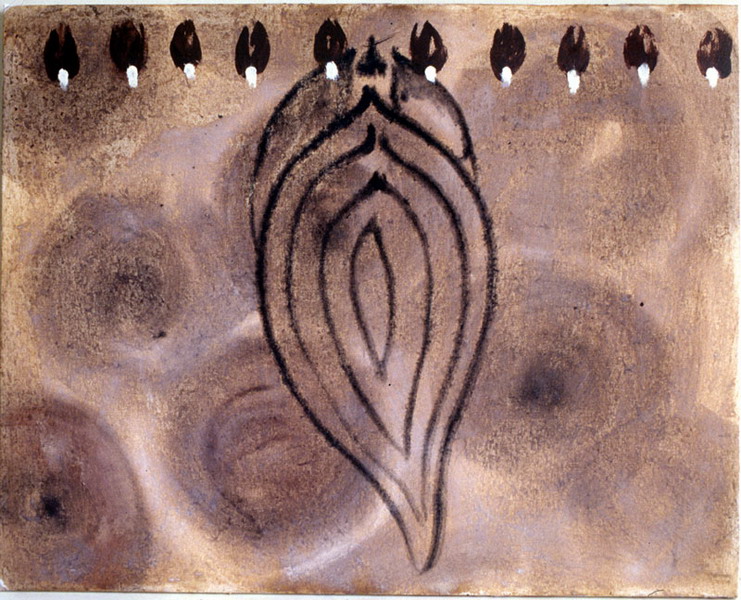
In Yen Ting-Sheng's artistic career, the New Southern Taiwan Style stage was a very important phase, a moment of creative enlightenment. Under the constant passionate stimulation and experimental exploration from painting association close friends, purely personal art finally fermented. For example, new attempts and exploration of new possibilities in "Ink Painting (Paper)" (1984), using pencil lines enlarged by photocopying, shades of carbon ink resembling ink painting works, titled "Ink Painting" without any ink, a purely experimental work.
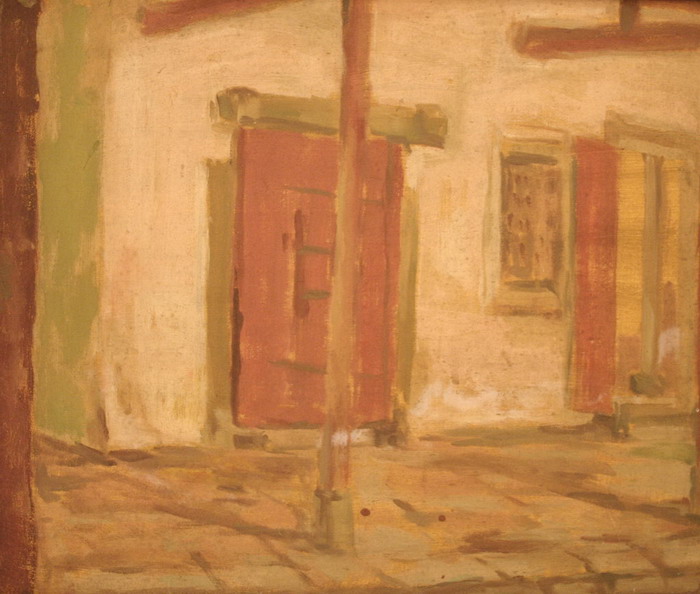
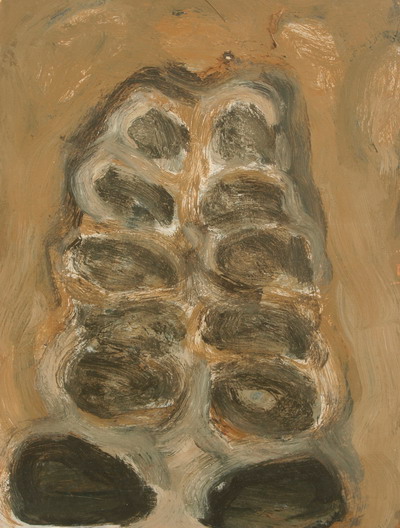
From representation to expression during student days, the student-era "Self-Portrait" (1981) sufficiently proves a subjective intent and expression. Later, "Confucius Temple" (1985), with Cézanne's rigorous structure, became more mature. During the New Southern Taiwan Style Painting Association period, he continued to liberate his forms under the call of instinct and expressiveness, beginning to internalize into purely personalized symbols and forms, expressive while implying symbolism and metaphor, entering the profundity of the mysterious painting world, creating Yen Ting-Sheng's unique super-imagery. Examples include the passionate and expressionist "Polygala Series" (1989), the metaphorically natural "Bird in the Wind" (1988) and "Seedling" (1992), and the "Mountain Series" (1992), all exploring the relationship between humans and nature.
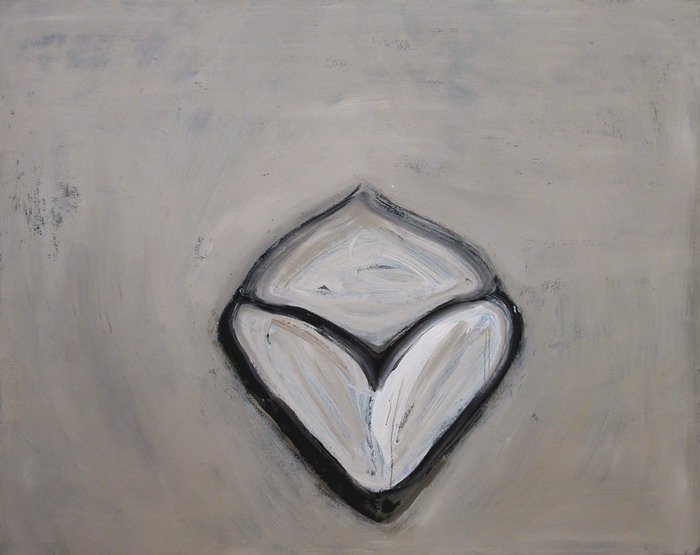
From Up Gallery to becoming a main member of Taipei's Eslite Gallery, his thinking gradually matured, skills refined further, autonomously delving into symbolic artistic vision, establishing an intimate relationship between humans, nature, and the land, poetically expressing personal mental imagery from the depths of life, such as the landscape imagery "Four Directions" (1989). The seed series implies life and vitality: "Black Seeds" (1991), "Wind Walks Seeds" (1994), "Seed and Heart (III)" (1996), etc., anticipating nature's renewal. Works filled with metaphor and implication, such as "Table and Mountain" (1994), "New Two Ends" (1995), and "Seed and Heart (III)" are the most poetic and abstract, considered the most representative works of this period.
Chaos and Renewal - "Before" and "After" TNNUA: The 1990s saw generational change. Multimedia installation art became fashionable and mainstream in Taiwan; painting became rearguard; the art market wind vane shifted. After his 1997 Eslite solo exhibition, Yen Ting-Sheng vanished. Both art and life faced unprecedented challenges, falling into creative anxiety and facing future unease and predicament. The artist self-doubted: "Have I exhausted my talent?" The path turned. Of course, life has its own arrangements and outlets. "Mindset determines state, breadth determines scope, vision determines realm." Everyone has latent infinite energy and possibilities. In 2003, as a senior painter, he took the entrance exam for Tainan National University of the Arts, re-entering a new learning stage in life's journey. During this period, he faced the critique, dialectic, and impact of the academic system, especially the discourse and test of new trends, and passionate discussions and explorations of artistic trends among classmates. Fortunately, under Teacher Hsiao's guidance, he gained deeper consciousness and experience regarding artistic creation and life attitude. TNNUA became the touchstone for Yen Ting-Sheng's art and life and the turning point for his artistic comeback.
This period broadened his exposure to and vision of contemporary art, extensive knowledge, and analysis of fashionable trends. Under the powerful, surging new tide of multimedia, video, and imagery, painter Yen Ting-Sheng never wavered in his commitment to painting art, because life is not a fad, nor can it be satisfied by blindly pursuing new materials or forms. He continued to deepen his spiritual and life state, internalize his forms and substance. Based on a romantic and optimistic attitude that everything is possible, life does not die, painting is understandable. Betting with life, willing to strive with painting, he attempted multi-form creation, multi-faceted painting reflection. Before ambitions remain unfulfilled, consciousness was first liberated, struggle continues with renewed effort. Works from this period, under subjective, instinctive, and expressive forms, reveal a possibility of painting, such as "Accumulation" (2001), "Seeds of the Heart," and "020030 (Heart Intention Seed)" (2002). Metaphysical conceptual transcendence painting, using the heart's consciousness as art's navigator, sailing into the unknown world of life, as the sprout of creative concept.
After TNNUA, with a fresh attitude, he entered the exploration of life and new learning, entering the unknown profundity of existence: art, life, existential consciousness, delving into various philosophies and Buddhist classics, even experiencing through bodily practices like Zen meditation, qigong, tea ceremony, gardening. Deeply influenced by his elder brother, he widely accepted New Agetrend of thought, especially Indian masters Jiddu Krishnamurti and Osho, Lao-Zhuang philosophy and Buddhist sutras, Jungian psychology, and new physics, particularly quantum mechanics, because science and spirit are not conflicting, etc. Liberating the self, releasing years of suppression, affirming existence, perceiving body and mind, learning to relax, awakening consciousness, arriving at the state of doing nothing yet accomplishing everything, suddenly seeing clearly walking out of personal existential doubt and hesitation, expanding not only life's field and spiritual context but also deeply changing his creative attitude.
When mountains and rivers seem exhausted, suspecting no road remains, suddenly appears a village with willows and hidden flowers - Taiyu: After TNNUA, Yen Ting-Sheng lay dormant and brewed for many years, retreating from artistic creation into life. In reflection and renewal, he carefully observed the people, events, and things in his surrounding living environment, insisting on the inseparability of artistic creation and life, embodying his own ideals for art and life thinking, firmly believing that "life is art, art is life." Clearly, from the decades-old "Sihai Caotang" garden of the Yen family in his hometown Lingziliao, which the artist personally managed and constructed, to the planning, supervision of construction, and gallery management of the aesthetically pleasing and innovative fair-faced concrete architecture of "Taiyu Meixuetang" in Chiayi, all sufficiently prove how the artist painstakingly created, how art is grounded in life—a commendable and rare example. The artist believes: "Life is inseparable," so life and art are two sides of the same coin, closely related.
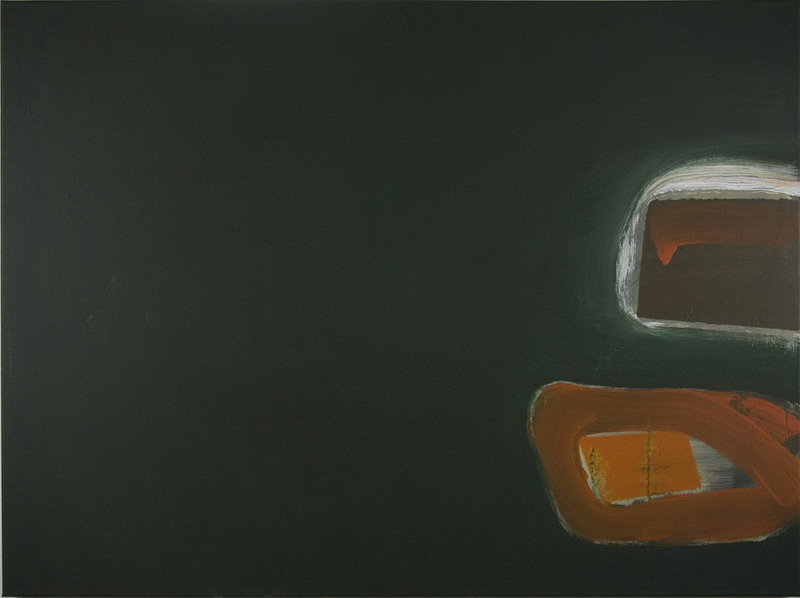
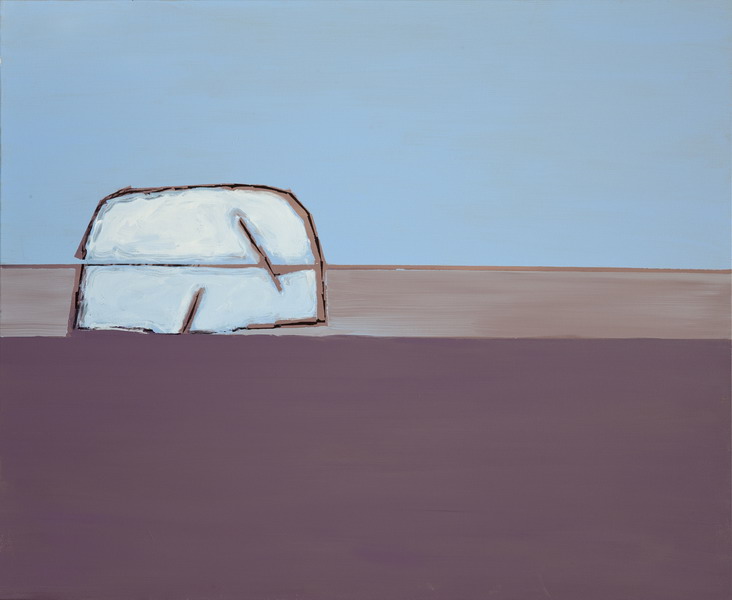
Life and creation are often winding paths. Only with wisdom, attitude, and perseverance can one arrive at the village with willows and hidden flowers. After more than a decade of life brewing, continuously seeking paths for self-liberation, pointing to the inner world, transforming object into subject, releasing life energy from subjective consciousness. Creation is a happening, not deliberately manipulated or forcibly expressed, following the momentum yet presenting without action. New revelation, new brewing "Taiyu" becomes the new initial beginning of Yen Ting-Sheng's art, sailing into the mature creative stage of life. Sometimes subjectively lyrical, sometimes mathematically structured color-field abstraction, between sensibility and rationality, geometric and non-geometric, material and spiritual, time-space and energy, metaphor and symbol. The works are quite tranquil, introverted, concise and powerful, such as new works "Finite Yet Boundless," "Floating," and "Gap" (2010), etc. Emphasizing referential titles, such as "Still, Govern, Wipe, Polish" (2010) from Buddhist sutras, indicating stages of life cultivation; "Exhalation" (2009) explores the heaven and earth between inhalation and exhalation in Daoist inner observation. Notably, new physics - quantum mechanics: "Field of Time-Space" and "Gaze."
Another novel series, "Autumn Colors on the Que and Hua Mountains" (2010-2011), is an echo and response to the painting by Zhao Mengfu of the Yuan Dynasty, reinterpreting the Chinese landscape painting the artist loves, simplifying the famous painting from complex to simple, purifying it into the abstract relationship between mountain and water as ideogram, concise, pure, subtle, tranquil, entering the lyrical rigorous realm of color-field abstraction and the metaphysical world, highlighting the artist's extraordinary landscape imagery. The latest "Golden Flower" series (2011), the title comes directly from Daoist thought's "The Secret of the Golden Flower" (Tang Dynasty - orally transmitted by Lü Dongbin), and also Jung's "The Secret of the Golden Flower." Within the mathematically geometric structured color-field abstraction, it attempts to explore reality and illusion, the relationship between observer and observed, through Daoist philosophy. Through the eyes, physiology, and psychology, expounding the consciousness and energy of seeing.