Chen Chih-Liang: Land of Milk and Honey "Taiwan Landscape"
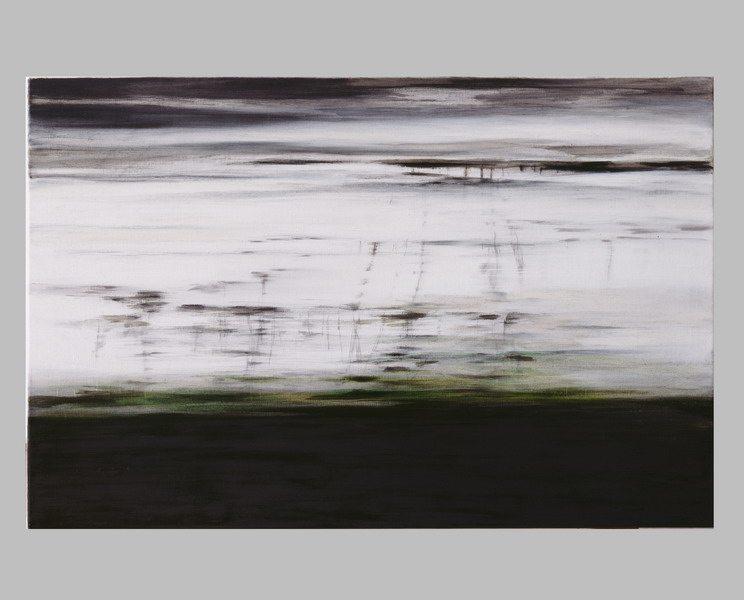
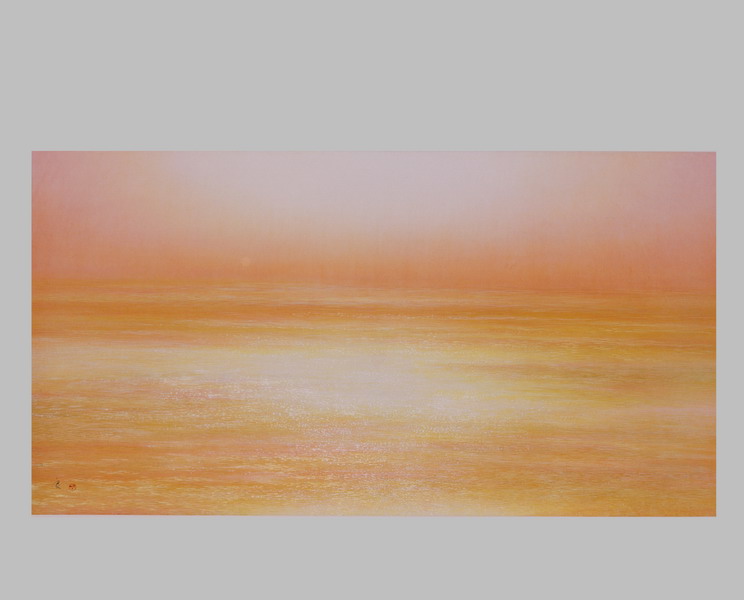
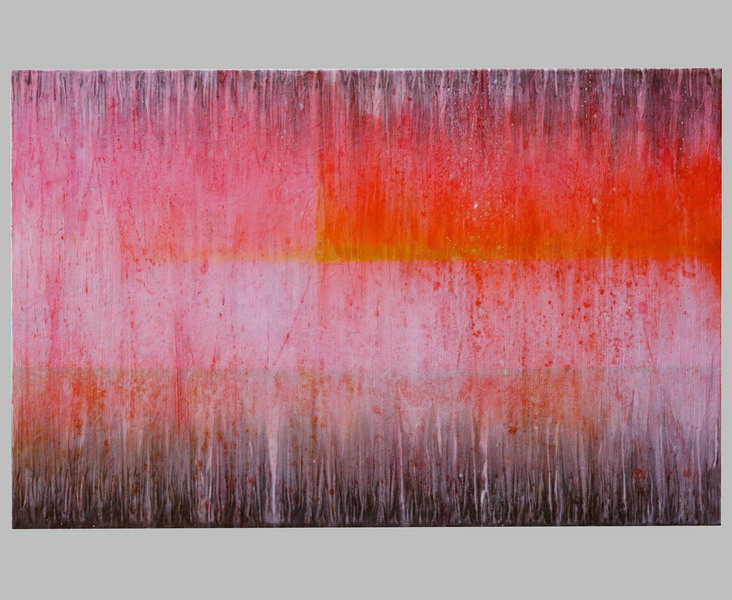
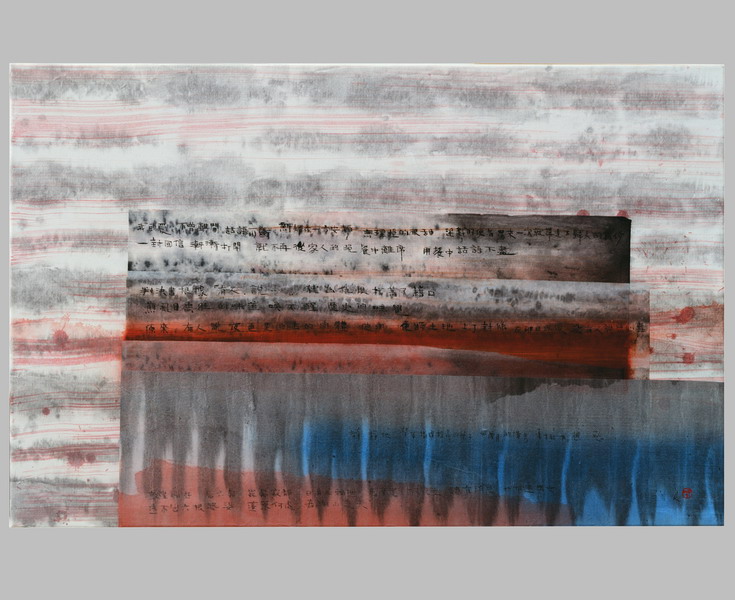
Taijiang Tide Hidden 60.5x91 cm colored ink wash 2009
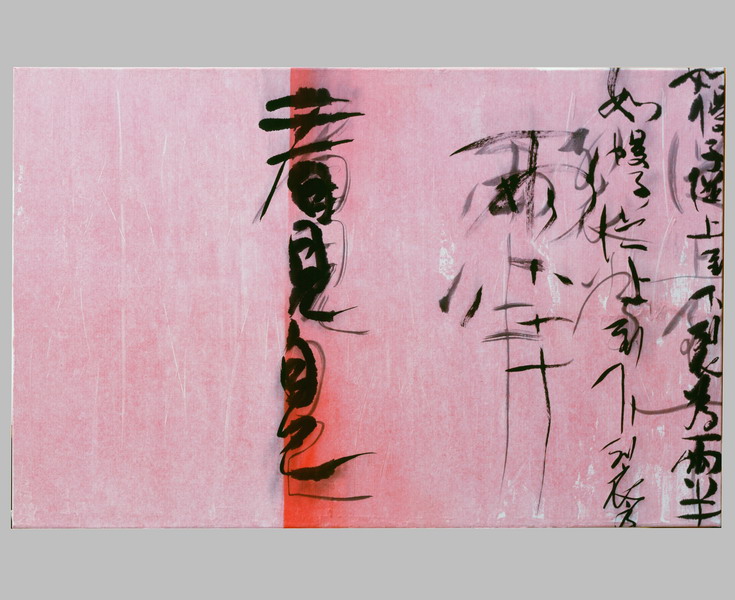
Text and images by Chen Chi-Hsiang
Preface: Taiwanese people speak Taiwanese, eat Taiwanese rice, and drink Taiwanese water; this is a natural sense of identity and local consciousness in life. Becoming Taiwanese is so natural that cultural identity becomes inevitable, yet not the only one; it also requires a broader global vision and perspective. Is it not logical for Taiwanese artists to paint Taiwanese landscapes? However, this obvious truth has been long politically distorted by Taiwan’s foreign rulers, preventing local consciousness from taking root and making it impossible to identify with the land where they were born and raised, leading to a loss of identity.
Taiwanese landscapes are not only the living space for Taiwanese people but also their spiritual sanctuary and pure land. In the past, they were obscured by the Greater China ideology, leaving people unable to face their own land. Over time, this ethereal unreality caused them to lose their sanity and consciousness. The meaning of Taiwanese landscapes embodies the blood and tears of the Taiwanese people, pointing out their sacrificial struggle process as subjects of consciousness and the awakening of local awareness. Clearly, starting from the local/nativist consciousness in the 1970s until the lifting of martial law in 1987, entering the democratic process, an unprecedented atmosphere of freedom led to active exploration of roots and the construction of Taiwanese consciousness. In the late 1980s, the awakening of Taiwanese art made the local become the source and element of artistic creation. With passionate artistic creation as a pillow, they criticized the Greater China tradition and politics. Especially among the new generation of ink wash painters, using novel painting methods and unique perspectives, they attempted to thoroughly revolutionize the illusory Chinese ink wash painting. Against this background, painter Chen Chih-Liang, bearing the mission of art, entered the landscape geographical environment of his native land and people, absorbing a great reality of the local spirit, expanding the "Taiwan Landscape" of his native land and people. A good mountain, good water, good place to live—Taiwan. Painter Chen Chih-Liang sincerely uses the biblical metaphor of the "Land of Milk and Honey" to express his beloved homeland, Taiwan, through the aesthetic and realistic sense of "Taiwan Landscape."
Painter - Chen Chih-Liang: Chen Chih-Liang (born in Tainan City in 1955) is one of the few contemporary Taiwanese artists whose main subject is "Taiwan Landscape," and is also a rare new-generation ink wash painter who integrates poetry, calligraphy, painting, and photography. Additionally, he specializes in Western painting and mixed media. Precocious, he wrote good poems at a young age and began his journey of spiritual exploration. In 1975, he studied calligraphy under the famous calligrapher Mr. Zhu Jiuying, developing a passion for the connection between writing and painting. He graduated from the Department of Fine Arts at Chinese Culture University in 1982. It is said that he transferred from the Design Group to the Traditional Chinese Painting Group, aiming to become a professional painter. Looking at Chen Chih-Liang’s ink wash creations, it is clear that he was influenced by two teachers: Lingnan school painter Ou Haonian and Jiang Zhao Shen, who called himself the last literati painter. The former brought him decorative coloring techniques, while the latter provided humanistic brushwork and ethereal quality.
However, in sketching and creation, he was inspired by painter Wu Xuerang. Through the artistic enlightenment of these teachers, he was deeply influenced throughout his life. Coupled with his broad knowledge acquisition, such as famous works from East and West, Traditional Chinese Medicine, Feng Shui, meditation, and other ancient Chinese theories, as well as the indispensable music in his life—which is quite diverse, including traditional, modern, and contemporary instruments from all over the world—he expanded not only his knowledge but also his creative vision and imaginative space. His religious beliefs ranged from Buddhism and Taoism to Christianity. After years of baptism in faith, he developed a new attitude toward creation: Art is not about telling the viewer the "answer"; art is a dialogue, providing "revelation" to the inner heart.
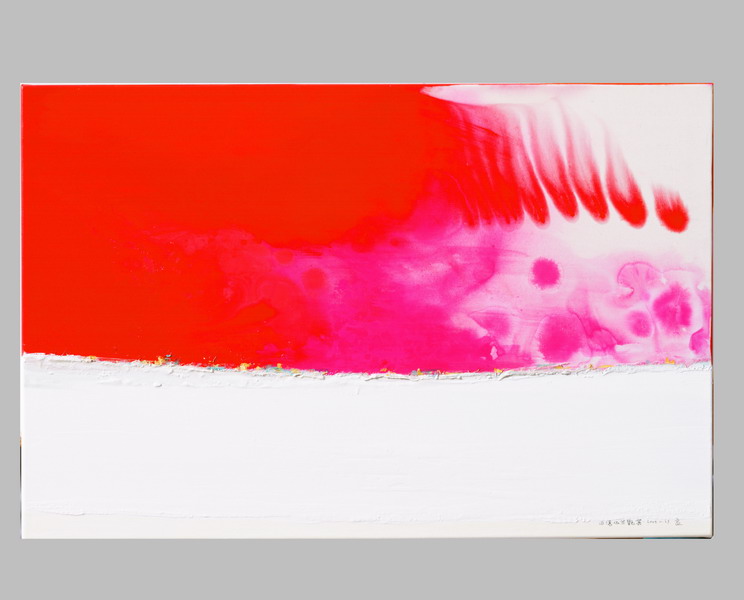
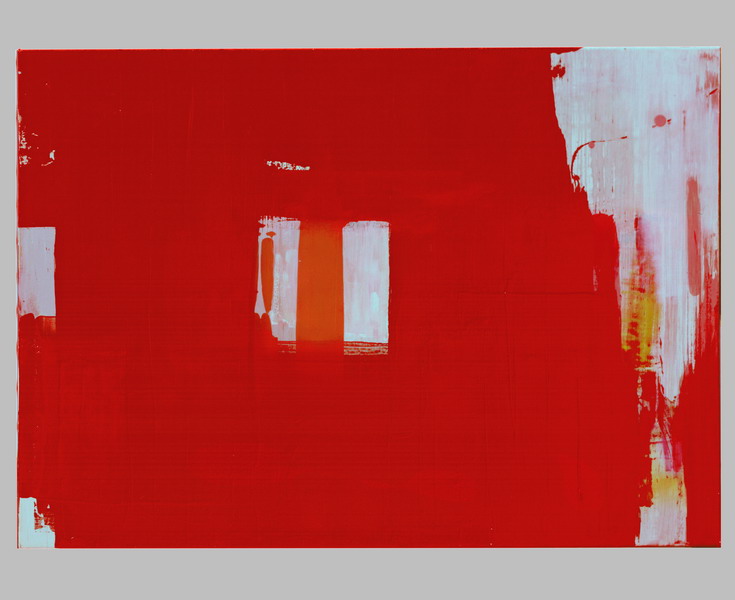
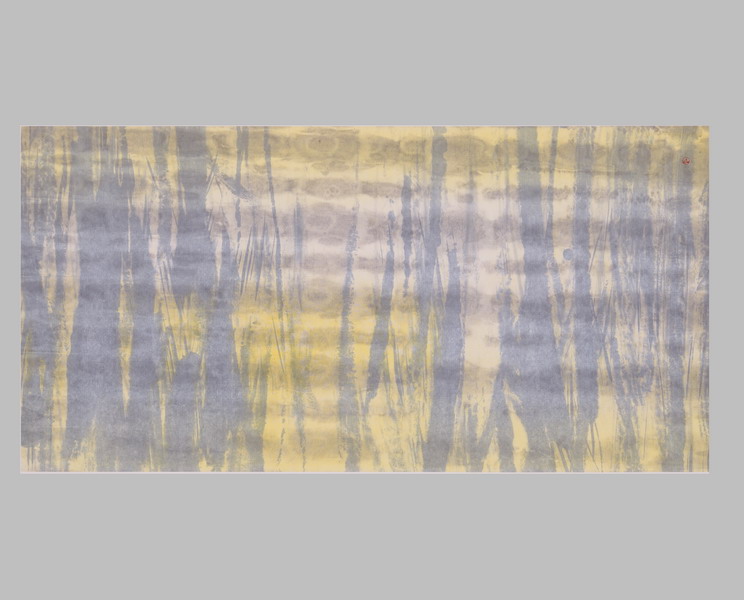
Characteristics of Modern Ink Wash: Chen Chih-Liang’s Taiwanese landscape paintings are highly lyrical, poetic, and elegant, possessing a spiritual resonance and substantiality, filled with infinite room for imagination. The scenes come from the painter’s on-site experience and diligent recording: photography and sketching, which are then simplified and internalized into paintings, often existing between figurative, imagistic, and mental images. However, the most prominent feature of his painting is the bright colored ink. Besides ink colors, he adds Japanese pigments, acrylics, and watercolors, often using multi-layered washing or even spraying, solely to highlight the brilliance of primary colors, featuring characteristics of both the Lingnan school and Oriental painting. Another sign is that almost the entire painting consists of dense, fine-dot stippling (resembling the pointillism of Post-Impressionism). Light, shadow, volume, and speed are accumulated and constructed by these simple rain-drop texture strokes and delicate lines, unraveling the mysteries of nature within the landscape. Like diversified digital visual art, its constituent genes are simply 0 and 1. Using new artistic techniques and methods, he displays the extraordinary new vitality of modern ink wash, exceeding the scope of traditional ink wash.
Awakening of Consciousness - "Taiwan Landscape": Chen Chih-Liang’s Taiwanese landscape paintings began with outdoor sketching of real scenes. After graduation, he often carried pencils and sketchbooks, traveling north and south across Taiwan, exploring the "landscape sketching method" for about five years, focusing on observing natural changes and experimentation. Early works like "Bitter Pond Clear Breeze" and "Wulai Valley," which had the flavor of Chinese landscapes, pointed out a path for Taiwanese landscape painting, but remained under the obvious shadow of his two traditional painting teachers. It was from 1985, when he returned south to his hometown - Tainan City, away from the influence of Taipei’s mainstream art, accepting the challenge of innovating modern ink wash and liberating consciousness, that he began to explore non-traditional ink wash subjects, attempting to break through traditional boundaries. Works with dynamic senses like "Highway Crossing the Jiannan Plain," a rare subject in ink wash, emphasized a sense of speed never seen before. Works with the mood of Impressionism like "Hutoubei Bamboo Forest," or those with modern art characteristics like "Tainan Wu Temple," swept away the nostalgic atmosphere in traditional ink wash and declared the substantiality of the local spirit in "Taiwan Landscape."
Painters, especially Taiwanese ink wash painters, have always yearned for the magnificent and majestic landscapes of China. After a trip to Guilin, known as having the best scenery in the world, and Huangshan in 1986, Chen Chih-Liang fell into deep thought. Where is the substantiality and spirituality of art? What is creation? Is creation merely recording a beautiful scene? Finally, with a rebirth-like insight into the truth of art and local emotion, the artist believed: "Creation is a message, a dialogue with oneself and the land." He clearly began to observe the environment where he grew up, with care and love for this land, using sketching to organize memories of Taiwan. At this time, "Taiwan Landscape" became the theme of his creation.
The following is an interview with painter Chen Chih-Liang when the author returned to Taiwan in August 2005.
Painter Chen Chih-Liang said he has been engaged in ink wash creation for over twenty years. During this period, my psychological journey can be explained through the inspiration of a story.
Inspiration from a Story: Simon had just received his PhD in Biology. He hoped to use his expertise to serve God and humanity, so he prayed to God: "Lord, your creation is so wonderful; can I study the earth you created?" God answered him: "This topic is too large, beyond your capacity." Simon continued to seek. The second time he prayed: "Lord, may I study the humans you created?" God replied: "This topic is too deep, beyond your capacity." Not knowing what to do, Simon thought of his hometown, a major potato-producing area. So the third time he prayed: "Lord, may I develop potatoes from my hometown?" God’s answer was: "This fits your capacity and wisdom." Simon returned to his hometown to study potatoes, developing eighty or ninety new products from them, even extracting dyes for cloth. Thus, Simon utilized his expertise and benefited the community.
One day in the office, after seeing Simon’s research report, his colleague asked him surprisingly: "How could you come up with such a wonderful equation?" Simon pointed to the flowers on the table and said to his colleague: "These flowers told me." The colleague said: "How is that possible?" Simon replied: "If you love it deeply enough, it will tell you many of its secrets."
This story gave me much inspiration regarding painting and faith. Through a period of groping and pursuit, I gradually focused my creation on "Taiwan Landscape," which is closely related to my life. And I believe that if we love Taiwan deeply, she will tell us many of her beauties and the desires in the hearts of her people; she will show us the secrets she harbors. Our lives should grow together with this land and the people living on it, responding to God’s love for us. This love is indeed the starting point of my artistic creation.
Dialogue with Painter - Chen Chih-Liang
Q: When did you start using "Taiwan Landscape" as your creative theme? Why?
A: "Taiwan Landscape" took a long time to ferment before forming. Initially, in 1980, during my junior year at the Department of Fine Arts, Chinese Culture University, Teacher Wu Xuerang taught two classes of "Outdoor Sketching." Afterwards, I carried pencils and sketchbooks myself, traveling north and south across Taiwan, exploring my own "landscape sketching method" for about five years, focusing on observing natural changes and trying various expressions with pencils.
In 1986, before mainland China opened up, I had the opportunity to travel to Guilin and Huangshan. After returning to Taiwan, I painted some works of Guilin and Huangshan. Later, I often wondered: Why paint Huangshan and Guilin? This made me reflect anew: What is creation? Do we just paint because the scenery is beautiful? However, creation is not just painting a beautiful landscape; creation is a message, a dialogue. I began to observe the environment where we grew up, with feelings of care and love for this land, using sketching to organize memories of Taiwan. At this time, "Taiwan Landscape" became the theme of my creation.
Q: What are you trying to explore or convey through "Taiwan Landscape"? What did you discover within it?
A: Since graduating from the Fine Arts Department in 1982, I have been engaged in ink wash creation for over twenty years. "Taiwan Landscape" has always been the theme I interpret. During this period, there were mainly three directions of exploration:
- Regarding the interpretation of Taiwanese landscapes, what are the main similarities and differences presented by modern ink wash and traditional ink wash?
- What is the possible relationship between modern ink wash as a creative language and the creative theme of "Taiwan Landscape"?
- What are the possible forms of the modern ink wash language (symbols) expressing Taiwanese landscapes?
The ink wash album Taiwan Landscape published in 1997 records this process of exploratory creation. During this period, I deeply felt the vigorous vitality of life on this land of Taiwan. Whether in people or nature, there is a strong driving force for growth, and this life force flows visibly and invisibly between me and my creation. However, this vitality in Taiwan has continued to dissipate or consume, lacking the stability of gathering and internalization. There are many valuable artistic insights in Taiwan, but few are accepted and affirmed, because the government and general public often view art and culture in terms of consumption, discarding or forgetting them after enjoyment.
When I share the information of "Taiwan Landscape" with others, I often receive joyful responses. The things depicted in the works often stir inner tremors and resonance in people. In this process of creation, dialogue, response, and exchange with people and nature, I gradually clarified my direction of exploration, becoming more free and authentic in my path.
Q: You use materials of traditional ink wash painting, but is it really that traditional? Your creation integrates ink wash techniques and characteristics of Western painting such as sketching, light and shadow, lines, spatial cutting, etc. Is this innovative technique sufficient to open up a new pattern for ink wash painting or traditional Chinese painting?
A: Innovation in painting techniques is a necessary path for ink wash painting. When I started creating, I also tried hard to break through in techniques, attempting various painting methods to convey the infinitely changing scenery of nature, so I focused on researching painting methods. Later, I found that the expression of techniques was deeply limited by materials and tools. Therefore, I tried again with paper, brushes, and pigments. After a long period of groping, I cast aside the "intent to innovate" in painting, shifting from the creator’s own painting intent to the landscape itself, letting the landscape speak for itself.
While traveling, sketching, and quietly observing Taiwanese landscapes, the landscape gradually narrated more messages to me than before, not only the seasonal changes of clouds generating and mist moving, but also the birth, aging, sickness, and death of the transformation of all things, and... here lies endless creative space. From the themes revealed in this creative space, the entire image of the painting emerges before me, and this image possesses form, color, and brushstrokes. So, when I paint, I do not use many techniques, materials, and experiences to achieve the purpose of creation. Instead, I let the Taiwanese landscape itself tell me what it is, what it is presenting and telling, and through it, I also obtain the medium of creation—the painting method.
Q: When people carefully read your works, the whole painting is mostly densely packed dots and fine lines or layer upon layer of washes. This innovative creation technique integrating Western painting approaches is close to the dotting characteristics of Impressionism or Neo-Impressionism. Why? What is your view?
A: Song Dynasty landscape painting is the classic of ink wash creation. Famous works such as Fan Kuan’s Travelers Among Mountains and Streams and Guo Xi’s Early Spring gave me much inspiration. Regarding the composition and rain-drop texture strokes used in Travelers Among Mountains and Streams, they inspired two very important concepts in my creation: one is to place the subject in the most prominent place in the composition; the other is to use extremely simple rain-drop texture strokes to draw thick and majestic mountain trends. Afterwards, I tried using the simplest brush method, "dot," as the keynote of creation, extending from the "dot" to the entire picture; using the "dot" as the bottom of the light and shadow space and structural form of landscape painting, and then developing brushstrokes, colors, layered washes, etc., upward from this base composed of "dots." All these actions serve only one purpose: to guide the interaction between object scenery and mental scenery. This back-and-forth interaction is the language of landscape creation.
In the works Kenting Sea of Grass and Alishan Xiding, you can see such interaction and dialogue more clearly. Therefore, my "dot" painting method and the Impressionist pointillism are similar in some places, with superficial resemblance, but completely different in spirit and connotation.
Actually, the "painting method" of ink wash is a technique and also a mental method. To illustrate with my own experience: In 1985, I completed pencil sketches of Jiuxu Cave in Taroko Gorge. Back home in Tainan, I began to ponder how to express it. By March of the following year, I started working on the painting of Jiuxu Cave. I remember the state of mind when I first put down the brush: my heart was like a still mirror, neither rushing nor slowing down. Afterwards, the mood each time I put down the brush was the same as the first time. This continued for three months until the painting was completed. The entire painting process used only one small horse-hair brush, without using diverse or profound techniques. Because of this experience, I realized that only physical and mental "focus" can deepen and sustain creation; and because of this simple rain-drop texture stroke, one can unravel the mysteries of nature within the landscape, just like diversified digital visual art, whose constituent genes are simply 0 and 1.
Q: Your works obviously no longer have the style, composition, framing, and inherent symbols of traditional ink wash. In the ethereal, spacious landscape mood and scenes of dynamic rhythm, appearing so unique between figurative, abstract, and imagistic, could you talk to us about your personal creative experiences, and the spiritual state and state of mind presented in the pictures? This is your true artistic connotation, right?
A: This is indeed a relatively complex question. The work itself hides the author’s thoughts. The spirit and state of mind presented in creation often turn with personal growth and experience. My thoughts and train of thought are deeply influenced by Taoism, Buddhism, and Christian faith, and through the doctrines of each, I reveal my understanding of life and art in my works.
In the early stage of creation, I was studying Traditional Chinese Medicine, Feng Shui, meditation, and other ancient Chinese theories, especially believing that the theory of "Five Elements and Six Qi" could be applied between heaven, earth, and all things. Taking "color" as an example, the Five Elements are Metal, Wood, Water, Fire, and Earth, representing five colors: Metal is white, Wood is green, Water is black, Fire is red, and Earth is yellow. This just happens to be the three primary colors plus black and white, covering all colors, which also conforms to the theory of modern color science. So, viewing nature and landscapes according to the thinking of "Five Elements and Six Qi" allows the creator to wander spiritually in the realm, leisurely observing the breath of the landscape. Traveling along the qi veins of the landscape, distinguishing the direction of the qi veins, is named "Seeking the Dragon." After investigating the qi veins, matching them with time cycles, "selecting" the space-time one chooses, is called "Using the Spirit." Thus, quietly observing the creation of heaven and earth, seeking the dragon and using the spirit, following nature and acting without forced action, having and non-being exist in one heart. In this way, landscape sketching can exist between emptiness and reality, with waxing and waning, entering and exiting, without falling into empty talk. That is, from observing the breath of the landscape, one realizes the vitality of the changing phenomena of nature, and this vitality is the opportunity for landscape creation. Paintings must be alive, not dead.
Later, influenced by Buddhist thought, my entire painting mindset shifted. The doctrine of "Things Do Not Move" allowed me to realize the unchanging heart-view of all things amidst the rapidly changing natural ecology, thus adding another layer of perspective to landscape sketching. Previously, I viewed myself as one with the landscape; now it is the Buddhist concept of freedom/ease. Due to these two experiences, one can observe the "existence" of natural landscapes, such as the five colors, and also observe their "non-existence," such as form and emptiness. The mutual reflection of these two states of mind allows landscape creation to advance or retreat.
However, the most important change in my creative process occurred on May 18, 1989, when I met Jesus Christ. Up to now, after years of baptism in faith, I have a new attitude toward creation: Art is not about telling the viewer the "answer"; art is a dialogue, providing "revelation" to the inner heart.
In the revelation of Jesus Christ’s "Incarnation," I realized a union: the unity of Jesus, the historically real person, and Christ, the divine in faith. I apply this understanding to creation: "Jesus" is like the realistic and figurative entity in creation, while "Christ" is the spiritual essence of the expressive and abstract in creation. If realism lacks the spiritual connotation of expressiveness and abstraction, the creative level of artistic creation will be restricted; if there is only the intent of expressiveness and abstraction, without the basis of realism and figuration, creation will become empty and detached. When the two merge into one, creation can have real and mature life.
Additionally, through Christian faith, I also expressed my feelings for Taiwan in the theme of landscape creation. Taking the creation Budai Salt Fields as an example. Budai Salt Fields is a place I like very much. Driving north from Tainan via Highway 17, past Xintuan, a stretch of salt fields spanning several kilometers appears before your eyes, wide and quiet, naturally simple. I often come to Budai Salt Fields to sketch, photograph, and walk, watching the salt fields present changes and landscapes of different layers in different spaces and times.
In my painting images, I view the entire salt field earth as a tabernacle of God, combining the landscapes of the salt fields in different spaces and times with the concept of the tabernacle. In the space-time where the Spirit of God operates, remembering the hundred-year history of the salt fields, writing the blood, sweat, and hopes of the salt farmers. Thus, after countless days of sun exposure and rain soaking, this land of prosperity and decline was gestated. All the breaths flowing through space and time are carved into the square inch of the land favored by God. Facing it, like seeing the pioneering and sacrificial spirit of our ancestors, what remains in the heart is a piece of cherishing. This sentiment makes me pick up the initial "love" in creation.