Lin Li-Ling: Provocative Visual Nude Art
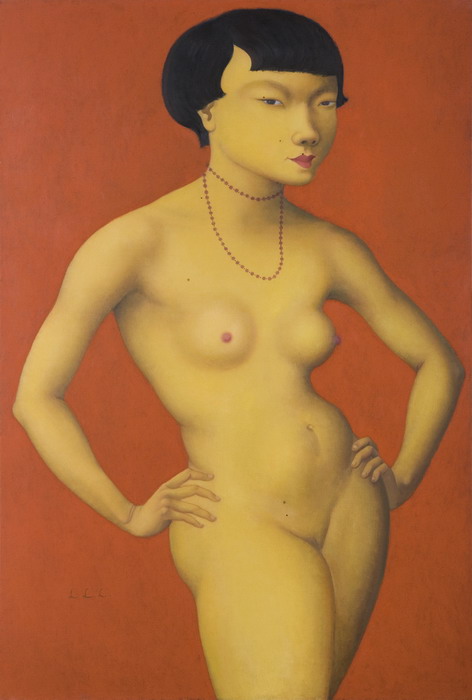
Nude Woman Wearing a Red Bead Necklace, 195x130cm, oil on canvas, 2009
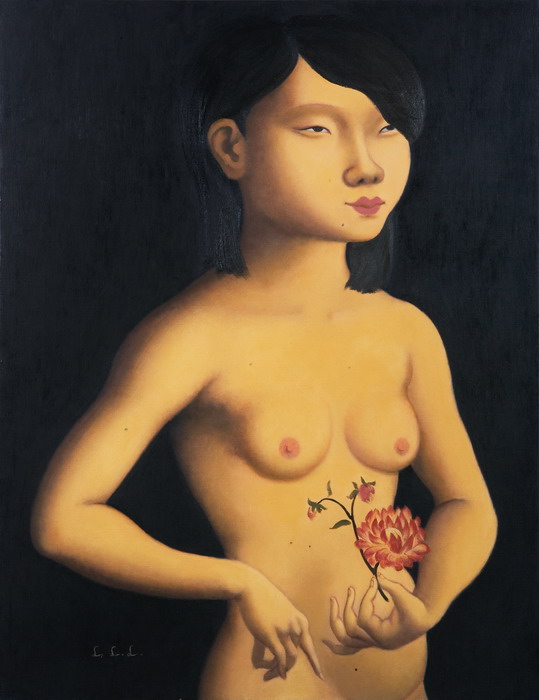
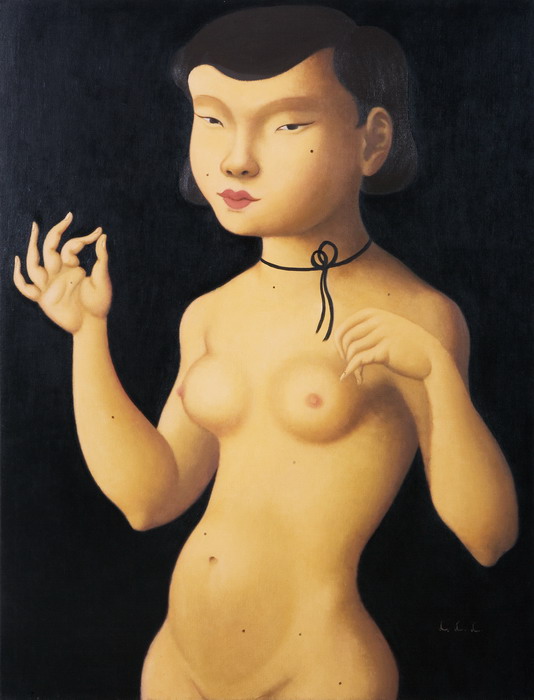
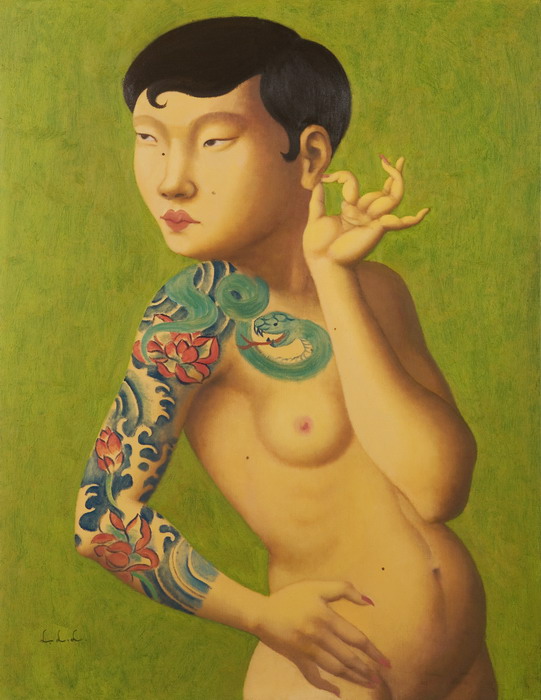
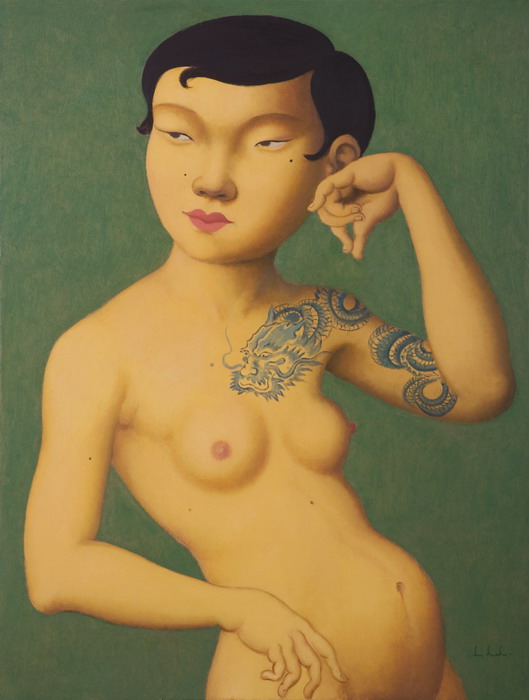
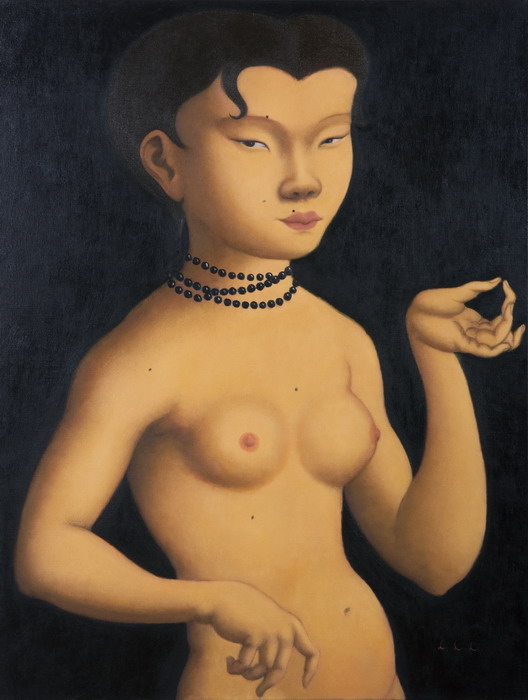
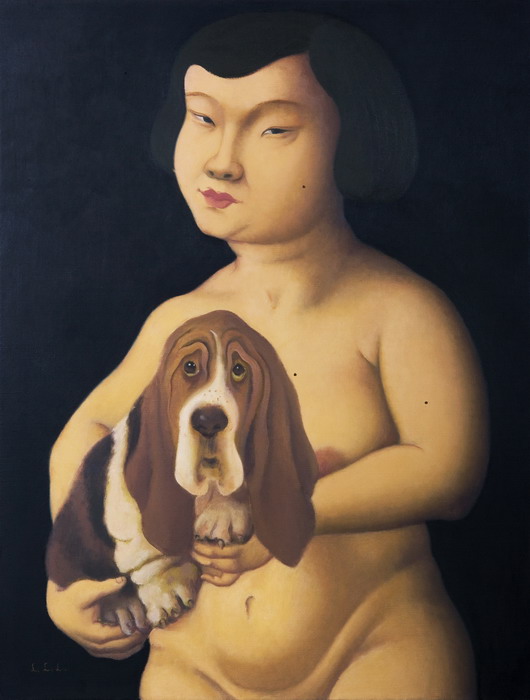
Text by Chen Chi-Hsiang
Foreword: Lin Li-Ling (born 1965) is a Taiwanese painter of the new generation residing in France. In today's era dominated by multi-media, installation, technology, and digitalization, she is a rare practitioner who persists in painting. Pure "beauty" was long ago overturned by modernism and avant-garde art; traditional painting was declared dead and cast into the clouds. Painting has not only become the rearguard but also the academy. In the current globalized, pluralistic inquiry, objects replace sculpture or are treated as sculpture, images replace painting or are treated as painting; video and imagery reign supreme, technique replaces craftsmanship, concept replaces form, price replaces value. Painting becomes an impossibility; painting is the most marginal creative practice today, on its last breath. Among these, nude painting seems to have been sentenced to an abyss, a forbidden territory—for a long time, no one dared to cross that line. In this context, it is a delightful surprise to see two Taiwanese painters residing in Paris—Lin Li-Ling and Wei Chen-Hung—braving life-and-death creative spirit to enter this forbidden land, intending to resurrect this forgotten nude art, to explore the typical human aesthetic beauty, and to probe this double impossibility (painting and nude art).
Lin Li-Ling's Creative Journey:
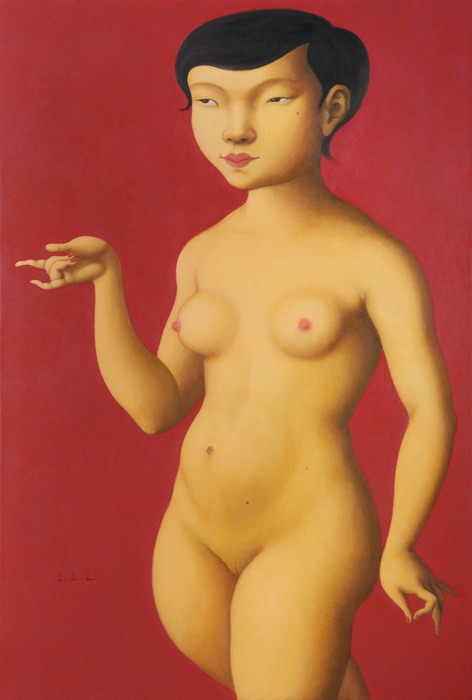
Lin Li-Ling's art, within postmodernism's return to tradition and myth, and its return to art history and classical literature, blends modernist form with classical temperament. Works like "Adam and Eve" (2007) recall the cold stylistic nudes of the 16th-century Northern Renaissance German painter Cranach. "Young Girl" and "Portrait of a Youth" (2008) are rare contemporary side portraits, inspired by the early figure portraits of the Italian Renaissance painter Piero della Francesca. The hand gesture of "Young Girl" seems to share a similar contrived elegance with the sister's hand in the painting "Gabrielle d'Estrées and One of Her Sisters" at the Louvre in Fontainebleau, France, rich in literary and anecdotal quality. This becomes the starting point for Lin Li-Ling's exploration of nude art.
In 2007, her exploratory phase also entered a Magritte-esque surreal dreamscape, such as the triptych "Reading the Newspaper," full of magic and imaginative space—a blind person reading a newspaper, which also reminds me of Wei Chen-Hung's "Eyes Closed" series, despising the real world and criticizing the mass media that "keep their eyes open but talk nonsense." It metaphorically addresses the essence of reading and the truth of interpretation, because "what can be seen can be imagined. What can be imagined may not be seen." In "Kiss of the Female Upanishad," a hand holds the Upanishad, lost in thought with eyes closed, presenting another world, more lyrical—passionate lovers yearning for love and embrace. Through the narrative depiction of this triptych, it unleashes imaginative space, interwoven with dreams and a heart full of happiness. The melancholic "Dream Butterfly" triptych awakens from a dream, through an atmosphere of green fields and fragrant waves, to a disappointed male angel covering his eyes with both hands—falling in love seems to blind one, pointing to the sorrow of "it's all over." The courting lovers by the "Seine River" are both surprised and uneasy. The gentle, intimate embrace of "The Kiss," though with eyes closed, bursts forth with sweet passion. Amid psychedelic colors and literary character imagery, with numerous symbolic referents, the literary quality stages a drama of maidenly sentiments and poetic dreams.
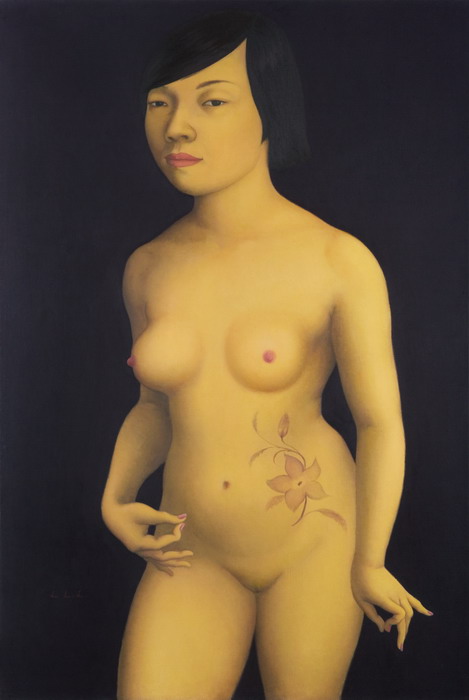
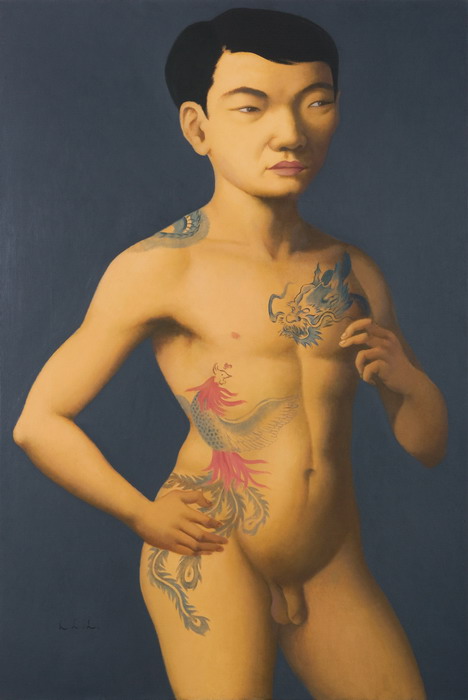
This drama of infatuation features entirely Western characters and plots, veiled in a mist-like dream, somewhat illusory and unreal, with various costumes disguising seemingly non-existent bodies, some with regional scenic backgrounds. Soon after, she awakens from this ethereal foreign dream; the dreamlike atmosphere vanishes, returning to self-cultural reflection and back to the human world. A new batch of uniformly Eastern faces appears, self-portrayals, young men and women under Eastern imagery, each with a flesh-and-blood body, without clear light and shadow, standing alone against a deep, contrasting background, highlighting solid and powerful physiques. Clearly, these nude portraits are mostly neither half-length nor full-length, but three-quarter profiles, with agitated bodies, bright and glossy skin tones, soft and undulating curves, exuding the ultimate feminine beauty.
Visual and Sensory:
Facing Lin Li-Ling's enchanting, eye-catching, charming, and provocatively sensual nude paintings, one's gaze is immediately captivated, leading to a state of fascination, reaching a visual climax. The act of viewing contains a voyeuristic psychological response, even a sense of awkwardness, a strong sensory and psychological disturbance, immersing the viewer in a visual feast that arouses involuntary excitement and exhilaration. One feels an unusual sense of gazing and being gazed upon (as you look, the figures in the painting also glance sideways at the viewer), challenging not only perception but also deeper consciousness and soul, sparking infinite imagination in the audience.
Lin Li-Ling's nude paintings skillfully employ provocative visual imagery, focusing on the unique beauty and symbolism of the human body, emphasizing sensual bodily forms and sensitive color use, incorporating multiple layers of symbolic and referential meaning (such as beauty marks and tattoos). Within a simple structure, they contain rich narratives. Navigating between reality and unreality, form and color, image and imagination, modern and classical, story and allegory, sign and symbol, soul and body, desire and sensation, reference and metaphor in postmodern aesthetics, they aim to break the boundaries of nude painting and attempt to escape the constraints of worldly conventions.
Note 1 and Note 2: From interviews with Lin Li-Ling.