Chen Chi-Hsiang’s Embodiment of Mind and Nature: “Original Image as Appearance” Solo Exhibition
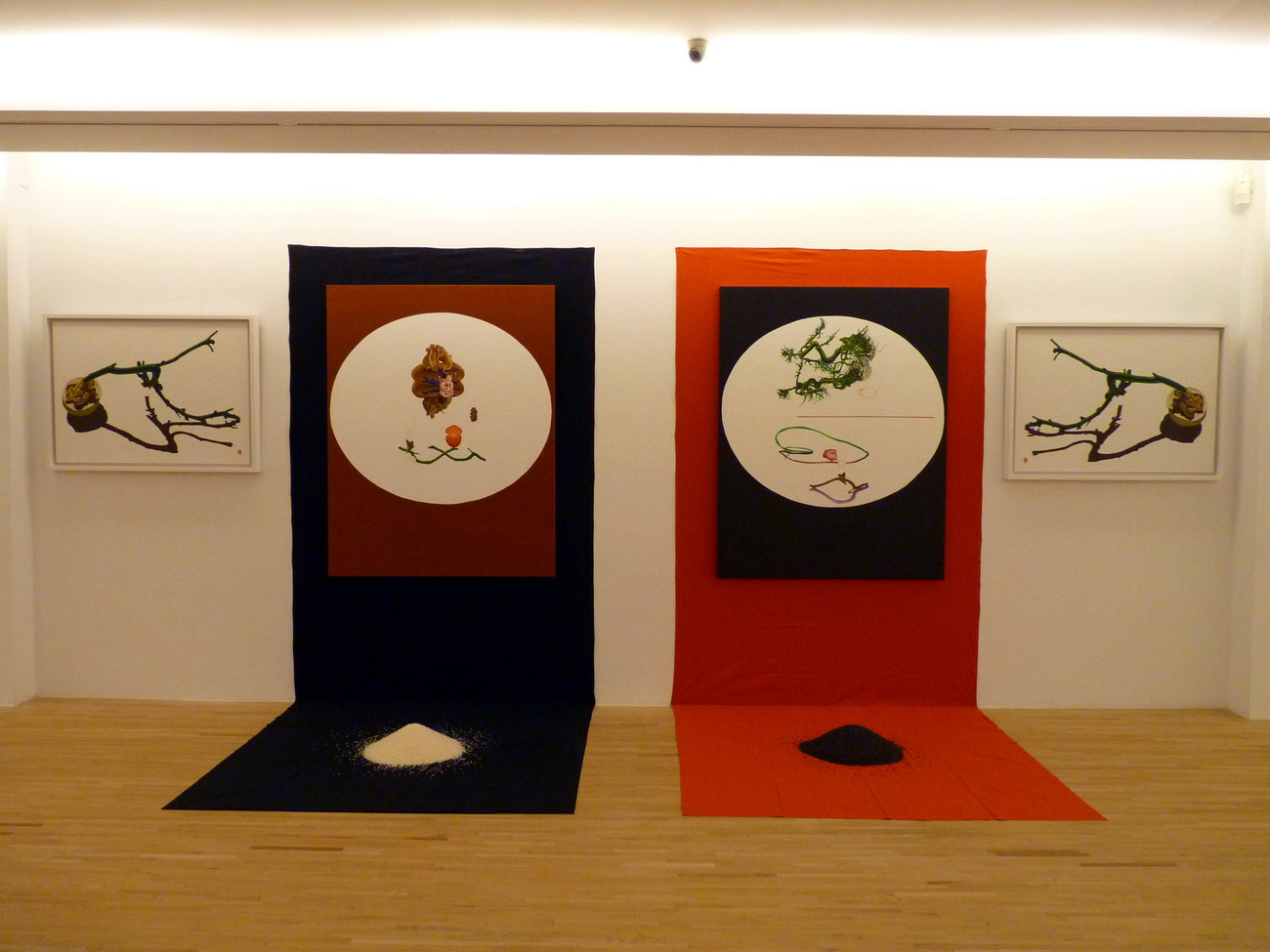
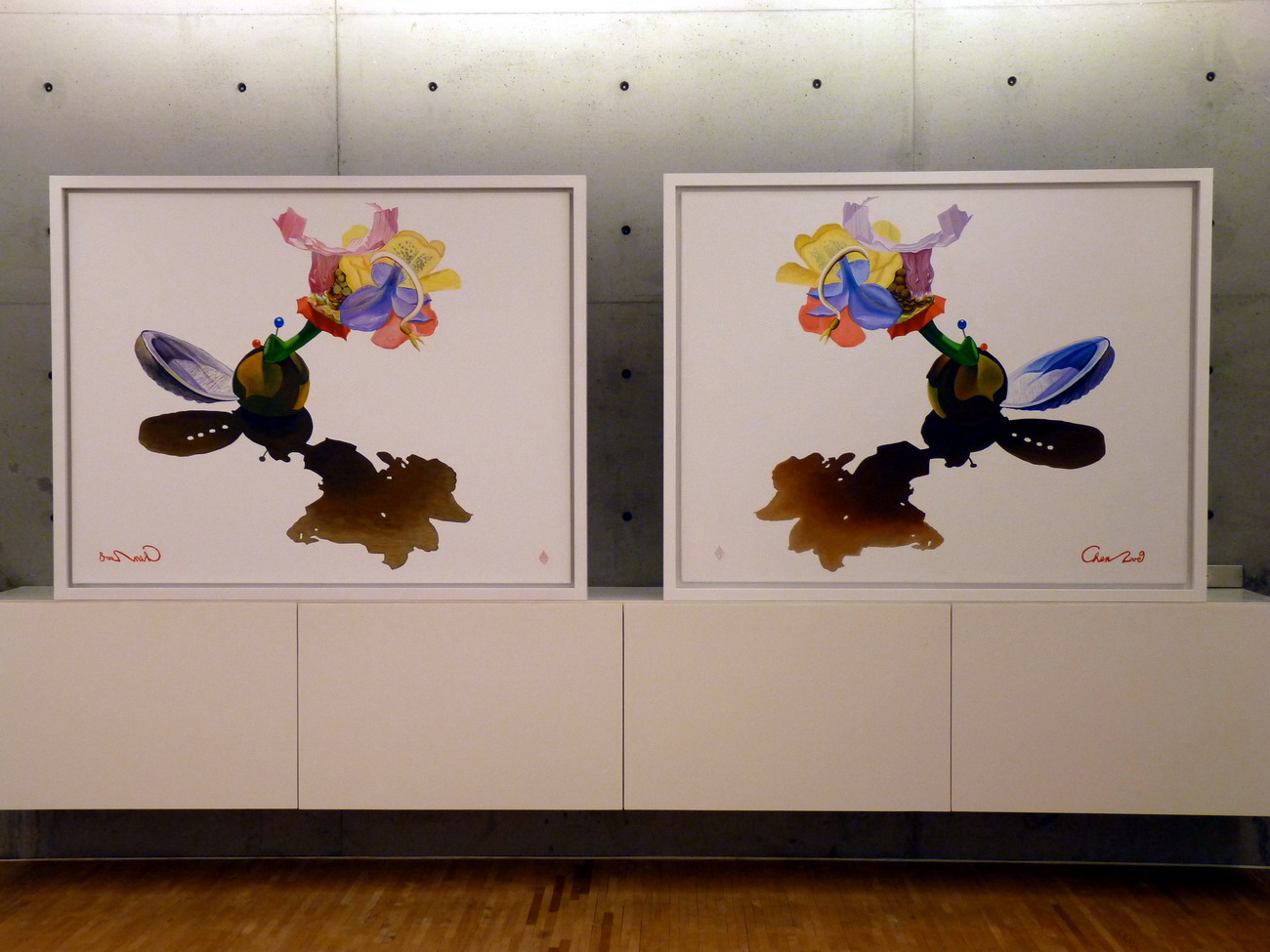
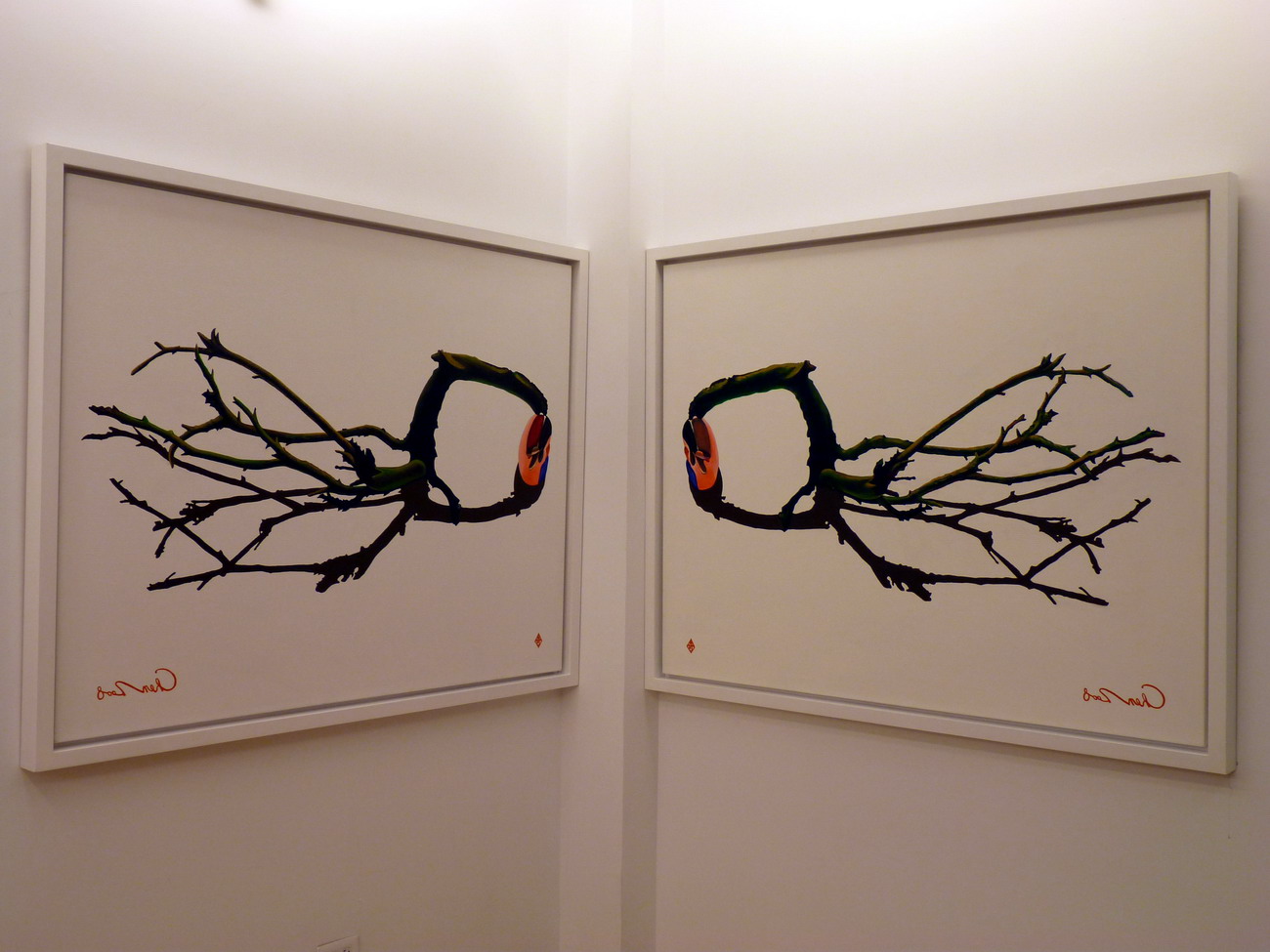
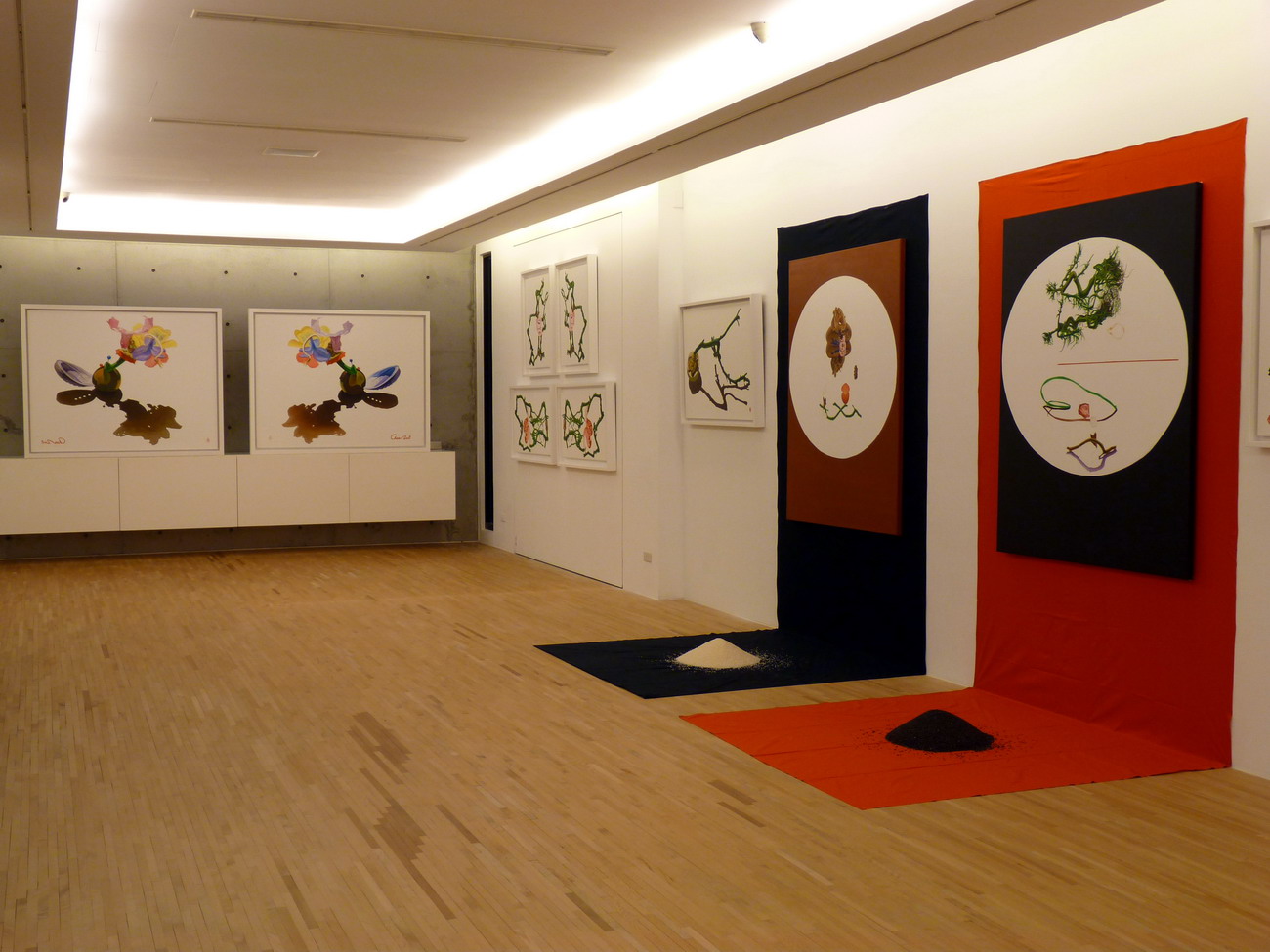
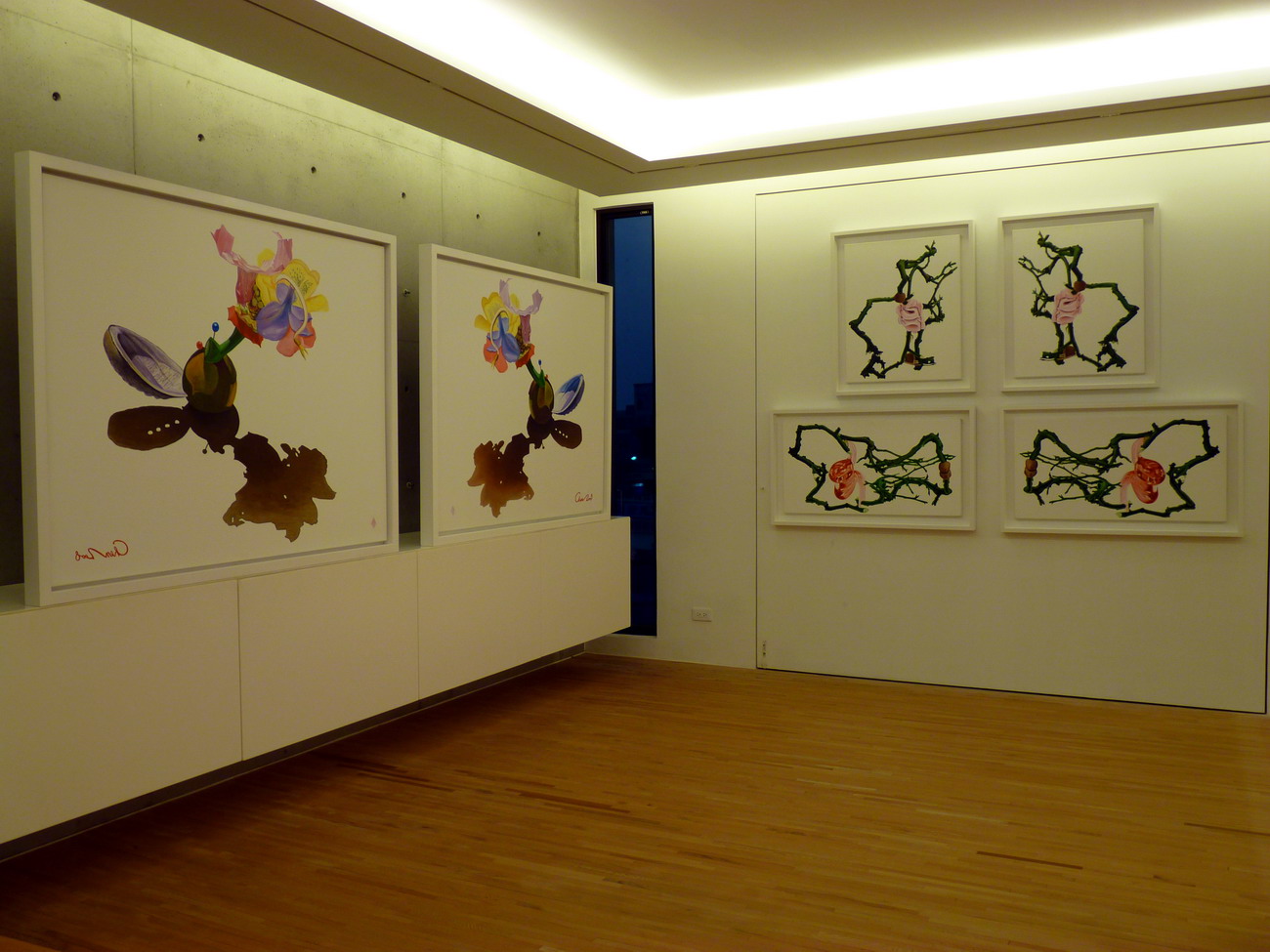
“Original Image as Appearance” solo exhibition at Taiyu Art Academy — one of the installation scenes in the work space.
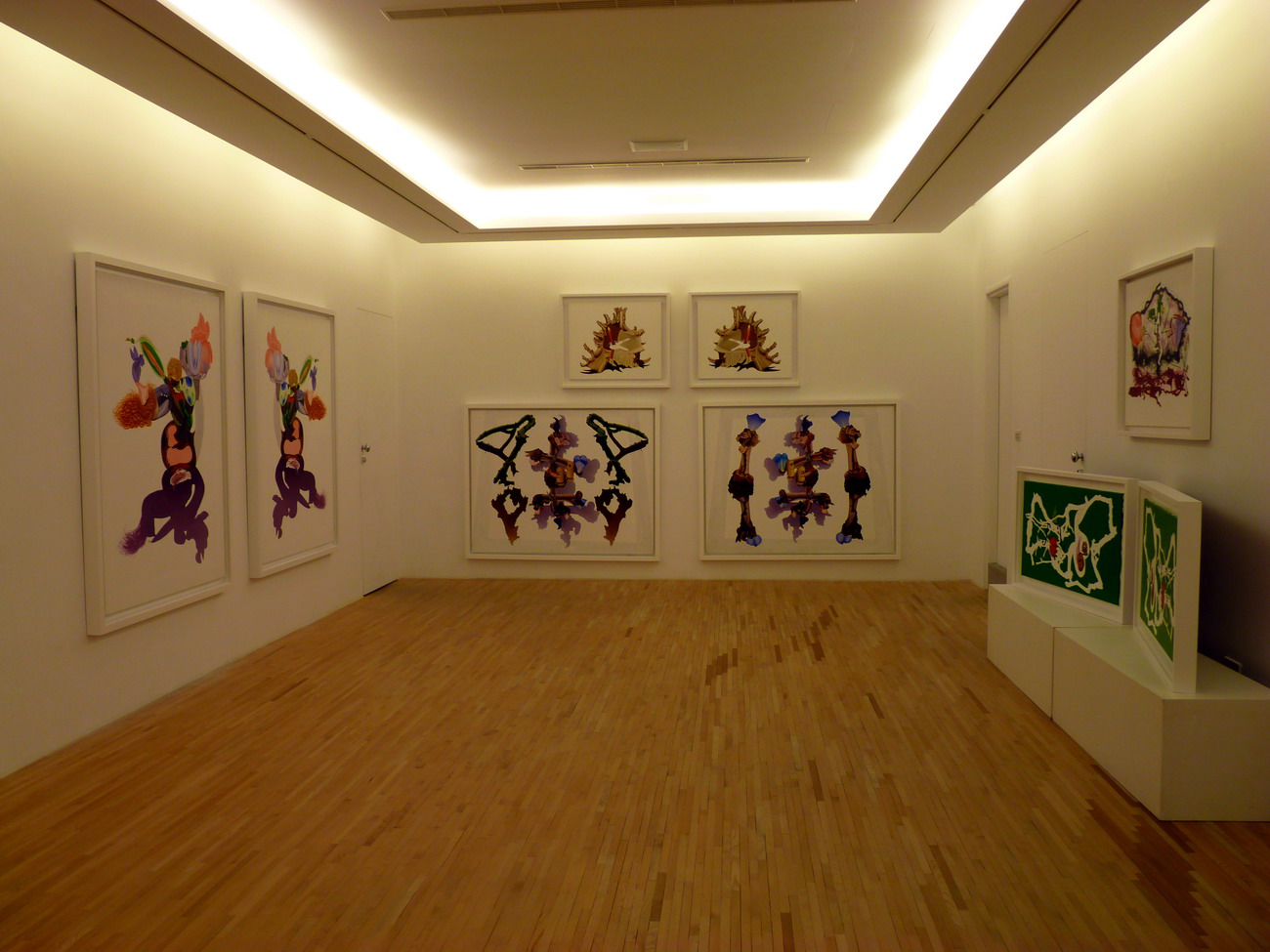
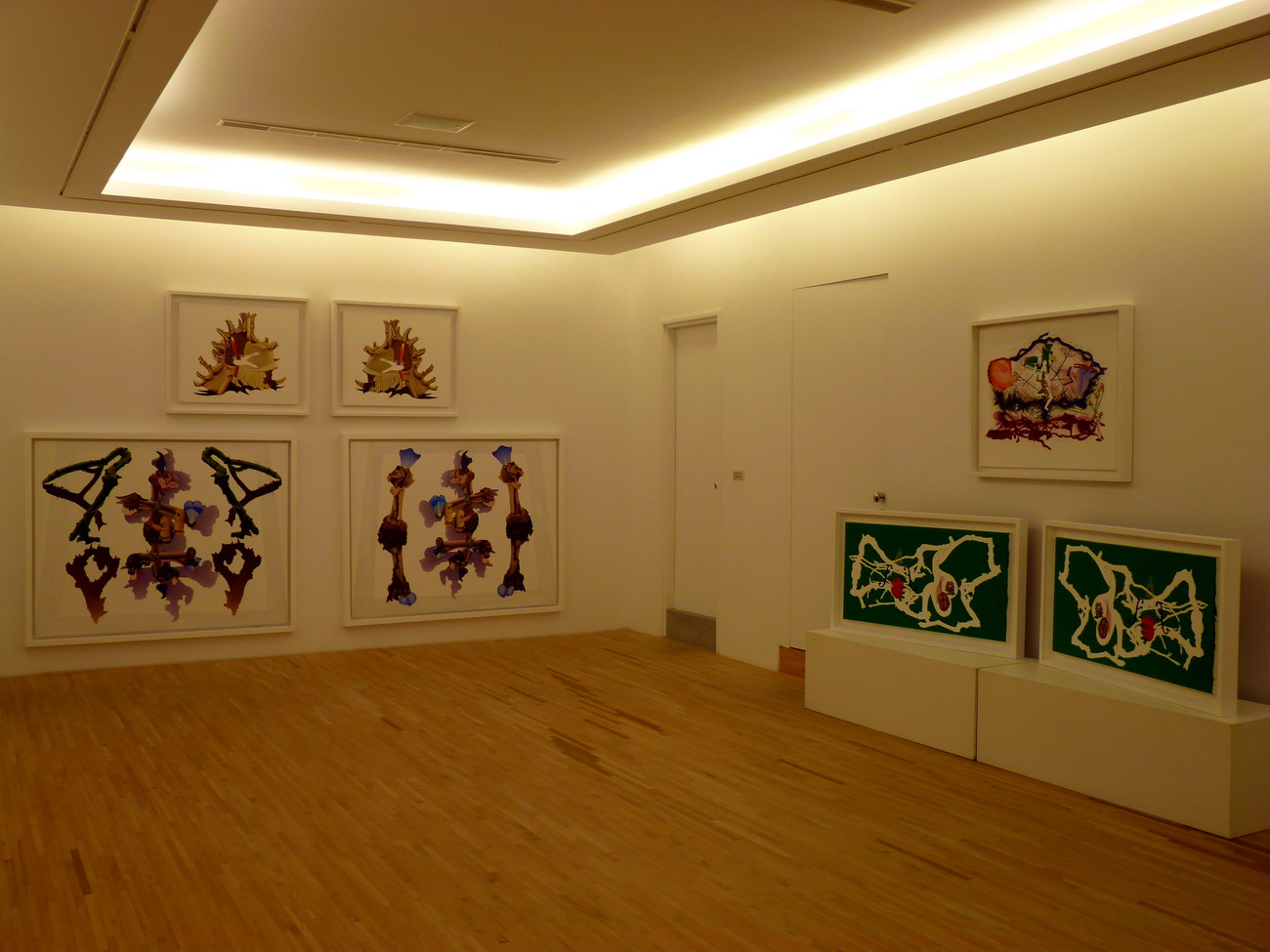
Original Image, No Appearance
Original Form, Empty Image
The Void is Wondrous
Without Emptiness, There is No Connection
All Ten Thousand Phenomena are Original Images (Appearances)
Preface: Chen Chi-Hsiang (born 1956) is a veteran artist, art critic, contemporary art historian, amateur horticulturist, plant enthusiast, and archival expert who has lived in Paris, France, for thirty years. Specializing in Western contemporary art and humanistic thought, he offers deep observations and research on current globalized artistic trends. He is renowned for his contemporary art criticism, serving as a columnist for Taiwan Artist Magazine and the Contemporary Art column of Tainan Yafen Daidi Literature. He has published numerous studies and essays on Western contemporary art. Possessing profound humanistic literacy and rich cross-cultural and interdisciplinary experience, along with a macro-level international artistic vision, he holds unique insights into exhibition spaces and is deeply concerned with and researching Taiwan’s prospects and the development of modern and contemporary arts and literature.
Chen Chi-Hsiang reveres nature and enjoys humanistic arts; observing mountains and water, admiring wind and scenery, are indispensable hobbies in his life. Living in the highly constrained urban environment of Paris, he steals moments to stroll leisurely, visit markets, collect materials, and engage in silent contemplation, becoming his most relaxing state, almost akin to wandering in meditation. For thirty years, day after day, he has dedicated himself full-time to exploring current artistic and ideological trends, continuously collecting materials, writing, curating exhibitions, giving lectures, and publishing works, while participating in various cultural activities and visiting friends in the arts.
Furthermore, he has never forgotten to silently cultivate the backyard garden of his artistic creation. Over the years, he has recently carved out a world of his own, constructed around coincidental encounters with objects in daily life, using light and shadow, mirrors and reflections, to metaphorize the illusionary destruction of the material world, like flowers in a mirror or the moon in water. What do the meanings of "image" refer to? What is reality and original appearance? Exploring the illusory changes of nature and worldly affairs, such as the reflection of "flowers in a mirror, moon in water, floating life like a dream," it reminds us how to see through the clouds to reveal the moon, reflecting inwardly on the local scenery of our existence amidst the phenomena of the material world and complex thoughts. Creation itself is the artist's life experience and projection of life, highlighting his current perceptions and insights. Indeed, art is a bright mirror of life, reflecting the creator's state of mind and the state of time and space.
The Faces of "Image" and "Appearance":
"Original Image as Appearance" is a creative term, much like the artist's sculptural and conceptual creations, forming poetic meaning and pointing to the magical and mysterious volume of life. "Image" (Xiang) and "Appearance" (Xiang) share the same pronunciation and similar references, both targeting external scenes or things. "Image" refers to shape or appearance, while "Appearance" externally refers to form and internally refers to essential meaning. "Original Image" points to what is seen in the present moment of time and space, the original state of perception. "As Appearance" implies the form and essence exactly as they are. All existences in the world are images. The myriad phenomena change with time, space conditions, and human circumstances. Between true, false, empty, illusory, and real appearances, all truth, falsehood, emptiness, and illusion ultimately return to "image." Are all ten thousand phenomena original appearances? Does existence rely on visual evidence as fact? What about imagination and perception? Are thoughts and dreams another level of real image or alternative reality? Thus, in today's era where digital and 3D imagery are developed and prevalent, when the virtual is more real than the real, what is the truth? All things and scenes involve visuality, perspective, and awareness. From seeing, we enter experience and feeling, manifesting the local scenery of life existing here and now.
In this vast world of myriad phenomena, are all that we see "images" or "appearances"? Do perceived, imagined, and dreamt things not fall under this category? In the realm of reality, between the void and the solid, the visible and invisible, the recognizable and unrecognizable, the understandable and incomprehensible, the tangible and intangible (liquids, gases, or super-materials like electrons, atoms, radio waves, and sound waves), the imaginable and unimaginable, the perceptible and imperceptible, the named and unnamed, and even those in sleep, there are countless internal and external aspects. It seems that all original images and formlessness coexist. All these are called "images" or "appearances." Are these existential phenomena also called "original images" or "original appearances"?
Myriad "images" change endlessly with time and space. Viewing shifts with the state of mind. True and false, real and empty, dream and illusion, inside and outside, named and nameless—all are empty appearances as Buddhism says, because "visible things are actually non-things." Clearly, "appearance arises from the mind." The object of observation becomes the location of viewing forms or bodies. The mind becomes the state and perspective of viewing. However, "environment shifts with the mind," and appearances change with the mind's transformation. Everything concrete or abstract in the world could be the truth, because "the ultimate truth has no appearance and is nothing but everything," depending entirely on the viewer's understanding and perception. Through visuality, it triggers physical and mental resonance and metaphysical experience, awakening deep inner consciousness and realizing the existence of embodied states. As recorded in the Avatamsaka Sutra: "Ultimate truth has no appearance and no difference; reaching the ultimate, there is still no appearance." Ultimate truth has no appearance, yet it concerns existence. Existence itself is the original appearance and original formlessness. Because "detaching from all external appearances is called formlessness," or as Buddhist scriptures reveal regarding seeing one's true nature: "If you see all appearances as non-appearances, you see the Tathagata." Worldly affairs are as they are, without fabrication or delusion. Here and now, returning to their original state, thus restoring factual original appearance or original form.
The World Inside and Outside Images and Appearances:
Under the vast cosmic time and space, everything operates in flux and destruction, which can be said to be "Heaven's Way is constantly moving, all dharmas are impermanent." Existence is real, yet itself is tangled with the unknown, magical, and mysterious. The material world cannot escape images and appearances. Life amidst myriad phenomena is colorful, bewildering, and uncertain. Everything seems like an environment and like a mirror, appearing and transforming in dreams and outside dreams. Consciousness shuttles between reality and illusion, like "flowers in a mirror, moon in water, floating life like a dream," elusive and changing in an instant. Life exists inside and outside images and appearances of temporal, material forms, and spirit, containing all finite and infinite, conscious and unconscious, metaphysical and other aspects. Existence is all possibilities. Inside and outside images and appearances can explore the nature of life. Reality or original appearance depends on individual perspectives and verification. Therefore, existence is purely the mystery of the universe.
The natural material world rotates with time and seasons. The local scenery of life changes with the flow of consciousness. Environment arises from the mind, and intention shifts with the environment. Human observation, attitude, and conditions create one's own face, naturally experiencing all possibilities of existence. Art is the outlet of life, so naturally, art itself reflects life's perception and insight, witnessing the state and scenic landscape of existence. Through art, we attempt to glimpse the nature of existence, revealing some ineffable mysteries of being.
Embodiment of Mind and Nature in Image and Appearance:
In recent years, observing changes amidst this fluxing and destructive life, entering the microcosm of life, examining the most intimate and trivial daily matters nearby, and probing the magic of unexpected encounters, thereby comprehending the secrets of existence. Starting from the "Observing the Mind, Surveying the Realm" mental image series (2004-2007), he transformed matter into mind, extending into diverse series surrounding the illusory changes of nature and worldly affairs, thereby reflecting inwardly on the existence of life itself. Afterwards, returning to painting, delving into the impossibility of painting, challenging its possibilities: such as the "Flowers in a Mirror, Moon in Water" series, creating reality within emptiness and emptiness within reality. Emptiness is like flowers in a mirror, reality is like the moon in water. The "Spring Dream - Non-Dream" series depicts the earth returning to spring and becoming myriad phenomena. Real and empty myriad phenomena are all realms of dream-non-dream. The "Like Mirror - Like Environment" series (2008), mirror is like environment, environment is like mirror, emptiness is like reality, reality is like emptiness, illusionary destruction, like a mirror, also like an environment. "Environment - Homeland" is another series, elaborating on the realm of time-space-myriad phenomena and the domain of myriad phenomena-time-space, the realm-homeland of life. The "Dream within a Dream" series intends to explore a type of real and illusory existence and state of life from the metaphor of Zhuangzi dreaming of a butterfly, allegorizing the new birth and destruction of natural evolution and the truth and illusion of things, like a dream-like and illusion-like world of myriad phenomena, making the invisible imagery or mental image visible, exploring the true face of "image" or "original appearance," displaying the most beautiful source of life.
The Origin of "Original Image as Appearance":
The "Original Image as Appearance" painting series, like all series, draws inspiration from the "Observing the Mind, Surveying the Realm" images, continuing to deepen the metaphysical world, exploring the true face of "image" or the "original appearance" of art. Expanding extraordinary visuals in the microcosm, entering deep consciousness, meditating on the state and spatial-temporal domains of all existent myriad phenomena. Amidst this vast and ever-changing universe, consciously and silently observing changes, or using the unchanging nature of life, with a romantic sentiment, capturing fragments of reality as eternal contemplations of existence. Observing material forms is like essence; appearance is nature. The external is an extension of the internal, or more precisely, internal and external are one body, boundless, like shadows following objects, time winding around space, space itself being time, substance combining with emptiness, ultimate truth having no appearance yet being everything. Fundamentally, experiencing art itself naturally as the manifestation of the life entity.
The Dimensions of "Original Image as Appearance":
The "Original Image as Appearance" series continues to construct heterogeneous everyday objects through unusual meetings, such as the view of French poet Comte de Lautréamont: "When a sewing machine and an umbrella meet unexpectedly on an operating table, how beautiful!" Furthermore, adding the bizarre play of light and shadow, mirrors and reflections, two sides of one coin mutually forming a whole. Under physical phenomenology, familiar things are transformed into strange visuals, emitting an extraordinary charm, constructing the metaphysical truth of art. Romantic poet Charles Baudelaire said: "Beauty is always strange."
This series strengthens the realm of mirrors, such as the famous "Mirror Stage" theory by French psychoanalyst Jacques Lacan, using mirror reflection as a "symbolic womb," arising from people's need for identity. Through mirror reflection, it performs "shaping 'I' to discover the 'inner' self and 'outer' self." And breaking free from the mirror, metaphysically intentionally confusing light/shadow and reflections or overlapping two different images to construct a magical world. Adding some subjective and abstract elements like horizons or symbolic musical notes, and sprinkling water droplets on the surface, contrasting reflections undergo qualitative change, making the interplay of reality and illusion more magical and bewildering. Breaking free from realistic material forms, magically shifting scenes, becoming confusing and disturbing visuals, intending to reveal the essence of appearance. Surrealist Andre Breton wrote: "Art is the medium of magic."
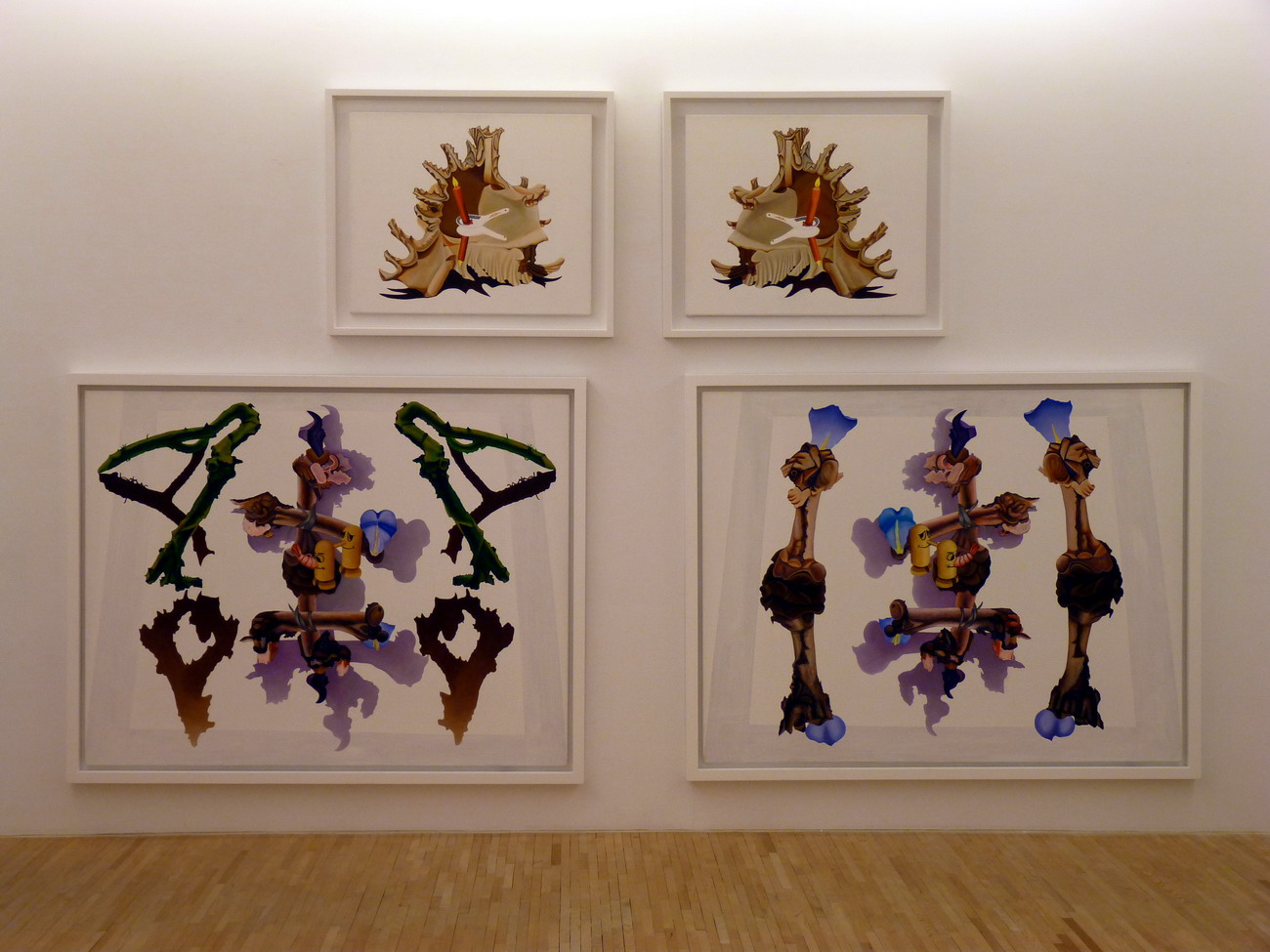
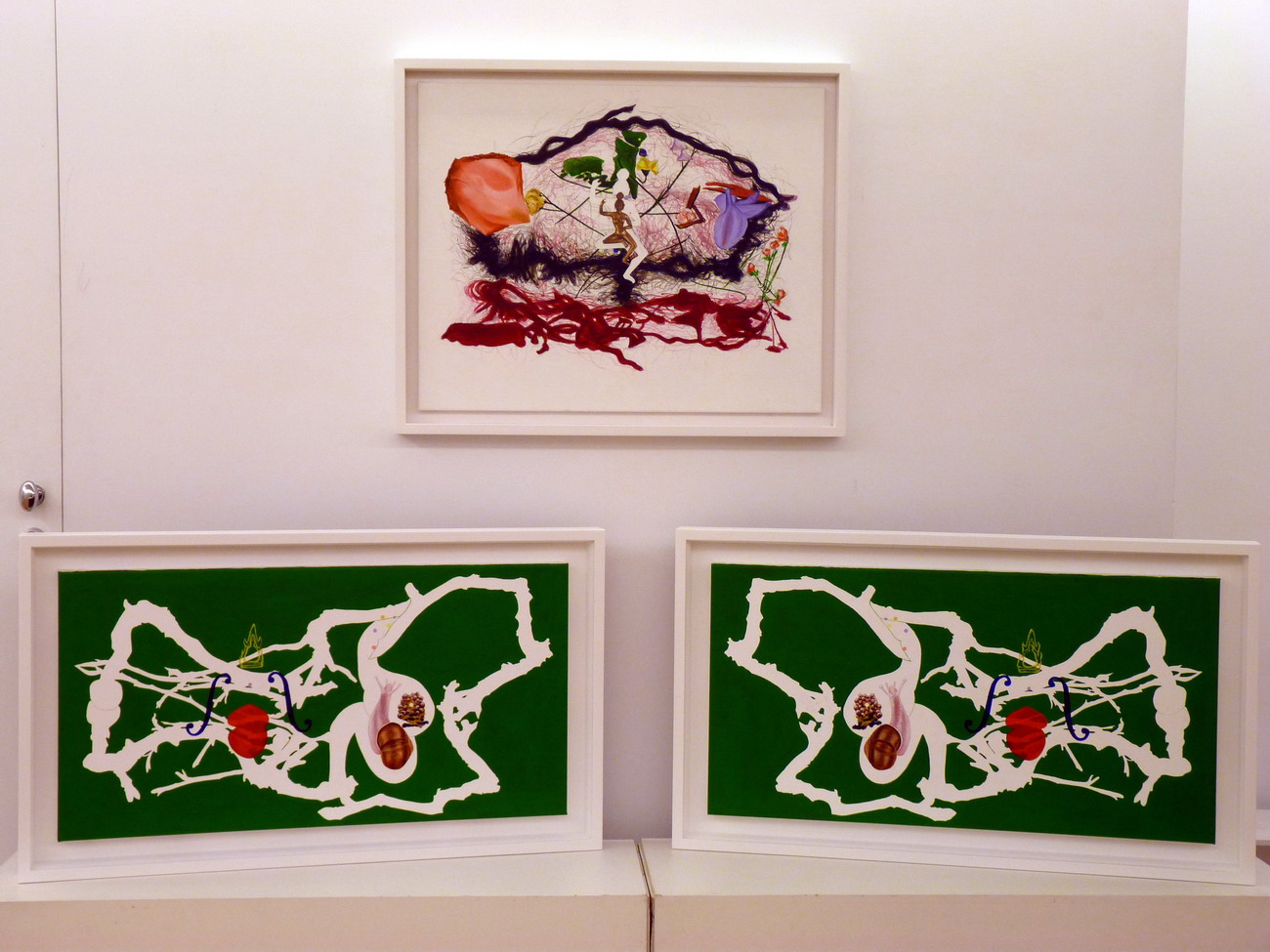
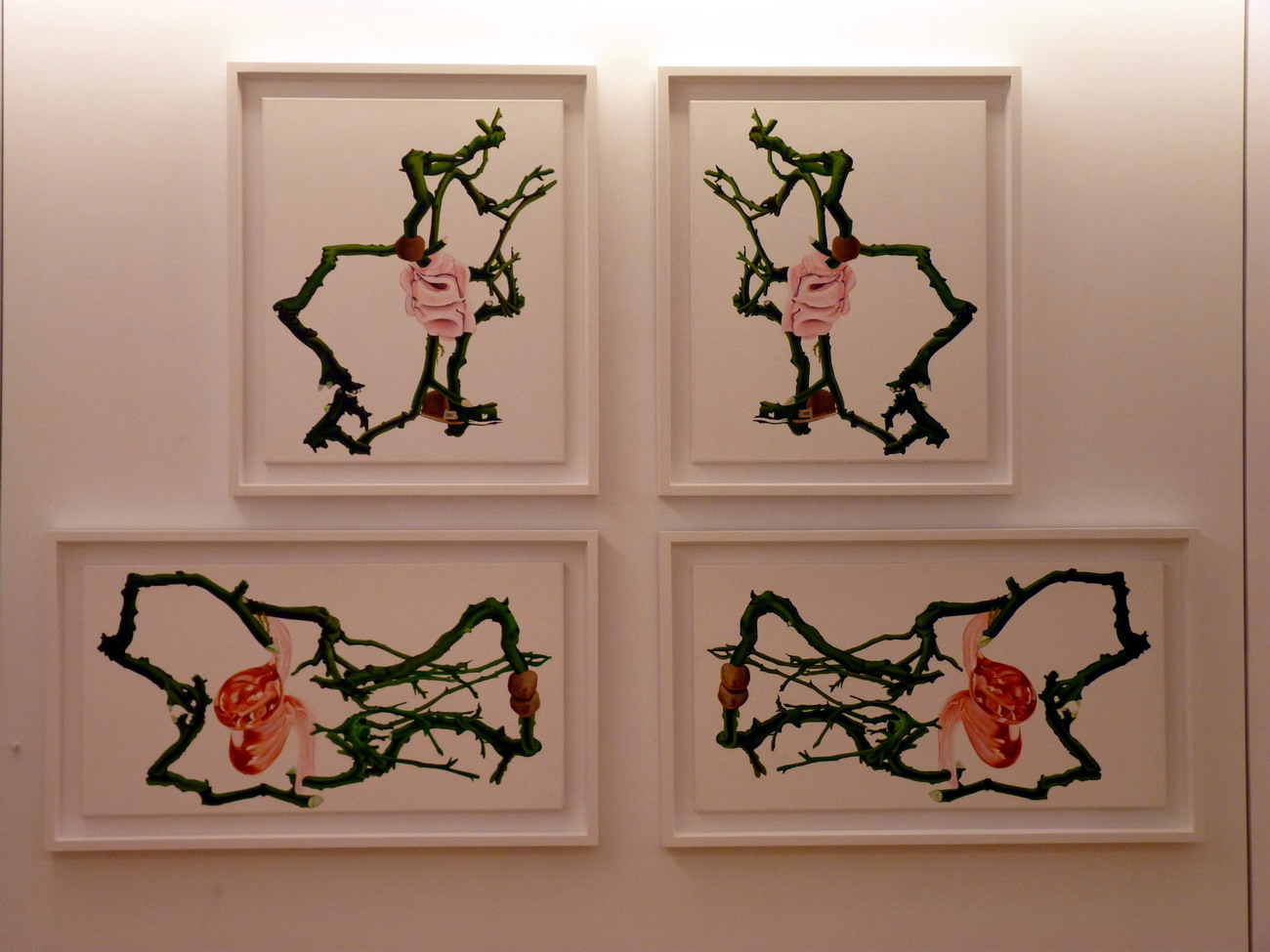
This series also continues in the dramatic intimacy of twins who look alike but differ in spirit, like mutually contrasting mirror images, engaging in mutual reflection and dialogue. Similarity becomes the symbol of these series. Conscious blank space carves the subject of material forms, strengthening shape and appearance. This is both a carrier of space and spirit, and a solvent of real space. Mastering the white realm of reality and emptiness, Daoism: "Emptiness contains reality, reality contains emptiness; extreme emptiness becomes reality, extreme reality becomes emptiness," highlighting the metaphysical dimension of painting and galloping imaginative space.
Spiritual Field - Space:
All exhibition spaces and stages, like magical spaces, change the overall atmosphere of the space substantially or highlight its spiritual field as the artist enters, through the creation and projection of personal temperament and style. There is a very apt Taiwanese saying "air is elegant," meaning any field naturally forms an atmosphere with personal creation. Exhibitions take works as the main body. Regardless, works already carry connotations and meanings, so how they are hung or arranged will not change the content of the works. However, space planning and transformation directly affect the visibility of works and the field atmosphere. Indeed, the integrity of an exhibition includes the creation of space, because "space is the carrier of works, works are the content of space," revealing the hidden, highlighting the hard-to-see, and calling forth the spirit of the field space, which will be key.
An exhibition is calmly accepting and facing space. After scrutiny, it is clear that Chen Chi-Hsiang has sensitivity and intuitive feelings for exhibition spaces. Under unique creation, not only does it strengthen the dimensions of the works, but it also awakens the extraordinary spirit of the spatial field. In the "Original Image as Appearance" solo exhibition, Chen Chi-Hsiang specially used two three-dimensional installation paintings, one black and one red, as the core of the exhibition, contrastingly highlighting the white carrier space, strengthening the dimensions of the paintings, entering deep consciousness, resonating out a religious-like spiritual field. The tension of the entire exhibition explodes from the core, flowing like electricity with poetic rhythm and musical beats, singing and dancing in symmetrical rhythmic beats: unusually on visual lines up or down, composition, corner symmetry, or standing vertically on platforms or floors like objects. On the black and red installations, symbolic materials like piles of black rice and white rice are added (awakening local consciousness and philosophical thought), constructing a visual melody of highs and lows, shuttling through consciousness, letting the entire space echo with a spiritual sonata, immersing in a metaphysical realm, bathing in an extraordinary feast of body, mind, and spirit, awakening spiritual awareness and resonance.
Aesthetics Inside and Outside Images and Appearances:
"Aesthetic" feeling is a kind of intellectual and emotional experience and life realization. Aesthetics has always been conditional, determined by viewpoints of time, space, conditions, culture, and customs. Art is no exception. Each era has its iconic aesthetic experiences and viewpoints, generally targeting fashion, popular and consumed within the scope of time. Can such aesthetics be called beauty? The aesthetics inside and outside images and appearances point to form and content, external and internal, image and essence, matter and spirit, etc. Within the two sides of aesthetic unity, there should be more subjective aesthetic experiences, transcending binary discourse, thereby witnessing the life aesthetics experienced in existence itself.
Purely "beautiful" things were long overturned by modernism and avant-garde art. "Beauty," in the eyes of these artists who ignore traditional concepts, became a negative term. They have always bravely moved forward, playing the role of pioneers, continuing to expand the realms of art and aesthetics. Where is art going? Is the new always new? After postmodern bad painting and indecent tastes dominated, what exactly is art exploring? French contemporary art team Presence Panchounette wrote: "In this upside-down reality world, 'ugly' is sometimes also 'beautiful'," possessing a certain destructiveness. But clearly, the truth of art is gripping and seems more moving than aesthetic experience. Although very heavy and pessimistic, it reflects the hypocritical social situation of the present exactly as it is. Truth is always hard to accept and face. Truth is always unspoken, just as charming as beauty. Truth not only changes art but also changes the world. Philosopher Nietzsche said: "We create art so that truth may not perish."
Chen Chi-Hsiang’s View on Art:
He believes creation is an attitude and behavior, involving the artist's existential subjective consciousness, outlook on life, and value of life. Art is like a bright mirror of life, naturally reflecting personal life experiences and situations. Existence in the present becomes Chen Chi-Hsiang's personal creative subject, because existence is purely the mystery of the universe. Dadaist poet Tristan Tzara: "Art is not the most precious expression of existence; life itself is more worthy of care." Art creation or painting is, for Chen Chi-Hsiang, a pure personal life viewpoint, experience, and projection, and also a concern and realization of life. Indeed, art is an exploration of life philosophy, seeking truth over pure aesthetic inquiry. Of course, deep truth contains goodness and beauty, because "beauty" is the truth of things, an expression of joy towards existence, awakening awareness and shuttling consciousness. It itself is a state of mind and mapping. Teacher Chen Shih-Ming wrote: "The benevolent heart does not move; one beauty, all beauty." "Beauty" is not just an adjective, but a verb of life action practice! That with "love" in life, whatever is done conforms to beauty.