Chen Chi-Hsiang's "Journey of the Original Image" — The Special Syntax Between Image and Visual
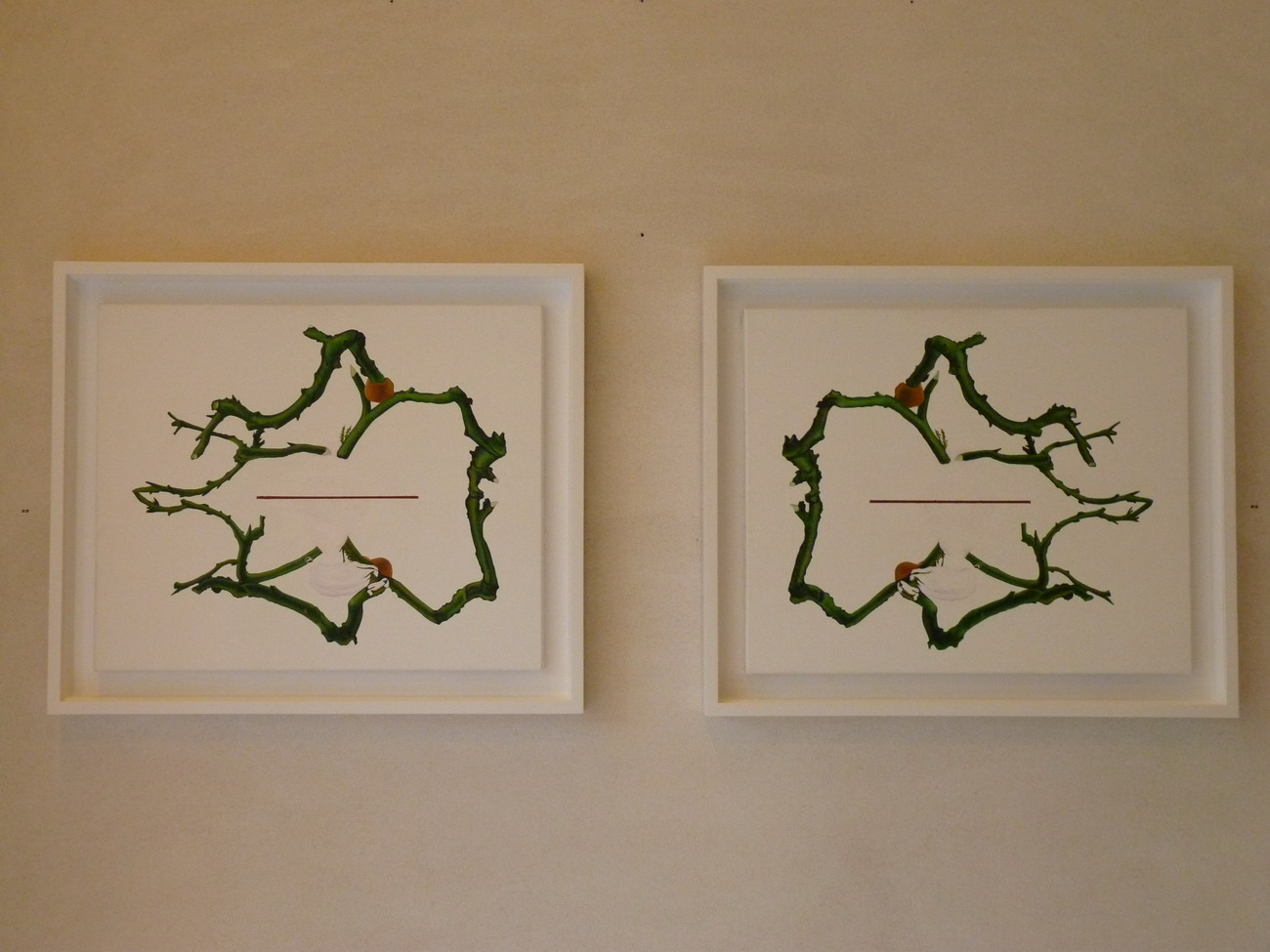
No. 9-10 from the "Original Image as Appearance" series, Acrylic on Canvas, each 60x72.8cm, 2011
By Wang Pin-Hua
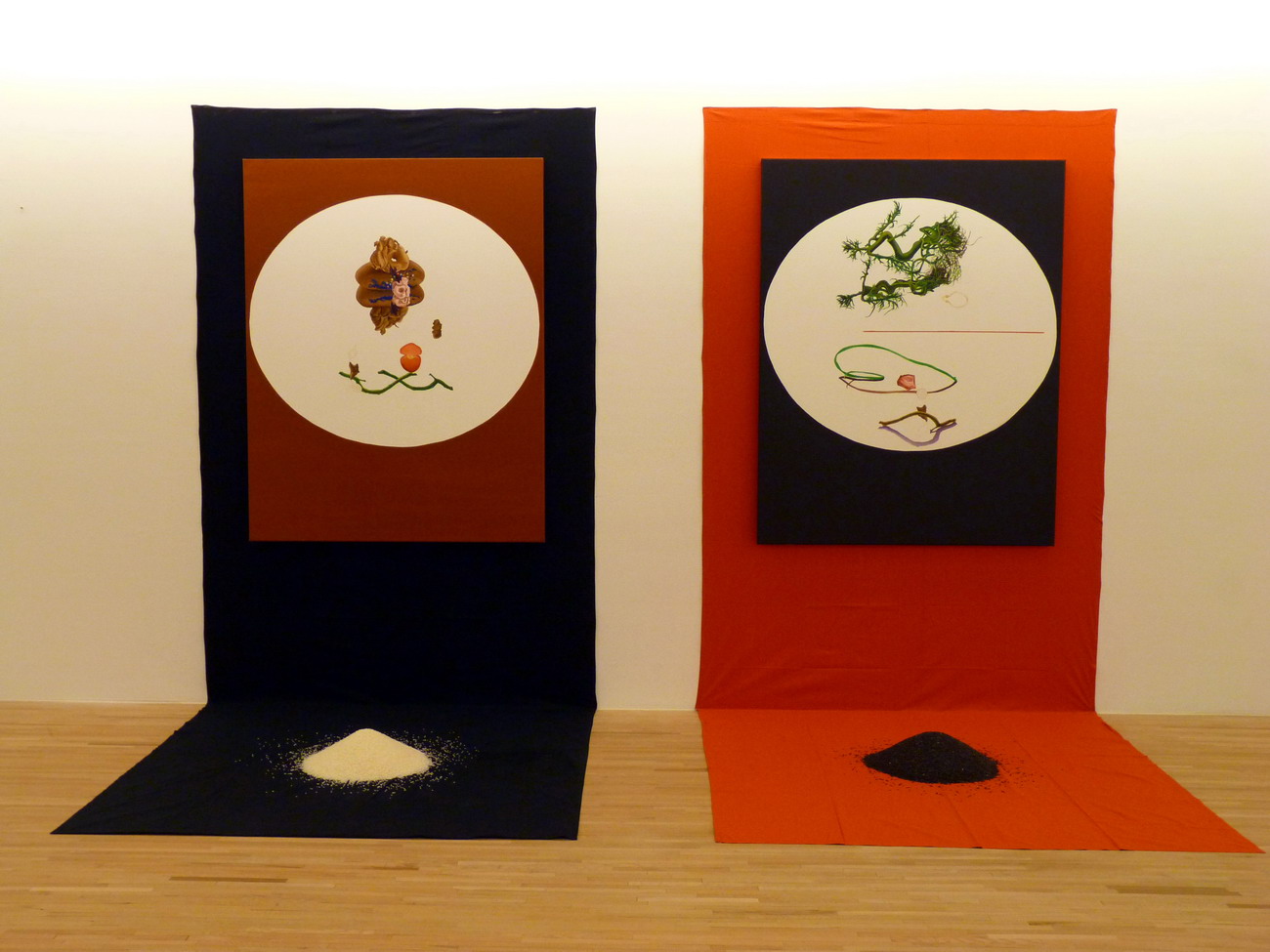
Entering the creative world of artist Chen Chi-Hsiang, who has been living in France for thirty years, viewers may find themselves surrounded by images installed in the exhibition space that are like "mirrors," symmetrically arranged up-down and left-right. Placed between the sequence and proliferation of these "mirrors," one might momentarily lose the conscious judgment of how to view or exist within them. Recognizing them as "mirrors" is a cognition based on daily experience. However, the situation at the exhibition site creates a sense of unfamiliarity that is hard to interpret at first. What is it? Perhaps, practically speaking, this is the second and third layers of space of these works. In other words, through these mutually reflecting symmetrical images, the viewer is actually surrounded by invisible mirrors existing between the symmetrical images. These mirror surfaces, hidden among the relationships of the images and existing at various angles, are present in the concrete space of these pictures but do not have material physical manifestations. In daily life, we often have spatial experiences of being surrounded by mirrors, such as in elevators or entryways, where what is reflected is the continuous superimposition of our own images. But here, the images within the frames carry the effect of continuous superimposition, while the mirrors creating the "illusion" space are hidden. Therefore, this "mirror" space, hidden in the viewer's original experience, now becomes a second layer of space that the viewer has already felt but finds strange, existing in an absent manner. Then, the "portrait" of the person who should appear in the original "mirror" is also absent, perhaps constituting the third layer of space.
Chen Chi-Hsiang's creation stems from the multiple superimpositions of the material imagery, mental imagery, and literary imagery of "images." This reminds me of the complex discussions about "image" in modern art theory. Judging from the works, he has created a syntactic space full of the "rhetoric of image." These syntaxes create a fundamental connection between his pictorial images and visual images, yet expressed in the form of patterns with strong cultural metaphorical characteristics. Therefore, "image" equals "visual," which involves the starting point of the complexity of the word meaning of image itself, becoming the source of polysemous expression in his creation. And this source, through his frequent use of culturally symbolic words in many exhibitions, fully expresses the philosophical concepts of the Buddhist Diamond Sutra verses such as "If you see all appearances as non-appearances, then you see the Tathagata" and "All appearances are illusory."
On the other hand, the repeated continuation of "image" equals "visual" seems to be discussing the problem of pictorial images brought about after the emergence of technical images. This contextual question arising from modern art's reflection on artistic media, however, interacts with Western classical masters Jan Van Eyck's "Arnolfini Portrait" and Diego Velazquez's "Las Meninas" on the thematic level surrounding "mirrors," engaging in a dialogue about the absentees in the "mirrors." The absent personal portrait in the "mirror," or rather the image representing a certain "subject," is actually a key issue expressed in Chen Chi-Hsiang's creation. However, after he brings the problems of representational practice and representation/reproduction belonging to image, visual, and imagery back to the context of Buddhist philosophy through the logic of mirrors to generate the syntactic expression of images, he returns to the cultural symbolic space full of Chinese five-character poems and seven-character quatrains' daily imagery (such as scene descriptions full of spatial imagery like "Empty mountains, no people seen, only hear human voices echoing" and "Withered vines, old trees, evening crows"). His works seem to raise the question of where the starting point of the "subject" in cognition lies, yet adopt a Chinese philosophical answer, letting the "mirror" and "image" speak directly.
Therefore, viewers fully feel a sense of "maturity" in the profound dialogue between Eastern and Western philosophies and cultural symbols in his creative world. That "maturity" is expressed in the theme of his creation—reflection on the existence of contemporary people; it is expressed in the universe of images constituted by the pure grammar of images; it is expressed in the unique image forms he created.
And that schematic or image form that initially made viewers feel strange is superficially expressed through illusory images such as "flowers in the mirror," "moon in the water," and "reflections in the mirror," but substantially, he creates new images born from translating various everyday objects, integrating the characteristics of places such as Zen halls, tea rooms, and dry landscapes in the East. It is like organ tissues, viscera, and internal body views projected out of high-tech medical imaging equipment; or some lively contemplation of white bones after penetrating death. And this faint sorrow and mourning for passing away, subtly revealed in the vivid and delicate painting techniques, makes one recall the magnificent gaze upon skeletons and symbols of death in Western classical still-life paintings. It is precisely this overall "maturity" of Eastern and Western cultures, artistic classics, and profound experiences that makes his creation an artistic form with abstract expression and pure grammatical characteristics.