Hsu Yu-Jen – The Don Quixote of the Taiwan Art Scene
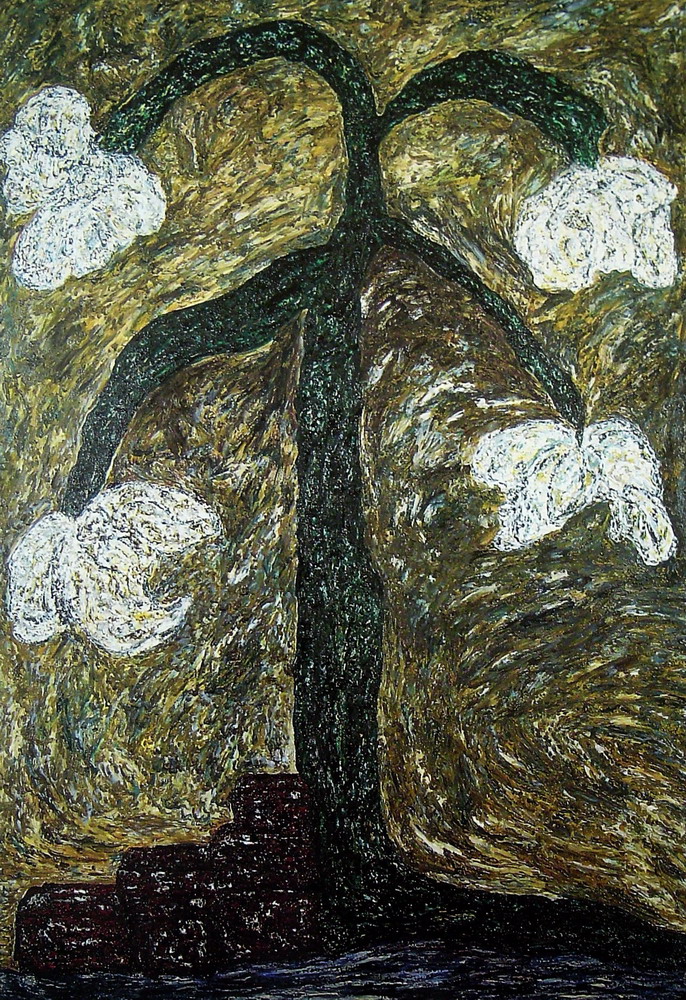
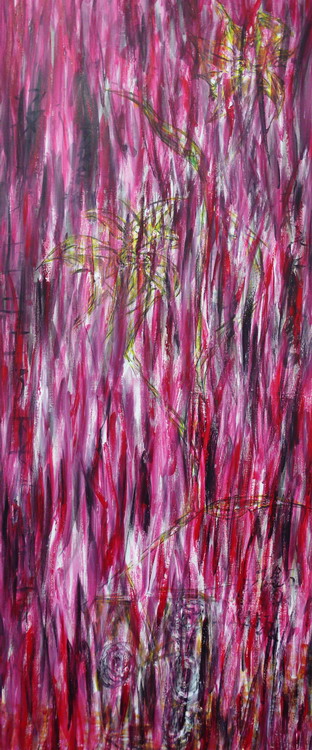
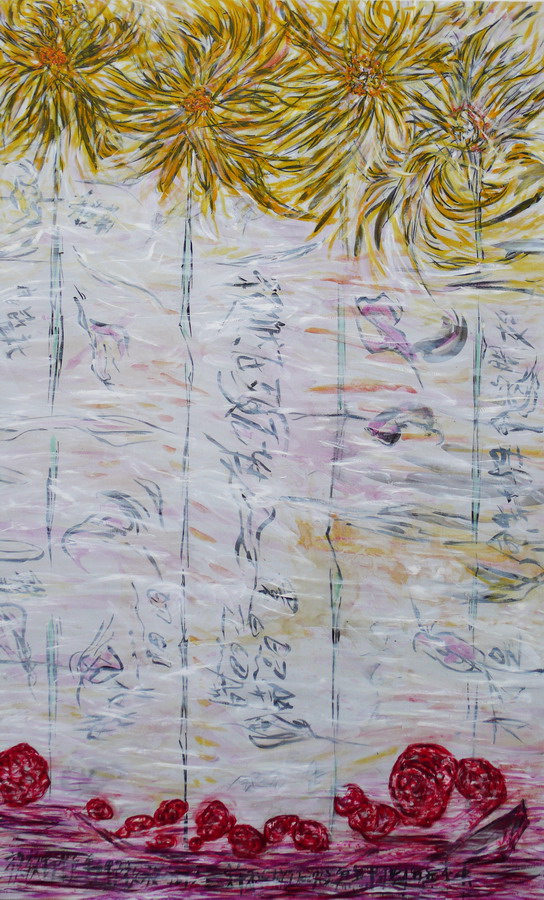
Symbolic flowering tree - Oil painting - 1992
Following the flow of time…
Seeking lonely flowers
Drinking alone under the vast sky, within and beyond the heart
Chang Chin-Lien
Text by Chen Chi-Hsiang
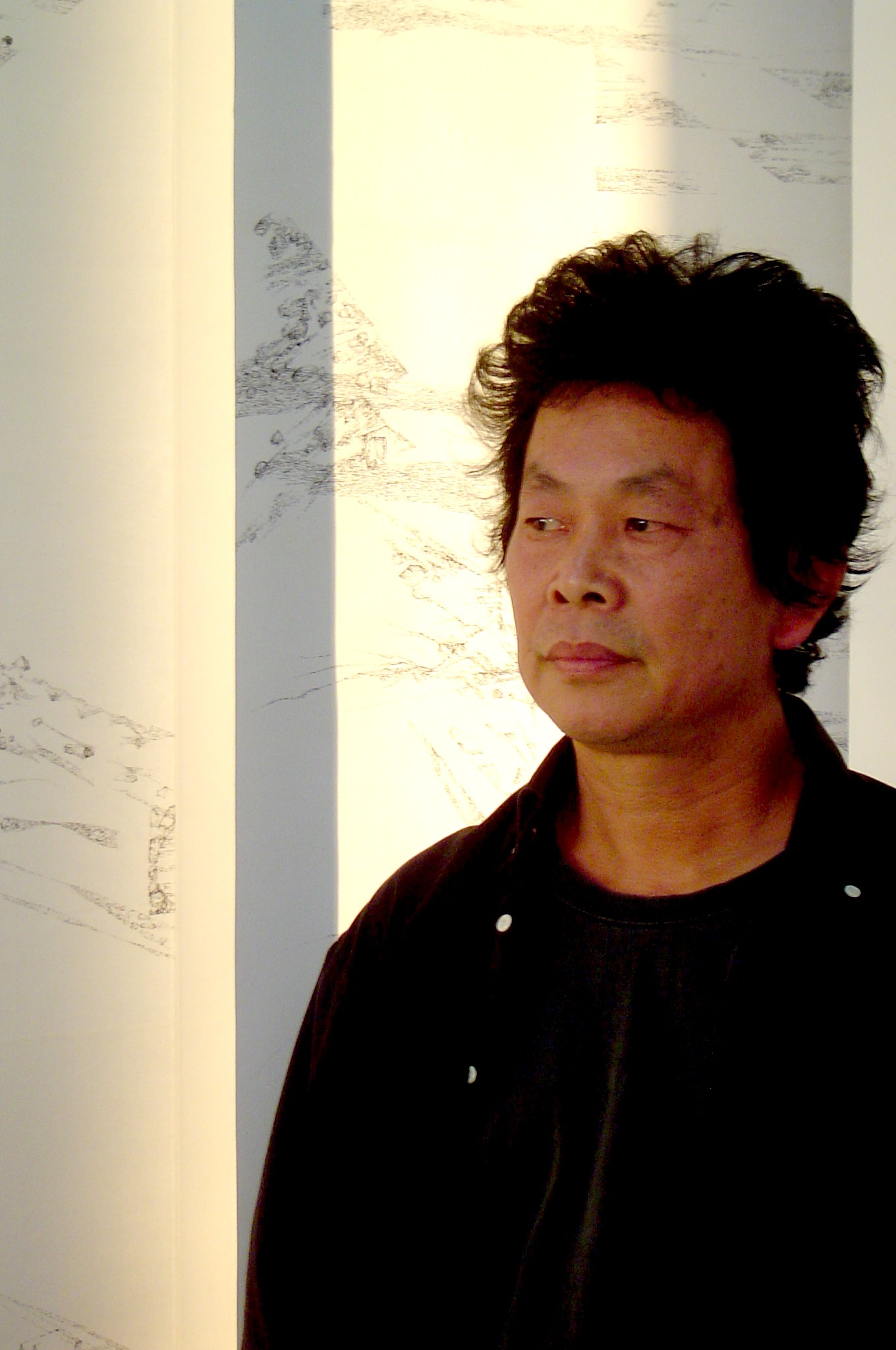
Preface: Hsu Yu-Jen (born 1951) is the most eccentric and solitary figure among the "eccentrics" in the Taiwanese art world. He is a rare painter skilled in oil painting, ink wash, poetry, and multiple media. Naturally sensitive and at ease, he is simple and restrained, possessing strong instincts and sensibility, purity and tenacity, penetrating intuition, and unyielding willpower. He is stubborn for what he believes to be right, resilient, marginal and aloof, yet holds a pure heart and an unbound soul. The artist seems naturally formed; painting is an instinct, as natural as breathing and eating.
Yu-Zai was born in Jiali, Tainan, in the salt-rich rural area, growing up in a family of aquaculture ponds amidst hardship. He possesses the character of a fisherman, the simplicity of a farmer, the indomitable spirit of a worker, and the mind of a philosopher. Unkempt, hardworking, daring and responsible, his simple nature hides a delicate and gentle heart. He harbors intense passion for life, is taciturn and reclusive, yet naturally radiates a unique, captivating artistic aura. Unpretentious and easygoing in life, he cares little for clothing or personal image, embodying the typical artistic temperament of Paris’s Montparnasse in the 1930s. He enjoys self-exile and wandering, possessing a Bohemian character, adapting casually to circumstances, like a gull between heaven and earth, soaring freely in the vast sky of life.
Beyond his persistence and adherence to art, worldly material things seem to mean nothing to him, akin to an artistic ascetic or spiritual practitioner. He roams freely within his personal life and artistic realm, existing along the flow of time, navigating with his consciousness, adventuring in loneliness, and facing all challenges of life’s possibilities. Yu-Zai is so pure, sincere, and at ease with art as if it were life itself, making his works appear even more pure and mature. His art, whether oil painting, ink wash, or original poetry, possesses strong originality, deep local sentiment and spirit, wisdom, passionate emotion, powerful spontaneous instinct, wild primal force, the purity of a naive amateur, the melancholy of a poet, and the sensitivity of a writer. It embodies poetic dimensions, literary allegory, the fragrance of hometown soil, the salty taste of sea breeze from the salt-rich region, the natural simplicity of the countryside, the scenario of survival amidst ruins, the scenery of perceived imagery, the will of existence, soaring through space and time, grasping the state of present consciousness, and revealing the mysterious depths of life.
The Don Quixote of the Art World – Hsu Yu-Jen:
Hsu Yu-Jen was my senior in the Chinese Painting Department of the National Taiwan College of Arts. He had unique opinions and personality regarding art, becoming an outsider even at school. The compromising art education served as a touchstone for artists; fortunately, many resilient reeds did not submit but instead strengthened the artist’s will and firm determination, enabling them to battle in artistic creation and open new territories. Yu-Zai was a precocious artist who showed instinctive and sensual talent early on. I still vividly remember the shock of seeing his first solo exhibition at the Taipei United States Information Service in 1979. A series of highly expressive ink wash writings, fiercer than American Bad Painting—black figures painted by "Black Mother," and a remarkable giant newspaper painting using unique installation techniques, hanging from the wall to the floor, forming a huge human head with dense, complex, rough black brushstrokes. In this closed era, both the imagery and technique were original, inspiring and unimaginable. From then on, the name Hsu Yu-Jen was engraved in my mind. Works from this period expressed emotions under expressive instincts, mixing naive, primal, and graffiti art styles.
In the mid-1980s, Yu-Zai traveled overseas to pursue his artistic dream, bringing his wife to New York, the holy land of contemporary art, to create new territory. For practical living, he became a jewelry salesman, devoting all his energy to running around, living the mundane days of an office worker. Confused by reality and powerless, he drifted further from art. He wrote: "Spinning on highways and country roads in D.C., Virginia, and Maryland every day, for life, for building an independent economic route... Eyes fixed on Jewelry Stores... Inside, forgetting myself, only retreating to myself before sleep, then brought by sleepy eyes to another quiet, struggling world!" He described himself as a "packed person" and a "person running inside a car." He painted a self-portrait "Standing on a Pile of Stones" (1989), like a tombstone inscription, concretely presenting a lost self, marking broken dreams and the journey of life. Yu-Zai said: "From Tainan to Taipei, from New York to Taiwan, I only found a stone," feeling the painter’s heavy sense of loss.
Driven by obsession and dreams, awakened from loss, he returned to the starting point—his hometown in Taiwan—in 1990. He worked as a community manager in Wusha, Taipei, squeezing into a four-ping doorhouse with his family, supporting them on a meager salary, living a rather arduous but happy frugal life. Finally, he rediscovered the impulse and joy of creation, highlighting the hot energy of life. Art not only soothes the heart but is also an outlet for life. Under sensual and expressive methods, he actively created oil paintings, throwing himself fully into the fire of creation. Life burned, forms struggled, colors screamed, and brushstrokes exploded with suppressed energy, dark, hazy, ambiguous, and chaotic, showing the strongest power of painting and the tremor of existence. Themes during this period revolved around personal growth memories: flowers, cities, natural mental landscapes, intending to recover local spirituality and a sense of real existence. Art critic Wang Chia-Chi wrote about Yu-Zai’s works: "Clear, strong, trembling brushstrokes with multiple color layers make people very uncomfortable, visually difficult to produce a continuous flow. Emotionally, they give a sense of repression and displeasure."
Coinciding with Taiwan’s economic takeoff and the rise of the art market, Yu-Zen was fortunate to make a living from painting. Life began to palpitate again. Wandering was to inspire creative inspiration and face life’s challenges. He bought an old house left behind by a retired veteran on the east coast of Taiwan in Hualien. In this square-inch windowless closed studio, he entered a refining period of creation. In hot summers, he slept on the roof, conversing with the starry sky; in bone-chilling winters, he had to hide in an old car, embracing the night. With the romantic sentiment of a gull between heaven and earth, drinking alone under the sky and dancing with art.
Soon after, he moved to Feng’ai Lin Villa in Sanyi Township, Taipei County. Although not perfect (an abandoned judicial auction seawater sand house, renovated by Yu-Zai himself, with a third floor added as a studio), at least he had a home and workspace to shelter from clouds and rain. This settled not just his family but his wandering soul, living a frugal mountain life. The winters in Sanyi, northern Taiwan, are particularly humid and rainy. Without air conditioning, the interior almost molded. For Yu-Zai, suffering hardship was like taking supplements. The environment became his alchemy of creation, stimulating life’s vitality and infinite creative inspiration. He opened a new era of personal creation, continuing to use metaphorical flowers, plants, and natural landscape imagery to develop local sentiment and extraordinary imaginative space. In 1996, he nurtured a new creative path—ink wash painting, creating a new Eastern vision for a new era.
In recent years, Beijing has become another art hub in the world. Under globalization, it attracts many domestic and foreign artists, becoming another creative base in the global village. Taiwanese artists are no exception. In 2006, Yu-Zai was invited to China’s Beijing to create at the Changdian Base built by his friend Zhang Zhangjian. Stationed in a clean large factory studio directly changed Hsu Yu-Jen’s creative vision, giving his artistic life an outlet. Inspiring creation, day and night, investing all life and ability, entering the eye of the artistic storm and the core of existence, realizing the mysterious depths of life. Paintings grew larger, objects simplified and magnificent, instinctive colors became more subjective and expressive, works purified more, highlighting inner infinite perception and sensation, expressing the artist’s feelings. Working on both fronts, painting oil and ink simultaneously, following the navigation of consciousness to explore states of existence, entering the peak of creation.
He personally experienced Beijing’s harsh geographical environment, sandstorms, severe cold and heat, and common people’s living situations. Under any harsh environment and material difficulties, it did not bother him at all; rather, it was more challenging. Since the studio lacked heating and cooling equipment, in Beijing’s coldest icy winter, the studio temperature often dropped below minus ten degrees. Yu-Zai was not frustrated but fought harder, resolutely facing challenges with his body. Under the intense passion of creation, the fire of art burned. He wore seven long pants, three pairs of socks, and all possible clothes, wrapping his upper body, finally covering himself with a green cotton coat of the People’s Liberation Army, wearing a cotton hat and three layers of gloves. Standing and moving while dancing with the painting driven by creative passion, because sitting down would not only be too cold but also freeze stiff. Worse, in this low temperature, he could not paint ink wash. One can imagine that fearless warrior fighting situation,worthy of being called the Don Quixote of the art world. Winter makes one calmer, emptier, and purer. Painting in this isolated space-time, drinking alone under the sky, makes people feel the heat of existence, glimpse the energy of life, and achieve spiritual sublimation.
Beijing’s summer is particularly sweltering. Easygoing, hardworking, and frugal Yu-Zai often went shirtless or disheveled, sometimes wearing his son’s discarded floral boxer shorts, plus messy hair, looking like a Chinese laborer, no one knowing his identity. Every evening, he would stroll out and buy beer at a nearby small shop. One day, the shop owner asked the local cook at the base puzzledly: "Why is your management so loose? Your hired workers drink beer while working." After the cook understood that the "long-term worker" referred to Hsu Yu-Jen, he nearly laughed out loud.
A few years ago, when accompanying collectors to the opening of Dongmen Gallery in Tainan, I discovered Yu-Zai’s unusual "One Flower" ink wash series. Only then did I realize he had picked up traditional brush and ink but touched not a bit of traditional Chinese ink wash. Breaking the inherent framework of traditional ink wash painting, under the originality of cross-boundary integration, he injected vitality and vision into the exploration of new ink wash.
In early spring 2008, I was invited to lecture at the Central Academy of Fine Arts in Beijing andpeep into the local map of Beijing contemporary art under globalization. During a two-week local investigation, I specially visited the studios of Taiwanese artists living in Beijing to understand their intentions and creative dynamics for coming to Beijing. One day, while visiting Songzhuang, passing through the barren wilderness near Beijing, I came to Huang Zhiyang’s studio and learned that Yu-Zai’s studio was next door. Unfortunately, due to familyunexpected event, his beloved son died unexpectedly, and he had returned to Taiwan. The impermanence of life gives people profoundinsight of myriad sorrows. To commemorate his beloved son, Hsu Yu-Jen and his wife established the "Xuan Guang Project," an annual program to promote youth artistic creation.
The following year, during my solo exhibition at Dongjia Gallery in Taipei, Yu-Zai appeared at the venue. After thirty-something years, I reunited with the Don Quixote in my heart—Hsu Yu-Jen. Invited to stay at his Feng’ai Lin Villa in Sanyi, we discussed recent creations and life insights, and visited his studio on Yangming Mountain, which resembled a construction shed, viewing his giant paintings brought back from Beijing, leaving me with many reflections. In spring 2010, during my solo exhibition at Bema Gallery in Taipei, he brought a group of artistic friends from Sanyi to visit. Later, I also personally returned, seeing several ink washes in his third-floor studio. And only during the "Body Has a Flower Blooming – Hsu Yu-Jen and Chang Chin-Lien Dual Solo Exhibition" at the home gallery did I trulypeep into the truth of Yu-Zai’s unique ink wash painting.
Creative Concept of Roaming in Space-Time State:
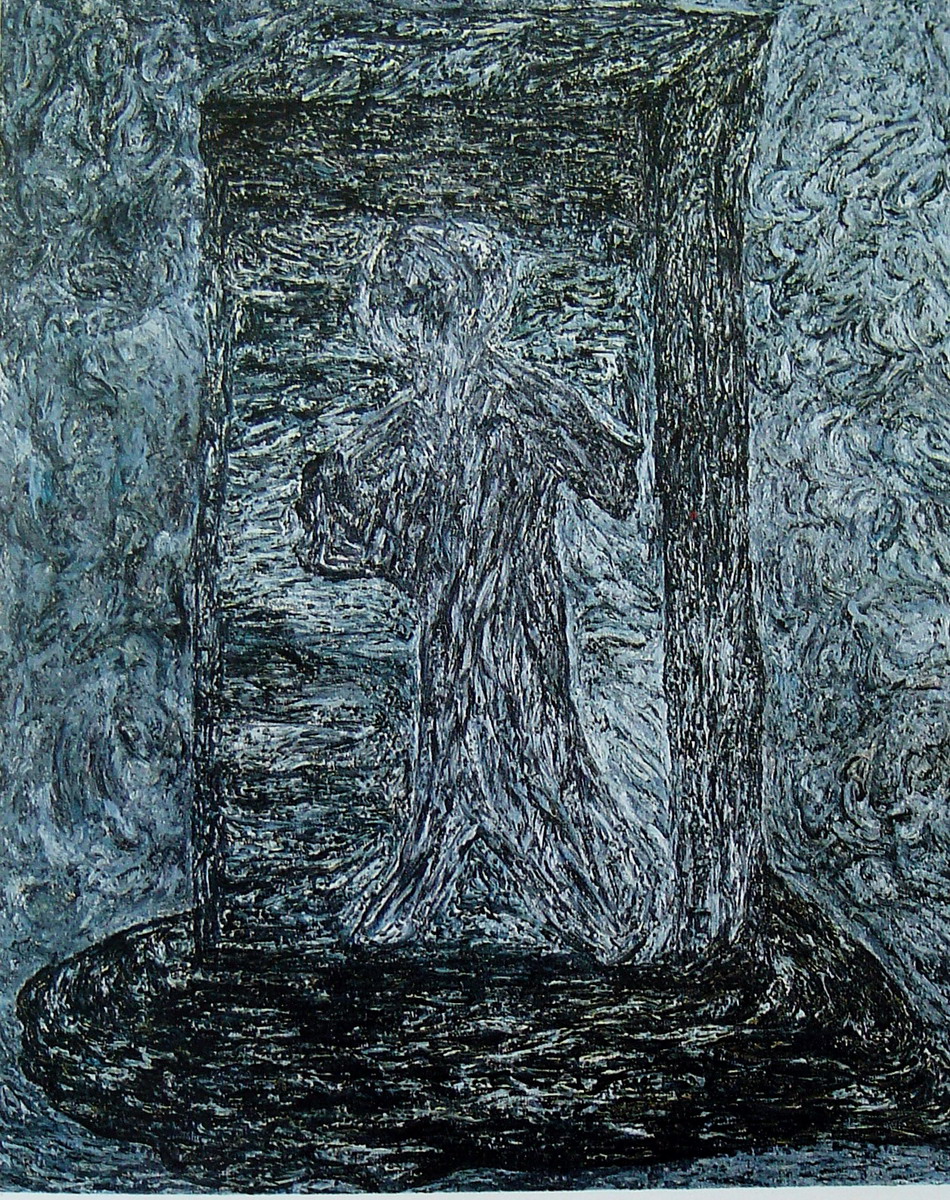
Yu-Zai is a rare Taiwanese artist proficient in poetry, calligraphy, and painting. Overflowing with talent, he writes doggerel poems with strong flavor and metaphorical meaning, and unique calligraphy. His creation wanders between modern ink wash painting and oil painting, paper and canvas. Under his free instinctive and sensual creative attitude, he despises social systems and traditional norms. Formal style is unconstrained, wandering between figurative, imagistic, mental, and abstract. Not bound by material media, nor constrained by form, space, or even style. Creation is like life for him, following space-time and situations. It seems that the harsher the environment, the more it stimulates his imagination and potential. Creation occurs naturally in thespitting silk/whispering. He said: "All wandering is for painting. In different environments, it can stimulate stronger creative ideas." Further expecting of his own creation: "The purpose of creation is not to practice painting skills. The meaning of creation is to discover the 'true self' and develop the 'personal self' under the premise of freedom and liberation, an original activity. In creation, only by appealing to free and liberated thinking can the 'true self' dare to 'speak freely' and 'do as one pleases,' and 'autonomous creation' and 'personalized style' will emerge naturally. My creation can proceed anytime and anywhere, materials unrestricted, form undefined, content preset-less. Nevertheless, some shapes seem hidden in the id. In my unconscious and consciousinterlace creative activities, they will naturally and automatically appear. Like the misty chaos before dawn, viewing the scene of heavenly light from within the door, seeming real yet void, feeling one’s own essence. Works make me face my spiritual connotation more."
Expressing Existence – Oil Painting:
Painting is a sensual and instinctive act for Yu-Zai. Creation often revolves around environmental memories of this land and its people, closely connecting humans, land, and environment, and personal life insights. His works are as simple,reserved, and at ease as he is. His earliest portraits possess the native, free nature of naive painters. In the 1970s, influenced by Teacher Li Zhongsheng, he developed a subconscious automatic technique and graffiti. Completely free, he liberated his imagination through sketching, discovering the true self. Works from his time in America in the 1980s walked between semi-figurative and abstract automatic techniques and graffiti, notably "Self-Portrait Standing on a Pile of Stones" (1989) or the following year "This Is the Biggest City I Have Ever Been To." Under strong expressive impressionism,helplessness, dark, stagnant, and depressed atmosphere, thick, viscous, dense color blocks, subjective imagery, covered with neurotic brushstrokes, permeating a sense of unease and depression, reflecting personal life status.
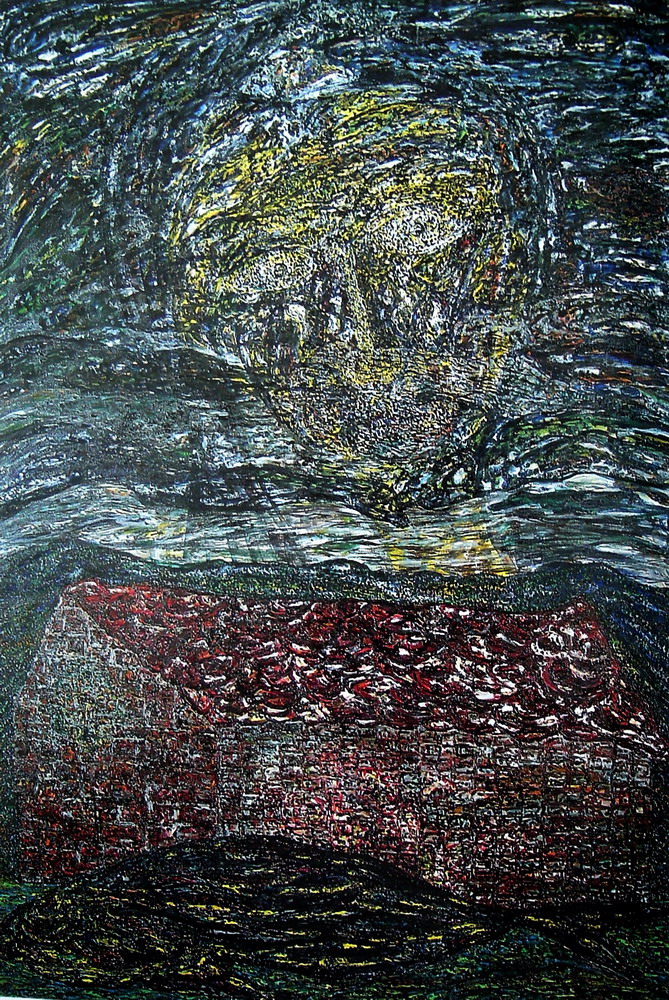
In the 1990s, the motive force –diving/submerging in the ruins of civilization, in anecdotal plots, continuing to express personal existential consciousness, retrieving memories of growing up in the salt-rich homeland from memory. Borrowing these flowers, a tree, natural landscapes, and ruined city themes to allegorize personal growth experiences and insights, he said: "Trees never say anything, just grow until death. People like to talk about others. A tree, a blade of grass, grows quietly." No wonder flowers, grass, trees, and stones are subjects Yu-Zai observes quietly and finds joy in painting. "Self-Portrait Carrying the Cross" (1991) symbolizes carrying one’s own will of life, running towards an ideal world. Dark "Red Brick Bricks" (1992) is aportrayal of mental expression, awakening the painter’s childhood memories. He said: "Feeling the painting dark allows one to enter the feelings of one’s own heart." "White Flowers on My Pyramid," "Red Bricks Surrounding Water Growing White Flowers and Green Leaves" (1993) all allegorize a strong loneliness of drinking alone under the sky. Special inverted triangular composition "Small House Looking at the Sky" and "Mountain Has No Trees, Mountain Has No Flowers, Mountain Has No Grass, Mountain Has No Water" (1996) address the crisis awareness of destruction of the hometown’s natural environment. Under thick, dense oil paint texture and dense expressive brushstrokes, it presents strong emotion and insight. Additionally, targeting lost villages and marginalized "cities," it points out current policies under political and economic violence and the possibility of survival in desperate situations.
Strong expressiveness gradually hides in poetic brushstrokes. "Floating Lotus Flowers" (1999) uses ethereal lotus flowers reflected in water light to allegorize the essential nature of existence being polluted yet unstained. Presenting the ubiquitous temptation of "sex" in current society, "Red Temptation" and "Green Temptation" (2003), through contrast of warm and cool tones, emphasizing the bewitching nakedness of women, smooth material oil painting texture flows down, calling forth the state and charm of matter, between sensibility and expression.
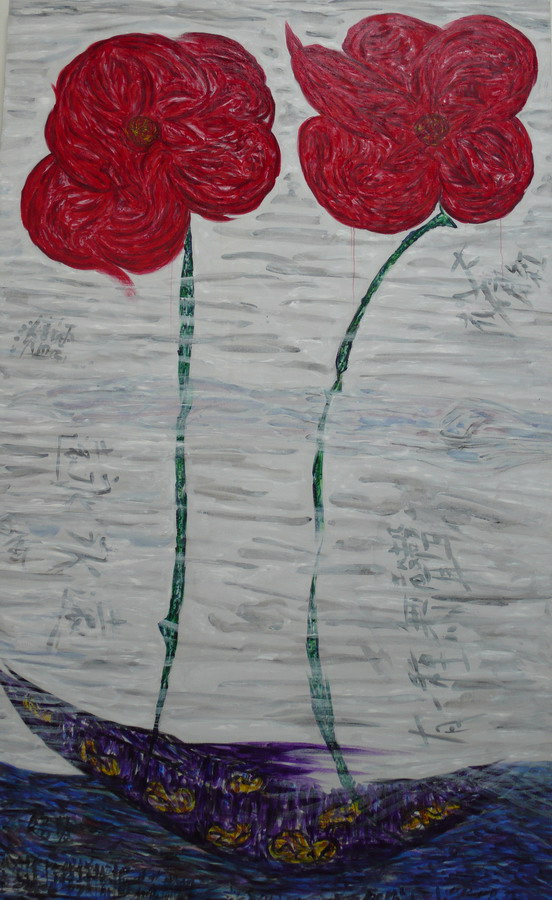
Shock and new thinking brought by Beijing, enthusiastically embracing creation, soul burning, mature style continues to deepen. Strong expressiveness is tamed by poetry, neurotic brushstrokes become sensual lyrical signifiers, sweeping away dark and gloomy colors to emit brilliant colors, dense texture becomes freer and smoother, entering mental and abstract realms. Painting themes identical to ink wash, combining plants and flowers into the "Plant Series" (2007-08), one flower, one world, one grain of sand, one paradise, constructing a new vision in the universe of flowers and plants. Keenly and substantially in bright red, bright green, and bright purple colors, deeply realizing the impermanence of life. The eyes of flowers gaze at the only remaining land as an allegory. Painter’s wife Chang Chin-Lien said: "Life is the process of blooming. Bloom your own flowers."
Essential Observation – Ink Wash:
"Chinese painting" is a term with strong ideology. Depending on material media, it should be clearly called ink wash painting. Yu-Zai’s creation wanders between oil painting and ink wash. Liberated fromscribbling/correcting, thick, dense texture oil painting material media, he expresses emotion, expands consciousness, and essential observation through simple Chinese traditional brush and ink. Ink wash emphasizes precision, strength, ink wash rendering charm, and ink color interest. It is the most difficult for contemporary artists, challenging not only tradition but also its medium. Hsu Yu-Jen’s ink wash comes from ordinary sketch books. Sketching is the record of the painter’s keen intuitive mental activity. Sketching is not just patterns but also the immediatethoughtful written reflections andportrayal of the painter’s immediate situation and state. Yu-Zai’s ink wash paintings come from early (1980) ballpoint pen sketches. These sensual disconnected brushstrokes already reveal the foundation of ink washeducation/training. Silent for many years, ink wash became direct improvisational expression after oil painting in the early 1990s, such as the earliest diary-form ink wash paintings of 1993-94.
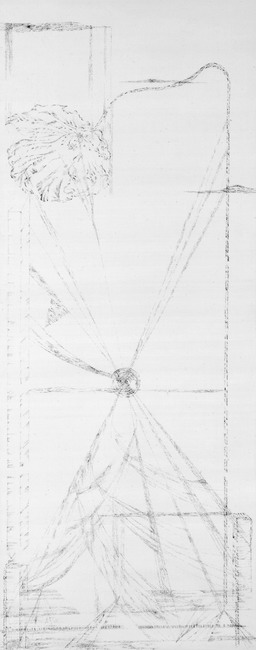
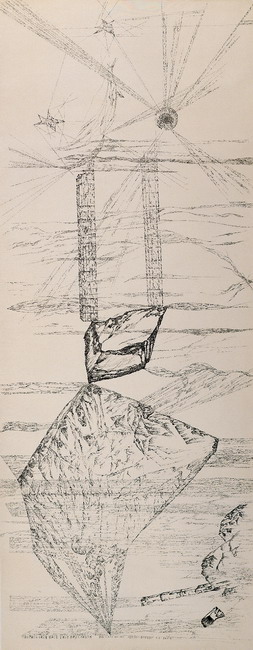
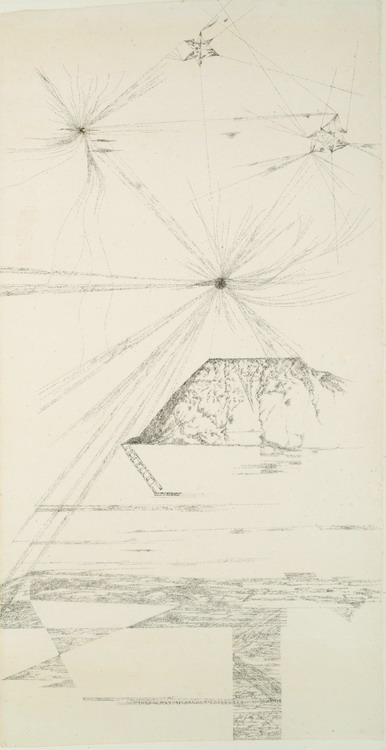
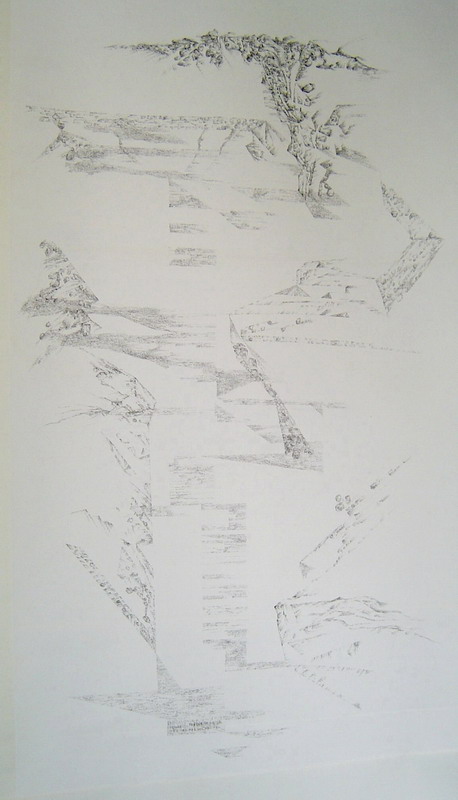
Yu-Zai quickly entered the path of original exploration. After 1995, he nurtured a new path for ink wash creation, returning to simplicity, restoring material media to the original, namely brush and ink. Using short, thin, sharp, hard brushstrokes of a fine brush, and developing dry brush dotting and broken thin line methods withburnt ink, there is no traditional ink wash rendering charm. Constructing structural natural mental landscapes through fine dots and broken lines forming squares, rectangles, circles, and triangles, very close to sketching, breaking the shackles of traditional ink wash, pioneering brand-new thinking for ink wash. His ink wash painting overturns not only tradition but also survives in desperation to pioneer personal originality. The painter said: "Look at my ink wash, you can hardly see the shadow of predecessors. I want to use fine brushes and broken lines to find the absolute principles of ink wash painting."
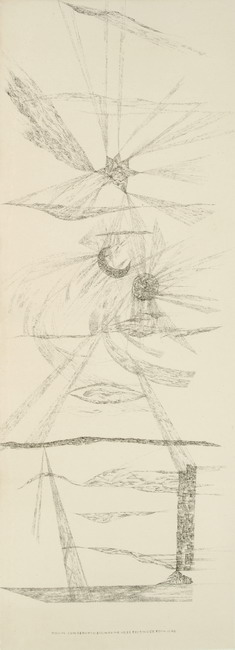
Starting from the new millennium, he gradually liberated himself from rational geometric formalization. Fixed solid equation forms combined rational sensibility and lyrical heaven, earth, mountains, rivers, and flower/grass imagery (such as lotus). Through multi-layered exquisite fine brush dot-line-plane weaving creation, diverse thousands of mountains and rivers or sun/moon/star imagery, more complex multi-structures. White background highlights spiritual space and extraordinary light. Elegant and beautiful, possessing a simple aesthetic. Ink wash works from 2000-2003 roam in the context of freehand writing, between simplicity and abstraction, rationality and sensibility, tranquility and poetry, imagery and mental imagery. In 2004, the "Ocean Calligraphy and Painting" vertical scroll series, the imagery of hills and valleys is particularly prominent, originating from the painter’s memory of the original hometown, sorrow over the hometown’s environment and disasters with myriad sorrows. With novel landscape imagery, between purification, symbolism, and abstraction, expressing local sentiment and life insights through stones, water, and sea: such as "Water builds stone, stone builds stone, stone builds building, thousand mountains have passed, flowing waters have divided," "Stone stone rushing accumulation fan is there." Yu-Zai wrote about this: "Born and grown in the salt-blood land of Tainan... As a child, initially seeing the flat salt fields imprinted on my heart, walking over hot sand dunes, salty sticky sea breeze, passing through dense casuarina forests, blinding bright blue distant view... Semi-circle of the sea kissing the sky, since then the sea woke me up... Whatever mood, I want to go to the 'sea'! I swam through ancient contexts like calligraphy and painting, now slowly and carefully with a small brush... Writing/painting 'Sea Me...'" Innovating a new vision for a new era, expressing local sentiment, capturing immediate situations and existential consciousness.
Yu-Zai’s ink wash paintings are divided into fine brush and coarse brush types. Before Beijing, they were always exquisite fine brush paintings. Starting from 2006, facing orthodox Chinese ink wash, under the palpitation of the heart, he liberated himself to pioneer coarse, rough brush paintings. Opening new vision and thinking for Beijing creation—"Brush Realm Calligraphy and Painting Series," boldly liberating form, brush and ink mature and at ease, geometric unnatural images, quite symbolic, planar, and abstract, full of emotional dryness and burnt-black ink color, rigorous architectural structure, brush and ink completely manifest his own temperament,hidden appearance, presenting an extraordinary modern sense and poetic imaginative space. In 2008, even simpler and grander and poetic "One Flower" series, allegorizing the situation of traveling alone among thousands of mountains and rivers, or the spirit of drinking alone under the sky, seeking the state of mind of finding lonely flowers. Dry ink rhyme allegorizes all existence. Under unique composition, lonely and outstanding line branches and leaves and a flower of life energy bloom, revealing resilience and ability, intending to recover the essence of existence.
Wu Ji-Tao pointed out in the Southern Traveler Exhibition: "Hsu Yu-Jen’s creative imagination can be said to be a structural architectural state, or a spiritual journey, containing within it aendless life energy. Symbolic images in the works can extend or expand according to his will. Each stroke possesses its own independent vector space. Hsu Yu-Jen’s urban landscapes are spiritual totems hidden behind the ruins of civilization. His natural flowers and plants mark an absolute and inviolable domain of survival. They materialize the painter’s life geometry of themental vision—an overall presentation projected and worked upon from internal driving forces."
Spiritual Image – Poetry and Text:
Yu-Zai’s art is a trinity of poetry, calligraphy, and painting. The indispensable doggerel poems, wise and reflective, are the painter’s calmfacing of every moment of existence and consciousness navigation’sawareness/illumination, recording the immediate situation of existence thoughts and scenery. In humor and wit, there is faint sadness and myriad sorrows, reflecting the painter’s deepspiritual consciousness, evoking deep spiritual state and the painter’s life philosophy and views on the world: Such as "There is a wave sound story, also a person living story, four rows middle flowing traceless water...", "Ink water, generation after generation broken, water ink mountain waterfall water, waterfall mountain, stone leaves mountain, earth leaves mountain, rolling stones, flowing earth, rolling stones, flowing earth, flowed out nature, in residual mountains, in flowing earth stones, found oneself and nature", "There is a flower drunk numb in heart clouds, flower grows straight line residuals, tellingtranscendent pleasure, leaving no traces, just pulling life with death, just pulling death with life line, in dim yellow dusk, watching sun watching sun... watching... passing smiling day...", "That is abandonedsobriety, gold water word shadow, towerfaintly can only throw shadow wave, time is just collapse wall trace memory, who is not, who is not!! Memory is just ash burned-outresidual smoke, morning bird sound insect chirp, piled each stone stone...poor mountains end waters, lived house, been place, who is mountain block block broken abyss, this is a life lost bygossip white laughing self-mockery", "Sea sea flowing continuously... just shape shape body bodyfloating diving... that temporary... that temporary... that temporary... that temporary... that temporary... Sunrise, noon, sunset, clear me, sunrise, noon, sunset, dark me, sea flows through me, sea floats me, sea takes me...", "Have stone, no mountain, no water, no tree, no flower, no beast, no cloud, quiet landscape observation, no bird, no butterfly, no insect, water is sand, sand is water, water is stone, stone is water, water is mountain, mountain is water".