Post-War Figurative Painting
Balthus (1908-2001) Alice - Spring 162.3x112cm 1933 Collection of the Centre Pompidou, Paris
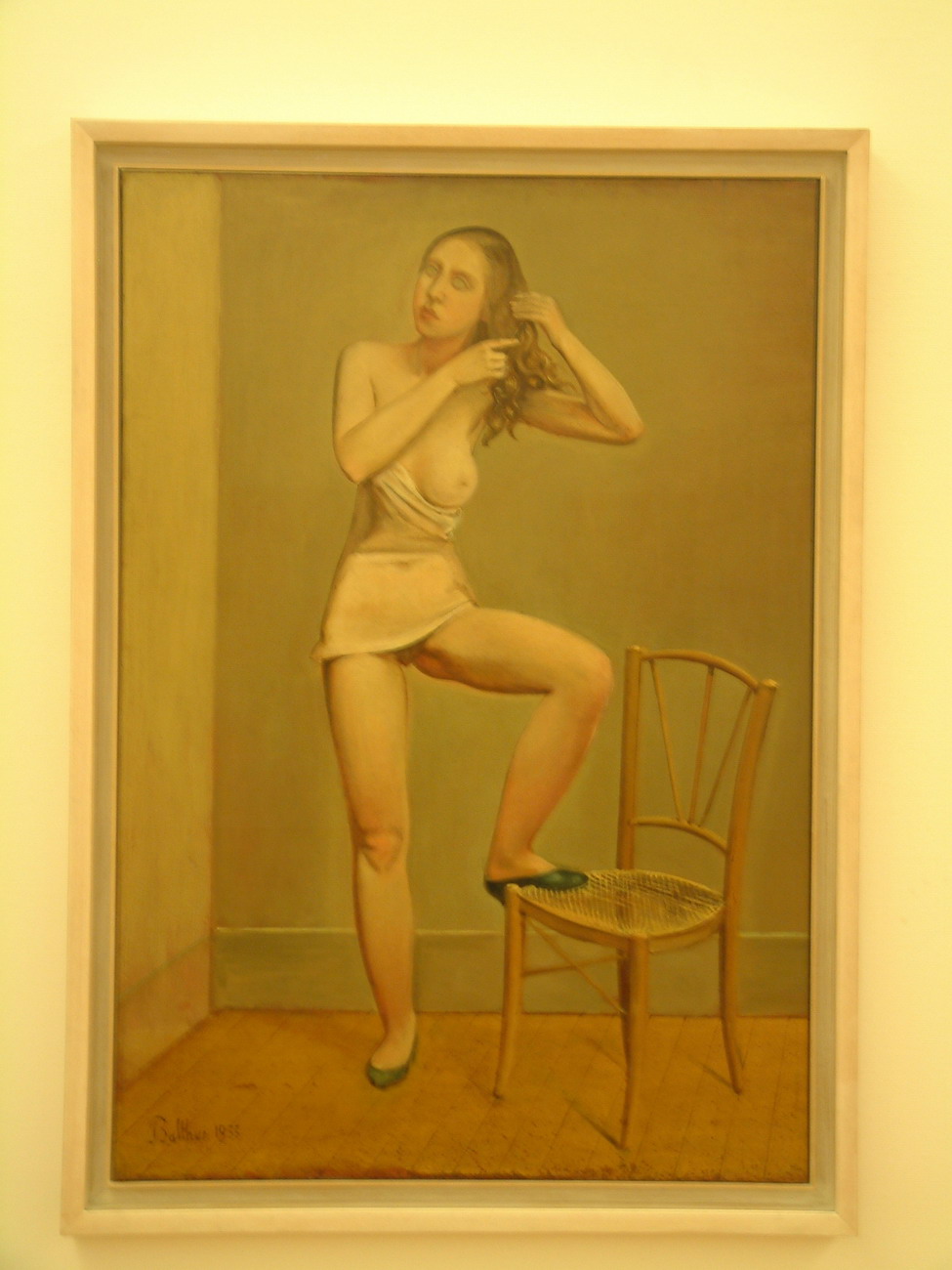
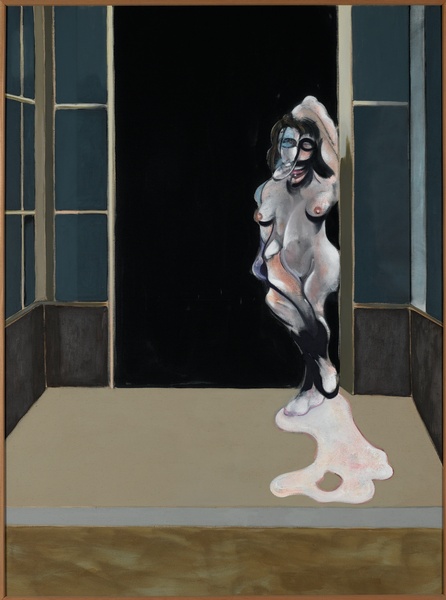
Figurative painting has never ceased; throughout art history, from classical to modern, contemporary, and recent periods, it was not eradicated even amidst the post-war abstract storm or declared "degenerate" by the Nazis before the war. However, figurative depiction has manifested various spiritual aspects alongside changing historical contexts. Sometimes figuration is merely a means of formal transfer, conveying inner sensibility through representation, or serving as concrete social documentation. These are irreplaceable by abstraction, just as figurative fields cannot replace abstract language, each defining its own social, moral, and aesthetic domains. The two World Wars brought not only shattered landscapes and nations, but also loss of life, physical trauma, and profoundly, human despair, spiritual pain, existential void, absurdity, value collapse, and moral decay. In this atmosphere of nihilism, post-war abstract painting presented metaphysical intentions—responding to their era to redeem human dignity and spiritual longing, attempting to heal post-war trauma through transcendent artistic methods. Artists, fulfilling their duties, sought to build a new future. Existentialism became the desired philosophy of life, verified in Giacometti’s emphasis on subjectivity and essential existence, and Bernard Buffet’s superficial existential melancholy. Post-war realism, such as Italian Rossellini’s early neorealism, the 1945 "Realist Manifesto," British "Kitchen Sink" painters, and French "Painters of Reality," shared similar effects. Yet, outstanding figurative painting did not dominate the art scene during the abstract storm. Balthus and Bacon stood out with unique styles reflecting European humanistic depth, becoming the most representative post-war figurative painters.
Post-war figurative painting implies a "return to tradition." Realists like Balthus and Bacon drew selectively from art history: Balthus’s cultivated classicism recalls Courbet and Piero della Francesca; Bacon’s roots lie in Velázquez and Picasso’s deformations. Italian realism adopted Neo-Baroque language or recalled Poussin. Social realism inherited 1930s expressions (previously banned as degenerate) or Expressionism, using satire, symbolism, and distortion to depict despair and absurdity, echoing Aragon’s view that modernity requires conscious exploration. Unlike some optimistic abstract art, post-war figurative works carry quietude and melancholy, reflecting Europe’s deep humanistic tradition amid the birth and disillusionment of the wars. Born before WWI, Balthus (1908) and Bacon (1909) expressed human essence through reflective consciousness. Italian realists like Renato Guttuso depicted ordinary life, akin to Léger’s "art for the people." British Kitchen Sink realism differed from Soviet Socialist Realism, lacking state directives, instead emphasizing artist sensibility through distorted forms and thick impasto, critiquing society as seen in Auerbach and Kossoff. Meanwhile, the Cobra movement bridged abstraction and figuration, appealing to irrational subconsciousness rather than rejecting imagery, aligning closer to Abstract Expressionism’s humanistic scope, where figuration was a stylistic shift rather than an end, distinct from traditional post-war norms.