The 2007 French Presidential Election, Part 5: The Third Figure
(Top-left image of Nicolas Sarkozy) from sarkozy2007.forumactif.com. (Top-right image of Jean-Marie Le Pen) from www.frotnational.com. (Middle-left image of Ségolène Royal) from segoleneroyal200…
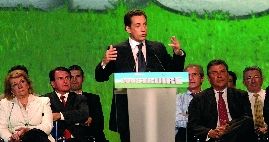

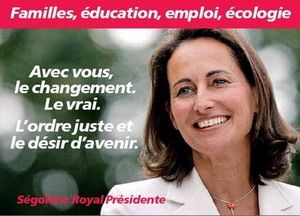
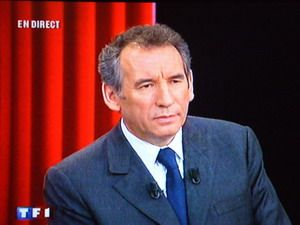
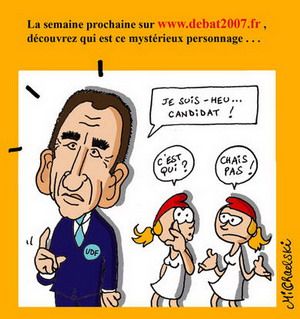
(Top-left image of Nicolas Sarkozy) sourced from sarkozy2007.forumactif.com. (Top-right image of Jean-Marie Le Pen) sourced from www.frotnational.com. (Middle-left image of Ségolène Royal) sourced from segoleneroyal2007.net. (Middle-right image of Francois Bayrou) captured from the TF1 program "I Have a Question for You." (Bottom image of Francois Bayrou cartoon) sourced from debat2007.fr; it is a masterpiece by cartoonist Michaelski, revealing how people view the third figure, Bayrou.
The French presidential election has entered its peak intensity, with various stances becoming quite clear. Especially since the four major candidates all attract broad public recognition through populist positions, the political discourse offered by the right-wing UMP and the Socialist Party is full of rich imagination. While their construction of France’s overall future cannot be called fantasy, it feels somewhat like empty promises. Yet people seem to prefer hearing good words; facing realistic difficulties, they cannot turn stone into gold like magicians. The strategy of power operations is to win the election first, because people are forgetful. Who would imagine that President Chirac’s 2002 campaign promise regarding "social difficulties" would result in more poor people in France today, continuously declining living standards, and young people mostly facing uncertain futures? Moreover, most French people have generally lost confidence in the future.
After years of successive long-term rule by the left and right, the French public is weary and somewhat disheartened by these two major parties. Although society seeks new faces and a new atmosphere to reverse France’s international and domestic political and economic dilemmas, all presidential candidates are familiar mid-career politicians. It is hard to call them "new," and a "new atmosphere" seems even more difficult. UMP presidential candidate Nicolas Sarkozy frequently speaks of breaking with or changing the past; this is likely an election strategy. Whether there is real change is known to the public, and ballots will prove everything.
The French public has always doubted the governing ability of the Socialist Party’s Ségolène Royal and her left-leaning social discourse. Especially under France’s patriarchal social stance (the fact that French women did not gain suffrage until relatively recently), if France truly wants change, wouldn’t the first female president represent the greatest political transformation in France? Let’s wait and see.
So, who is the third figure in the French presidential election: the far-right National Front candidate Jean-Marie Le Pen, or the UDF centrist candidate Francois Bayrou? Their political discourses are worlds apart and incomparable. The far-right is built on a stance of national supremacy and prioritizing French people; under the effects of globalization on the far-right, this seems further reinforced. Entering the second round of the presidential finals in 2002 was not unexpected. Of course, the far-right is not favored by mass media, so most polls seem to unintentionally ignore them. No one is quite sure about society’s intentions toward far-right voters, so whether the far-right is the third figure is surprising within the surprise.
From the political debate program "I Have a Question for You," the UDF centrist candidate Francois Bayrou attracted 6.8 million viewers (Le Pen also had 6.4 million viewers). Thus, it appears the UDF centrist candidate Bayrou is the third figure. Having entered the race early this year, his mid-campaign polls hovered around 6%. He often proactively attacked mass media, declaring that mainstream media favors big parties. This direct criticism of media has gradually made him a core figure in the media itself. In the offensive and defensive battles of election strategies, anything goes.
The centrists’ moderate stance and their democratic governance position, which draws a dividing line against both left and right, aim under policies of wooing both sides to imagine a utopia of cohabitation like the Fourth Republic, gathering political elites from both sides to plan state affairs. Their campaign slogan is "All the Power of France." After over two months of promoting and discussing their views, he realistically addresses France’s current domestic and international politics, economy, society, and education, proposing near-reality viewpoints. He was the first presidential candidate to directly propose solutions for France’s heavy national debt problem and the EU’s current dilemmas, among others.
He attracts growing trust from voters disillusioned by years of left-right rule and stabilizes confidence among undecided voters in this election. He is favored by many young people. Polls show his support rising from 6%, 12%, 18%, 20% to as high as 23% as of today (March 10), sharing equal footing with Socialist candidate Ségolène Royal. This not only directly threatens the Socialists but also compresses Nicolas Sarkozy, the UMP presidential candidate and leader of France’s largest party (the ruling party). Both left and right attack fiercely, bringing out heavyweight political figures to counter Bayrou, arguing that his utopian cohabitation is outdated and an impossible ideal. Yet, amidst increasing attacks, Francois Bayrou gracefully bears his political ideals, becoming the hottest candidate and a core media figure. Is he the third figure? Hard to say. This year’s presidential election seems to be putting on a good show.
According to poll data from Metropolitaine on March 8, if Francois Bayrou enters the second-round runoff, he would win 55% against Nicolas Sarkozy (due to support from Socialist leftists) and 54% against Ségolène Royal (due to right-wing support). One can imagine that in such a situation, Francois Bayrou finds favor on both sides. Of course, these are merely current predictions. Another unique forecast is that both major parties are eliminated, leading to a showdown between Francois Bayrou and far-right National Front candidate Jean-Marie Le Pen; that would be another story entirely.