Chen Shih-Ming: The Original Work of Art is "Life"
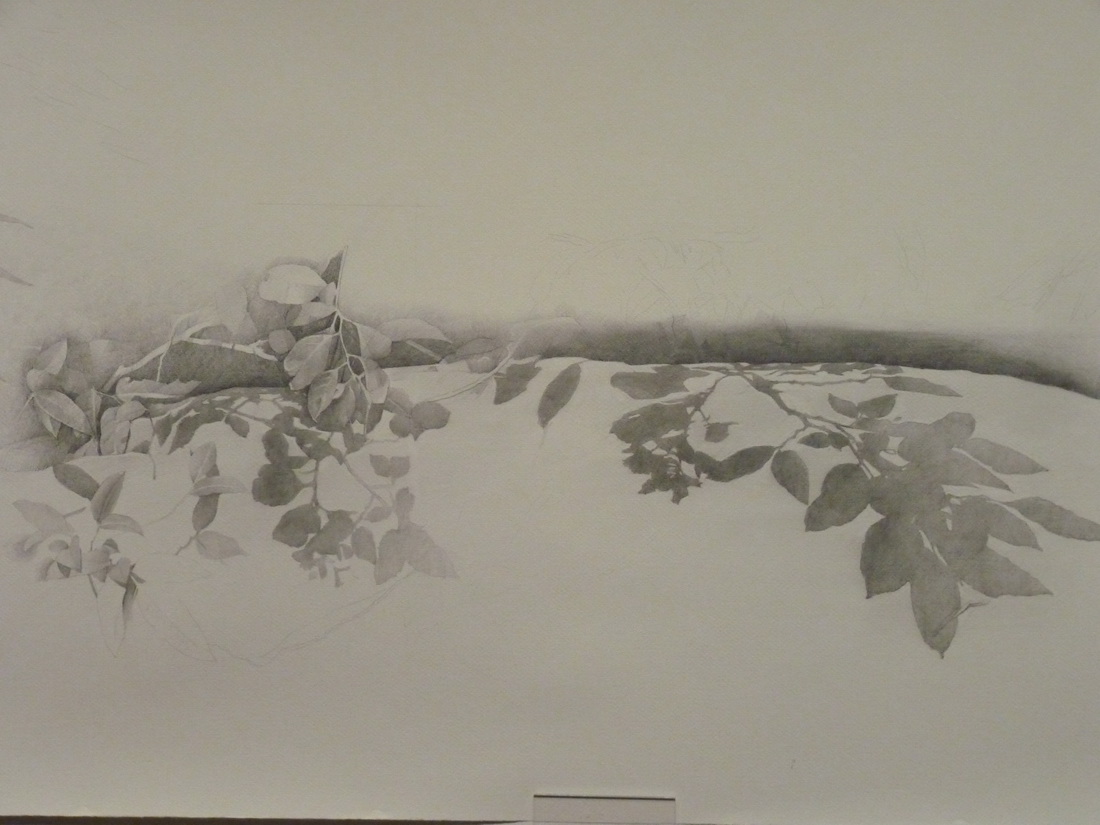
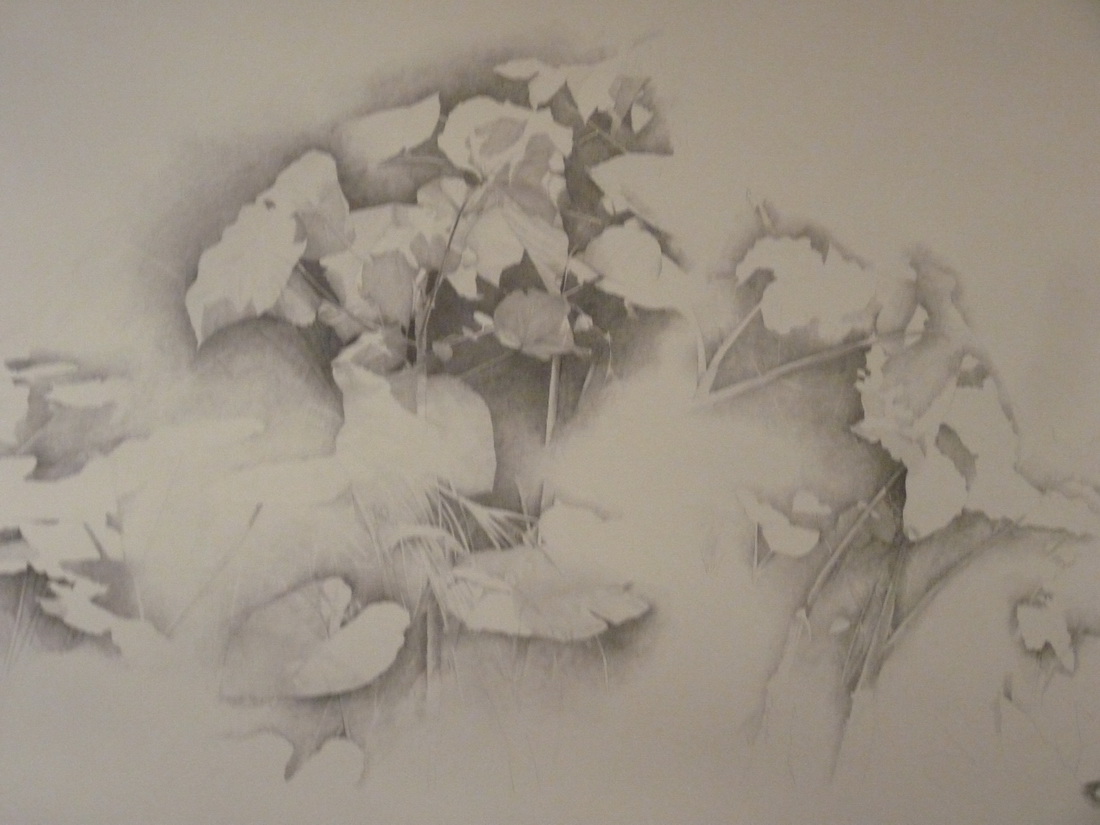
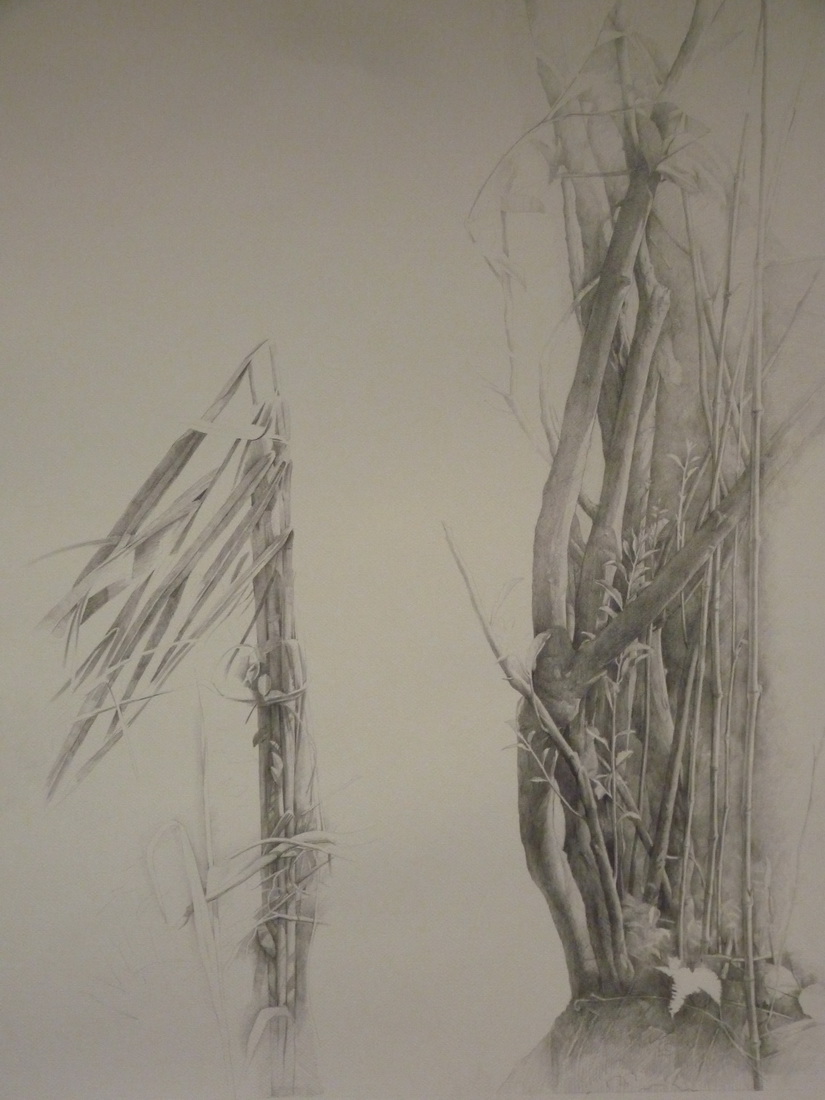
Detailed Sketch 96-01, detail, 117x946cm, paper, 1996 (Work from Taipei Fine Arts Museum solo exhibition "Exploring Context"), Private Collection of Wu Chong-Hsien
"Art is the ultimate meaning of life, the call of life's spiritual energy."
Chen Shih-Ming
Text/Chen Chi-Hsiang Preface: What is art? What is its use? Where does inspiration come from? Who is it created for? Why express? Where is the position of life? Is art the creator's doubt, process, or answer? Are art and life two different things, or the same matter?
Is art an attitude toward life or merely a profession for making a living? What is the relationship between life, objects, self, existence, and art? What is the ultimate meaning of art? Is the original work of art "life"?
What is the artist's promise to his own life and the ultimate truth of art? Art is diverse and varied, just like life. Art is performance, art is cultivation, or art is the meaning of life.
Art can be simple, with painters becoming mere draftsmen; art can be complex, forming artistic philosophers or life artists. Everyone understands its meaning in their own way.
Ultimately, whether one grasps the truth of existence and the perfection of life depends on personal ability and wisdom.
Obviously, art is a projection of a state of mind (consciousness) and serves as a clear mirror for the artist, reflecting his current thoughts and circumstances.
A wise artist not only presents himself but also reflects the artist's overall consciousness of life or the meaning that transcends existence itself.
Teacher Chen Shih-Ming’s art possesses a grand, wise, and elegant structure and insight into existence.
His artistic forms expand with the consciousness of the heart; as the heart changes, language shifts, and his creation mirrors the practice and realization of life's waves and turns. His art does not rely on the construction of a personal style.
Instead, flowing with the consciousness of each moment, he spontaneously interprets the context and consciousness of each scene, verifying Chen Shih-Ming’s view of life art: "One beauty, all beauty." He no longer blindly pursues new types of artistic creativity in form.
He simply conveys what he has realized, observing the Dao with a clear mind, embracing the aesthetic "new" thinking of tranquility, elegance, and dedication to art.
Chen Shih-Ming – The Original Work of Art is "Life": Chen Shih-Ming (born 1948 in Xizhou, Changhua) is considered by the general public to be one of the most magical and difficult-to-understand artists in the Taiwanese art world (Note 1), yet to those who know him, he is a kind, amiable, and respectable person.
His paintings are like him: clean, crisp, clear, pure, reasonable, peaceful, and wise; never verbose, nor speaking too much. He is also rare in the contemporary visual arts community for embodying the art of life through body and mind.
He has his own unique worldview regarding the realization of life and the universe, which is deeply attractive, providing profound existential inspiration, guidance, and influence to those around him.
Full of spirituality, he adopts a macroscopic, diverse, and open approach to art education, respecting students as he respects the scene, teaching art with life as the subject.
He has had a profound inspirational and influential impact on contemporary Taiwanese art, especially through his philosophical reflections on life art, his attitude toward creation, his awareness of human existence, and his new aesthetic thinking.
Teacher Chen Shih-Ming is my mentor in both art and spirit, a benefactor who influenced my art and life for a lifetime.
After graduating from the Taiwan Provincial College of Arts in 1970, Chen Shih-Ming went abroad to study in Spain, graduating from the Real Academia de Bellas Artes de San Fernando in Madrid.
Under the rigorous realistic training of Spain's great painting tradition, particularly in light and shadow, form, color, and composition, he laid the foundation for his future artistic creation.
During his studies in Spain, he was deeply influenced by two masters: Antonio Lopez (born 1936), a traditional detailed sketch realist painter in Madrid, and Dabie, a material abstract painter in Barcelona.
The painter said: "Although I have only seen one original sketch by Lopez, to this day he remains the best realist painter I have seen for plein air scenery.
His reverent heart toward scenery, along with Dabie's and the author of the rock garden at Ryōan-ji Temple in Kyoto, has had a profound impact on my work" (Note 2).
After graduating from the Real Academia de San Fernando in Madrid in 1977, Chen Shih-Ming moved from Madrid to New York, the center of the world's art, to observe the art scene. However, news arrived of his father's sudden death from illness in his prime, so he returned home.
He deeply experienced "the impermanence of life and where its true meaning lies," beginning to observe the confusion of life and existence. Life straddled the gap between life and art, becoming the two greatest topics of his life.
At that time, the debate over localism in Taiwan was rising, with the awakening of local consciousness and local literature.
He established the Qiaoxiang Studio and taught printmaking courses while working, beginning to develop his detailed sketch creations and striving to become an artist. In 1980, he held his first exhibition at Apollo in Taipei.
In 1982–83, his works were selected for the International Joan Miró Drawing Exhibition. At this time, life advanced through wave after wave of turns, often entangled between the limitations of artistic creation and the confusing problems of life itself.
He began to reflect on himself. Chen Shih-Ming said: "By chance, I saw the words 'Guan Zi Zai' (Observing the Self/Nature) on a print, which made me ponder how observation leads to freedom, and what wisdom life holds.
Additionally, the words left by Venerable Master Guang Qin before his passing: 'No coming, no going, no matters,' were deeply embedded in my heart. How can one be so detached when leaving this world?
If applied to an artist, could I also be so free?" Thus, he began to ponder "whether to play the role of an artist, or if life is a practice; if art is a practice, he began to consider whether art is life art or visual art." His view of life art began to take shape (Note 3).
He began to touch upon the topic of life, pondering the truth of life, seeking inner eternity, and opening his spiritual journey.
In 1984, his artistic creation seemed smooth sailing. He held a solo exhibition titled "Large Drawings" at Spring Gallery in Taipei and at the Marco Nardi Gallery in Milan, Italy, a great opportunity to display his art.
Yet again, he fell into confusion, unable to find a perspective on life. He questioned whether the perspective on life was more urgent than the perspective on art, and wanted to practice Zen. He began to face the choice of life: "What is the regret of life?
What is the use of art? The confusion of life has far more meaning than art."
This prompted him to resolutely put down the role of the artist, stop painting, and fade out of the art scene. It was not only due to confusion about existence but also a questioning of art itself.
Chen Shih-Ming said: "In 1984, I visited the Venice Biennale, a landmark of contemporary art in Italy, and saw many avant-garde artworks displaying various forms. I felt that Western contemporary art generally did not go beyond three elements: violence, lust, and anxiety.
I felt I did not belong to these characteristics of Western contemporary art at all. What I wanted to pursue was actually a sense of tranquility and the perfection of life." "I thought of Rodin's lust, Bacon's violent madness, and even Giacometti's nihilism.
I simply did not have such things inside me.
Even when I was young, I did not have such things." "Many people agree that art is a symbol of bitterness, but I feel that for painful people, the most important thing is how to solve the source of pain." "I thought about art, and I realized I leaned toward Giacometti's idea of 'removing all existence.' If wild passion is contemporary art, then I told myself: 'Perhaps I am not suited for art'" (Note 4).
Then, Chen Shih-Ming could no longer endure the short suffering of ignorance of life, and grew tired of the capriciousness and commercialization of modern art. He shifted from pursuing the gorgeousness of modern painting to the great beauty of life.
He said: "If the artist's world is only imagination, how does reality enter this world?
If that realm is only imagination, how can one compensate for the doubts of life?" Finally, he clarified that "art cannot resolve the internal anxiety and distress of life," and resolved to strive toward the path of liberation.
In 1985, Chen Shih-Ming traveled to Kyoto, Japan. After seeing the magnificent Zen temples and famous dry landscape gardens, he was deeply moved by Zen.
He thought, "How can such a place be so tranquil?" He deeply experienced an extraordinary peace, which reminded him of the great contrast with the Western art he had previously studied! Relative to the West's denial of man, unease, and fear, he saw the peaceful world of Zen.
It turned out that one must sit down to see anything. Sitting down feels like merging with the universe. Previously, he thought art needed innovation, but when sitting down, he found the world right before his eyes. Everything else was born of the mind.
The important thing was to open one's eyes (Note 5). After the trip to Japan, his beliefs were further strengthened. That same year, after participating in the Lion Two-Year Exhibition, he completely let go of the role of the artist.
What could be more important than returning to the value and meaning of life and living? He calmly and peacefully sought the meaning of existence and a balance point, because the essence of life must be understood through the actions of life.
Thus, he entered an exploration of self-meditation and contemplative observation. From 1985 onwards, he solved the puzzles of life, bowing to the reality of birth.
If painting could only be looked at but not reached, the doubts of life would grow larger, and conflicts would increase. He put into practice introspection, entering his practice life through meditation, reading the mind, contemplation, looking inward, and stilling the mind.
Chen Shih-Ming's exploration of the soul first studied Laozi and Zhuangzi, then self-studied Zen and Buddhism. Through self-exploration, he focused on calming the mind, meditation, sitting in silence, and gazing with stillness.
Sometimes listening to Buddhist scriptures, he did not rely on any religion or rituals, thus remaining unrestricted. In 1985, during a period of sitting in silence, he had his first realization.
He said: "That was the most wonderful experience of my life." All life experiences were dismantled in that brief instant, without the burden of memory, neither past nor future.
"I felt myself in a transparent, weightless state." He understood that humans suffer because of the accumulation of past memories and experiences. In fact, humans possess the power to overcome all this (Note 6).
Life is transformed through experience itself or through the enlightenment of wisdom. Experience and enlightenment constitute the transformation of all inner content.
Chen Shih-Ming continued to bitterly ponder and explore how to clarify the mind and see nature? Continuing contemplative observation, meditation, and sitting in silence, attached to the appearances of life, in 1989 he had his second realization.
In the calmness, he suddenly felt a pang of heartache. "It hurt deeply," he said. "He thought that after so many years he had already been calm, why would such pain suddenly arise?
Only then did he clearly discover how deeply he had buried his unease." "(...) The shadows of past unease and fear were all there." Self-exploration is not just sitting and meditating; it must be practiced through certain actions.
Stilling the mind and gazing became the awareness of the current state of every thought, clearly knowing the changes in the heart at every moment. Ultimately, he discovered that all unease comes from past accumulation, which is his deepest underlying meaning (Note 7).
Chen Shih-Ming's method of practice was a daily mental diary, recording his arising thoughts and movements every day. For eight full years, without stopping for a second, he carefully examined his dense thoughts.
He said: "Writing every day, this notebook is my heart map, the map of my inner heart." Recording the changes in the heart, observing the origins of change, ultimately understanding the knots at the bottom layer, surpassing the deep entanglement with life, death, the unknown, and memories.
This is how one knows that the core ability of humans is released in a state of emptiness and awareness. Maintaining a state of stillness at all times, mastering every moment of oneself, is mastering life.
He said: "People today often say living in the present, being aware of every moment, makes me feel I am living in every scene." Regarding the heartache, he simultaneously detached. The origin of Chen Shih-Ming's second heartache was related to art.
He said: "Humans are essentially a process of mind, thought, emotion, desire, and action" (Note 8). In June 1989, Chen Shih-Ming participated in a Modern Zen retreat. The following April, he passed the main retreat instructor, promoting the path of life in Modern Zen (Note 9).
In 1991, Chen Shih-Ming realized the meaning of life. Having understood the meaning of existence and the soul through Buddhism, Daoism, and Zen, he set off anew. Driven by a vitality of inner joy and perfection, he picked up his brush again.
In a life of aware realization, he offered saturated colors, transforming the contemplation of emptiness into brilliant and colorful hues, entering the mental realm of "willow dark and flowers bright, another village"—abstract geometry.
Art not only presents itself but also reflects the artist's overall consciousness of life or the meaning that transcends existence itself. The following year, he held solo exhibitions at Eslite Gallery in Taipei and Apr Gallery in Kaohsiung.
Chen Shih-Ming said: "Artistic creation is often forged from distress. Artworks are sometimes questions, sometimes answers, sometimes processes.
Since engaging in artistic creation, I have constantly thought about and explored various aspects of artistic elements, such as time, space, plane, nature, objects, geometry, color, change and non-change, attempting to find the most primitive ultimate truth." (Note 10)
After going through the colorful and brilliant abstract paintings, Chen Shih-Ming suddenly saw the light and arrived at the pure, empty white realm of life where "tranquility is beauty," "the mind delights in pure liberation, hence named 'emptiness'."
In 2000, he held the solo exhibition "Truth Revealed" at Eslite Gallery, practicing and transmitting "stilling the mind and gazing." Finally, after revealing the truth, he realized life: "All dharmas are Nirvana, all realms are as they are." Chen Shih-Ming smiled and said: "My position is now different from that of an artist" (Note 11).
Finally resolving the puzzle and realizing "Art is the ultimate meaning of life, the call of life's spiritual energy," everything is created by the mind: "You are the original work of your artwork," "One beauty, all beauty." Obviously, within the holistic view of art and life, he no longer blindly pursued new types of artistic creativity in form.
He simply conveyed what he had realized. He said: "As long as I can still paint, I will bury my realization within them."
"Truth Revealed" marked Chen Shih-Ming's realization of the ultimate meaning of painting art.
With joyful perfection, he expounded "mindfulness of mind, mindfulness of objects; arising thought becomes object, mindful awareness becomes emptiness." In 2001, Chen Shih-Ming moved from Zhonghe to Tamsui.
After experiencing gazing without thought and the mind becoming still and empty, he existed freely. In 2002, under a state of spiritual clarity and purity, he sensed the great power of the existing universe.
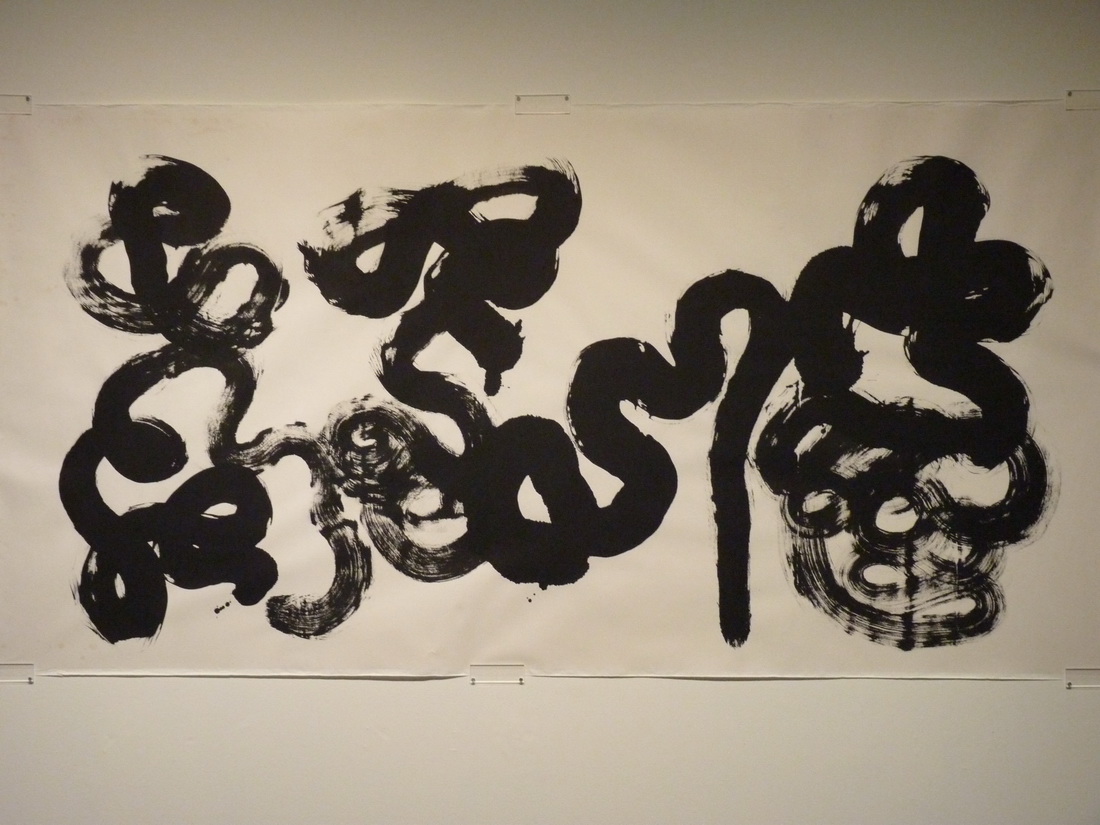
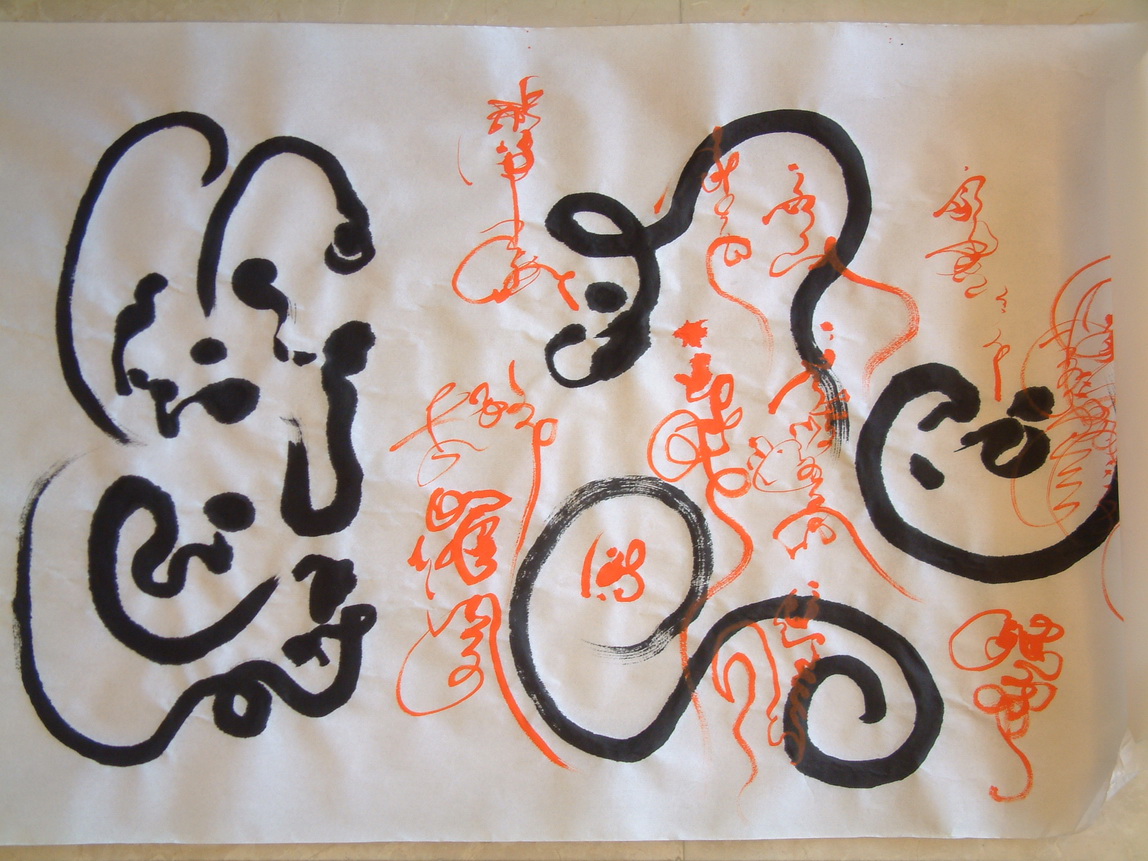
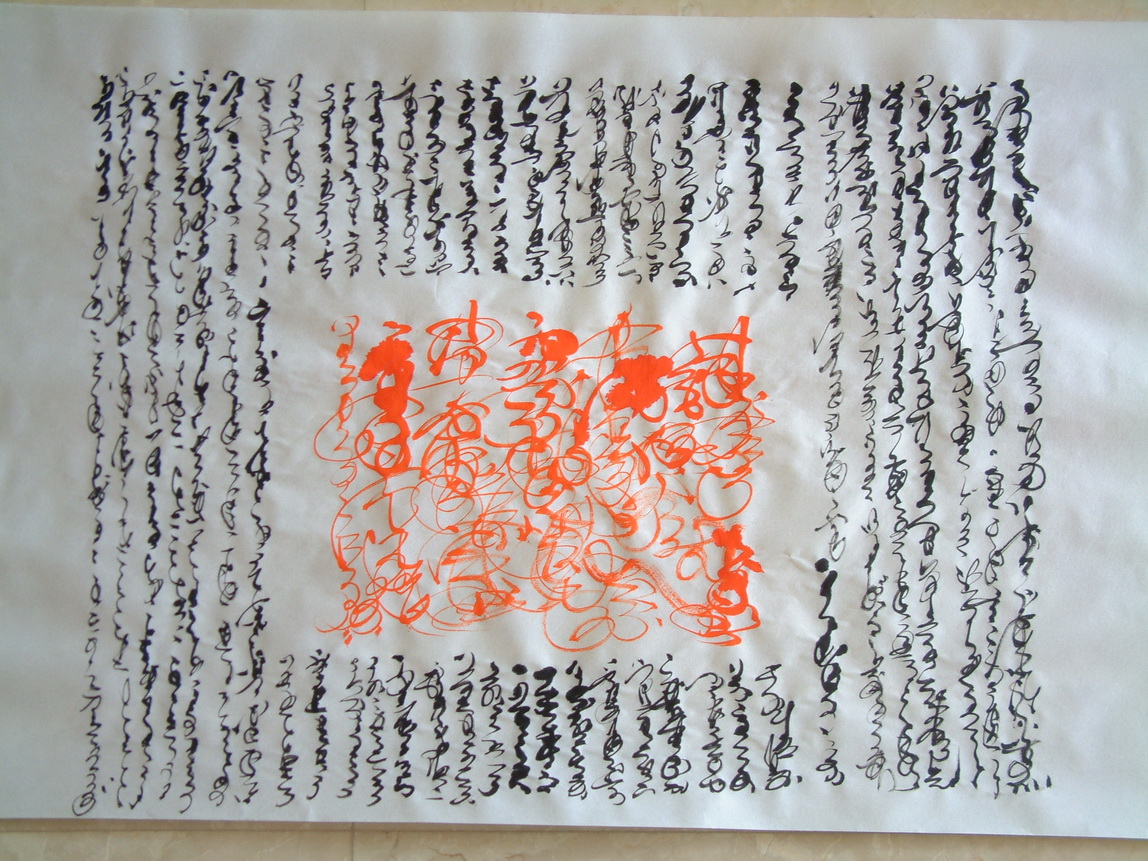
In a super-conscious state close to mediumship, through instinctual revelation and spontaneity, "Qi-Dong Xie-Xing" (Form Generated by Vital Energy) was born. A series of unprecedented black and red calligraphic images emerged, vastly different from traditional calligraphy.
Very abstract, full of kinetic energy, seemingly indecipherable like heavenly script, covered in a thick layer of mystery. At the end of the year, Chen Shih-Ming held a groundbreaking solo exhibition of "Qi-Dong Xie-Xing" calligraphy at the Taipei County Cultural Center.
The journey of life, with its waves and turns, was followed by severe tests and difficulties in life. Chen Shih-Ming accepted everything without complaint or regret. Life becomes more vibrant because of the adventure of bearing one's rightful journey of existence.
Once again, he faded out of the art scene.
In this endless, long exploration of the heart's journey of life, Chen Shih-Ming's realm of practice is divided into two major stages: early worldly viewing of life from a Zen perspective, and post-2003 viewing of life from a cosmic atmospheric perspective.
The realization and growth of life (Note 12) involve complete acceptance and naturalness, bearing even the greatest hardships of life, because life is a trust and a test. A test is a form of learning.
The most beautiful aspect of life is "fearlessness," and the feedback of life is "beauty." The beauty of life is returning to the basic virtues of Wisdom, Benevolence, and Courage. He believes: "Life has a mission. Life is a trust.
Everything we currently possess is given by the Creator. How we handle this trust is the driving force to move forward. Moving forward, no matter how far, we can learn in the next life. Therefore, life is eternal. Living beings are always learning, endlessly reproducing.
With this belief, one becomes brave" (Note 13), because existence is all possibilities.
After a decade of silence, with the maturation of life and the shift in mindset, the artistic context underwent a major turn. Facing the various hardships of life, Chen Shih-Ming's mindset was without doubt, without worry, and without fear.
This explosive power of fearlessness naturally combined into a magnificent visual context of myriad phenomena.
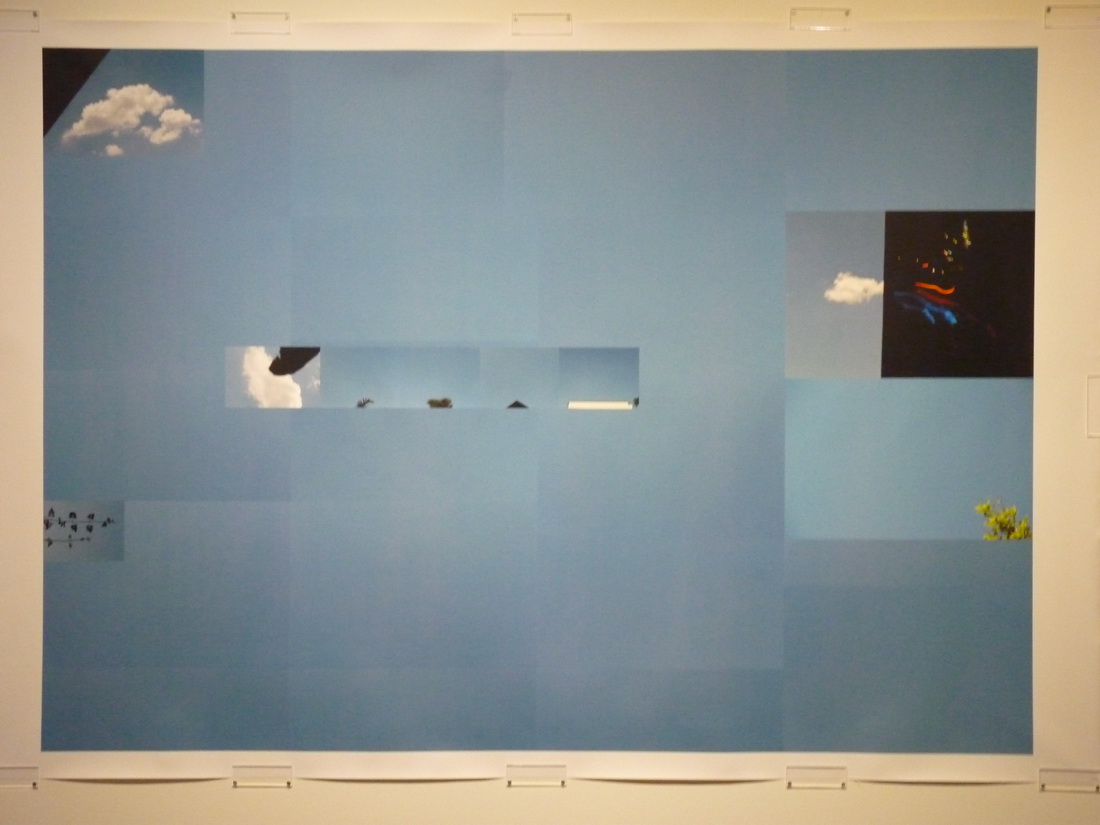
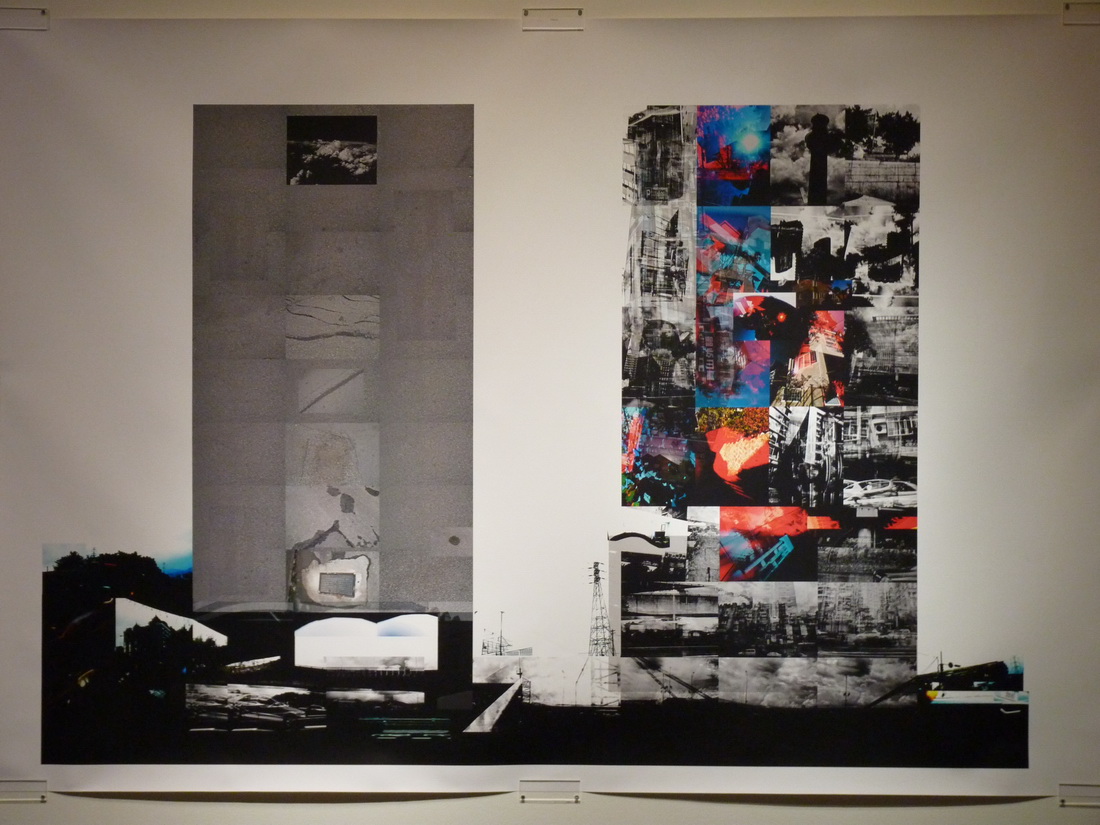
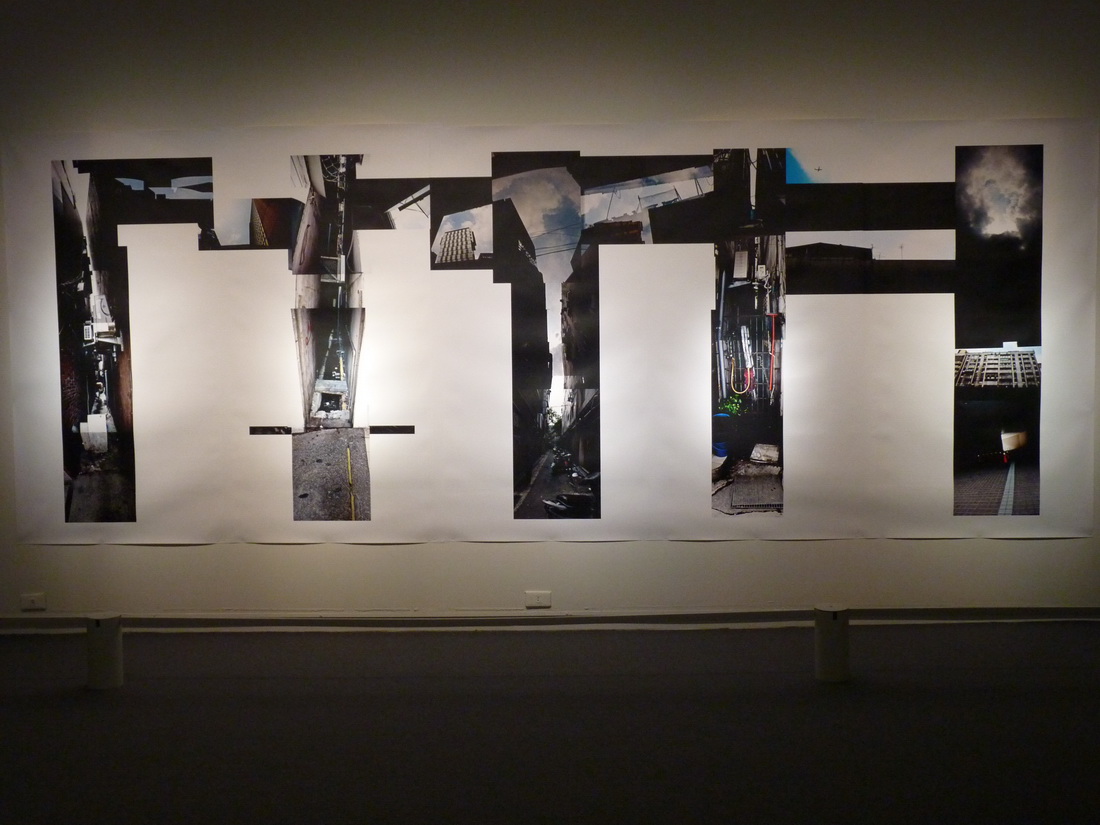
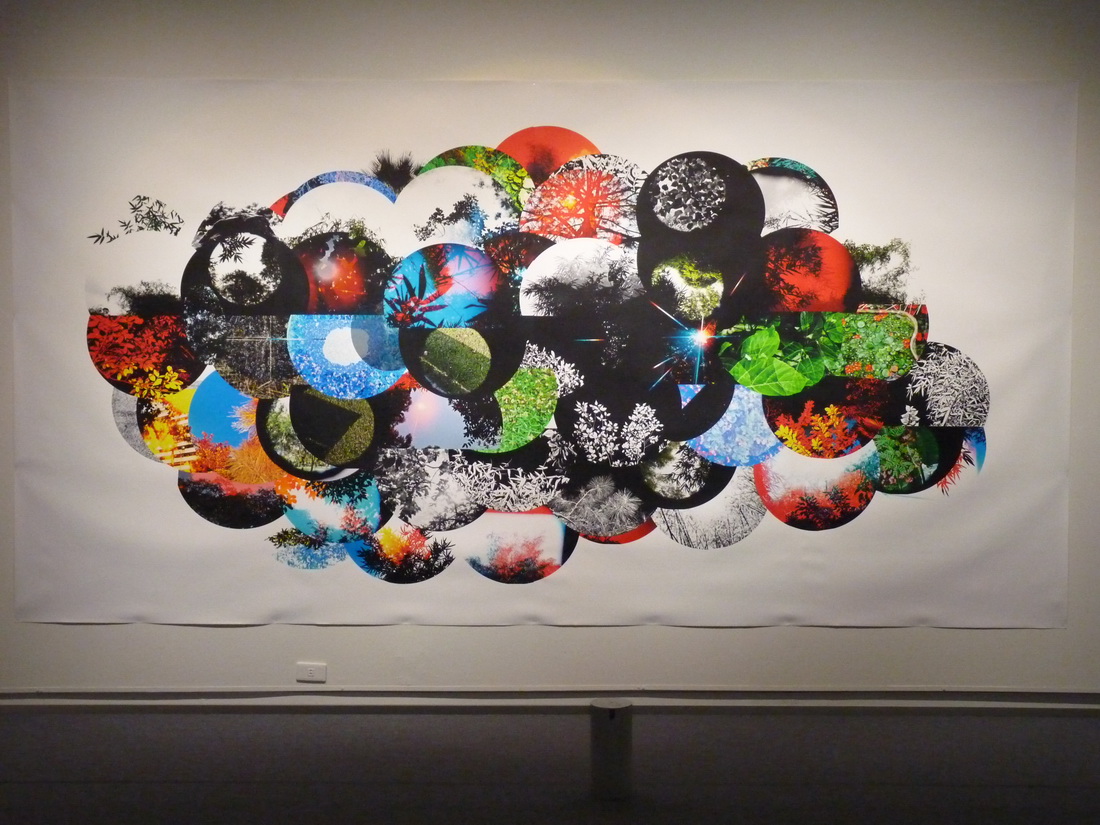
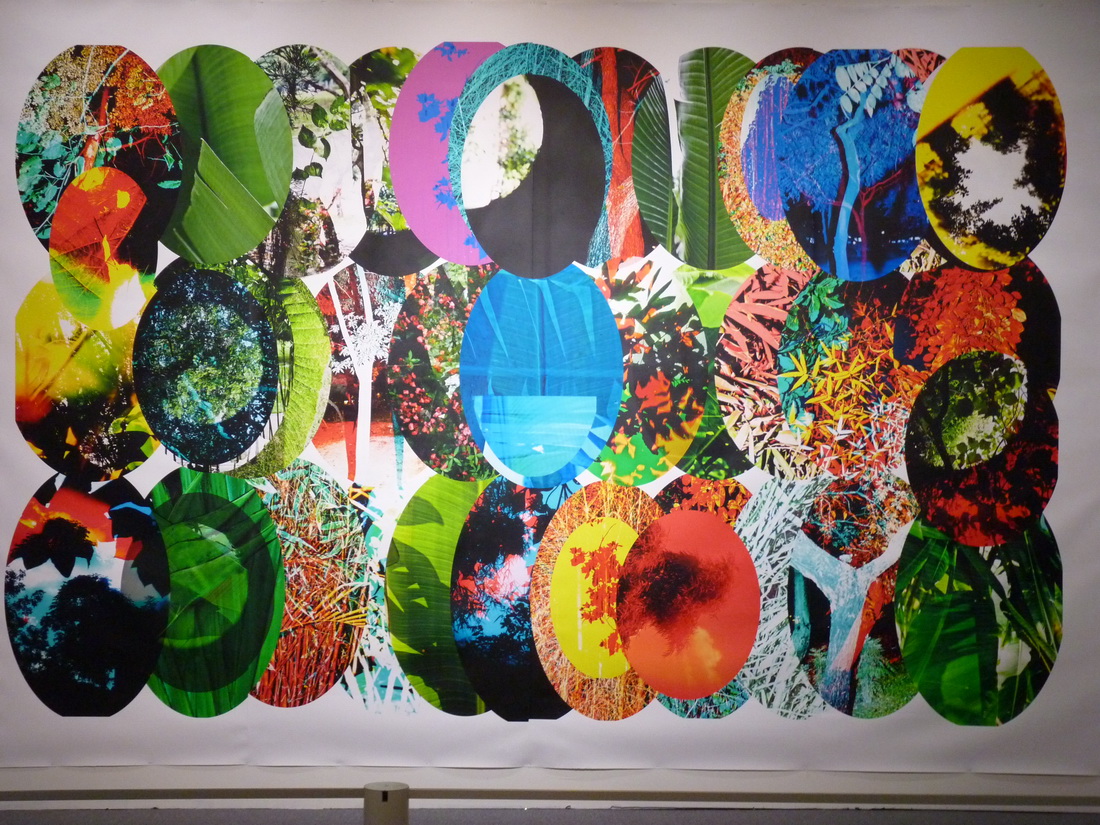
In 2012, the "Zong Tan Yu Jing" (Exploring Context) series of myriad phenomena, through the re-composition of numerous images, constructed a dense space of myriad phenomena. These image paintings shuttling through time and space verify Chen Shih-Ming’s view of life art.
Mental State - Detailed Sketch: In his early years, Chen Shih-Ming stood out with his unique detailed pencil sketches, depicting various plants in nature such as flowers, grass, leaves, and stems, including lotus leaves, bamboo, bamboo branches (thorns), bamboo leaves, bamboo shoots, taro leaves, cannas, parasol tree leaves, miscanthus, intertwined branches and leaves, etc.
Through the floating light and fleeting shadows and fragments of nature, via delicate and precise realism and unique composition and negative space, he carved the soft posture of plants, peering into the appearance of existence.
Sketches were no longer drafts for creation or casual records of inspiration, but independent works. In terms of materials, pencils have their own characteristics: stronger, more powerful, without needing to consider color, presenting contrast.
Pure black-and-white pencil sketches, after detaching from color, reveal a unique illusionary quality that other materials cannot replace.
This series focuses on the exploration of natural objects in time and space, particularly light and shadow, chiaroscuro, image, texture, and existence.
Under the simplest, crispest, and most elegant images, such as leaves outlined in a few strokes, funnel-shaped lotus leaves, curled taro leaves, a solitary bamboo shoot, overlapping and interlaced leaves, fluttering fine bamboo, charming cannas, tangled clumps of bamboo, rhythmic pasture grass, ethereal miscanthus, and airy lotus leaves, etc., simplicity reveals the invisible whole through presence, alternating void and solid.
Another striking feature is the unique and charming light, crystal-clear leaves contrasting with branch shadows, isolated branches and leaves under overlapping contrast, intersecting light and shadow on branches, and even entire lotus flowers blending into the empty white, creating an ethereal and airy artistic conception.
The melody of light constructs the tones of chiaroscuro, forming a lyrical and poetic symphony.
The most unique vocabulary in Chen Shih-Ming's brilliant pencil sketches is the full of vitality composition, derived from his fundamental training in traditional Western painting. Simplicity implies rigorous structure.
In natural, perfect geometric or non-geometric organic organizations, each piece is a world.
Among this sketch series are many rare and outstanding compositions: such as the radiating "95-1," inverted triangle "95-02," pyramid "95-17," chiaroscuro contrast "95-09," linear radiating "95-14," and hidden vertical and diagonal lines "95-16" from the mid-1990s.
Kandinsky wrote: "Pure composition in art is not enough to appeal to the senses; the artwork itself must evoke a deeper resonance."
Figurative form is the vocabulary, light and composition are the grammar, and negative space constructs the artistic context. White (negative space): Is it emptiness? Is it void? Is it omnipresent? Is it no-thought? Is it intuition? Or is it imagination?
White is the whole, the entirety, the total space, the universe. Chen Shih-Ming has a preference for white, especially in this detailed sketch series, where negative space occupies unique significance and reference.
Chen Shih-Ming questions white: "White provides humanity with rest, contemplation, a pause for vision and soul. It has a state of mind without expectation, which the soul yearns for." Negative space acts as an intermediary, allowing the projection of matter.
White is the background and also the theme. Traditional negative space signifies space.
Here, "revealing the invisible through the visible, unity of void and solid, or revealing the solid through the void" (Note 14), possessing two layers of space: projection and negative space (space), constructing the composition of form, color, material, and light in space, revealing the mental state and spiritual field.
The white painting dialogues with light and shadow; it is the shadow of the entity, the entity of the shadow. Cause and effect, the total reality of emptiness, and the total great truth of solidity.
Figurative is merely a bridge, leading people to yearn for infinity. But figurative is a visual trap; people stay only on the image and cannot be led to "emptiness."
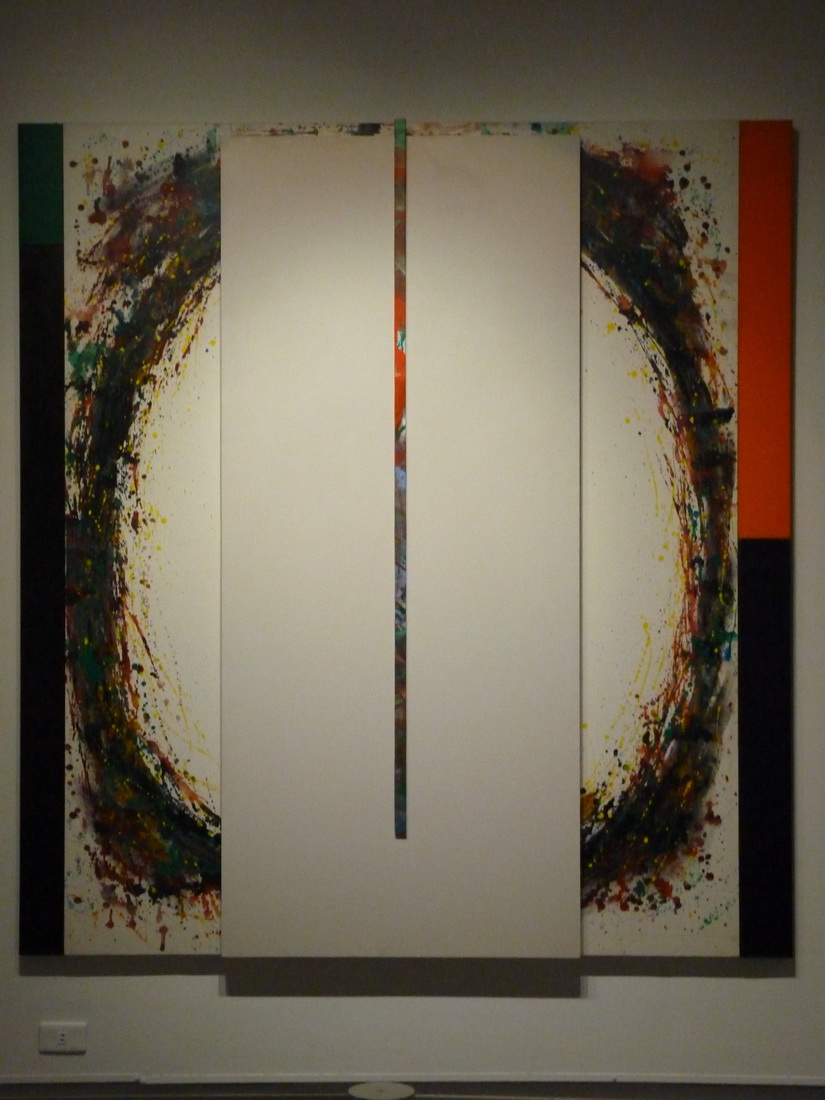
Abstract Geometry of the Mental Realm: Starting in the 1990s, Chen Shih-Ming's creation entered the mental realm of "willow dark and flowers bright, another village"—abstract geometry (he continued exploring pencil sketches).
In the trend of postmodern abstract geometry or geometric abstraction, he liberated object images, creating clear, clean, and crisp geometric color abstract paintings, condensing the pure energy of geometry and color.
The greatest difference from Western abstract geometry is not just culture, but the creative attitude and view of life that directly points to nature, continuing to deepen artistic connotation and existential awareness.
This series uses the geometric forms of canvas and frames, intuitively arranging blocks like toys, constructed on different facades and planes.
In the early stage, after realizing the primal nature of life, he returned to the contemplation of life.
In a state of liberated consciousness, sensitive and enthusiastic abstract geometry burst forth with brilliant, vivid, and colorful hues, condensing all possible energy and movement.
Intuitive geometry expresses a unique elegance, generosity, lyricism, and solemnity, hinting at a sacred feeling like "Fa" (1991).
The unprecedented colors of this period were not only particularly evocative, intense, and powerful, but also reflected Chen Shih-Ming's life energy and mental state.
For example, "Mind State" (1992) was constructed on a white interface using seven colors: red, orange-red, yellow, blue, green, purple, and blue-purple. Do the seven colors symbolize seven spiritual realms?
Color blocks and the juxtaposition of color blocks formed extraordinary color movements, such as "Three Minds" (1991). Besides, there were vertical and parallel linear movements, such as "Journey to the Source" (1991) or "Ascension II" (1992), etc.
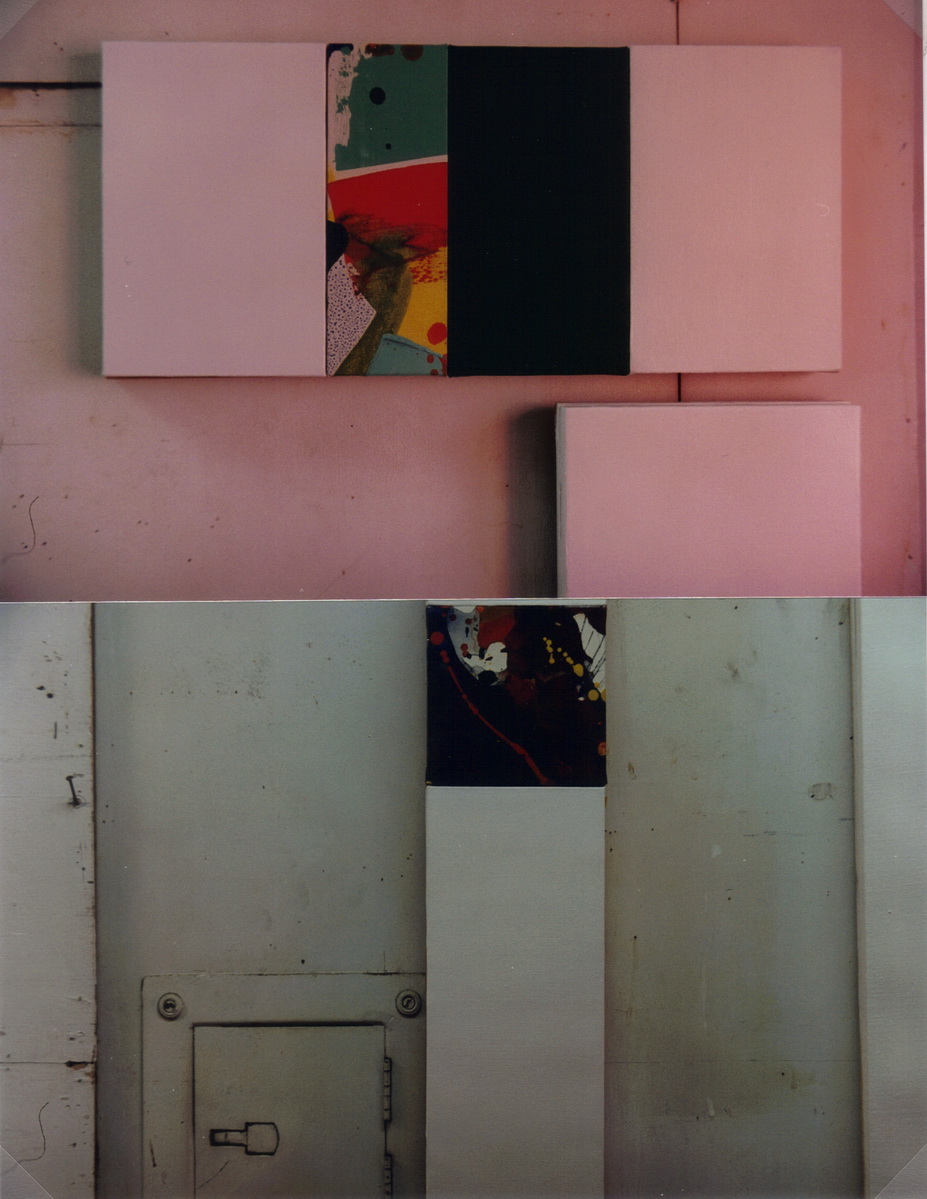
In the later stage (after 1995), the series using white as the carrier became simpler, crisper, and more minimal. Like adding the finishing touch, it composed fragments of colorful small color blocks (red, orange, yellow, green, blue, black, etc.).
Using various possible techniques: painting, splashing, spraying, scattering, dripping, and flicking, etc. Finally, these geometric planes were pushed and combined with a single dominant tone.
Thus, through intuitive construction of multiple geometric color paintings, plus contrasting brushwork, breaking the original "minimal" into a "complex" rigorous and intricate structure.
Between minimal and multiple, emotional and rational, robust and generous, rigorous and lyrical, order and geometry, abstraction and essence.
Obviously, the early abstract geometric forms were complex and variable, color application was brilliant and diverse, full of instinctiveness, overflowing with rich emotion, with themes symbolizing the spiritual journey added to the movement of color blocks and lines.
The later works were simpler and more minimal. Under the main structure of white, colored makeup shines, calm and stable, awakening spirit and consciousness, presenting a state of mind.
More purely and quietly, (sketch and painting) themes were replaced by dates and numbers, restoring the abstract essence.
Malevich wrote: "In the creation of painting, what is more precious is color and organization: they constitute the essence of painting, and there the theme is destroyed." If the painting language of this series is placed in the field of Western modern art, it would be seen as color (or color plane) geometric abstraction.
However, the painting that has shed life has transcended painting itself. Chen Shih-Ming said: "A state of mind without expectation, liberated from painting." Art is above and below everything, belonging neither to time and space nor to history.
It belongs purely to the verification of life, displaying the painter's current mental state and existential context.
Realizing the Truth Revealed of Life: "Truth Revealed" was Chen Shih-Ming's solo exhibition at Eslite Gallery in 2000. After going through the colorful and brilliant abstract paintings, he arrived at the vast, pure, and empty white realm of life.
"Truth Revealed" mainly explores the deep relationships between object and self, the seer and the seen, time and space, myriad phenomena and original essence, stilling the mind and pure emptiness.
From reading nature and everything seen, turning inward to still the mind and gaze, reading the original heart, recognizing the truth, silently illuminating and perceiving the inner world, clarifying the mind and seeing nature in the moment of distinct thoughts, what is presented is the reflection of the pure original heart and mental state.
It embodies and verifies the artist's realization of life. He said: "The beauty of art lies in realization, in expressing what is obtained in the heart. The so-called 'Knowing - Doing - Verifying' (Note 15)."
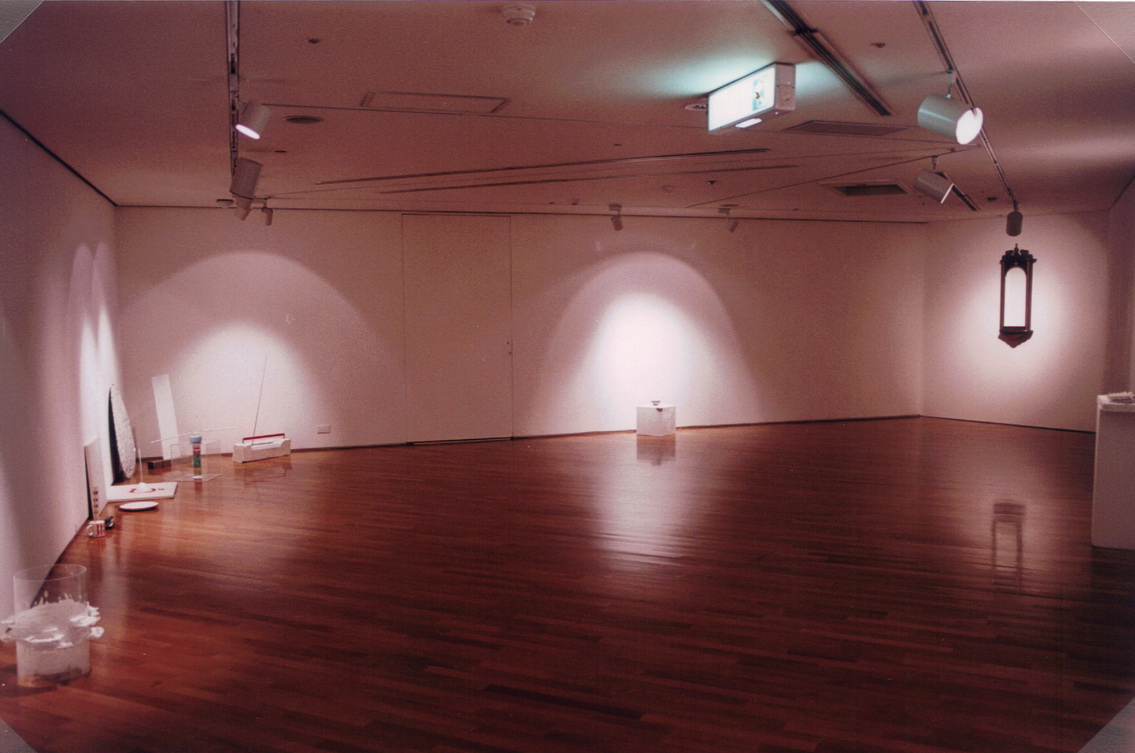
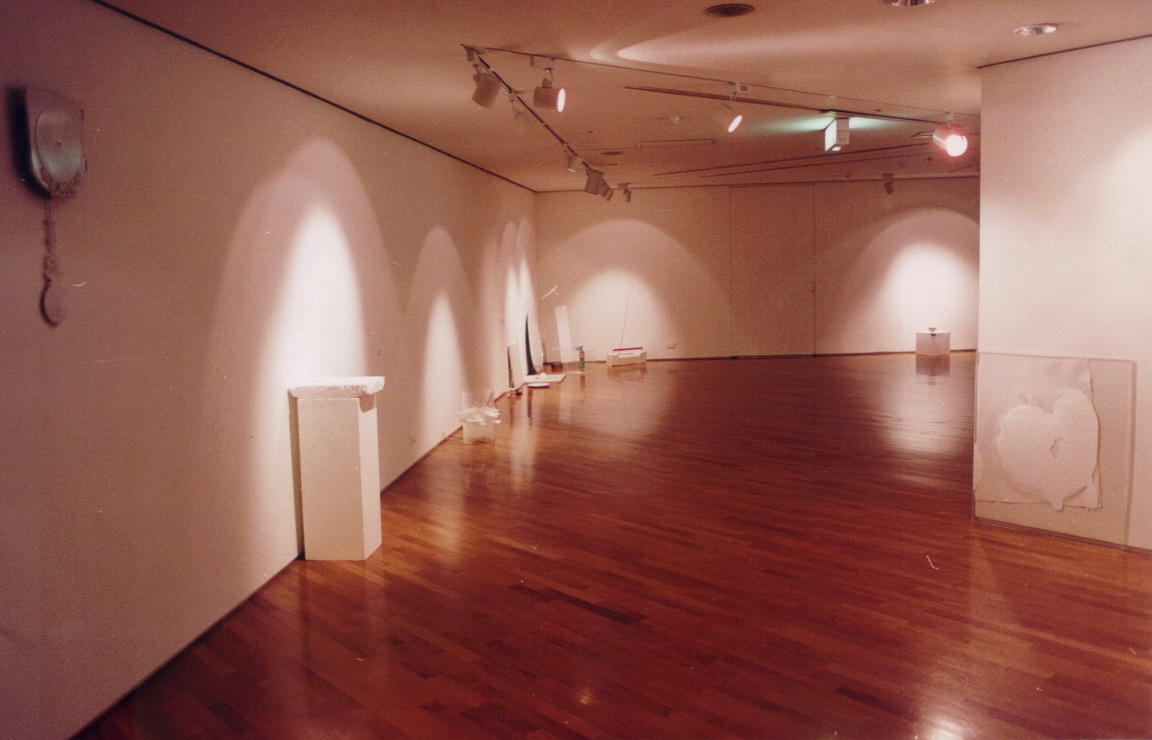
The Original Essence of White: In the exhibition space with all-white walls, white works were arranged according to the space, and under white fluorescent lights, the feeling of pure emptiness constructed a white atmosphere. White begins from nothing.
It is both the starting point and the endpoint, meaning it has no beginning and no end. In the original state of things, it is also a spatial field of spirit. White is the minimum limit but not the extreme limit.
White allows inward observation: the silent world, an absolute state—"mindful awareness"; outward observation: the states of life, aging, sickness, and death—"mindful heart." White paintings accept the white wall surface, integrating into the overall space, forming a unified universe.
White forms a boundless and infinite vast space. Space constructs time; time merges into space, naturally formed. Object and self merge; matter disappears, spirit is called forth, like a vacuum world.
What white explores is not space; it signifies "emptiness." Merging into the white wall surface, the entity is nothing but emptiness itself. Tranquility is beauty.
In mindful awareness, in matter, vision, sensation, space, time, object, and self, nothing remains, manifesting the essential nature of "white."
Art Element White: Pure and clean white painting series, applying white layer upon layer upon layer on the canvas, with no brushstrokes and no traces. Chen Shih-Ming said: "Painting, painting again and again, painted dozens of times. Do you know? Can we look again and again?
Or do we know upon one look? Do these belong to looking? The truth is here." In The Little Prince, it is written: "Only with the heart can one see clearly; what is truly essential is invisible to the eye." Additionally, four long paintings used white as the carrier.
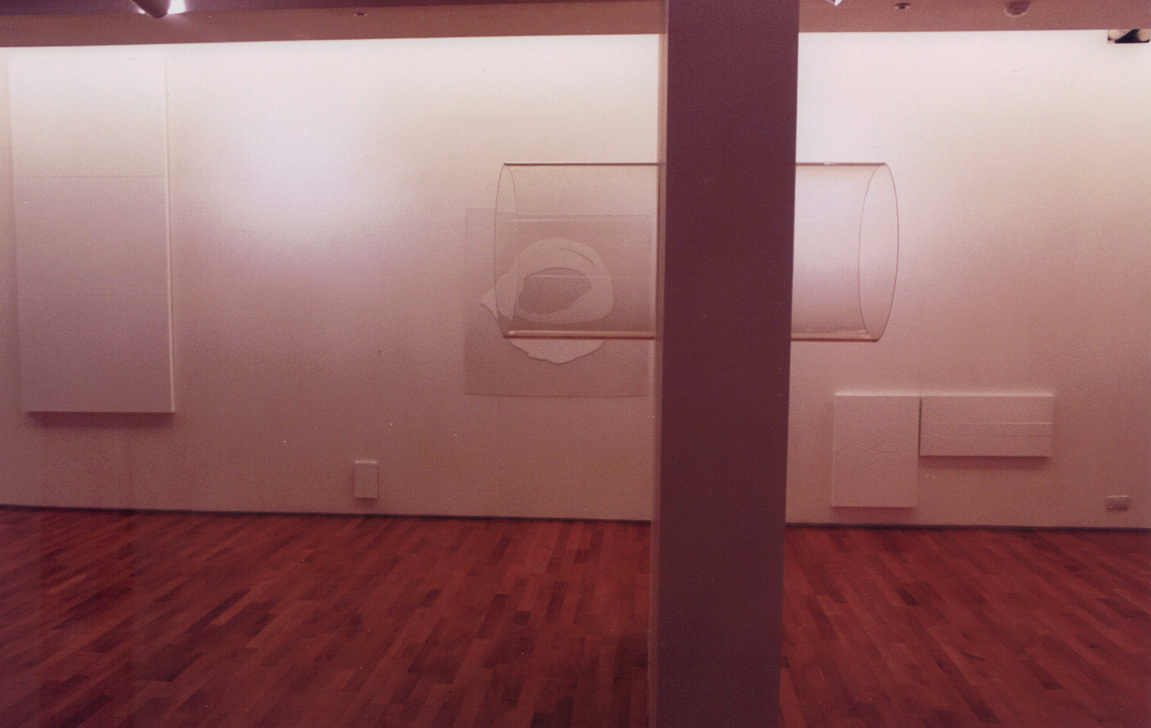
By pasting white paper or canvas inside acrylic frames, they expressed various textures and perceptions of white. One white block grew spots of mold, revealing the temporality of existence.
White paintings not only established the gallery field (arranged according to architectural space, varying in height, following walls, pillars, edges, corners, or diagonals), but also merged with the white wall surface into a whole, presenting a vacuum tense and spiritual energy field.
Thus, white became capacity. It contains everything and becomes everything, manifesting the state of total existence, peering into the great white of life.
Material White: Chen Shih-Ming used transparent acrylic sheets as space supports and carriers for painting. He presented multiple states of white on the acrylic sheets, with transparency signifying penetrability.
Using spatial installation techniques, he placed these works against walls, in corners, on diagonal walls, or leaning against walls to form shapes.
The original essence of material white was detached from the wall surface, becoming a three-dimensional object-painting, attempting to express the material white hidden in everyday life spaces.
On one wall, an acrylic cylinder pierced through the wall, constructing an architectural circular window and a mental horizon, becoming a spatial installation work crossing time and space on the wall.
Facing one end of the cylinder, viewers could see through to the second white wall. Walking to the other end, they could glimpse the space and works of the main exhibition hall.
It revealed the process of direct perception, emphasizing that people, through different perspectives, pass through mental barriers, opening up the possibility of a vast sky and wide earth.
Additionally, it reminded viewers that they might also perceive the omnipresent material white.
Medium Symbols: After exploring different layers of "white," "white" was given new meaning. Through the medium conversion of "white" color, various objects of food, clothing, education, and entertainment in daily life were transformed.
Thermometers and rulers were fixed on white pedestals; celadon bowls and plates overflowed with white substances; white shirts and cassette players were sealed in white gypsum blocks; computer keyboards became white; round mirrors were coated with white paint; the interior of black glasses cases was white; clocks with "white" interiors hung on the wall; and a pure white mechanical clock without hands swung back and forth, etc.
White became a medium, a symbol reflecting a phenomenon.
In this relationship between object and self, Chen Shih-Ming expounded: "Each independent exhibit represents a different aspect of life, but also concretely manifests the main meaning of 'Truth' revealed as 'Great White'.
The essence and original form of objects are attached with external meanings and values, and their original purpose and use have been changed (...)" "Therefore, if one wishes to experience the inherent truth of all things, one must detach from worldly conventions and values, and directly 'contemplate the object in the present moment'.
Thus, the 'simultaneity of object and self' for the observer is very important, and this is also my motivation for arranging the computer keyboard and the outer frame of the hanging clock: the former represents the instantaneous speed and time of 'thought'; the latter is the timeless indicative 'present moment'.
Only from the angle of 'object and self simultaneity' can one equally and directly contemplate the object, regardless of other external values and sensory effects, and also realize that the essence of all things has no high or low, but exists peacefully on its own, including the act of contemplation itself.
So, the contemplating 'self' is not higher than the object; the contemplated 'object' is not lower than the self. Object and self are both small molecules in the universe, insignificant transient guests in a total moment" (Note 16).
Time is timeless, and all existing things are originally perfect.
Chen Shih-Ming expounded: "For me, artistic creation is less about the expression and pursuit of formal creation than a channel for solving thinking and questions.
Problems I pondered over twenty years ago, regarding space, matter, nature, time, etc., are still the main axis of my creation today. Many of my original ideas explored the most basic and difficult issues.
Along the way, finally returning to oneself, facing the long-pondered relationship between object and self in a mental state akin to practice, after detaching from self-emotion and the external value of outer objects, carefully considering the essence and original form of all things, and through artistic creation, presenting the complex, multi-layered answers obtained personally, forming a certain system of self-completion: one is a simple starting point but complex and profound artistic philosophy; the other is artistic creation with simple elements but multiple layers" (Note 17).
Writing of Qi-Dong Xie-Xing: At the 2000 "Truth Revealed" solo exhibition at Eslite Gallery, from figurative to abstract, then from imagery to emptiness, the painting context reached pure emptiness and cleanliness, spiritually aware, without thought or form.
In the realization and growth of life, Chen Shih-Ming realized the ultimate meaning of painting art. As poet T.S. Eliot wrote: "The end of our seeking is to arrive where we started and know the place for the first time" (Note 18). From then on, he bid farewell to painting.
The following year, Chen Shih-Ming moved to Tamsui. With changes in the living environment, life entered another level.
From stilling the mind and gazing, delving into the consciousness of the heart, the core thought expanded from a Zen perspective to a worldview of the cosmic energy field. Changes in mindset brought forth a new context.
At the end of 2002, Chen Shih-Ming was invited by the Taipei County Cultural Center to hold the "Qi-Dong Xie-Xing" calligraphy solo exhibition. As everyone knows, Teacher Chen had never written calligraphy before, nor had he paid special attention or research to calligraphy art.
Obviously, the operation of the universe, life itself is a small cosmic energy field and possesses all energy. "Qi-Dong Xie-Xing" is a spontaneous and instinctual response to the great energy of the universe, a spiritual writing.
Chen Shih-Ming completed it in a super-conscious state close to mediumship, writing with black or red ink on full-size mulberry paper, presenting concrete linear symbols of calligraphy? (Temporarily called calligraphy depending on tools and forms), vastly different from traditional calligraphy.
Full of physical kinetic energy, very abstract, its ideograms are unreadable by people, covered in a thick layer of mystery. Chen Shih-Ming said: "In the spring of 2002, one day I suddenly heard a voice telling me to write characters.
As soon as I put pen to paper, an automatic writing energy exploded. Afterwards, I averaged about thirty sheets of mulberry paper per day for over a year. To this day, I can pick up the pen to write at any time.
As for whether those symbols bursting from within received external cosmic information, or if there is any relation to religion, I do not understand. It is said that the universe is a holographic system.
If a person wants to develop intuitive potential and expand energy waves, can they receive cosmic messages? Furthermore, humans are the spirits of all things and should have so-called mediumship. However, mediumship has levels, and the range of resonance varies.
What is lacking is probably the ability to interpret information." He continued: "From a formal perspective, the 2000 'Truth Revealed' was an introversion from having to emptiness, while the 2002 'Qi-Dong Xie-Xing' was an extroversion from emptiness to having.
Mentally, one is gathering and releasing. Gathering means the empty realm has nothing; releasing means myriad phenomena appear. Looking back now, it seems to foreshadow my current life and creative direction" (Note 19).
Exploring Context Images: In today's internet and digital image world, people are often surrounded by a large amount of brilliant image information. In an era of consuming image disasters, artistic creation has also taken a turn.
Photography is the most common and convenient medium at present. Especially with the various possibilities of post-production using digital technology, images provide more thinking and feelings. Digital image art has become one of the current creative trends.
Unprecedented image construction creates richer and more diverse image contexts. Static is image; dynamic is video.
Photography has always been Chen Shih-Ming's observation and record of nature and the surrounding environment. Images were the source of his past creation.
Observing life and capturing the floating light and fleeting shadows of nature from the natural world, the camera became his tool for examining nature. He intended to find various possible elements for creation and inspire thinking.
Past photographic images were the basis for creative thinking and also the medium for creation. Now, digital images have become his artistic creation of "formal material composition in space."
By chance, in 2004, Teacher Chen Shih-Ming traveled to Japan with friends. A friend gave him a small digital camera, thus forming a bond with digital photography. Thus, Chen Shih-Ming opened a new digital vision. Playing with it, he became fascinated by the digital camera.
Convenient and practical, he got used to carrying it everywhere.
Anywhere, any season, any subject, rural or urban, sky or ground, day or night, natural or cultural, he photographed what he saw, shot what he wanted to shoot, unconstrained by form or state, casually shooting anywhere.
Diary-like image records captured the mental state of each moment, yet he never thought of creating with images. Thus, year after year, unknowingly accumulating tens of thousands of photos.
After organizing and reviewing them, randomly combining and constructing, he discovered the profundity and magic of images, beginning to deeply explore the various possibilities of construction, such as subject, attribute, theme, form, color, light and shadow, state, and type, etc.
Naturally, he cited the thinking of "formal material composition in space." From over ten thousand images, he selected and combined a thousand as experiments, exploring form and form, color and color, light and shadow, and structure, etc., and attempted to find new formal possibilities by modifying or reorganizing through computer post-processing.
Of course, the difficulty of combining each picture with others became a challenge for one type of photography painting (Note 20). The painter said: "Art has no profound knowledge; it is right beside us" (Note 21).
In today's era of digitalized art, photography has replaced painting and become painting (under the condition of painting).
Chen Shih-Ming's "Zong Tan Yu Jing" (Exploring Context) image series of myriad phenomena, inheriting and developing his consistent artistic vocabulary, expands a new visual field and artistic breadth for images.
Through multiple combinations and constructions, and image processing such as splicing, exposure, hue, saturation, chiaroscuro, and modification, etc., in the lyrical like "Water Connects to Azure Sky," the geometric like the rhythm of square light and circular waltzes, and the rigorous architectural structure like "Empty Alley," between figurative, imagery, and abstract, it presents a brilliant kaleidoscope-like image language.
The painter spoke of the basic construction of this series: "When studying painting in Spain in 1975, I learned chiaroscuro composition, color plane composition, symbol composition, and perspective composition.
From the perspective of composition, geometric abstraction belongs to color plane composition. Form and color are one. Forms include circles, triangles, squares; colors have three basic elements: hue, saturation, and brightness.
In production, drawing borders with rulers and flat-color painting seems rational and expressionless, but I do not look at it rationally but with spirituality.
All colors, shapes, and textures combined, the intuitive accuracy can achieve a sense of solemnity, differing from the proportion and balance emphasized in Western geometric painting" (Note 22).
This series clearly proves Chen Shih-Ming's observation of his view of life art, his contemplation of the Dao with a clear mind, and his thinking of tranquility, elegance, and dedication to art. Just as he said: "The feedback of life—'Beauty'.
The most beautiful aspect of life is 'fearlessness'." Everything is created by the mind. The realm is born of the heart. Meaning follows the realm. Mind moves, language changes. The context picture of a calm and quiet mind will be pure and empty.
Life is an energy field and energy. Life is a learning and a test. A test is a form of learning. The painter said: "Facing the various hardships of life, the mindset is without doubt, without worry, and without fear.
The energy of fearlessness naturally bursts forth into a magnificent, solemn image context of myriad phenomena." "The presentation of art is like the gathering and releasing of thoughts.
Gathering means the empty realm has nothing; releasing means myriad phenomena appear" (Note 23).
Shuttle through Chen Shih-Ming's brilliant image paintings, interpreting his view of life and the universe: "Art is the ultimate meaning of life, the call of life's spiritual energy," tracing back to the root to investigate the meaning of existence.
Note 1: Art Performance and Ultimate Concern, Chen Shih-Ming 1996 Eslite Solo Exhibition, Huang Hai-Ming, Eslite Gallery, published December 1996. Note 2: Liu Yong-Ren "Chen Shih-Ming - Exploring Context" Interview Record, Artist Magazine, March 2012. Note 3: Fortunately Having Two Eyes, Ming - Observation · Art, Chen Shih-Ming, October 27, 1998 (Republic of China Year 98), Speech at the Department of Fine