Raphael (1483-1520)
(Top) The Three Graces, 17x17 cm, 1504-1505, Musée Condé, Chantilly, France. (Bottom left) Sixtine Madonna, 265x196 cm, 1513-1514, Gemäldegalerie Alte Meister, Dresden, Germany. (Bottom right) Transfiguration, 405x278 cm, 1518-1519, Vatican. Undoubtedly, Raphael is one of the greatest painters in We
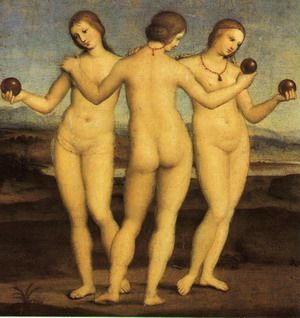
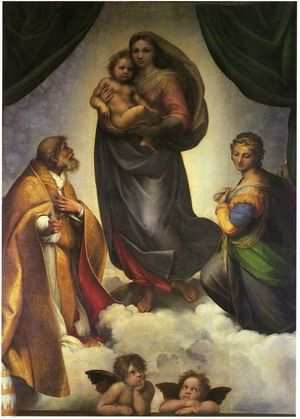
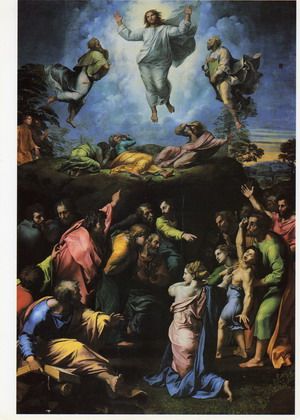
(Top) The Three Graces, 17x17 cm, 1504-1505, Musée Condé, Chantilly, France. (Bottom left) Sixtine Madonna, 265x196 cm, 1513-1514, Gemäldegalerie Alte Meister, Dresden, Germany. (Bottom right) Transfiguration, 405x278 cm, 1518-1519, Vatican. Undoubtedly, Raphael is one of the greatest painters in Western art history; his pinnacle art became the model for all European painting. This new force of Western civilization—Raphael—was born on April 6, 1483, in Urbino, a city on the central Italian plateau, into an artistic family. At that time, Duke Federico II of Urbino was a humanist and a renowned patron of the arts who loved culture deeply. This small duchy was one of the most active centers for plastic arts in the fifteenth century, earning Urbino the reputation of a beacon of the Renaissance. Prominent artists active there included Brunelleschi, Paolo Uccello, Piero della Francesca, Andrea Mantegna, and others.
Raphael's unique artistic style was closely related to his living environment. His father was a court painter in Urbino, and Raphael accompanied him to the court from childhood, absorbing advanced humanism through osmosis. He was passionate about painting from a young age, creating a Madonna and Child painting at thirteen. At sixteen, he entered the studio of Perugino, then the most famous painter. Raphael's early works, such as The Marriage of the Virgin and The Dream of the Knight, reflect his master's bright, rigorous, and generous style.
In 1504, the young Raphael traveled to the cradle of the Renaissance—Florence—to specifically seek guidance from the extraordinary Leonardo da Vinci, studying the artistic essence of Masaccio and Michelangelo. Humble and eager to learn, Raphael absorbed the strengths of many masters, combining them into himself. This showcased his talents, making him stand out as a great painter unparalleled in history. (At this time, displaying his unique style, his outstanding works included: The Madonna of the Grand Duke (1504), Madonna of the Meadow (1506), Self-Portrait (1506), Madonna of the Garden (1507), Entombment (1507), etc.)
In 1508, recommended by the famous architect Bramante, Raphael was invited to Rome by Pope Julius II. (Artists at the Vatican at this time included Bramante, Michelangelo, Luca Signorelli, etc.) The Vatican was undergoing major construction projects. From 1508, Raphael entered the most brilliant creative period of his life, working on a series of grand frescoes over several decades. His most outstanding works are the monumental frescoes celebrating truth, goodness, and beauty in the Stanza della Segnatura. Below Theology is The Disputation of the Holy Sacrament; below Philosophy is The School of Athens; below Jurisprudence is The Cardinal Virtues; below Poetry is Parnassus. These became the painstaking creations of Raphael's life. In 1514, he took charge as the Director of Vatican Buildings. In 1515, he became the Curator of Ancient Greek and Roman Art, continuing to study ancient art, which made his works even more extraordinary and reached their pinnacle, establishing him as the ancestor of classicism for centuries. Unfortunately, he died young at thirty-seven on April 6, 1520, while painting The Transfiguration. His artistic achievements profoundly influenced European painting, becoming the model for Western classical art.