Roman Opalka: The Irreversible Mirror of Time – "Passage" Solo Exhibition
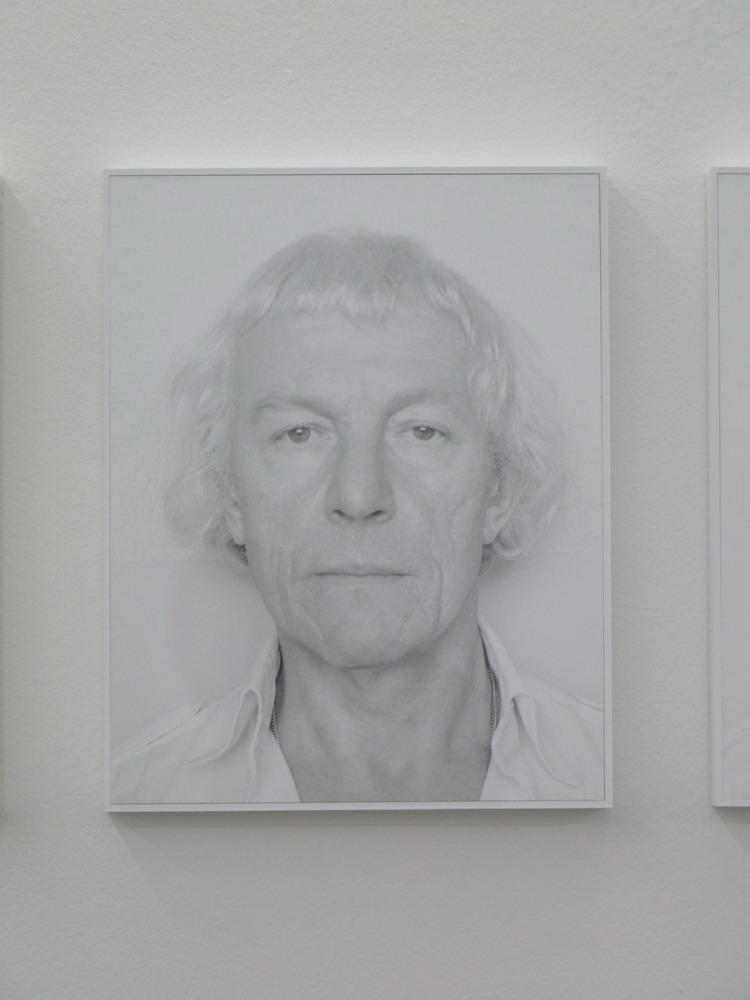
Roman Opalka, Time Mirror series, each 196 × 135 cm, 1970s.
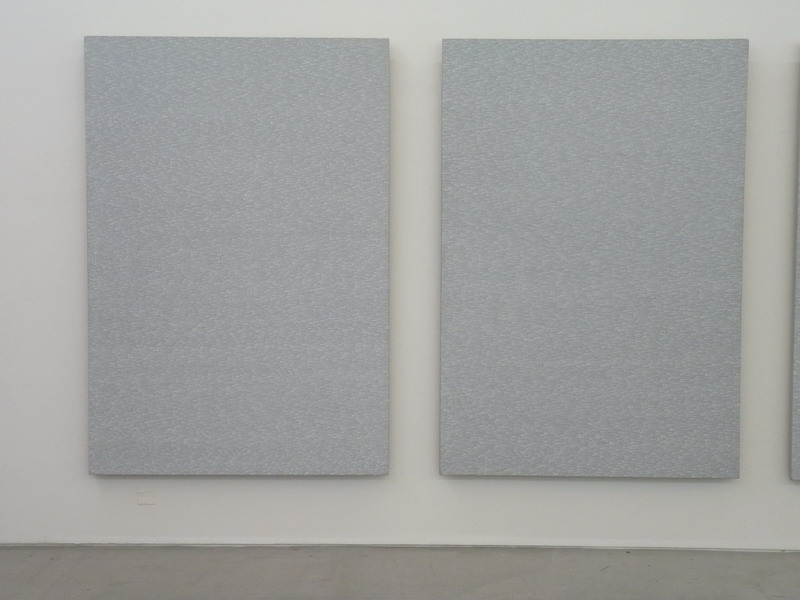
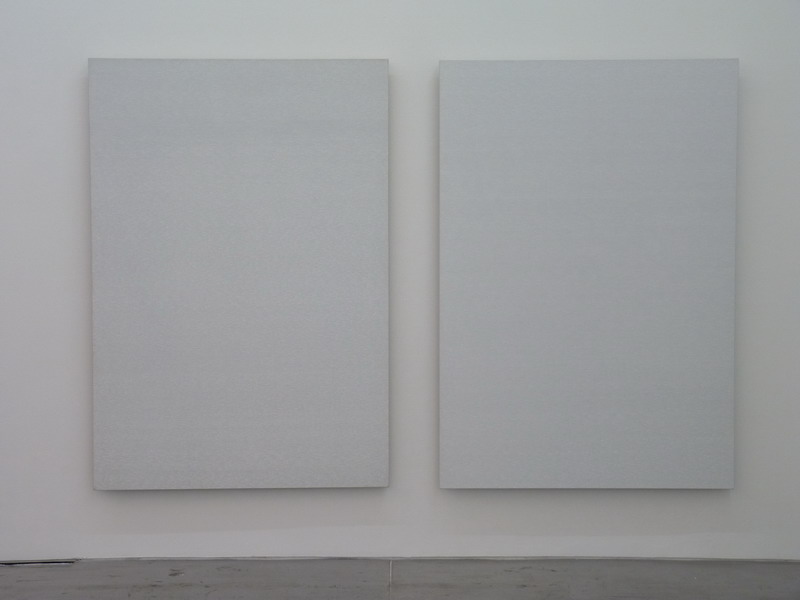
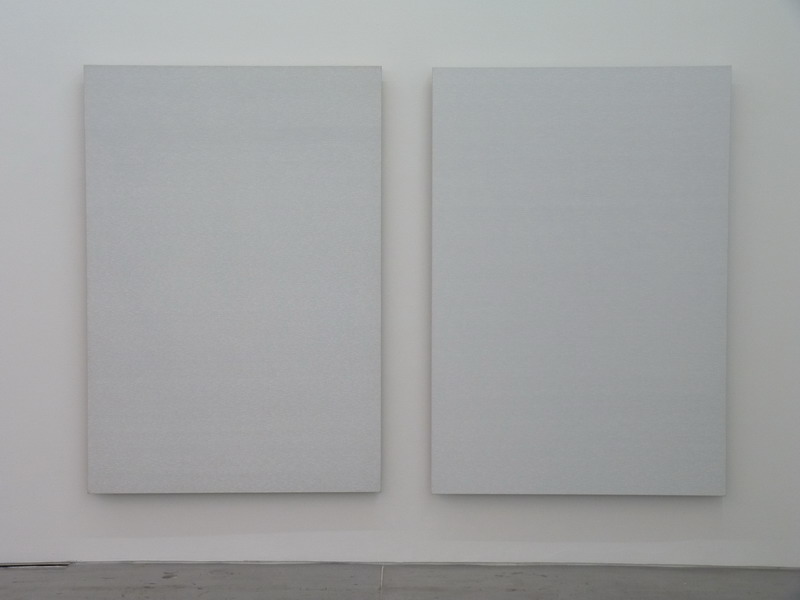
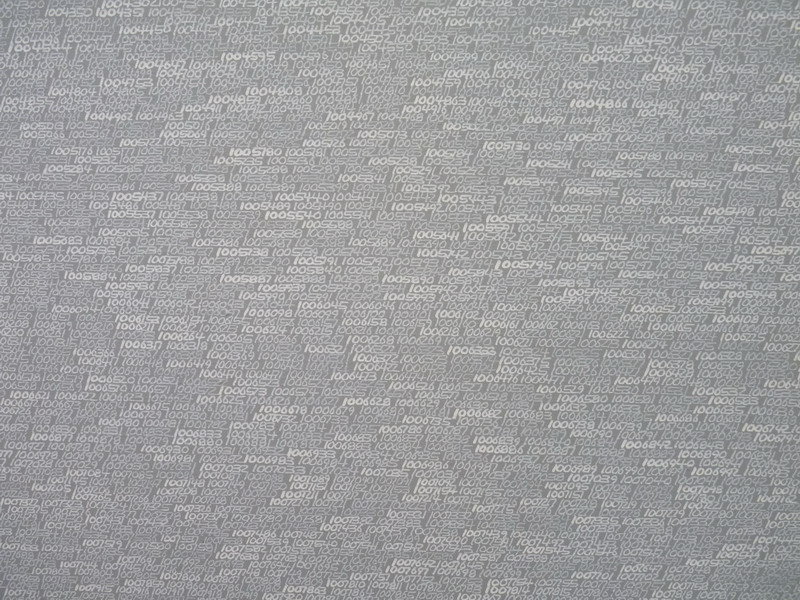
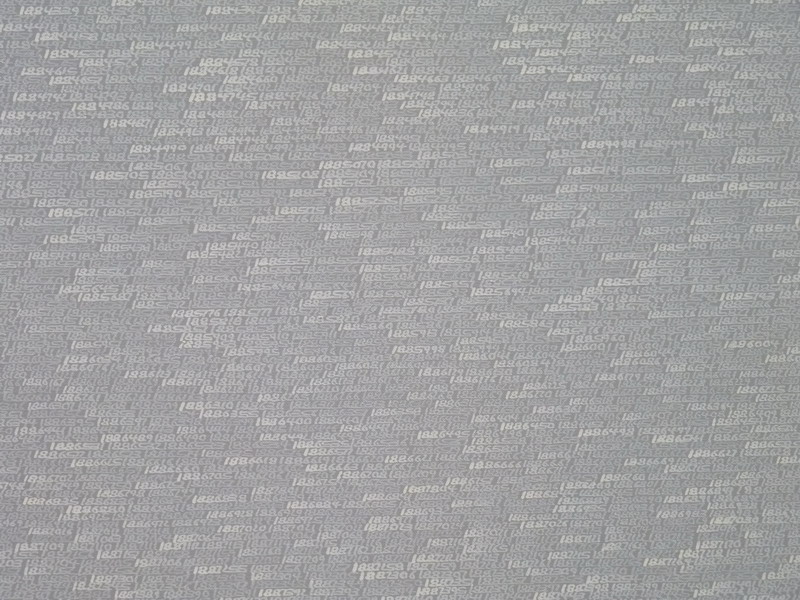
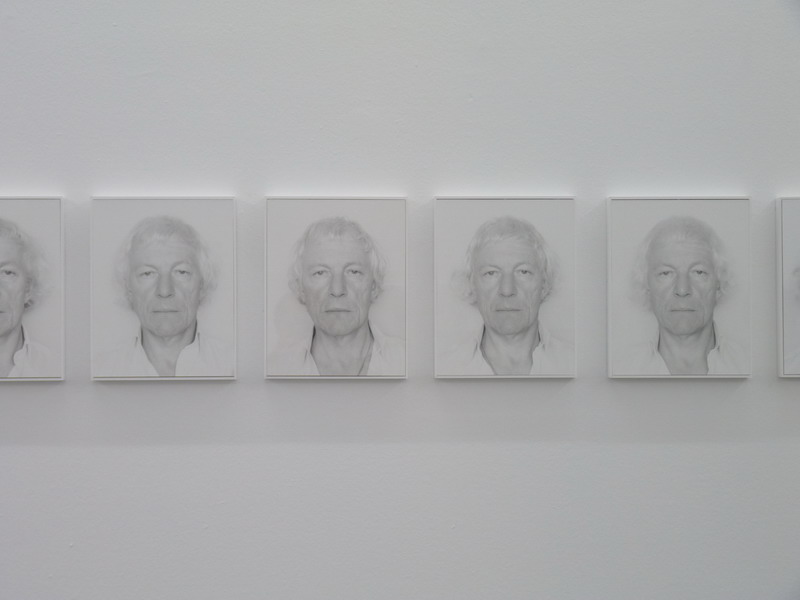
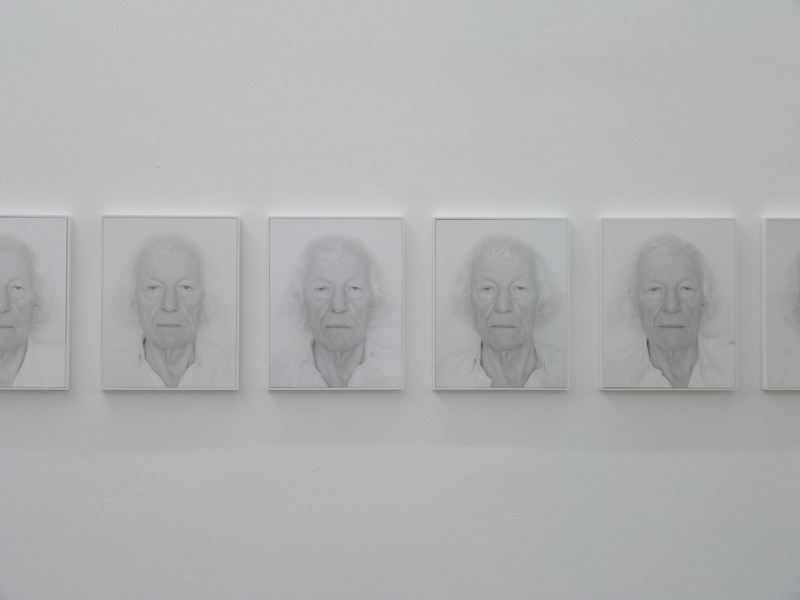
Roman Opalka: The Irreversible Mirror of Time – "Passage" Solo Exhibition was on view from September 4 to October 9 at the Yvon Lambert gallery in Paris and New York. Roman Opalka (born 1931), a Polish artist residing in France, is one of the most representative conceptual artists in Europe during the 1970s. Sharing a similar effect with the Japanese artist On Kawara, both present the state of time and space within a clearly programmed, systematic form, making time the core of their creative work. The very essence of life exists within the realm of time and space. This realm is found in Roman Opalka's endlessly repeated "number paintings."
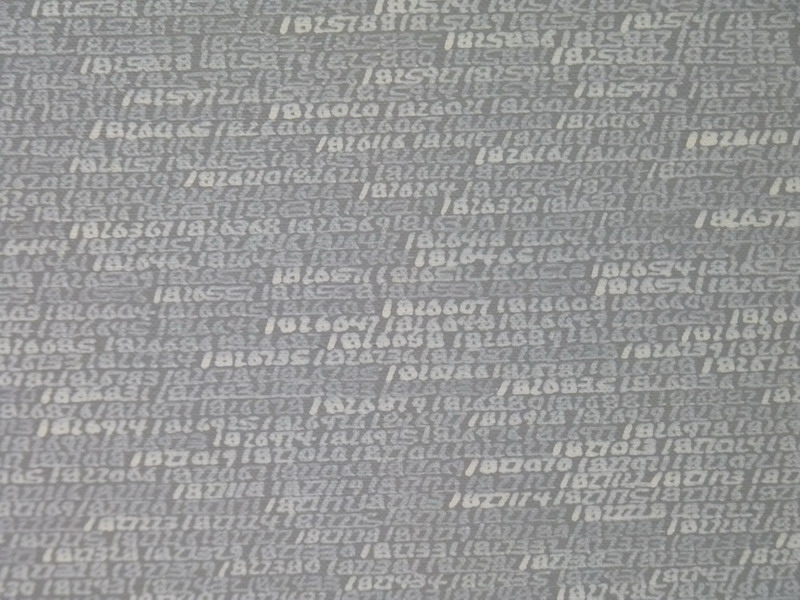
Since 1965, with minimal painterly action, the artist resolutely established his creative program. From then on, on monochrome canvases of the same size (196 × 135 cm), he writes Arabic numerals from "1" to "0" using only white paint. Each time, he dips his brush once to write Fibonacci-style numbers from dark to light, repeating this endlessly until the entire canvas is filled. The abstract, sensitive surface possesses a dramatic effect and tension, where the dizzying numbers become the language and symbols of painting. Roman Opalka declared: "I decided my entire creative plan from 1965 until the end of my life." Thus! The work is not only an expression of individual life but becomes Roman Opalka's irreversible mirror of time, simultaneously a concrete memory of existential action.
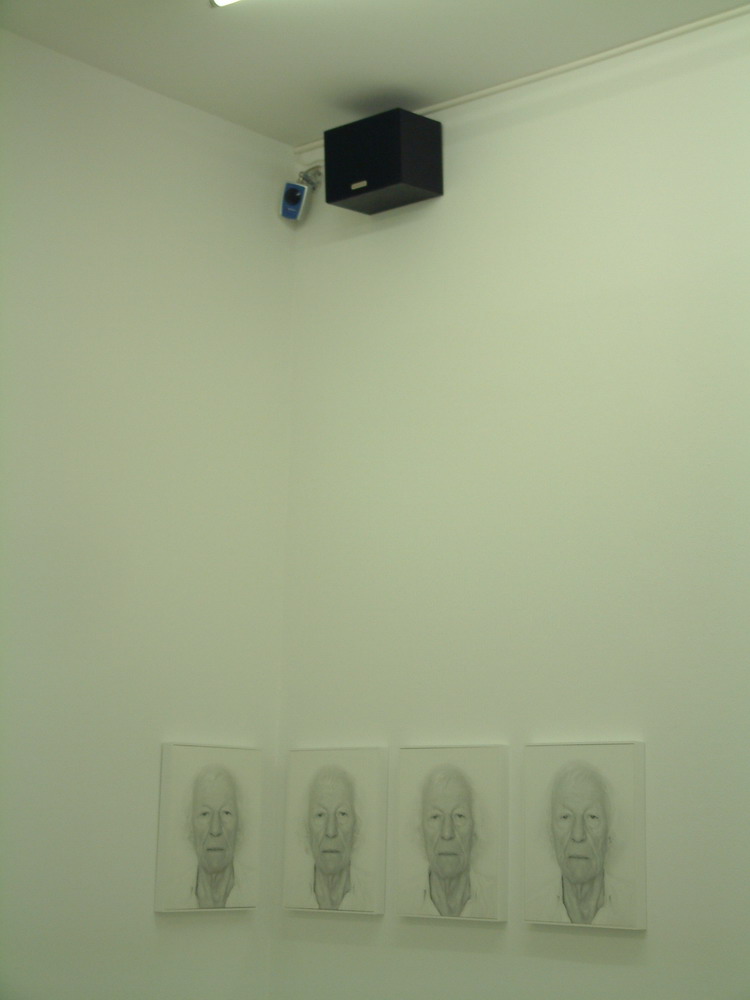
Starting in 1972, while painting, he also used a tape recorder to capture him speaking aloud the numbers he was writing, thus continuously documenting the act of painting (writing) and the will of artistic creation in each moment (sound). Furthermore, after each work session before leaving the studio, he took a frontal photograph (like a passport headshot), always under the same condition of wearing a white shirt. The number paintings, the number sounds, and the self-portraits all become the most authentic, immediate memory of the spatiotemporal state of his entire artistic life. Roman Opalka, with extreme consciousness, faces every moment and process of his artistic life, pointing to the "time" of each present moment. The artist, with his life, candidly accepts the challenge of existence in each moment of time, all of which is clearly presented in his extraordinary works.
His programmed process began (in 1965) by painting on a black canvas, adding one percent white pigment each year. As time passes, the gray tones will progressively brighten until reaching a white painting (that is to say, white on a white canvas), which is the completion of life.
This is even more prominently presented in the daily self-portraits, from dark brown hair to gray hair, and from full cheeks to a slackened face. Through these methods, Roman Opalka clearly grasps the passage of time and transforms time into images and paintings, revealing the artist's incomparable willpower and the program of life. In 1987, the artist wrote in "Meeting via Separation": "Time is in continuation and creation, time is in our forgetting, existence is simultaneously alive, yet often before death, it is in this very suspension that all living existence resides, it harbors a consciousness, a microcosm, existence already in that which outlines this unique fact. This awareness is an extension, an opening, it becomes broader in a world without exclusion of enjoyment, yet often like the ubiquitous concept of natural inherent life, in its flow, dispersion as with each one, for those problems to actually obtain and give a same visible reality, a homomorphism, this is not my exclusive possession. Then! People meet in the world that connects us" (Note 1).
Time: The being of life exists within time and space; all matter transforms in its operation. The process of being—birth and dissolution, existence and death—are all part of the universe's ceaseless flux. Death gives birth to life, yet life points toward death. Opalka's artistic creation directly points to the state of life facing death in creation; time becomes the rehearsal process of passionate creation until the completion of being. The artist wrote of this view of time: "To understand time, one must see death as the volume of the fact of life. The being of life is not completely, a state where it seems incomplete. The definition of existence is fulfilled through death. My creative concept is simple and complex like life itself, from birth and growth to death. The art of extremity allows me a life of ultimate adventure, in the extreme sensitivity of life. Clearly, the definition of life is through death, explicit death, becoming the tool for organizing the work. The answer that occurred to me: death is nothing but the tool of my concept, a definition under perfect subjectivity. My death is the logical proof and the passion of the work's completion. My final detail is what death completes, defines, ends, confirms. In this feeling of my logical verification, from within, I confirm a work through the limitless. The completion of the work is through that which is no more, only then is the work completed. Suddenly, in the answer that occurred to me, death is a creation. Roman Opalka lives in the completed state of subjective verification and sensitivity" (Note 2).
Color: Throughout his life, his radical creation adopted only the gray tones of black and white. The artist wrote: "Gray is the mixed body of white and black; gray expresses the consistency of color operation. It excludes duality and reveals the whole. Gray is universal; it contains all colors, operating in the image of the spectrum. Gray is neutral: I use the gradations of gray to allude to the true being of my time and years. Gray is not a symbolic color; for me, it becomes a visible mutation. Beneath this gray is my life: it is a contrast of indifference and cool-toned color; it is the color of my painting's sacrificial offering, through the guided demonstration of the concept, its mutation and time. At this extreme point, from local black fading to white on white, a surface of existence: color can become a sensitivity unto death" (Note 3).
Regarding Numbers: The artist uses numbers as the temporal vehicle and philosophical essence of his paintings, holding a unique perspective on numbers, writing: "The medieval monk Fibonacci explored an arithmetic progression that would approximate the imaginable fertility of rats, proposing: 1, 1, 2, 3, 5, 8, 13, 21, 34, 55, 89, 144, 233, 377, 610, 987, 1597, 2584 … etc., reaching 1,346,269 by the thirtieth term! His macroscopic progression is not for measuring the vibrant existence of humans. At the beginning of life, a child experiences accelerated growth: one year, two years, three years, four years, etc., doubling quadruply. Then, a more optimistic existence is in the process of time: stages of learning, adaptation, taking root, then reflection, finally wisdom. Consciousness is rooted in this optimistic existence and becomes aware of life's limits: wisdom meets its extremity. In my detailed progression: 1, 22, 333, 4444, belongs to the beginning of the preliminary details, 55555, is the end of the second act, yet to reach 666666, one must wait seven years after 55555. After reaching 666666 (six 6s), I pose the question: 'How much time to reach 7777777?' I understand that if all remains well, it would take thirty years to reach seven 7s. Facing the possibility of an existence in time, probably a whole life must be devoted to this type of counting, such that one might never reach eight 8s. 88888888 is the spatiotemporal limit of existence. Fibonacci's creation presses upon us; my macroscopic progression lets us understand that the number 7777777 has already reached a volume of spatiotemporal existence: numbers, by distinguishing measurement, encounter those limits; that is a kind of wisdom" (Note 4).
Note: From the 2010 "Passage" exhibition press release.