Roy Lichtenstein (1923-1997)
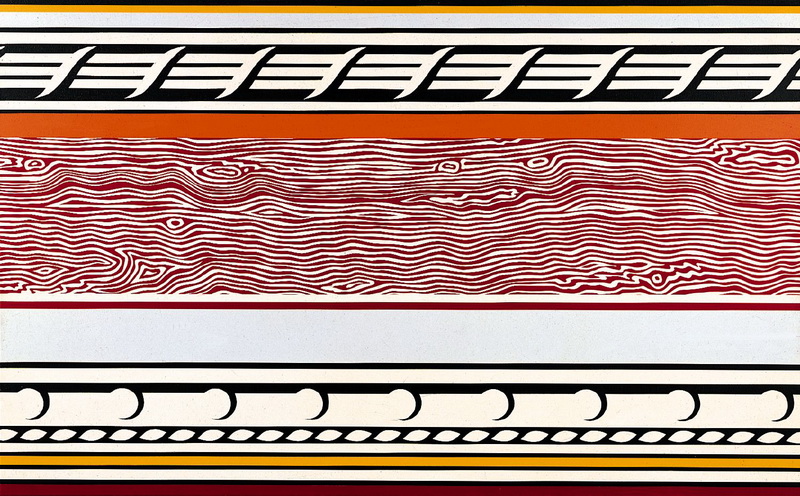
Entablature 178x284CM 1975 Collection of the Musée d'Art Moderne de Saint-Étienne, France
Roy Lichtenstein (1923-1997): Adopting a method of flat representational painting, he faithfully copied printing dots without omission. He once said, "Art is an organized concept," and added, "The external form taken when viewing a painting is irrelevant; what matters is how it constitutes a unified mode of viewing."
Lichtenstein's early works were based on popular comic strips, copying even the color dots without missing any. When asked about his work, he stated, "I think my work differs from comic strips, but I do not call it transformation... What concerns me is form. Ordinary comic strips lack the connotation of 'form' as I use that word." Comic strips indeed have modeling, but they do not expend effort to unify them more powerfully; our purposes differ. One aims to describe, the other to unify. My work and comic strips are indeed different, in every aspect, although some may see this difference as minute.
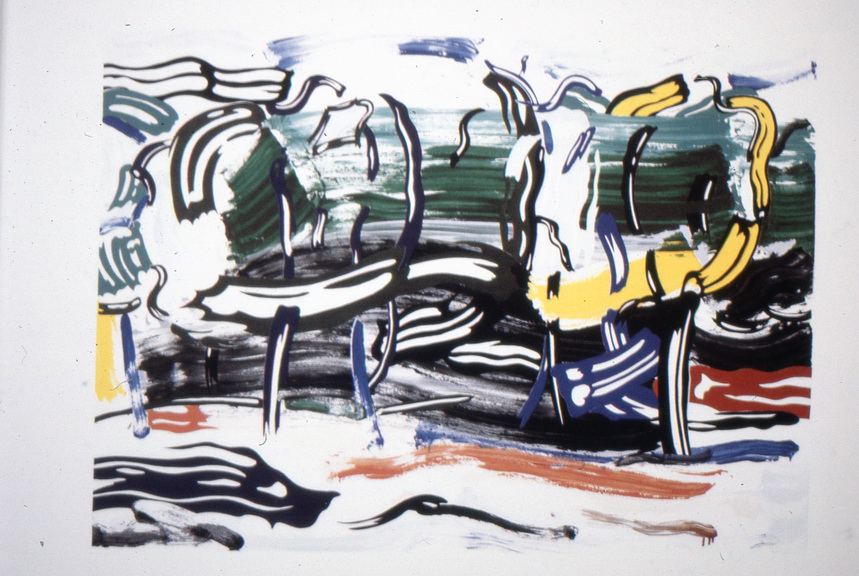
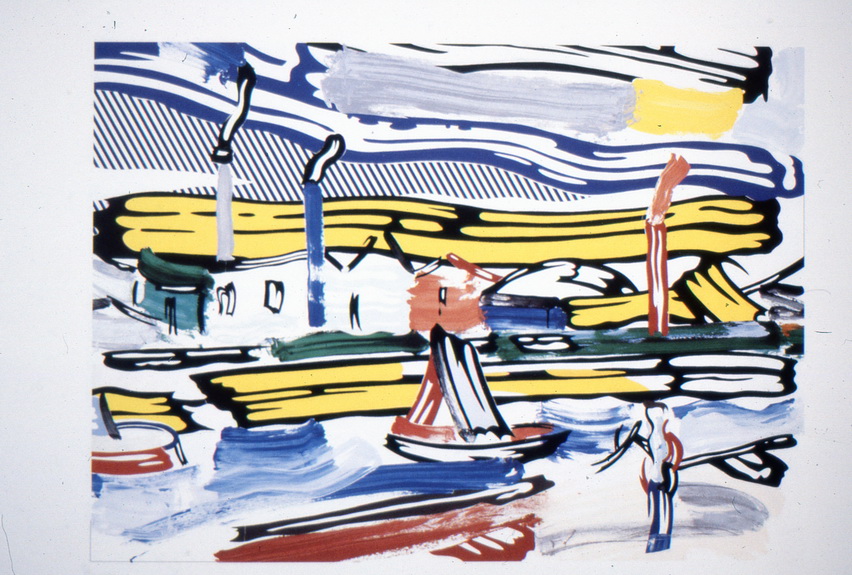
In other words, his imitation of comic strips was a strategic issue, a means of integrating the painting's surface. His other goal is clearly visible in a work called "Brushstroke": similarly copying without omission (even the printing dots in drawings). For Abstract Expressionist painters, such subjects might be completed with a single stroke; in this series of connected works, it is an experiment in "transposition," a term frequently appearing in Lichtenstein's talks, and also an attempt to encourage viewers to explore its value themselves.