The Three Major Challenges of Sarkozy's Current Reforms
(Image 1) The French President facing social challenges. Image from sarkozix.canclblog.com. (Image 2) Presidential candidates during the election campaign. Image from sarkozy2007.forumactif.com. Facing current global economic and political situations, and future energy and environmental changes unde
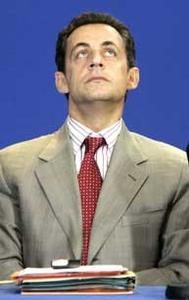
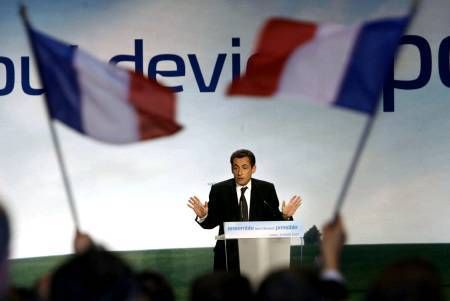
(Image 1) The French President facing social challenges. Image from sarkozix.canclblog.com. (Image 2) Presidential candidates during the election campaign. Image from sarkozy2007.forumactif.com. Facing current global economic and political situations, and future energy and environmental changes under globalization, France's political and economic reforms are imperative; there is no other way. All innovations will bring political and economic changes, shake social organizational structures, and thoroughly update the system. All innovations require decisive, strong perseverance and persistence to break through various difficulties. Undoubtedly, government reforms will face three unprecedented challenges.
First is the current uncertain economy in Europe. The euro continues to rise (1 euro compared to 1.43 dollars), making Europe's export market even worse, with soaring agricultural product prices. Added to this is the global financial crisis triggered by the US subprime mortgage loan, etc., which deeply affect France's economy. Growth has been slow for two consecutive quarters, with a growth rate of 2.25% set for the second half of 2007. Most economists consider this optimistic projection unrealistic, imagining that economic growth will drive the job market and purchasing power. September employment rates rose again, casting a shadow over the government's optimistic tone. France's unemployment population has always been the government's most difficult political and economic task (hovering around 9%). This not only becomes a major social burden but also deeply affects current reforms. Of course, President Sarkozy says it is not his fault; his achievements will take effect in 2008.
Special retirement systems, social insurance, university system reforms, etc., have all triggered resistance in French society. All trade unions have indicated opposition to the special retirement system. Social insurance has caused widespread public resentment, widening the gap between rich and poor. Many medicines are no longer reimbursed, moving towards a private medical insurance system. In university system innovation, university economies will move towards independence and autonomy, resembling American universities. The president announced halving civil servants to save national expenses (France's national expenses have always been in deficit). After autumn retirements, replacements will not be made, and 22,700 personnel will be asked to leave, with education units accounting for more than half. Railway and subway bureaus are dissatisfied with the government's approval of minimum service laws. Discussions on the only contract for current employment with various trade unions have led to dissatisfaction among civil servants, teachers, workers, trade unions, lower-class citizens, and students regarding government innovations that shake the middle and lower social classes in France. A feeling of an impending storm has formed. Trade unions for special retirements have prepared demonstrations (October 18), followed by civil servants, especially teachers, students, and the middle and lower classes, who are ready for upcoming social resistance, bringing new opportunities for the left-wing to regroup.
One of the three major challenges of Sarkozy's current reforms is himself. Elected to fulfill his campaign promises, it is understandable that the president became more assertive. From the day he was elected president, he appeared in mass media every day, like a new emperor—Napoleon—or more like a monarch—Louis XIV. Every move of the president became major news in mass media. It seemed as if the president had to shape his image or promote his achievements through mass media, becoming a super celebrity (the prime minister and heads of government disappeared). What happened today, how many kilograms of grapes he ate, how much juice he drank, where he went on vacation, who he was with. Even more wonderfully, the first lady also stepped out to handle international affairs such as the Bulgarian nurses' case in Libya. Whether intentional or unintentional, whether authoritative showmanship or image polishing, at least the first lady solved a seemingly arduous task. All these trivial matters satisfied the French people's voyeuristic desires or became topics for gossip. Anti-Sarkozy groups declared refusal to watch mass media, hoping to let people have some peace and asking mass media to stop "fooling the people." The president on the front line was also vocal, eager to fight for his campaign promise commitments, quickly completing four laws: University Law, Minimum Service Law, Recidivist Law, and Tax Law. This overly exposed president caused public resentment and became a handle for opposition criticism. Even his friends felt it was too heated and seemed a bit off. But the assertive president still indulged himself. The consequences of this excessive manipulation of mass media might eventually bite back. Everyone would question: Are all these promotions really for France?