Subodh Gupta "Idol Thief" Solo Exhibition
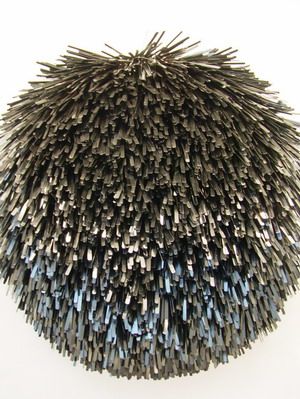
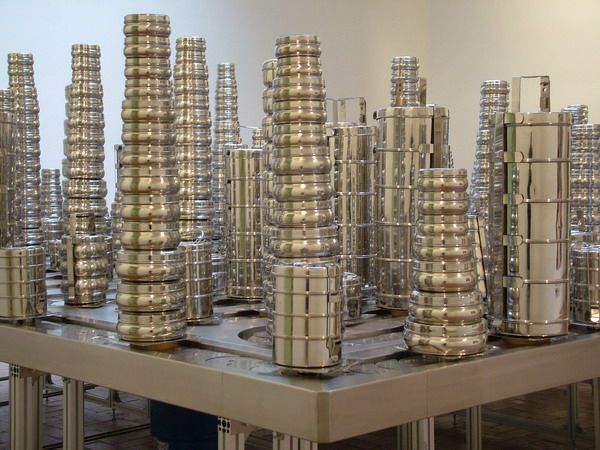
(Top) Block Thing Object-Sculpture 2007 230x60x220 cm. (Bottom) Monumental Installation - Silk Road 2007 200x480x400 cm.
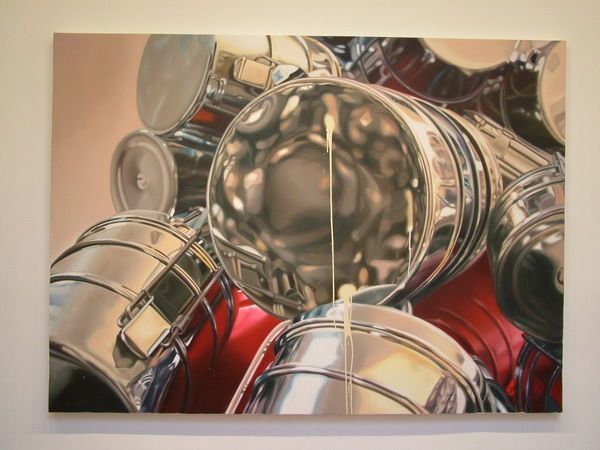
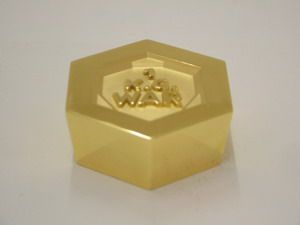
(Top) Idol Thief II Painting 2007 168x229 cm. (Bottom) One-Kilogram Hexagonal Block 2007. Subodh Gupta's "Idol Thief" solo exhibition runs from October 4 to November 10 at In situ-Fabienne Leclerc Gallery. Born in Khagaul, India, in 1964, Subodh Gupta is one of the most representative contemporary Indian artists. Riding the wave of globalization after the Chinese art boom, Indian contemporary art has surged ahead. A surge of interest in India accompanies economic growth and modernization; the rise of Silicon Valley industries and global services drives this trend. Economic development in India and China fuels today's global economy, becoming its engine. This economic shift brings about the development and prosperity of contemporary culture and art, creating a unique, eye-catching global style with extraordinary potential and possibilities, dominating the current art market within localized global styles.
Subodh Gupta’s works are now ubiquitous (New York, Berlin, Paris, London, Delhi, etc.). He has participated in major international exhibitions, such as the opening show at Palais de Tokyo in Paris, François Pinault’s collection exhibition featuring the world’s most influential contemporary art collectors, and this year’s Venice Biennale. He is currently the most visible and representative figure in Indian art. His art begins with everyday elements, particularly Indian kitchenware, often referencing traditional Indian life. From this, he develops seemingly ordinary object-sculptures. The overall aesthetic resembles the complex flavors of an Indian meal, carrying an extraordinary magic within alchemical simplicity, full of poetry and unusual imaginative space, standing out distinctly in today's localized global art scene.
This is another grand event following his solo exhibition at the same gallery last year. This year’s theme, "Idol Thief," is highly literary and poetic. The artist intends to invert mythology, endowing these mundane objects with sacred volume. He explores diverse mediums: painting, sculpture, installation, video, and performance art. This solo exhibition features three series, centered on the "Silk Road" object installation. Gupta stacks numerous traditional Indian stainless steel vessels by size into tower-like formations, displayed directly on Japanese buffet conveyor belts. These objects continuously circulate on the platform, metaphorically reflecting the uniformity of global dining culture.
The eye-catching "Block Thing" object-sculpture on the wall is a semi-elliptical structure built from numerous L-shaped stainless steel pieces, emphasizing the juxtaposition effect of objects and volume, enhanced by light and shadow for a poetic beauty. Two paintings titled "Idol Thief" depict the light and shadows of kitchen stainless steel vessels with exquisite technique, being both figurative and abstract. Finally, in the small exhibition space, a one-kilogram hexagonal gold block is displayed on the platform. Is it gold or art? Does social value come from traditional measurement or appreciation? These questions directly challenge today's global consumer society.
His most stylistic works construct and install various objects using numerous kitchen stainless steel items (pots, plates, bowls, ladles, metal buckets, etc.). Within mysterious figurative and non-abstract forms, they evoke or display connections to the many symbolic meanings of traditional Indian rituals. In this global cultural tide, Subodh Gupta’s works are not only rooted in local culture but also look to the world. He attempts to expose the rapid homogenization of contemporary Indian urban life. This powerful pressure crosses over the impact on local traditional society and objects. This seems to be an inevitable path for emerging economies entering globalization and a necessary result of modernization, transforming entire social structures and traditional local landscapes (as clearly seen in the conflicts and contradictions within Chinese society).