Thomas Hirschhorn "Eternal Flame" Solo Exhibition Notes
Swiss artist Thomas Hirschhorn "Eternal Flame" entrance
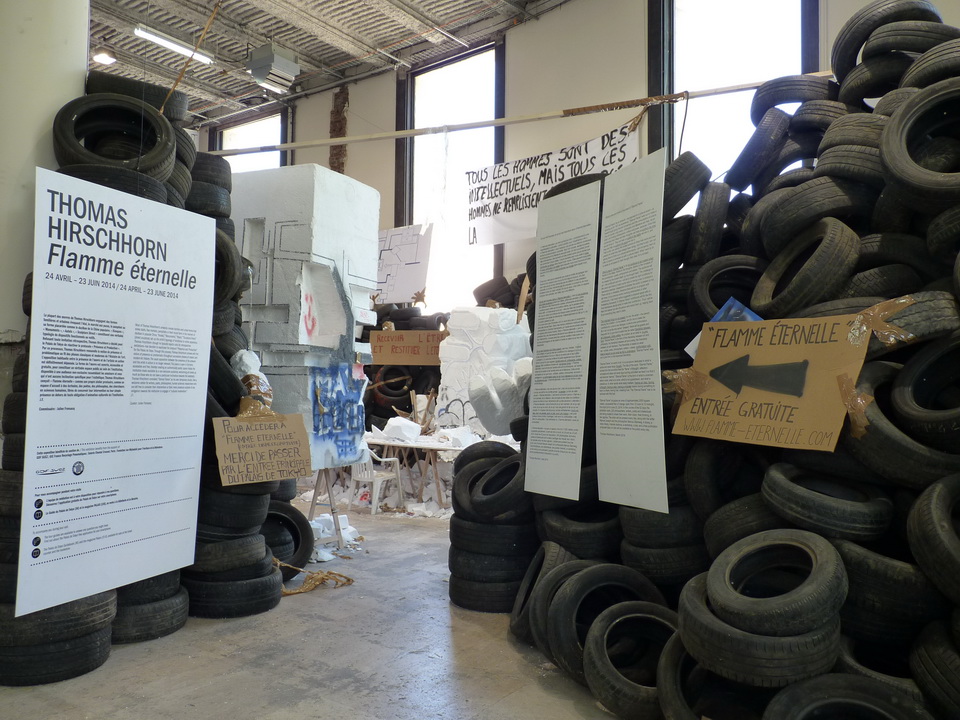
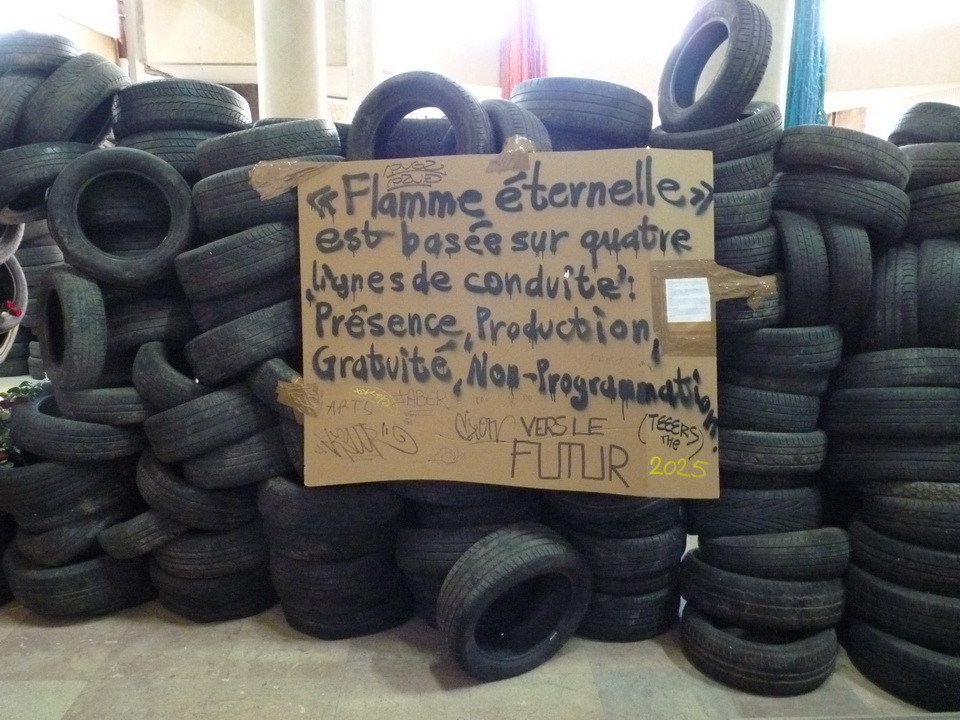
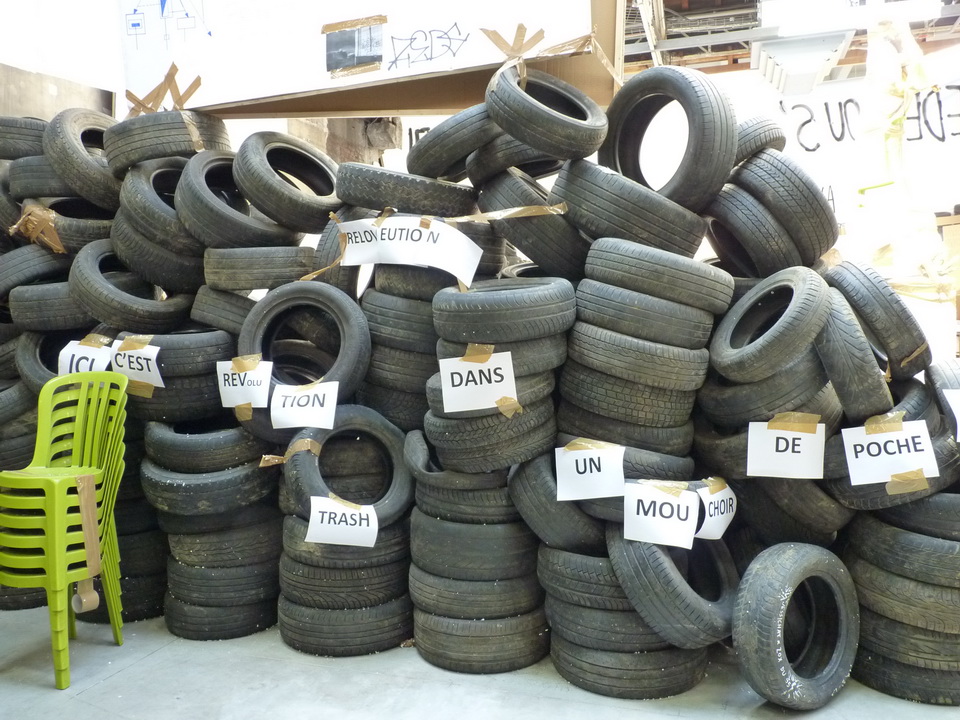
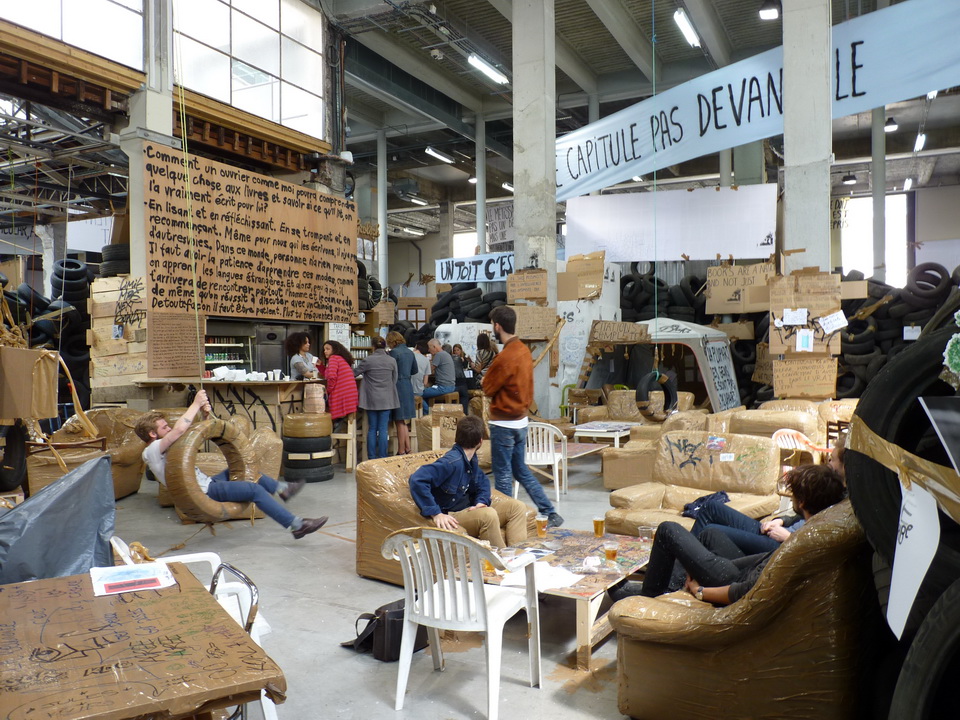
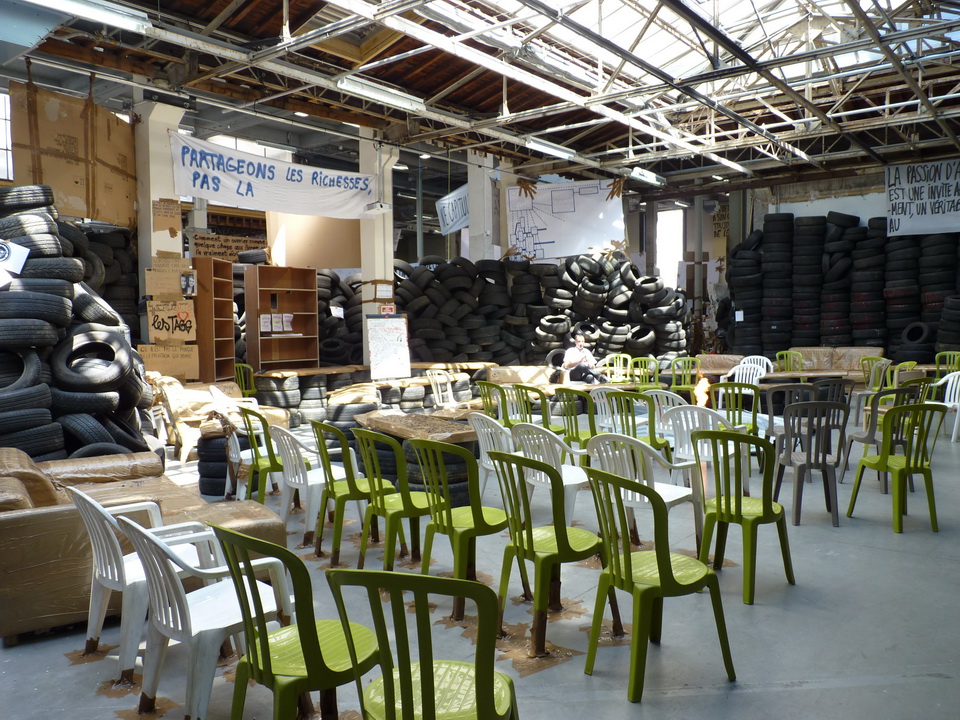
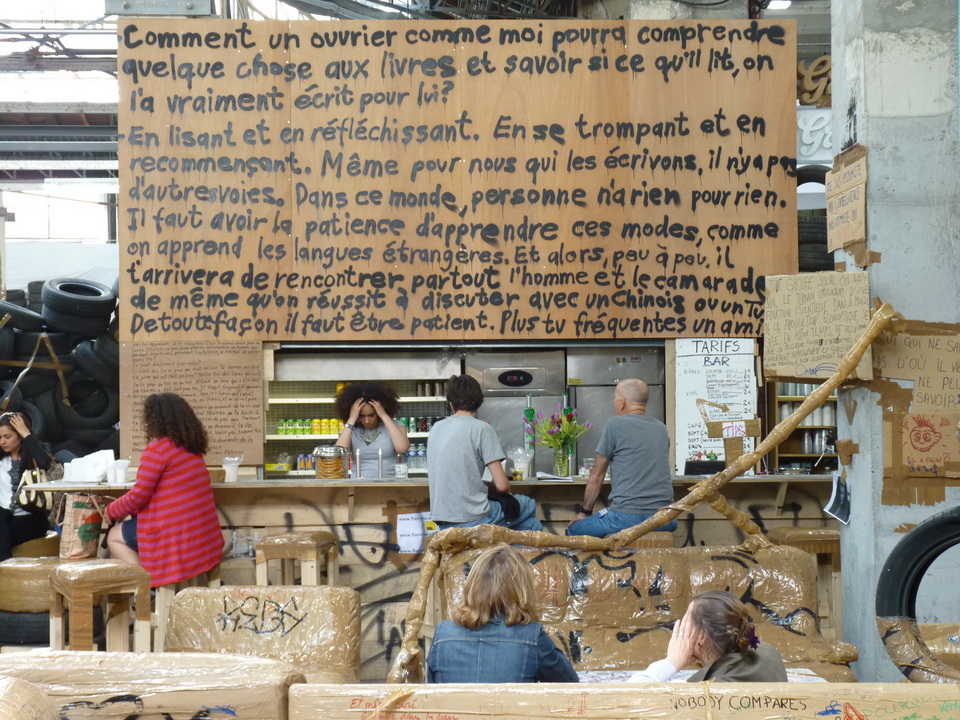
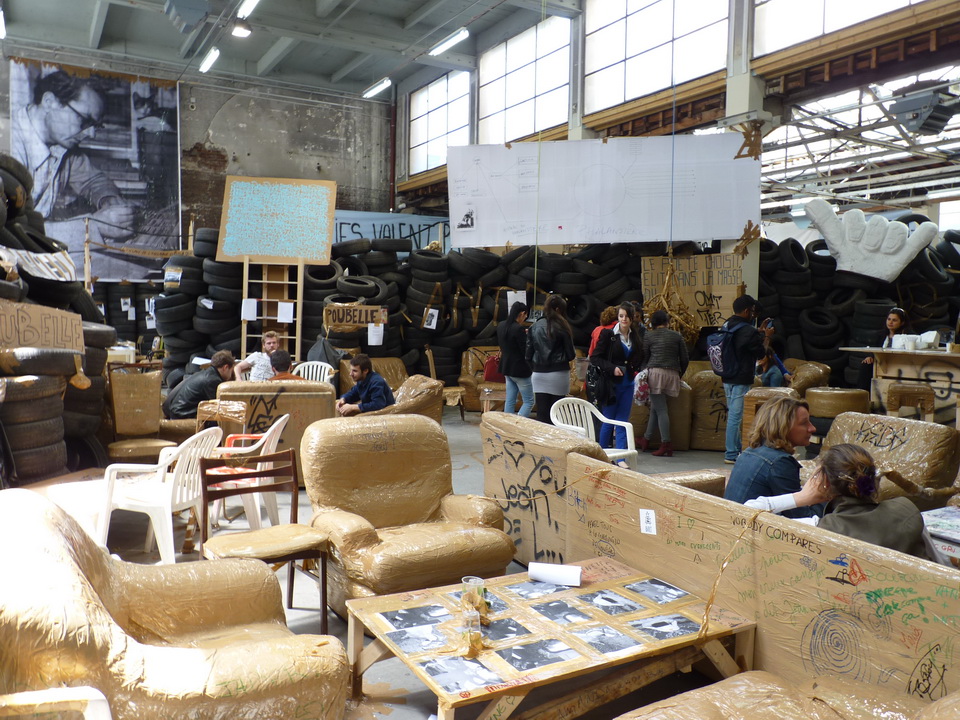
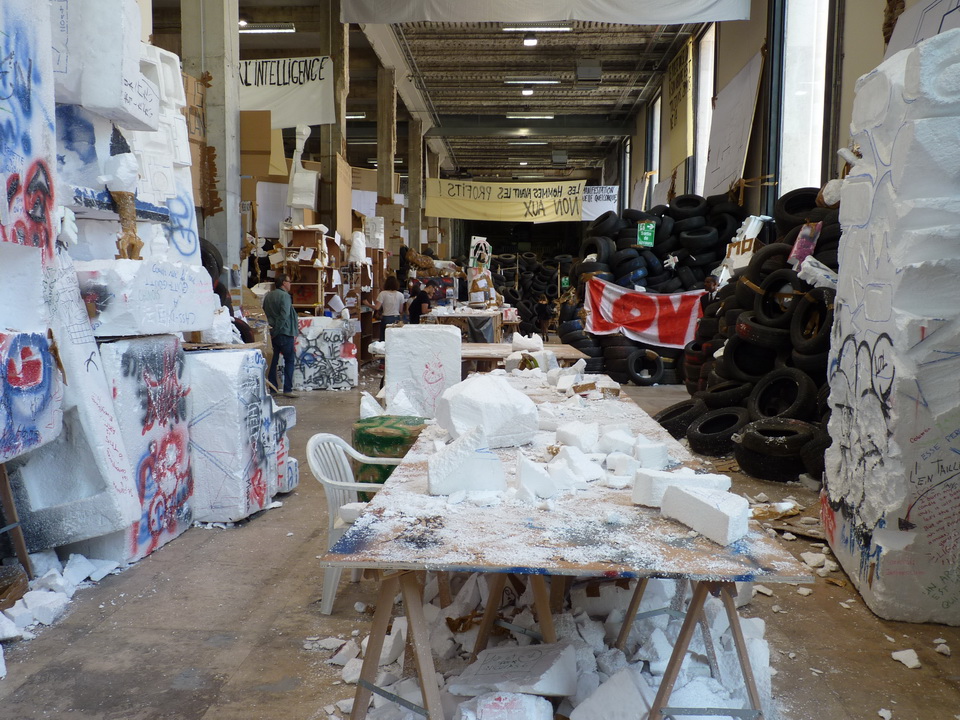
Text and images by Chen Chi-Hsiang. Venue: Palais de Tokyo, Paris. Swiss artist Thomas Hirschhorn's "Eternal Flame" is an exhibition under the annual major theme "Weather of States" at the Palais de Tokyo. Thomas Hirschhorn (born 1957) is one of Europe's most representative contemporary artists; his creative discourse is built on explorations of current politics, society, economy, and manufacturing. This solo exhibition features a participatory spatial installation where the entire venue is constructed from stacked tires. The space is divided into several areas, with slogans and mottos regarding globalization, politics, society, humanities, and human rights hanging everywhere. Each slogan reflects the current situation but is written only halfway, such as "United in resistance…", "Share resources…", "No democracy without…", "Many people are not just many people," etc., seemingly telling people that the revolution is not yet complete and urging continued struggle. The entire exhibition is grounded in current politics, society, and humanities, becoming a platform for public discourse.
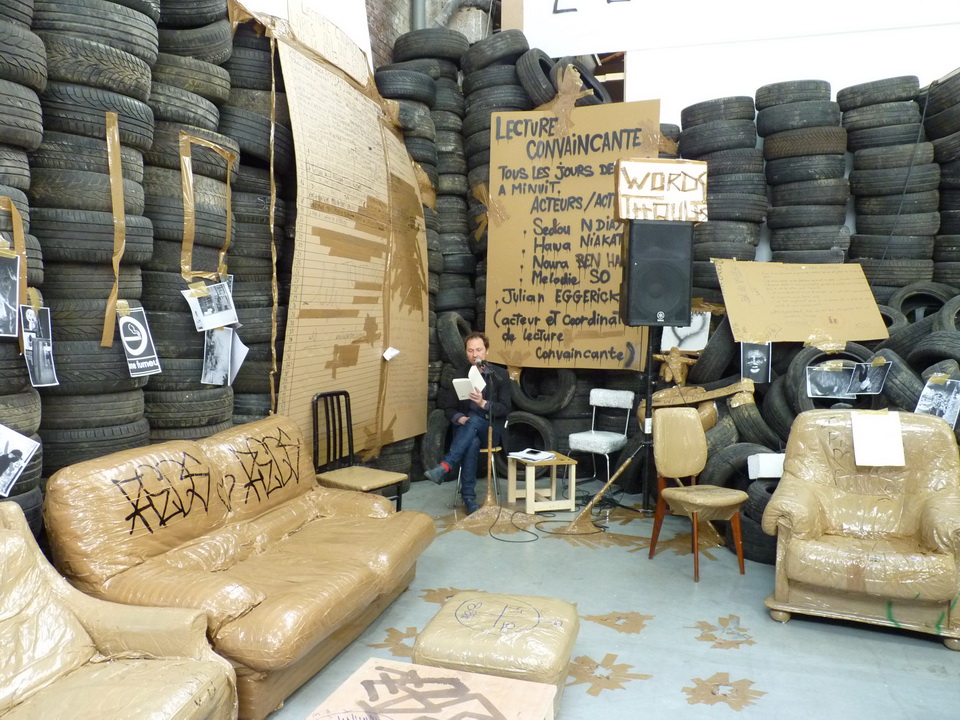
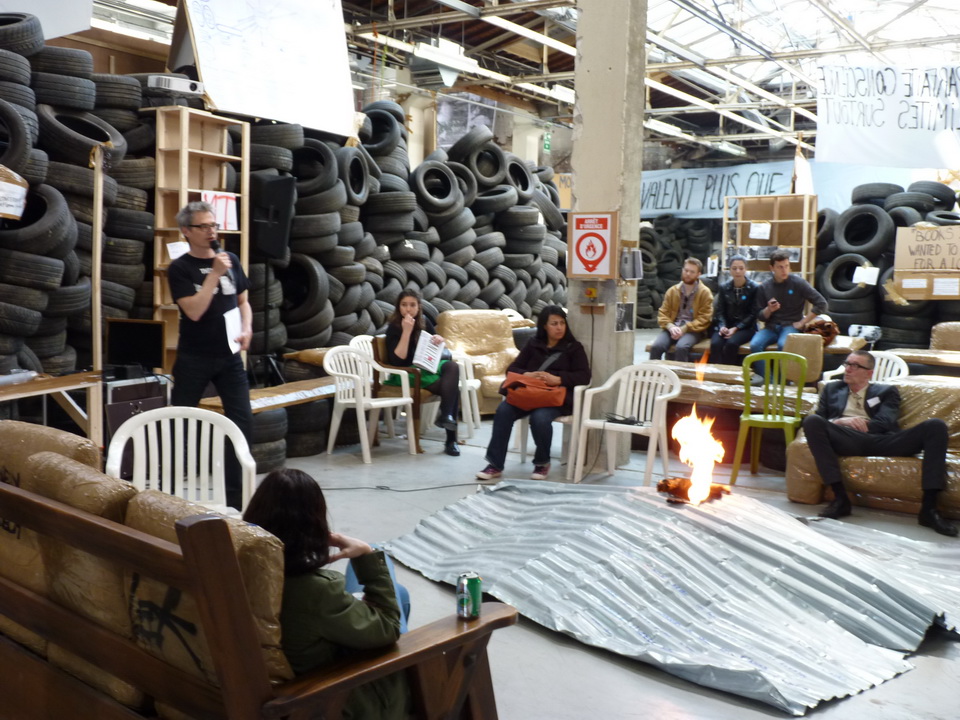
The tire stacks forming mountains in "Eternal Flame" immediately evoke demonstrations during social, agricultural, or student movements, where protesters burned tires to form walls of fire against riot police, symbolizing the artist's spirit of resistance. Especially in this era of globalization, where neoliberal transnational capitalism scours resources everywhere, the greed-induced social unrest and political collapse affecting human rights, or various problems caused by political corruption, are highlighted. "Eternal Flame" is constructed around four aspects: Now, Product, Free, and Non-programmatic. The exhibition invited nearly a hundred scholars and experts, including philosophers, sociologists, anthropologists, musicians, poets, and writers, to participate in the discourse. Experts and scholars shared their insights with the audience daily; poets sang poems in corners, or audiences raised issues for discussion with scholars around the flames or bar counters, creating a philosophical café.
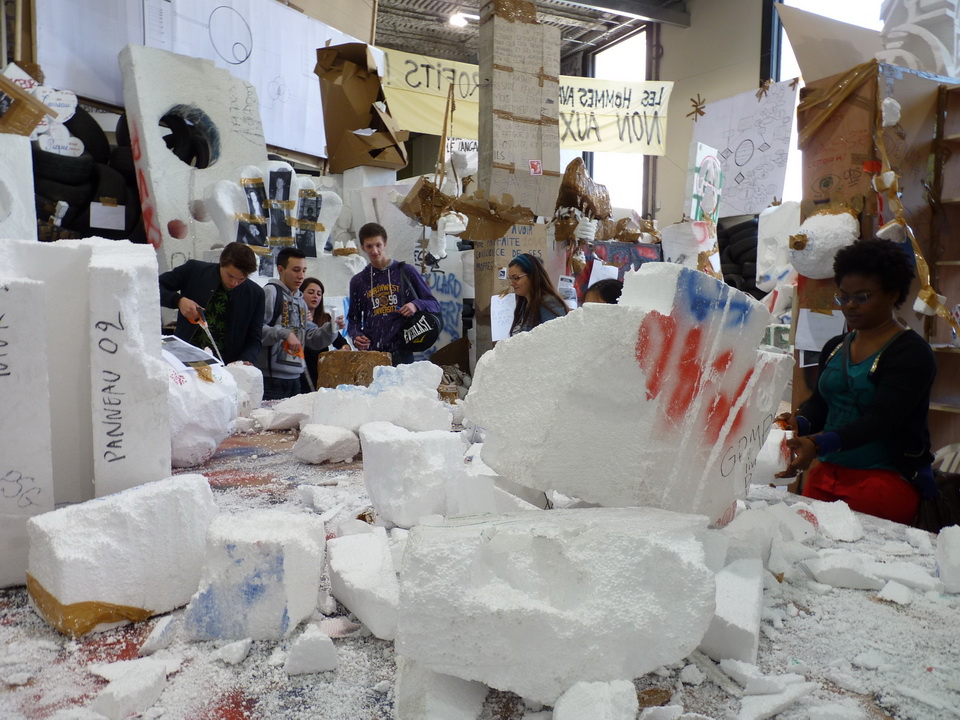
Furthermore, audiences can directly participate in creation. In the Styrofoam area, everyone can create statues in their minds, or in the editing area, write down your views on the current world. Regardless of being left-wing or right-wing, radical or conservative, everyone has the right to express their political and social views, which are published weekly. Anyone who likes can take the publication home to read. This resembles the "Free University" or "Direct Democracy" concept attributed to the legendary German artist Joseph Beuys. The exhibition acts like a grand, open public discourse platform. Is this kind of public, open democratic process a utopia? Or can utopia only be practiced within the limited boundaries of the exhibition area, pointing to another grand imaginative world constructing Babel? What role and function does art play in today's reality where art is like reality and reality is like art? Perhaps art becomes a super consumer good, like any product in the material world. Where is art heading? Once art enters the market, it becomes a consumer good. Fortunately, what I want is perspective and aesthetics; there is no need for me to understand anything else. Enjoying art in the moment, enjoying the beauty of power, is enough to satisfy my heart.