Thomas Schutte Solo Exhibition
(Top) Striking "Hund Series III" ceramic sculpture, humorous human-dog figures 177x80x122cm, 2004, with body sketches behind. (Mid-left) Striking "Zombie III" bronze sculpture 84.5x75x99cm, 2007. (Mid-right) Striking "Zombie I"...
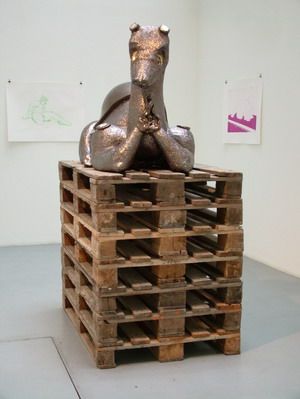
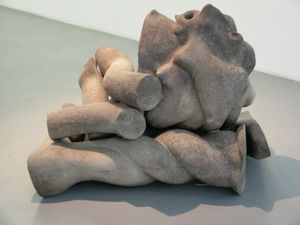
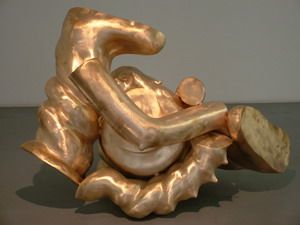
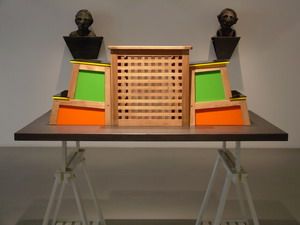
(Top) Striking "Hund Series III" large ceramic sculpture, depicting humorous human and dog figures, 177x80x122 cm, created in 2004, with body sketch works behind it. (Middle left) Striking "Zombie III" sculpture, 84.5x75x99 cm, 2007, bronze. (Middle right) Striking "Zombie I" work, 104x145x112 cm, 2007, bronze. (Bottom) "Ika Variations - Kindergarten", 143x100x150 cm, 2007, and behind it the sculpture is the "Gnomes" series of twelve head sculptures. The Thomas Schutte solo exhibition runs from April 27 to June 21 at Nelson-Freeman Gallery. Born in 1954, Thomas Schutte is the most representative artist among the new generation of German sculptors in the 1980s; his diverse development and advancement of neo-figurative forms are evident. After 25 years of creation, he finally received the honor of Best Artist Award at the 2005 Venice Biennale.
Looking at Thomas Schutte's diverse explorations, they can be categorized into three main creative directions: interest in imaginative human figures, rigorous architectural models, and sensitive paper-based works. His creations constantly update and seek highly personalized imagery references, often quite novel and striking, such as the "Capacity Men" sculptures at the 2006 Berlin Biennale. In this new solo exhibition in Paris, Thomas Schutte exhibits three categories—sculptures, architectural models, and paper-based works (prints, sketches, and watercolors). Upon entering, one is attracted by three "Zombie I-II-III" sculptures. These rather abstract forms, upon careful observation, gradually reveal themselves as deconstructed, reassembled, and piled-up versions of his outstanding 2004 "Great Soul" humorous large statue. It is as if the Great Soul statue has not yet fully taken shape; the sensitive human figure undergoes a qualitative change through deconstruction until its appearance is unrecognizable. This creative method is not mere repetition; in 2005, he had already separated the body of the Great Soul as a new work.
There is also the striking "Hund Series III" large ceramic sculpture, depicting a sensual tripartite form. Upon careful observation, it reveals humorous human and dog imagery: a contemplative dog head, hands crossed in micro-gestures, suddenly wearing a steel helmet (shell armor), squatting on a pedestal stacked with wooden cups, full of imaginative space within the humor. The wall series of women's portraits on paper clearly references modern sculptors like Maillol and Henry Moore. On the walls of the second-floor exhibition room, the artist presents for the first time the "Gnomes" series of twelve head sculptures. Within traditional expressionist sculptural imagery, these comical characters with expressive faces almost resemble cartoon aesthetics, akin to Dumont’s statues.
In the center of the exhibition room, two exquisite modern architectural models are displayed, titled "Ikea Variations." Modern buildings in geometric forms, rendered in cold and shabby tones, use small-scale models of ordinary people within tiny utopian architecture to metaphorically represent social events. Through titles reminding viewers of "Divorced Families" and "Kindergarten," various current social phenomena are presented. Clearly, Thomas Schutte's artistic development begins from classical concepts such as nature, politics, society, and spatiotemporal (postmodern) cultural backgrounds, flowing into themes and social relations under various possible conditions. Therefore, his choice of subjects often carries a sense of satire and criticism. The artist says, "I don't care much about architecture; it simply appears as a theme, actually serving as a substitute for nature, because working directly with nature is so difficult. Otherwise, I could excellently paint those trees and a figure in front of a building."