Tomas Saraceno's Solo Exhibition "On Air" on Natural Ecology
Tomas Saraceno "On Air" Solo Exhibition: Entrance
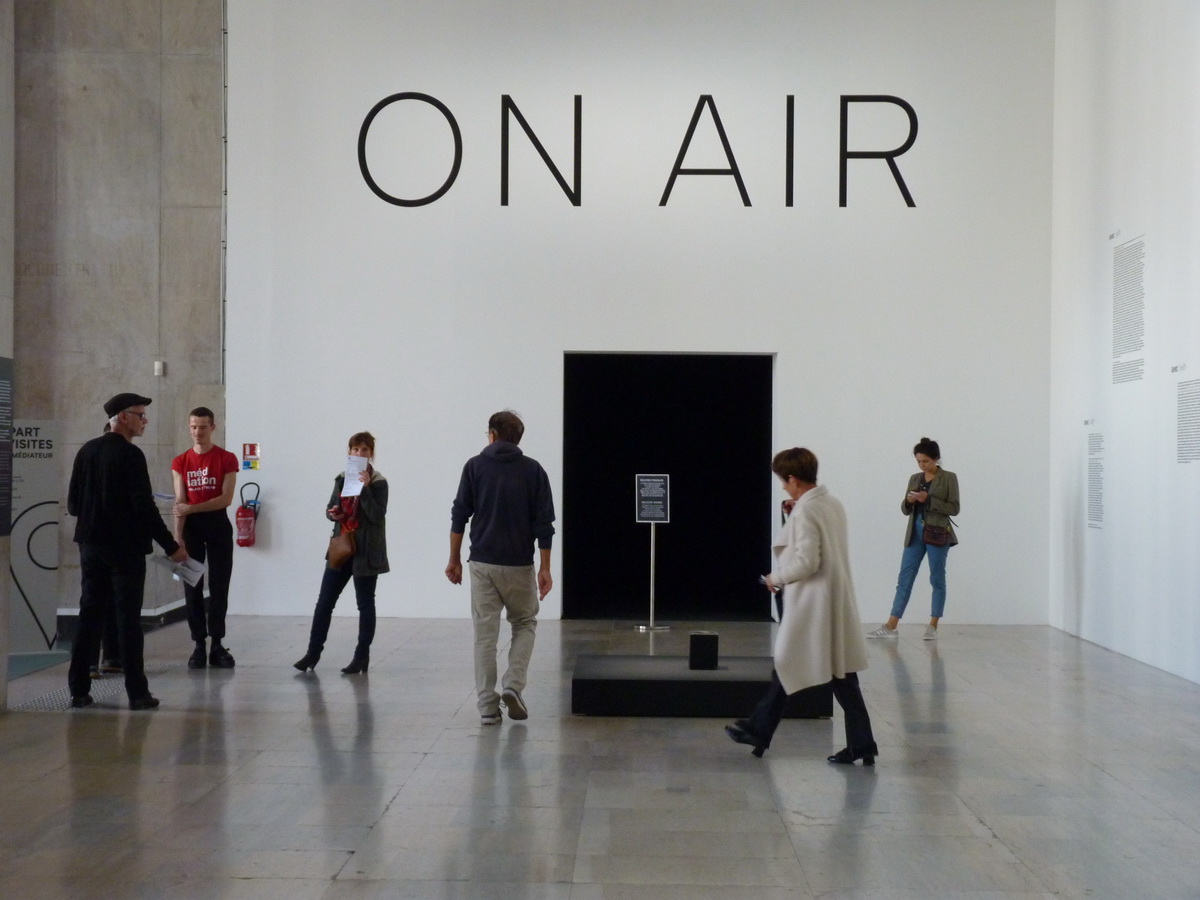
Text/Photos by Chen Chi-Hsiang Time: October 17 to January 6, 2019 Location: Palais de Tokyo Have you ever seen spiders and spider webs in outdoor areas or under eaves? Are spiders artists? Is a spider web art? Who knows, have you never heard the delicate sounds of spiders?
This exhibition, full of curiosity, treats these spiders as complete participants in the show.
Unexpectedly, at the Palais de Tokyo's "On Air" exhibition, one sees an entire venue filled with spider webs (woven by various spiders within the Palais de Tokyo), and can hear the wonderful sounds of the spiders while seeing numerous anecdotes about them.
This is the masterpiece of Argentine artist Tomas Saraceno, a spider expert.
Using spider webs to elaborate on the interrelationships of human existence and the close connection between humans and nature coexisting with the natural environment, the inspiration from spiders or spider webs also subtly tells the world, as Kandinsky said: "When human culture development produces a crisis, it must return to nature and relearn from nature." Born in 1973 in San Miguel de Tucumán, Argentina, into a family with a scientific background, Tomas Saraceno is an Argentine contemporary artist living in Germany who has participated in NASA programs.
He is famous for his spectacular networks woven by spiders; his thinking and creative approach are close to utopian, always constructing his works beyond imagination impossibilities.
His works are true praises of nature, blending poetic forms, architectural dimensions, and scientific structures at the crossroads of disciplines. His reflections focus mainly on urban lifestyles and how to view a beautiful new future differently.
After obtaining a Master's degree in Architecture from the National Academy of Fine Arts in Buenos Aires, he continued his studies in Europe, attending Städelschule in Frankfurt, and then IUAV in Venice for further studies in art and architecture.
In 2007, he affirmed his creation with spectacular installations like Poetic Cosmos Of The Breath. In 2009, he participated in the 53rd Venice Biennale. At the time of COP21 in 2015, he displayed his major work Aerocene, expressing his vision for the environment.
Along with artist Olafur Eliasson, he is a leading soul figure in contemporary environmental art.
His entire artistic creation crosses boundaries, integrating architecture, science, natural sciences, and environmental space exploration, built upon natural ecology, demonstrating environmental awareness, innovation, and creativity in global movement visions.
The "On Air" exhibition is like a movement ecosystem, conducting multiple scientific explorations and arrangements among humans, organisms (spiders), and nature (air, wind, sunlight, cosmic dust, stones, etc.).
Between nature and science, humans and non-humans, life and non-life, poetry and imagination, the works reveal an interconnected unified world, the fragile and transient rhythms and trajectories that unite these worlds.
This exhibition is established thanks to the multitude of these existences, living and non-living, elaborating on the natural ecology of cosmic coexistence.
His creation is divided into two main axes: the dramatic "spiders" and "spider webs," intending to learn from nature through spider webs and imagine a harmonious world of coexistence.
And "Aerocene," imagining new ways to live in the air, creating possibilities for a beautiful new world without fossil fuels. Poetically rethinking the world we inhabit, and re-evaluating our way as humans.
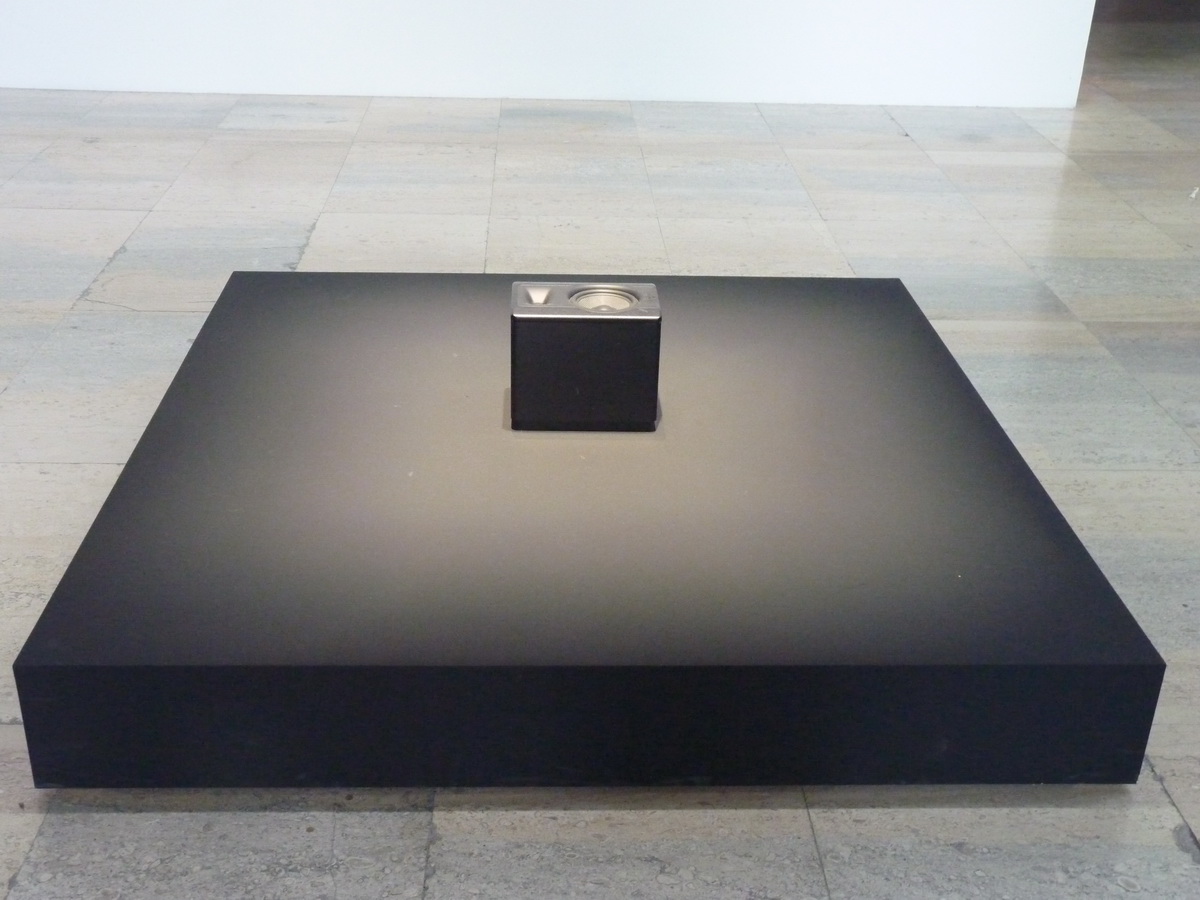
Inspiration from the beauty and mystery of "spiders" and "spider webs": Upon entering, on a dark coffee-colored speaker display platform is "The Horizon of Events": Have you heard the trembling sound of a spider? This is truly a cosmic event, its vibrations recorded live.
Only in silence can one hear the vibrational sounds emitted by a holocnemus pluchei spider residing in the basement of the Palais de Tokyo. Through imagination, people might feel their presence and the possibility of conversing with them.
This work reveals the perceptual range of other species, the sensitivity of other species in the cosmic web; we are all part of it.
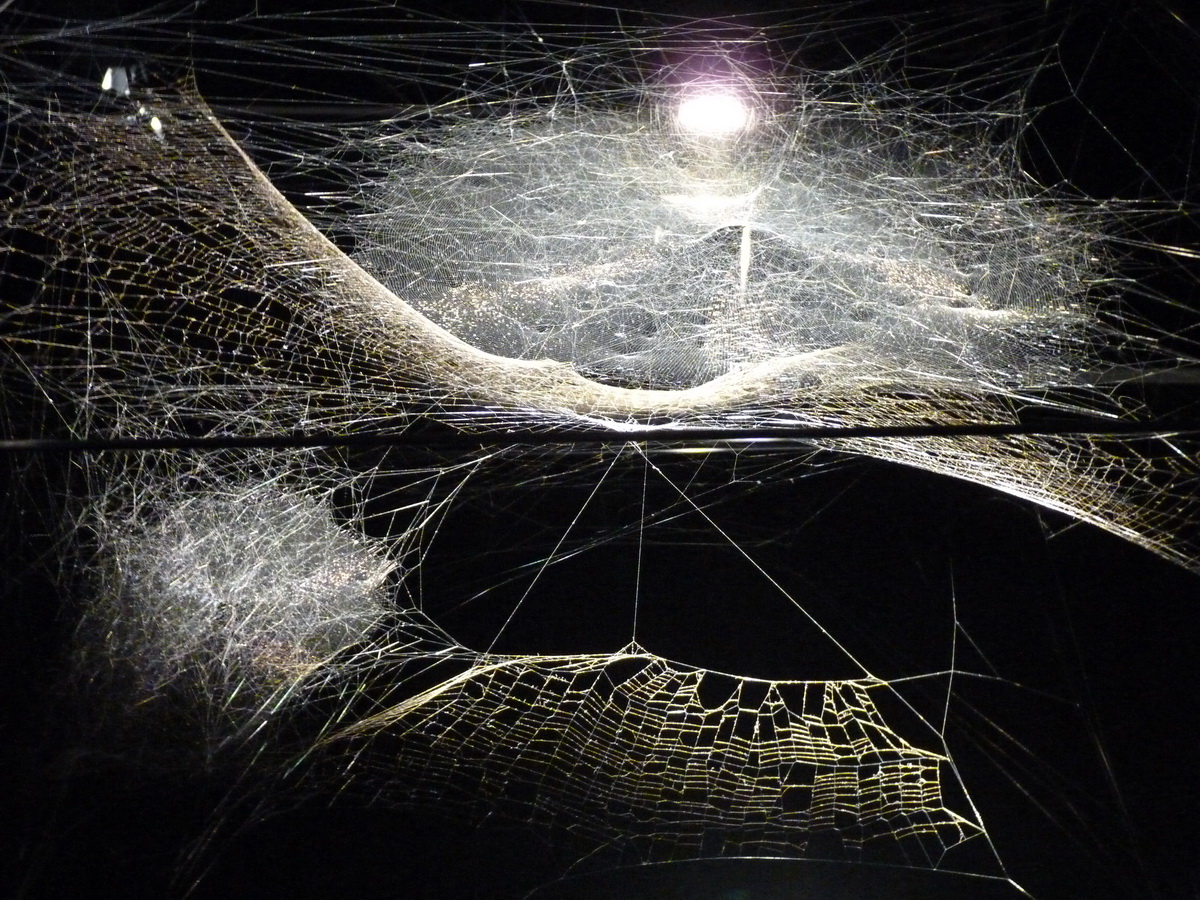
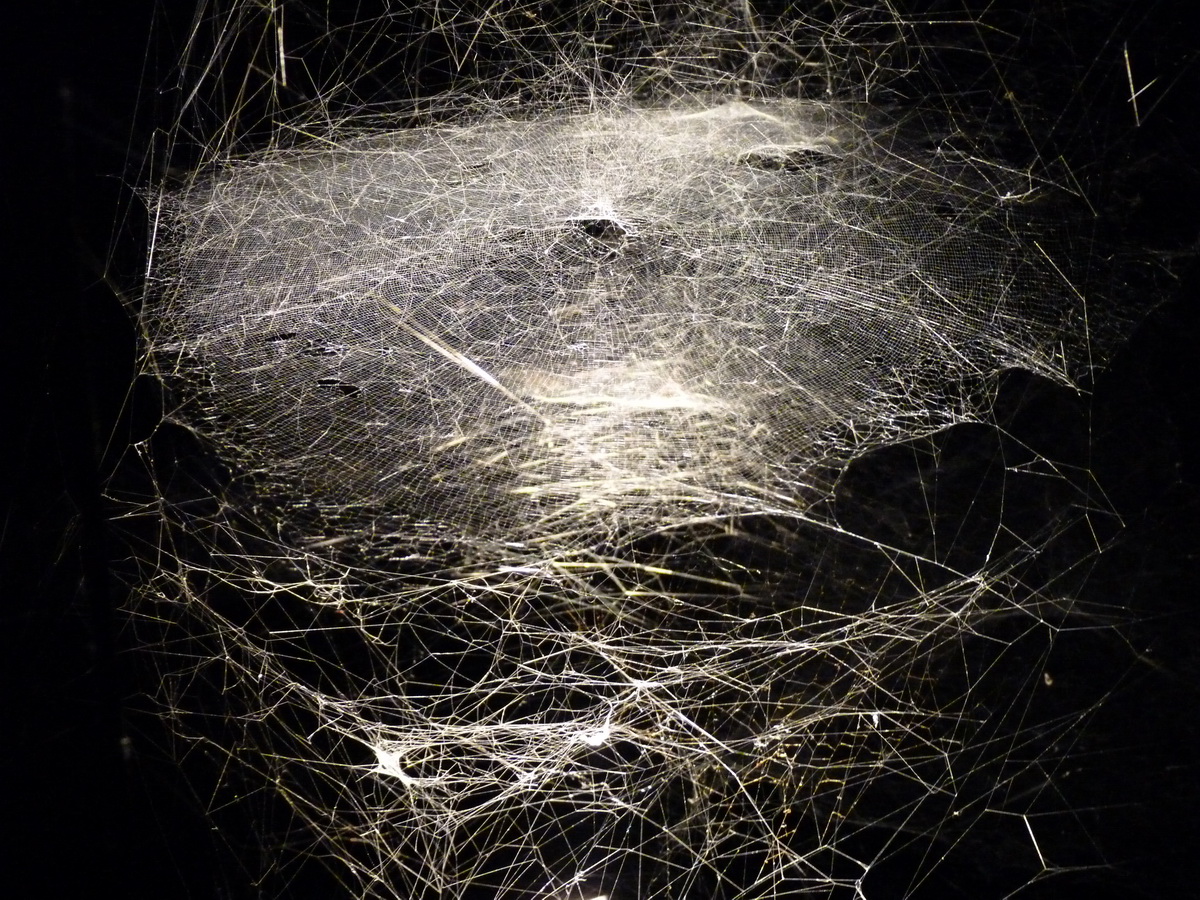
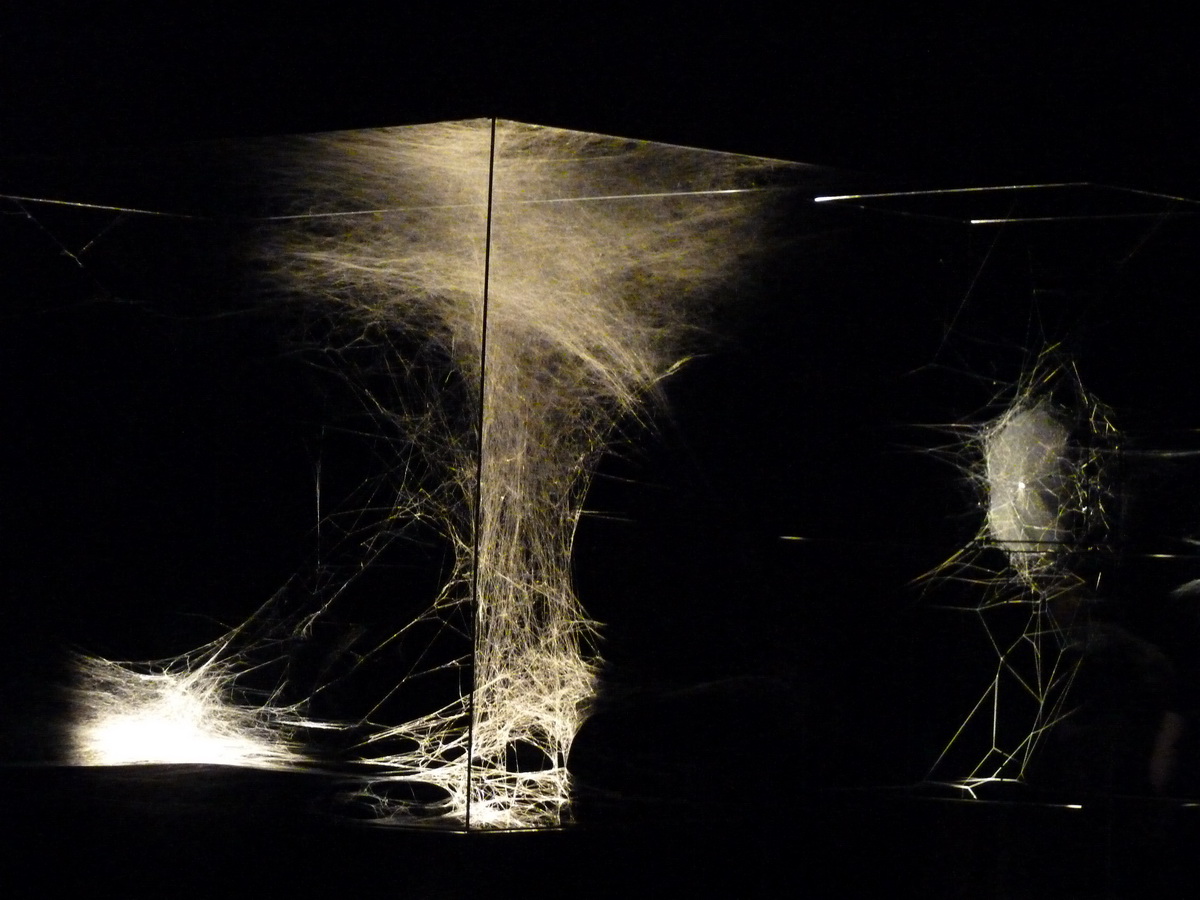
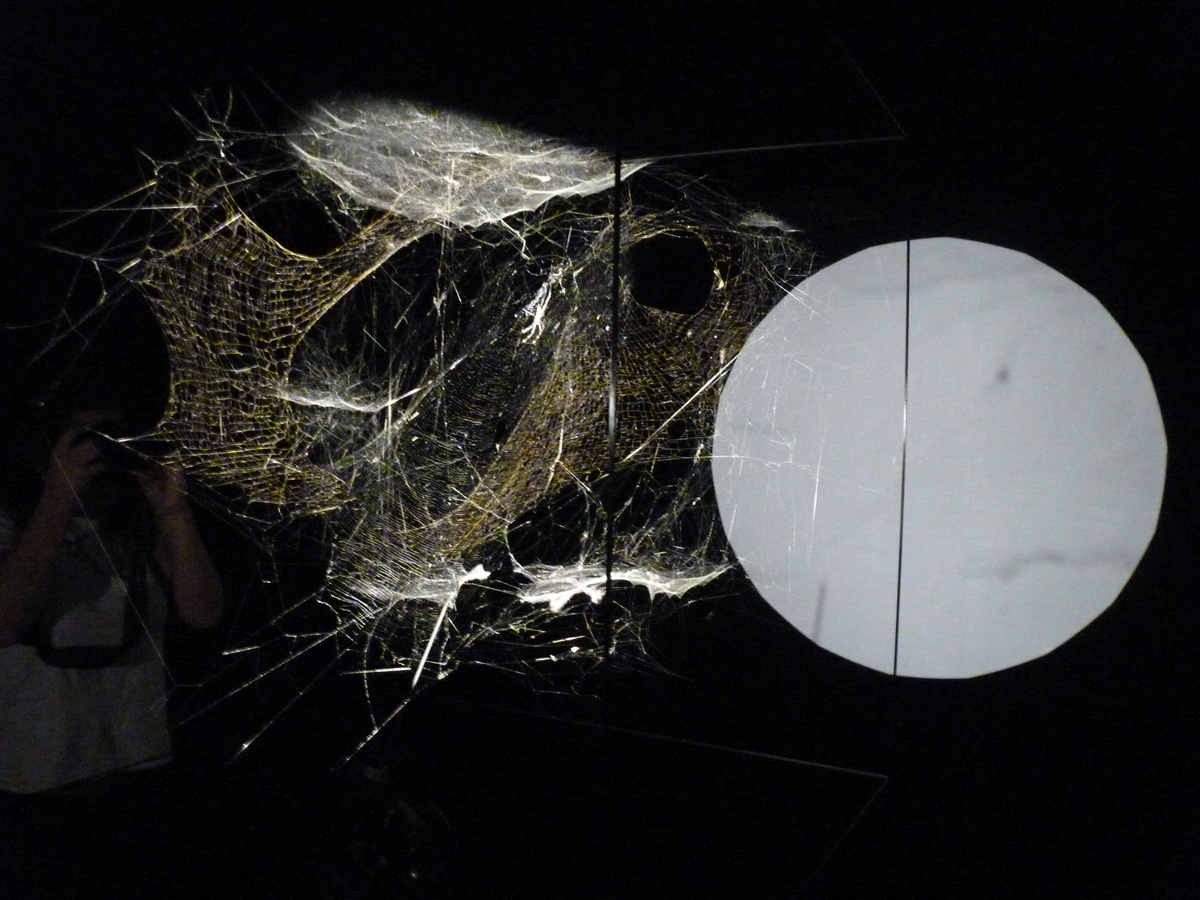
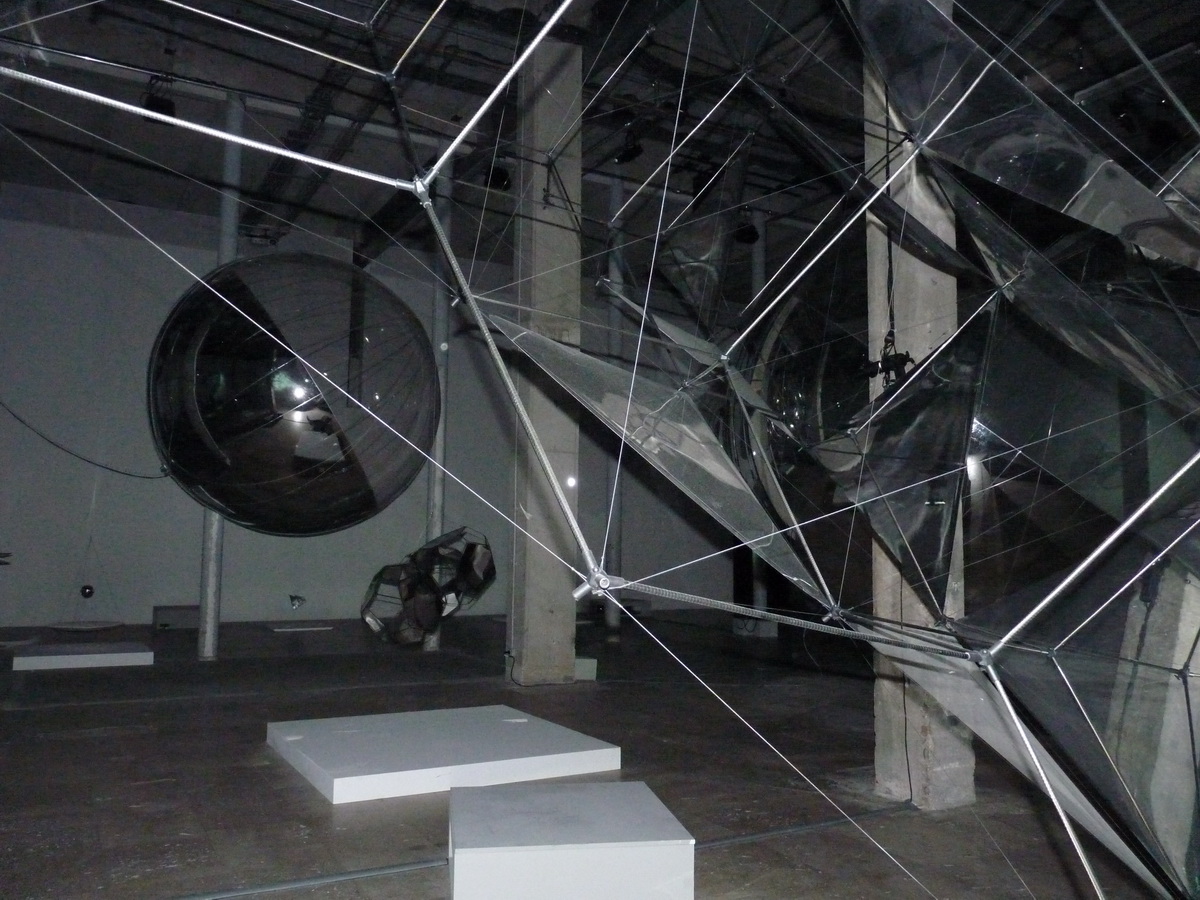
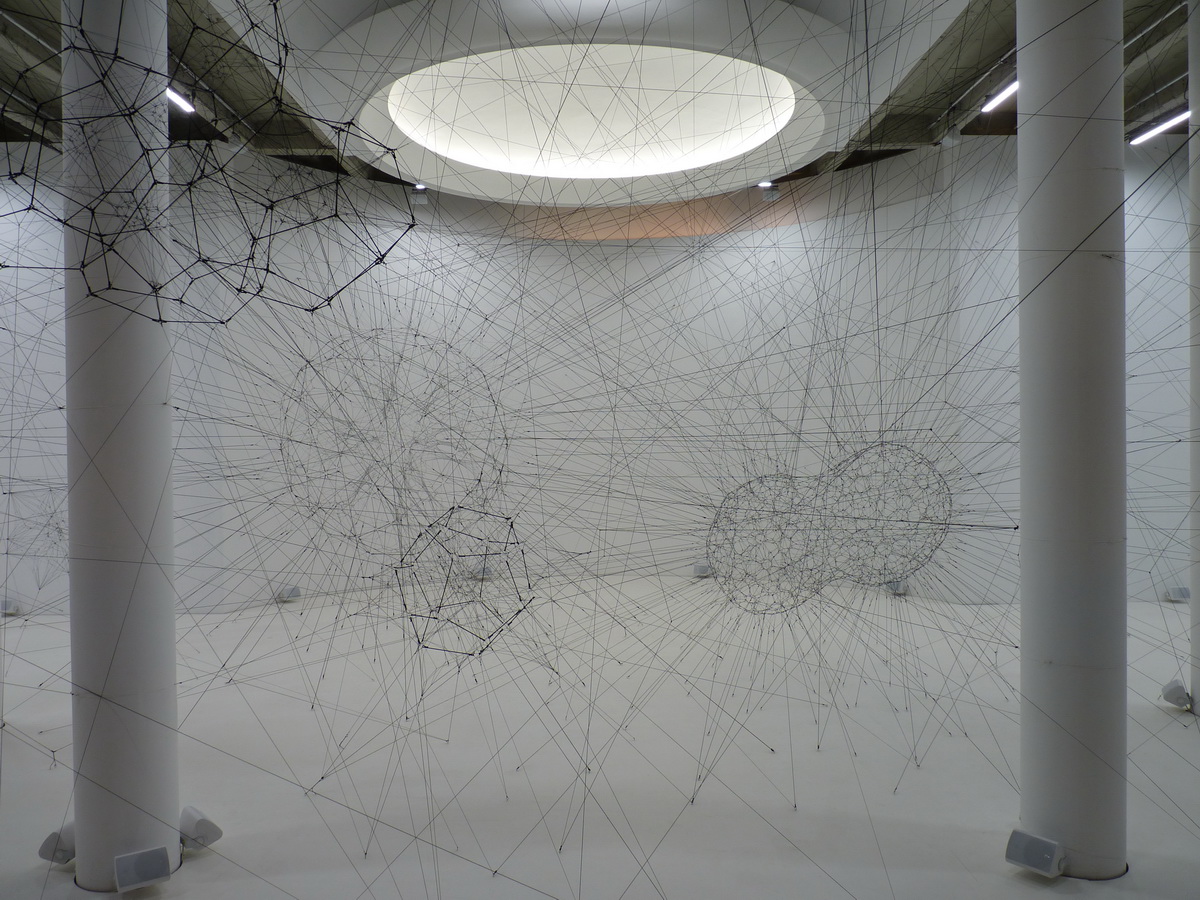
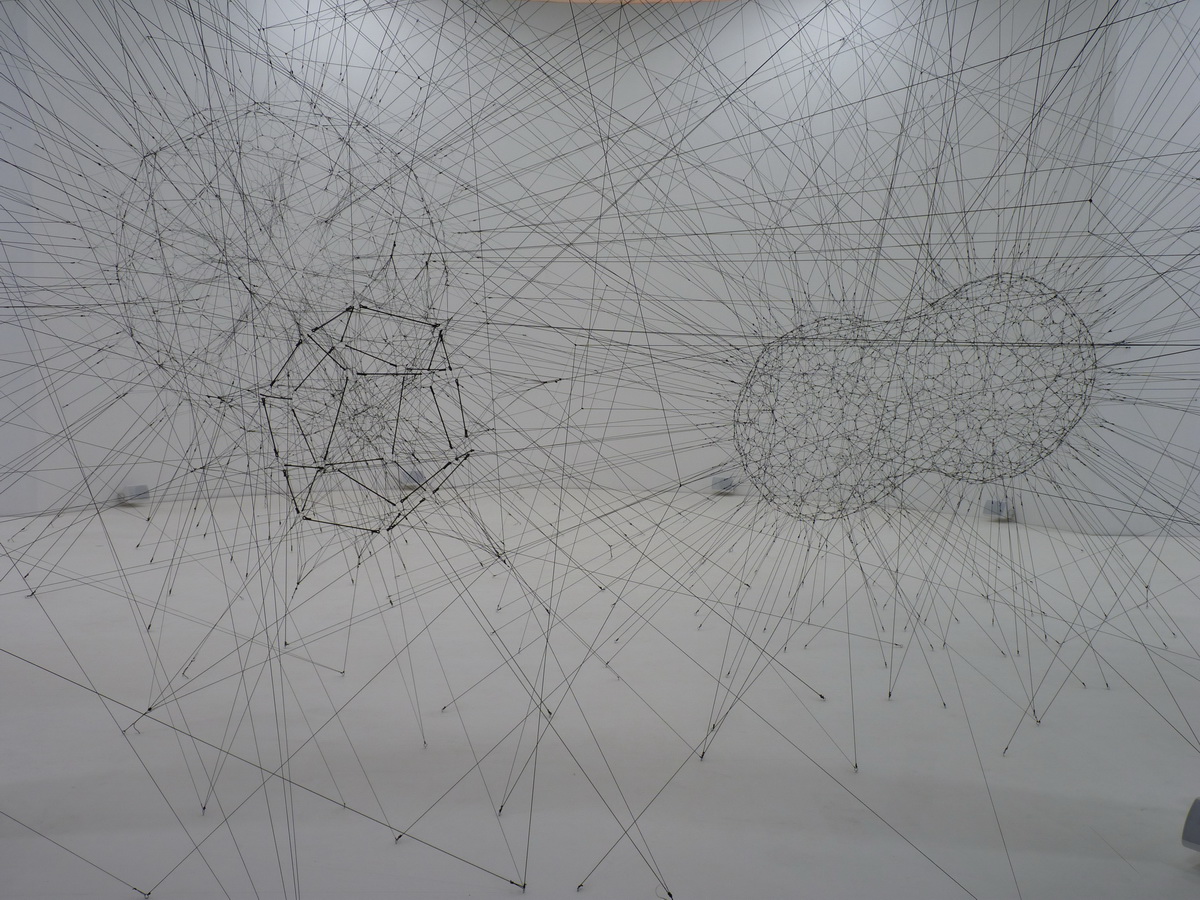
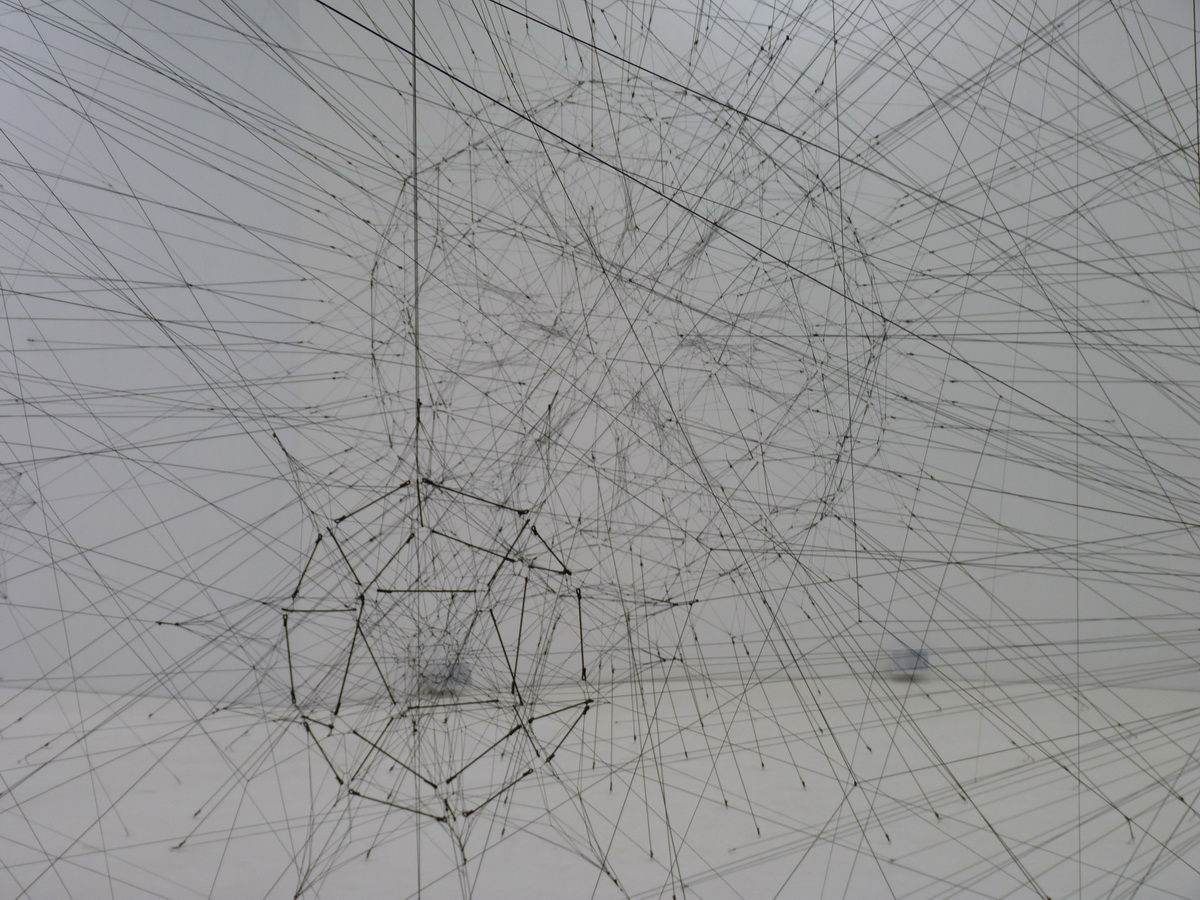
In the large exhibition hall "at-tentsion," a pitch-black space is filled with mixed-power spider webs of various sizes, carved or ready-made? These beautiful, natural constellation-like networks were woven by various types of spiders in the Palais de Tokyo.
Diverse network forms extend in all directions, constructing an overall shape that forms a floating, beautiful, and mysterious landscape.
The networks become places where sensory worlds meet, extensions of feeling, habitats, sensitive hearing, sending and receiving vibrations—perhaps ideas, a way for them to connect with the world.
In this exhibition, these spiders are viewed as complete participants in the exhibition. It is said that over five hundred spiders reside in the Palais de Tokyo; these constellation networks invite us to reflect on our coexistence with them.
Next is "The Sound of Air," a light, poetic spatial installation, which is an instrument composed of five slender, soft thin lines, floating and resonating in the air. Under a series of forces and conditions, changing the space and its dynamics: invisible movements caused by temperature changes, or triggered by the audience's breathing. By converting vibrations into sound frequencies, this installation allows us to hear the sound of the air.
The artist says: "Looking at spiders, I realized that I am part of a constantly developing ecosystem... Let me question how humans find their place in nature, coexisting with other organisms, rather than being dominant.
In this exhibition, I try to share, pay attention to others, amplify some usually unheard sounds, still in the air, those giving visibility to particles.
For me, observing, preserving, revealing these spider webs, showing their beauty according to the diversity of species' forms, is to show that we are surrounded by incredible works of art! (Note 1)"
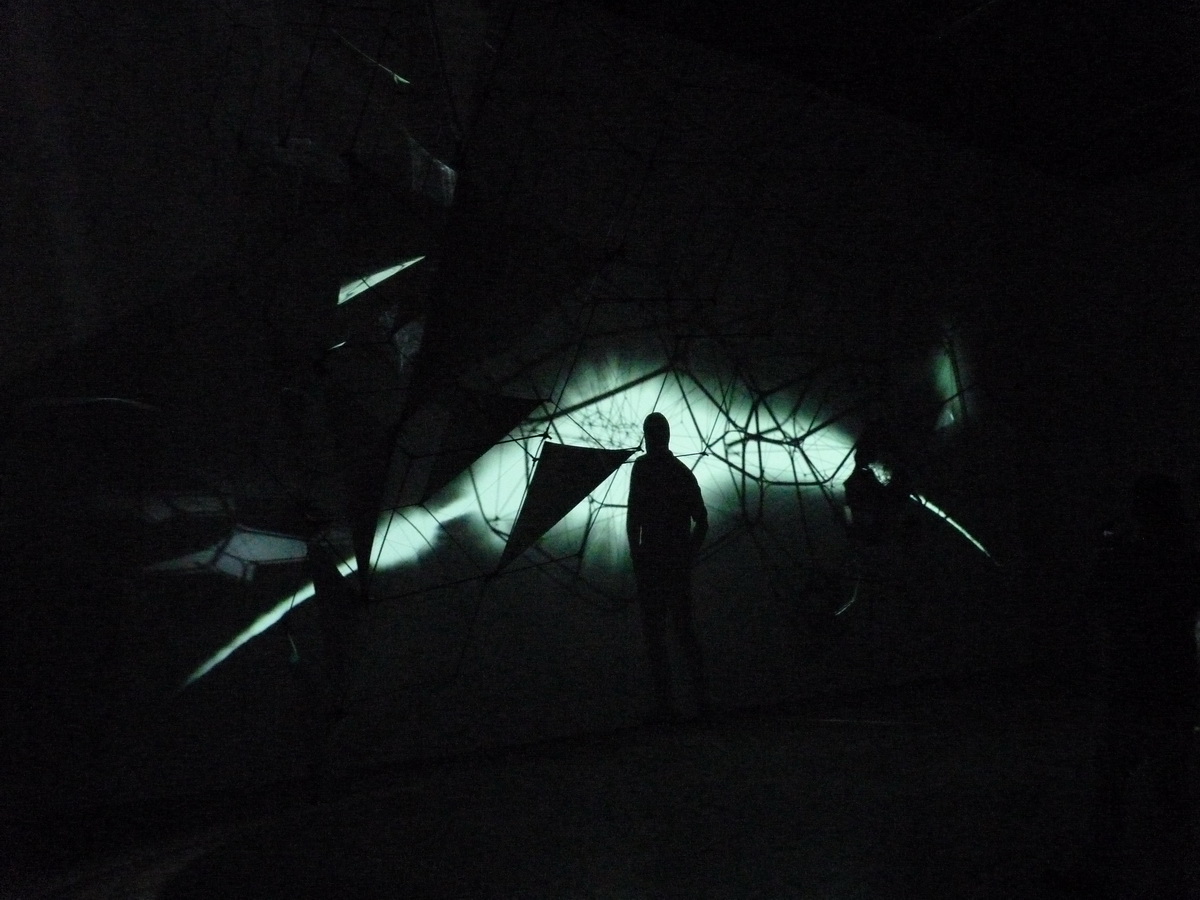
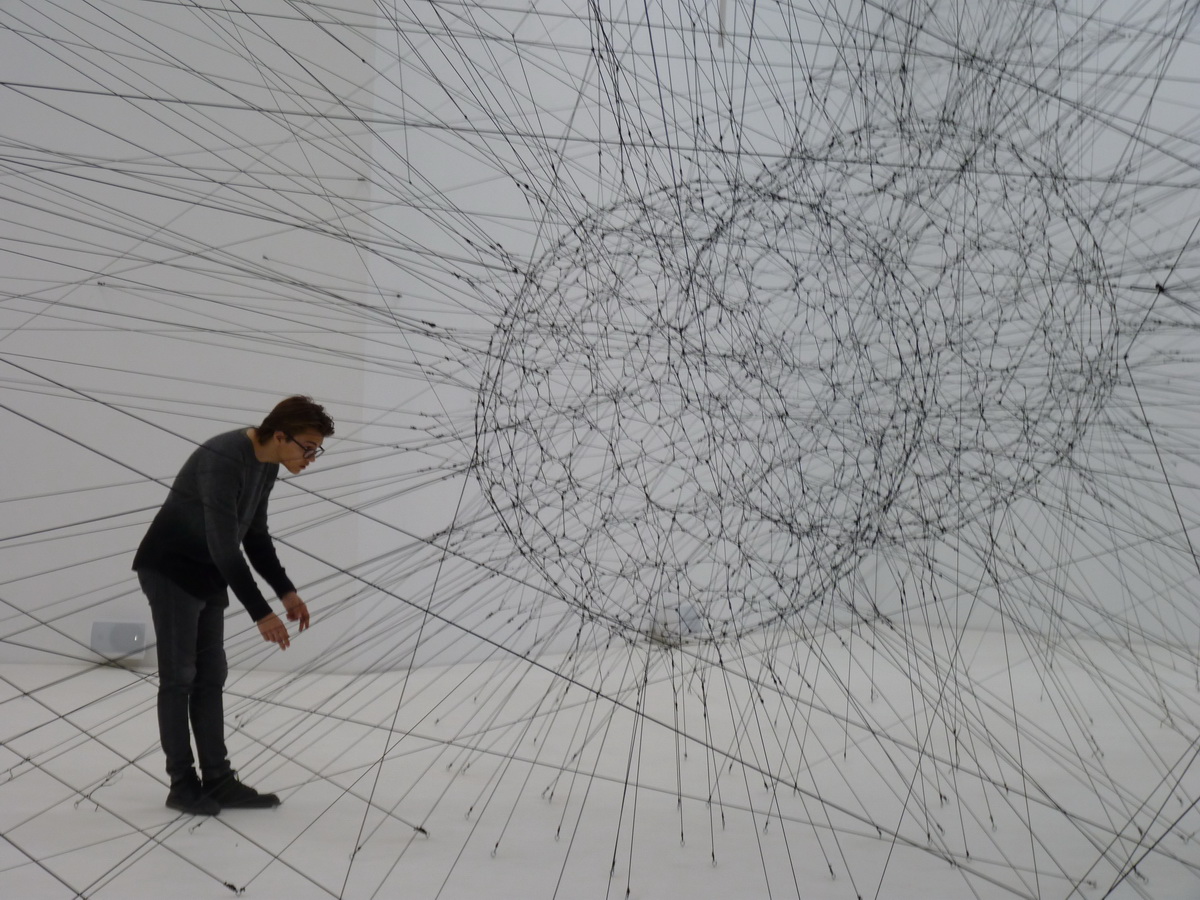
The most dramatic "algo-rhiythms" in this exhibition traps the audience in an oversized spider web, constructed from numerous geometric string lines, its form derived from associations with spider webs and the extension of geometric forms.
It is a spatial installation of a sound-interactive poetic constellation network structure, a structure that changes our perspective on natural phenomena.
This innovative work invites audiences to participate in improvised musical performances; fingers gently pluck the strings, each emitting different tones and scales, matching the rhythm around them.
Each line has a different frequency producing resonance, some audible, some sounding like vibrations.
Subsonic amplifiers turn the floor into a giant shell; lying on the ground, our bodies become a vast beach, the vibrating membrane shifting our attention to other perceptual modes. Improvisation becomes an unexpected network encounter.
Exploration of Air and the Challenge of a New Epoch "Aerocene": The entire exhibition, like a whole, reveals the intensity of entities in the air and how they affect us: from carbon dioxide (CO2) to cosmic dust, from infrastructure and radio frequencies to new corridors, aerial mobility. These invisible stories constitute the essence of what we belong to; it invites us to poetically rethink how we live in this world—and re-evaluate our way as humans. (Note 2)
Air is the wisest and most fascinating subject of exploration for artist Tomas Saraceno. These invisible substances constitute the essence belonging to all living beings on Earth, and are also topics of challenges for humanity's survival in the post-industrial era.
The basement exhibition hall "Aware Event" Particular Matters Jam Session is a complex installation series of scientific experiments exploring air, attempting to capture permanently agitated air matter. How can we hear the movement of floating particles?
By illuminating home, ground, and universe with air particles using a beam of light, recording their position and speed in real-time via camera, and then transmitting this data into a series of speakers in the exhibition space across different music.
Here, spider vibrations are combined, along with live broadcasts of dolphin sounds from the Mediterranean bottom, and the mixed air from walking and breathing of the live audience. It allows us to view the world as a complex material combination, inseparable from humans.
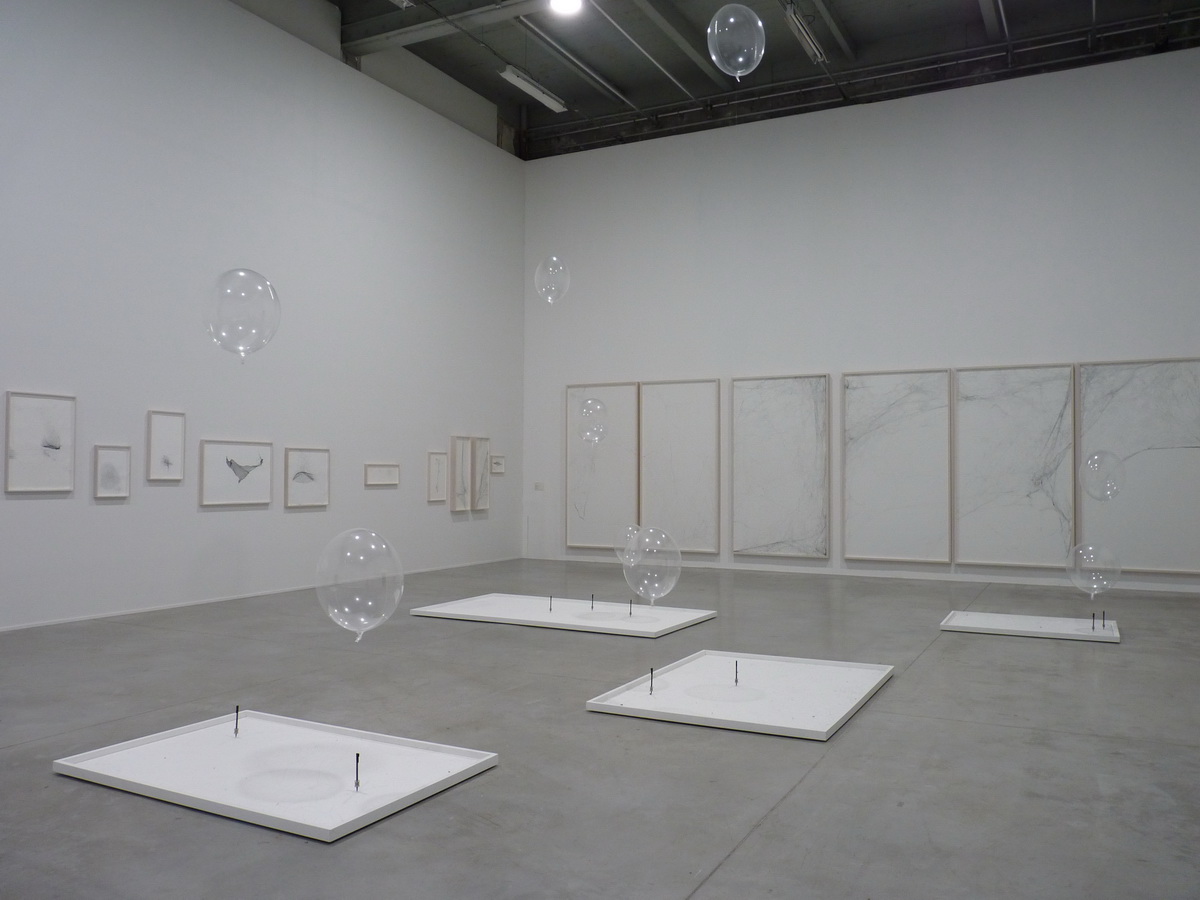
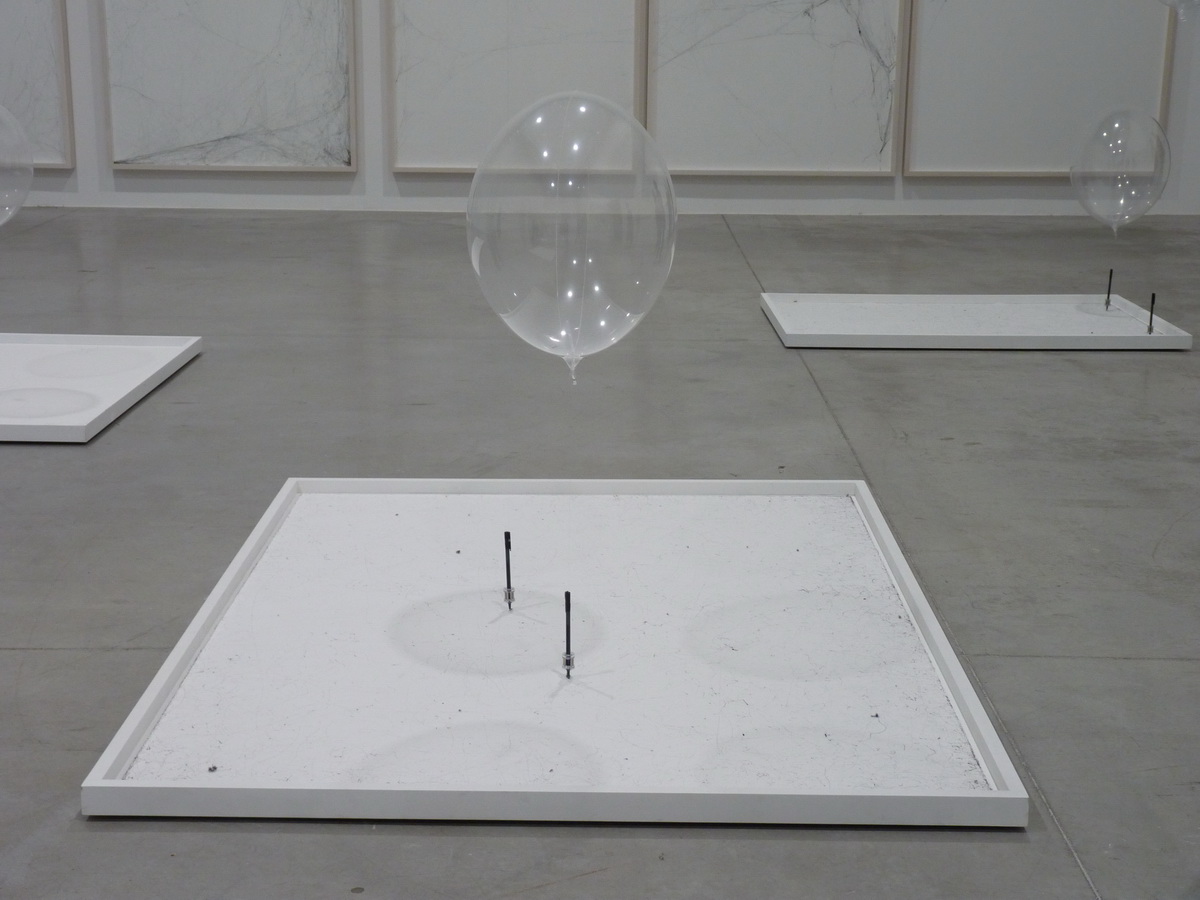
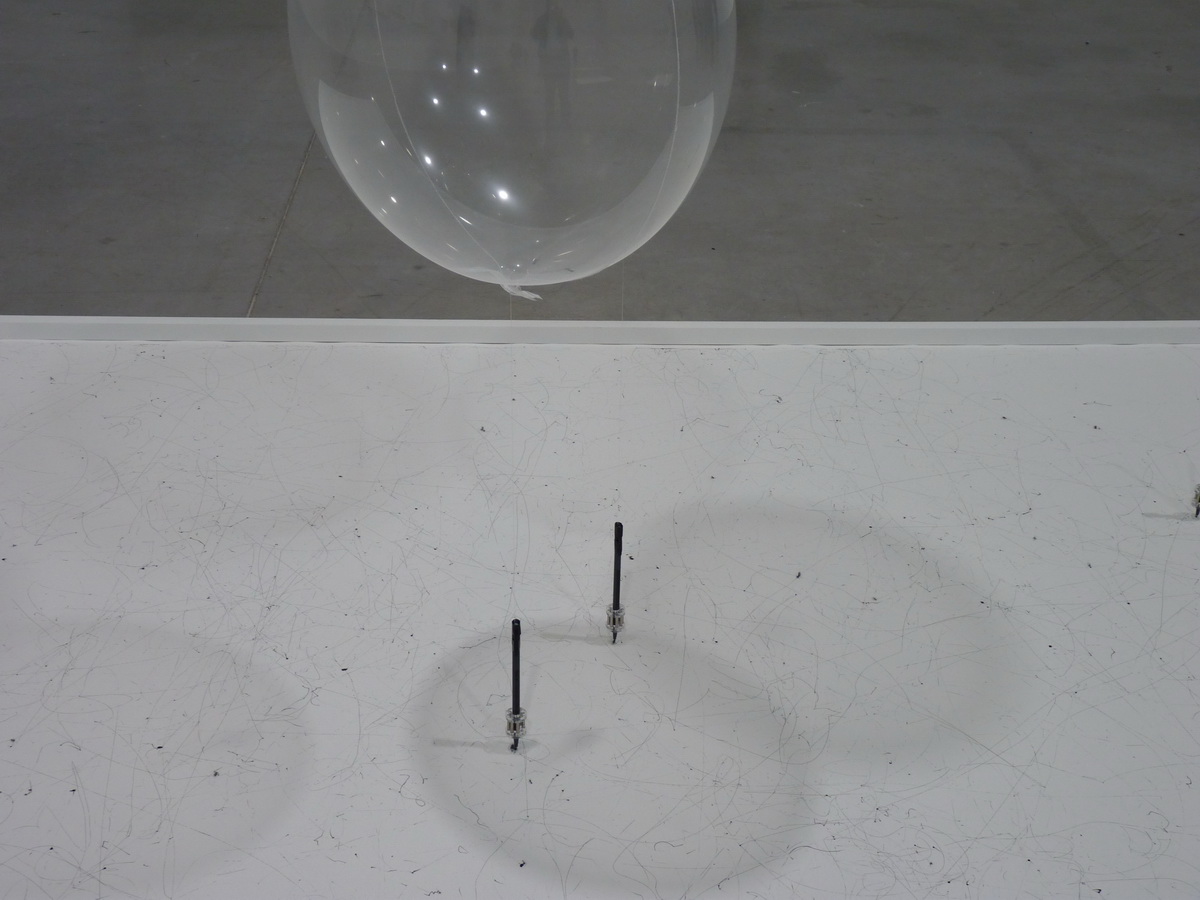
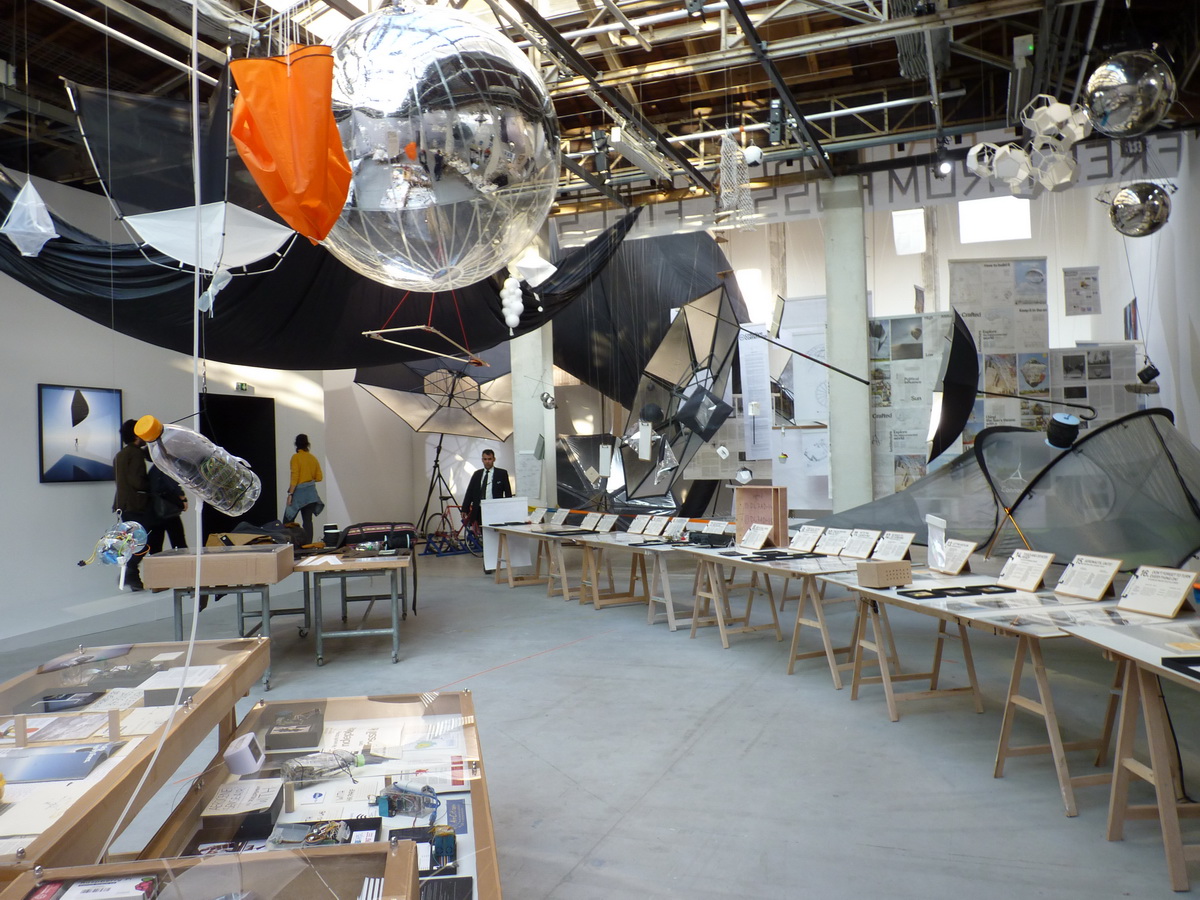
The innovative "Aerographies" wall features a large series of pencil sketches of various spider webs. Lightweight transparent plastic balloons float in the space, with a pencil tied below, writing and recording air chart states as the air flows.
Here, different methods are tested to see how human, non-human, and wind movements affect the air around them.
As balloons float due to natural and human activity conditions, the air status tracked by aerographs drawn by nature clearly shows that overall, these aerograph charts form so many traces and image characteristics that constitute a new epoch.
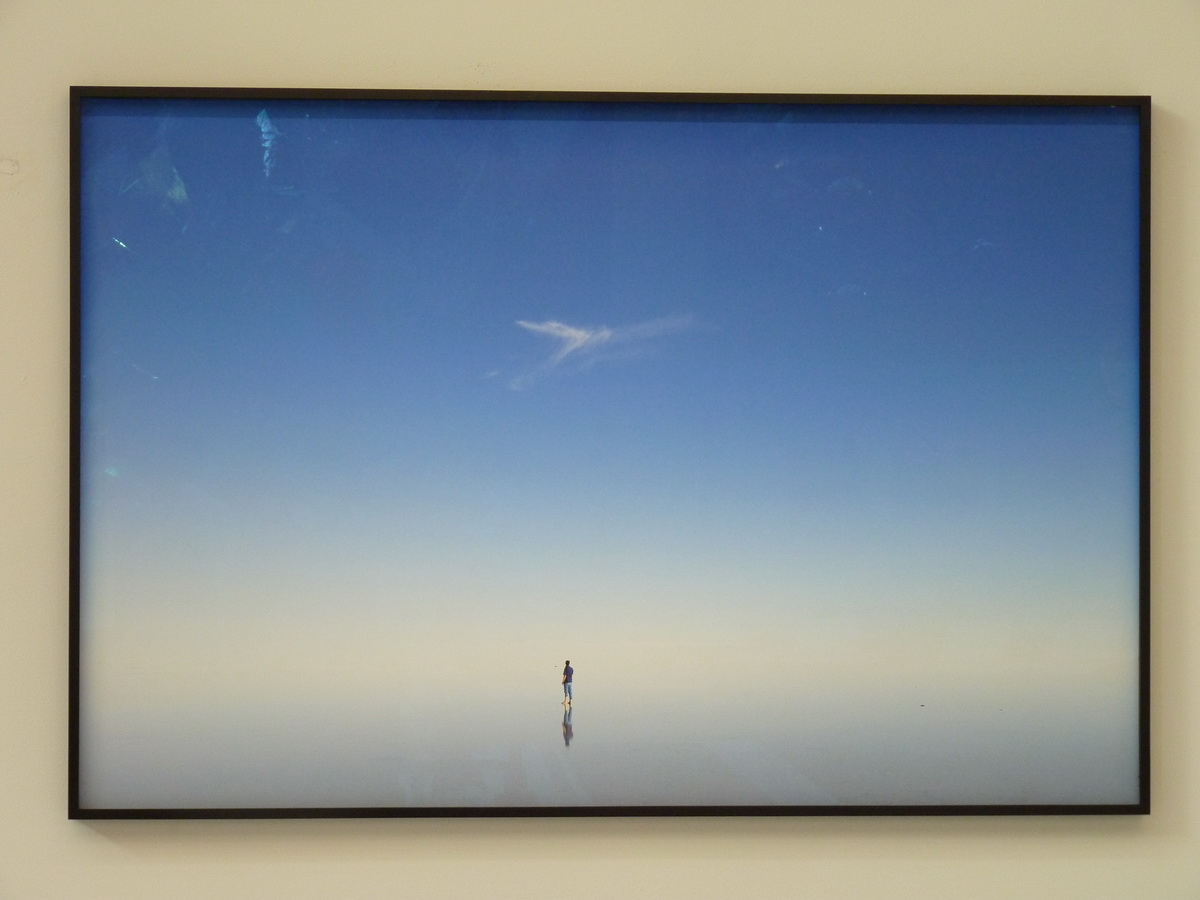
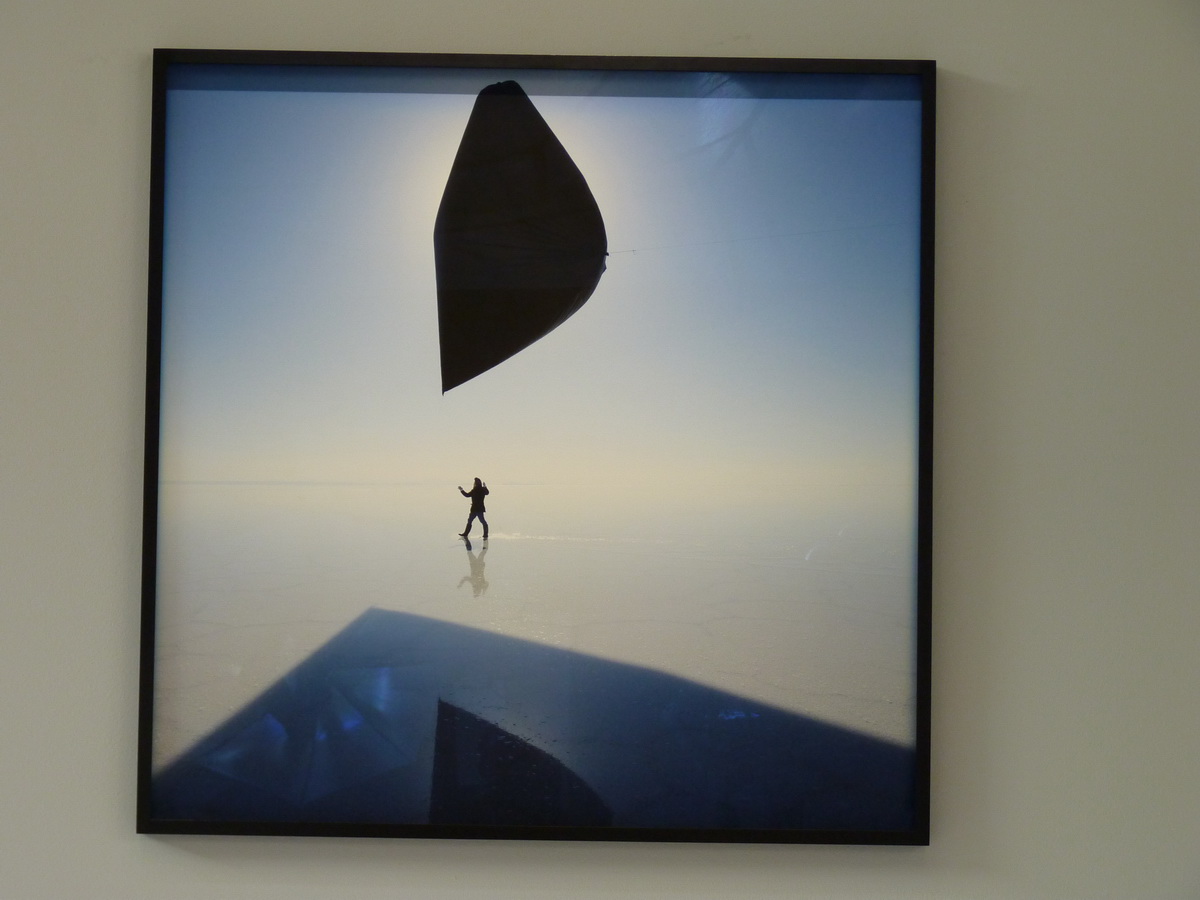
The "Development of Aerocene" is an object capable of floating in the air without burning any fossil, helium, or hydrogen fuel. It is equipped with several sensors capable of measuring temperature, humidity, and atmospheric pressure quality. It is an object built in a continuous, open, and collective manner, a poetic tool to imagine a new era without fossil energy.
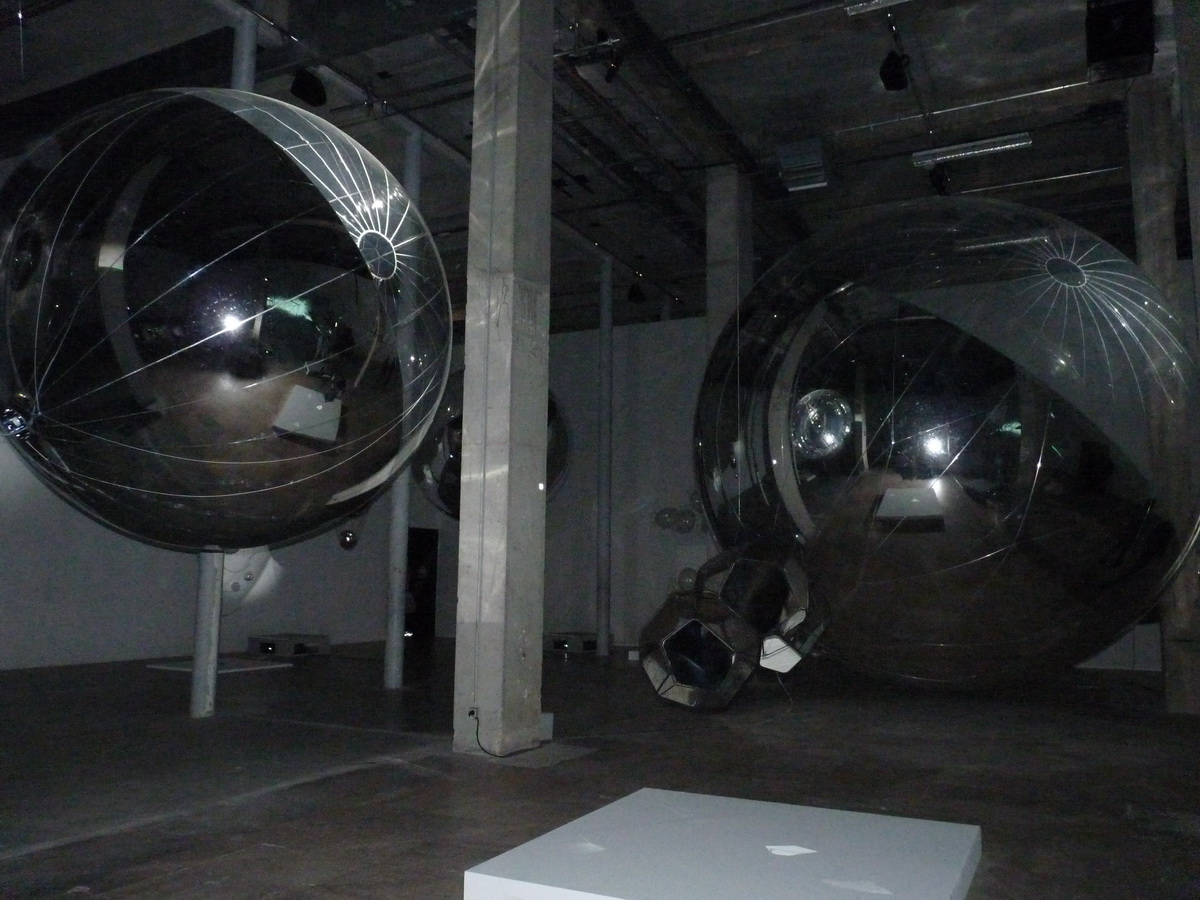
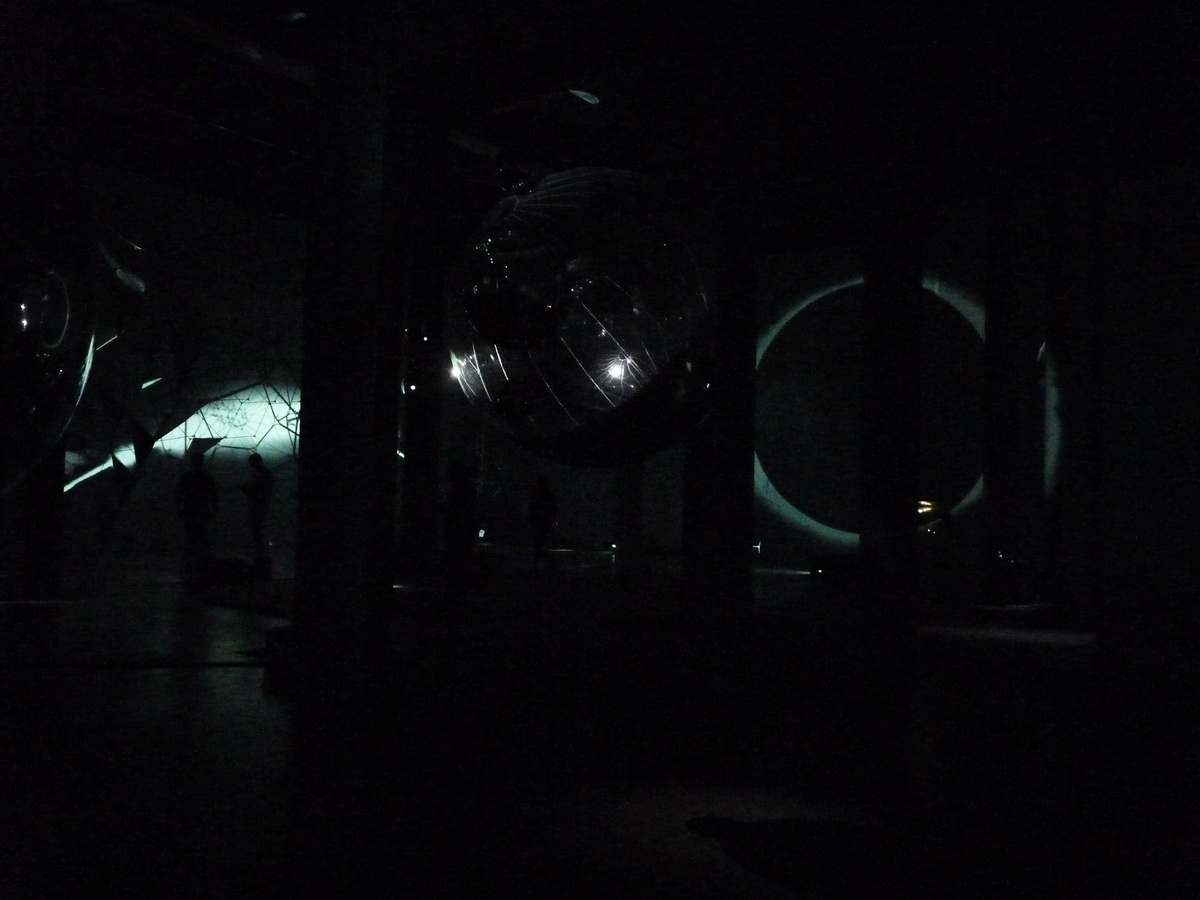
"Thermodynamic Imagination" (spatial installation of large and small balloons and subtle light projections): A pitch-black space makes one feel placed in the starry cosmos, with several black spherical planets floating, surrounded by a series of geometric objects.
Circular spheres and audience shadows are projected on the walls, amidst magnificent, eternal, changing landscapes of light and shadow. Audiences witness a series of eclipses in the planetary-shaped shadows, as if placed in the universe.
It evokes thermodynamic principles; thermodynamics is a branch of physics studying thermal energy and energy.
In this spatial installation, it reminds audiences of the connection between Earth and the Sun, relying on a reciprocal relationship of coexistence between its elements and their influences.
"Aerocene" is an international multidisciplinary community imagining borderless, new ways of existence without fossil energy. This space promotes self or collective hands-on practice through studios and participatory activities.
These studios raise a fundamental question: What does it feel like to breathe in a post-fossil energy era?
In this era of industrial predatory exploitation where Earth's resources are depleted, threatening the natural ecological environment of coexistence for all life, "Aerocene" is a movement initiated by artist Tomás Saraceno as an international open-source project.
It is a multidisciplinary art project aimed at reviving common imagination and working on atmospheric and environmental ethics, inviting audiences to participate collectively in coordination activities.
Responding to the human world, it proposes describing the unprecedented challenges faced in our era and begins to review the global impact of human activities on Earth's ecosystems.
He imagines a new era in Earth's history where ecological consciousness, morality, and environmental policy become primary social values.
Starting from this new historical era, Aerocene offers new forms of movement and sensation, coordinated with solar energy, wind power, and infrared radiation.
This is why, without using solar panels and batteries, and without helium, hydrogen, or other rare gases, the Aerocene Explorer sculpture floats without burning fossil fuels.
In this sense, they follow the most basic energy movements of our planet and its nearest star, making citizen-led environmental research possible, and providing new reasons for aerial mobility. (Note 3)
Note 1: Telerame Stephane Renault 16/10/2018. Note 2: Curator Rebecca Lamarche-Vadel exhibition press release. Note 3: Curator Rebecca Lamarche-Vadel exhibition press release. Note - Full text refers to the exhibition press release.