Valerio Adami (V. Adami) – "The 1980s" Solo Exhibition
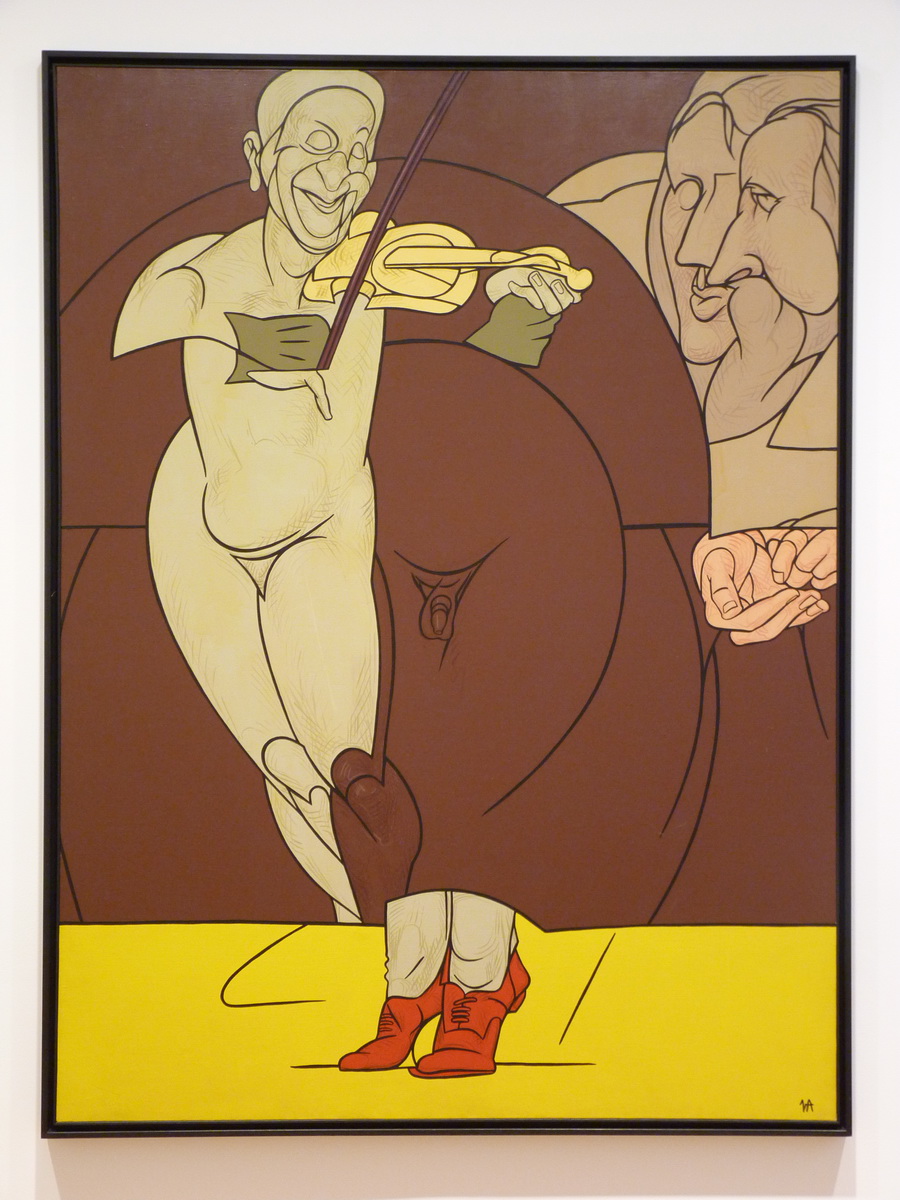
Valerio Adami The Prodigal Son 1982 203.5x165cm Acrylic/canvas
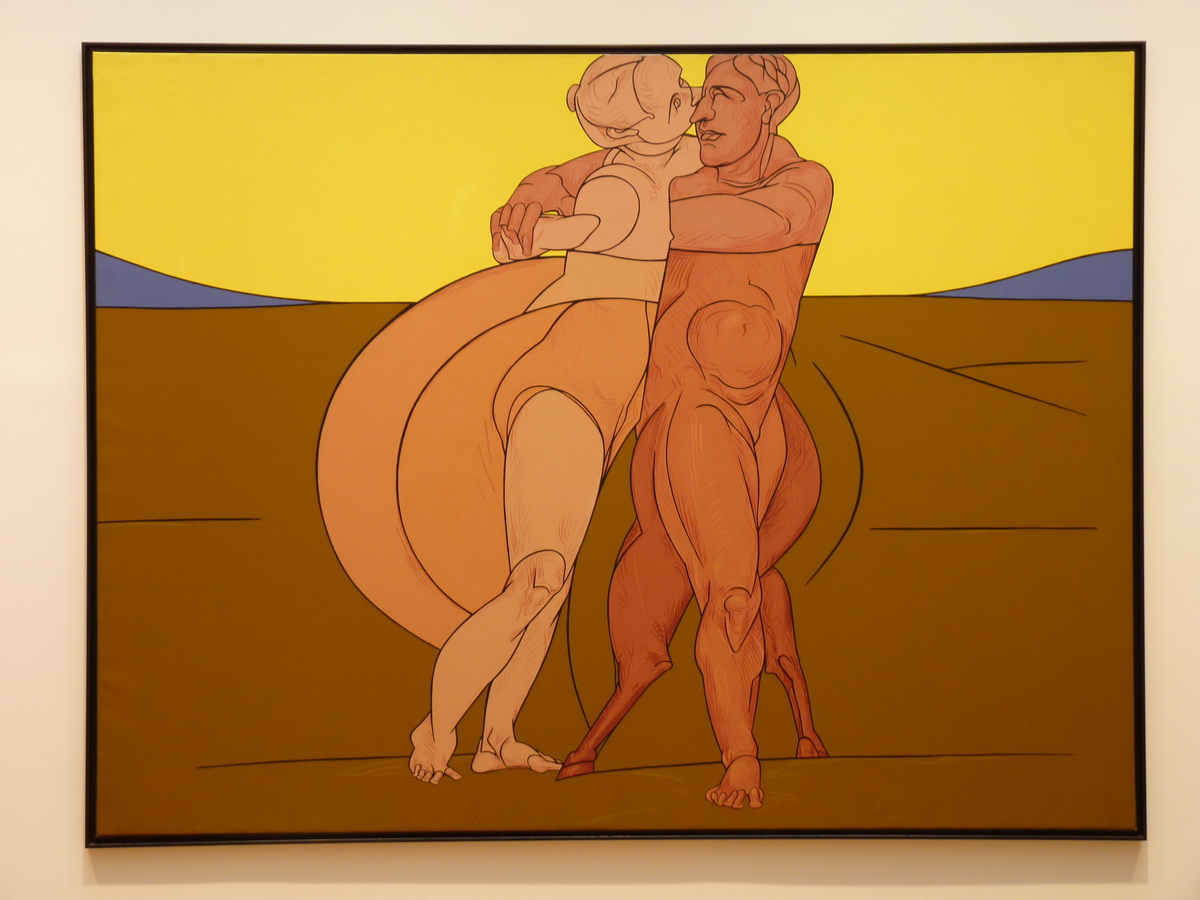
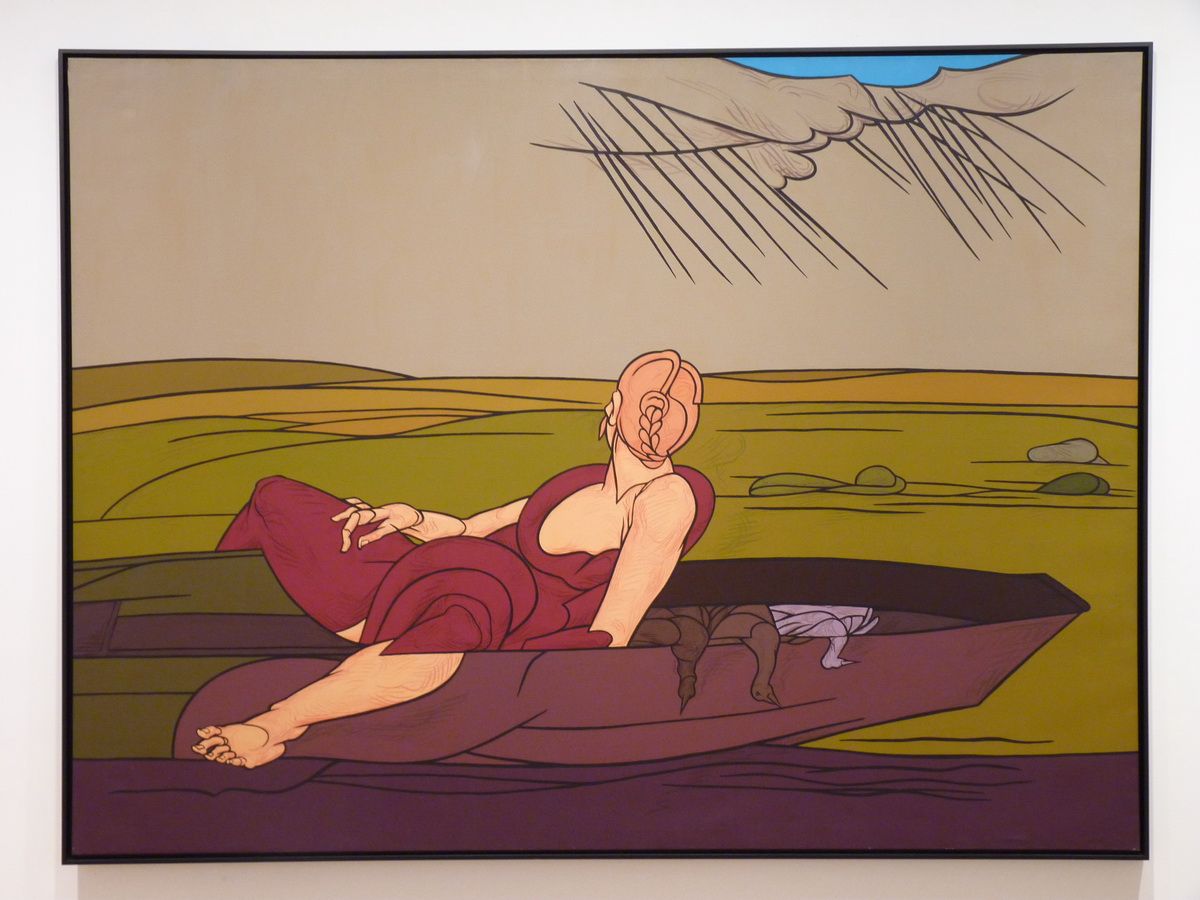
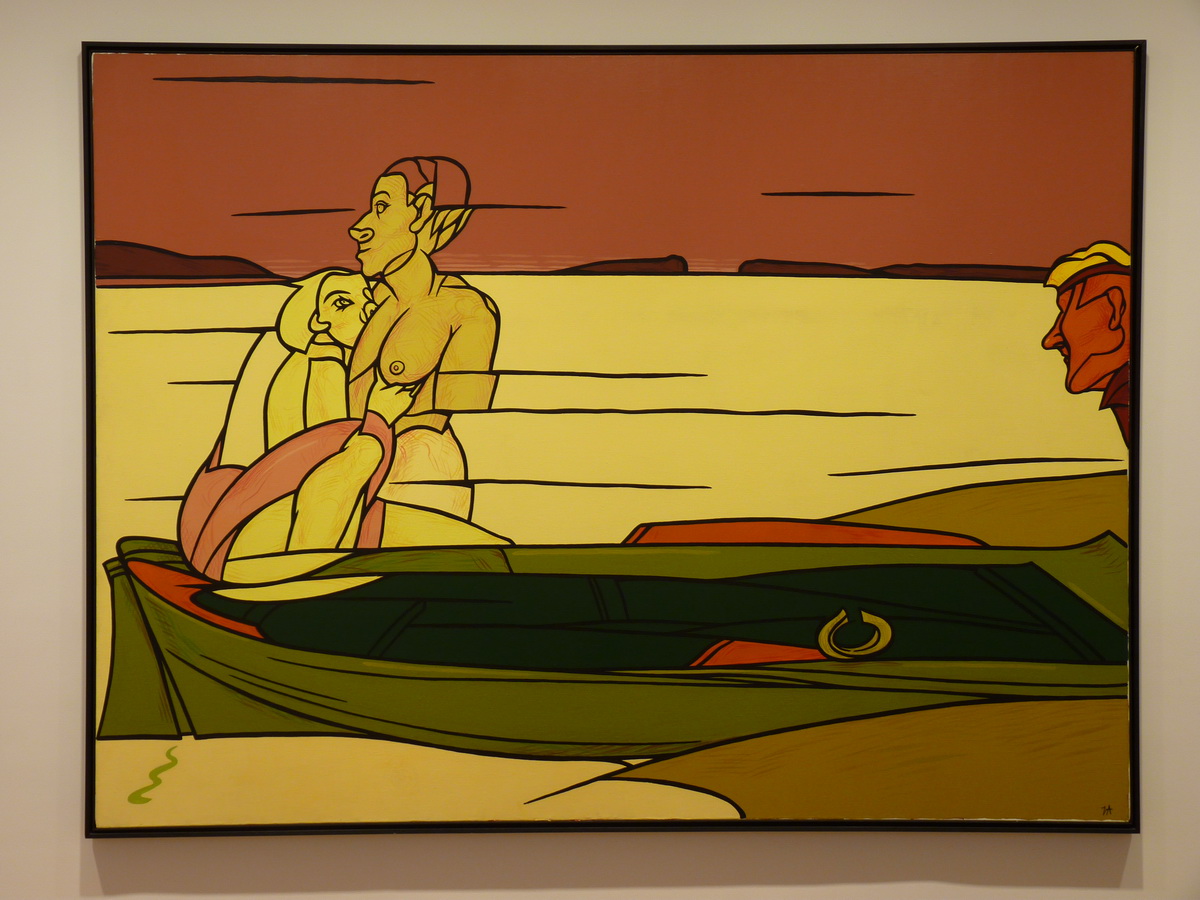
Time: September 7–October 19. Location: Templon Gallery, Paris. Text and images by Chen Chi-Hsiang
"To create a myth is the conflict between time and timelessness; this is the magic and power of all painting."
Valerio Adami (V. Adami) (Note 1)
Time: September 7–October 19. Location: Templon Gallery. Italian painter Valerio Adami (born 1935) is one of the most representative figures of European narrative realism. He has been active in the Western art world since the 1960s.
This early-maturing artist underwent the baptism of Italy's traditional Brera Academy.
At age 16, after discovering the works of Austrian Expressionist painter Egon Schiele at the Venice Biennale, he realized that painting possesses a particular psychological dimension and intellectual power, thereby establishing his artistic direction.
Nomadic at a young age (20), he traveled through Paris, London, and New York. Achieving success early, he participated in the invited exhibition at Documenta in Kassel, Germany, in 1964, and held his first retrospective at the Paris Municipal Museum of Modern Art six years later.
Adami employs an analytical simplification of structural composition, where black lines become the soul that flips figurative symbols.
Surrounding generous geometric color planes, he constructs complex spatial frameworks, shaping codified painting, which has earned him fame for his unique narrative figurative style.
His paintings are filled with intellectual humanism; subjective codified imagery exists within puzzle-like color plane abstraction, supplemented by references to narrative black written text.
His artistic creation stems from the companionship of poets and writers he has loved throughout his life (Italo Calvino, Jacques Derrida, Michel Deguy, Carlo Fuentes, Edouard Glissant, Jean-Luc Nancy, Antonio Tabucchi, etc.).
Adami does not adopt any transcendent meaning already existing in painting, because such painting generates meaning in its own way.
The artist states: "In this codified painting, the viewer must re-experience the methods of their educational process to comprehend the image." (Note 2)
After 1975, Adami returned to the source of traditional culture, building his creative core around the grand themes of ancient Greek and Roman mythology, referencing culture to return to myth and story.
In the mature 1980s, under the postmodern cultural climate, anchored in Western classical tradition, the result was the creation of extraordinary works with a strong sense of modernity.
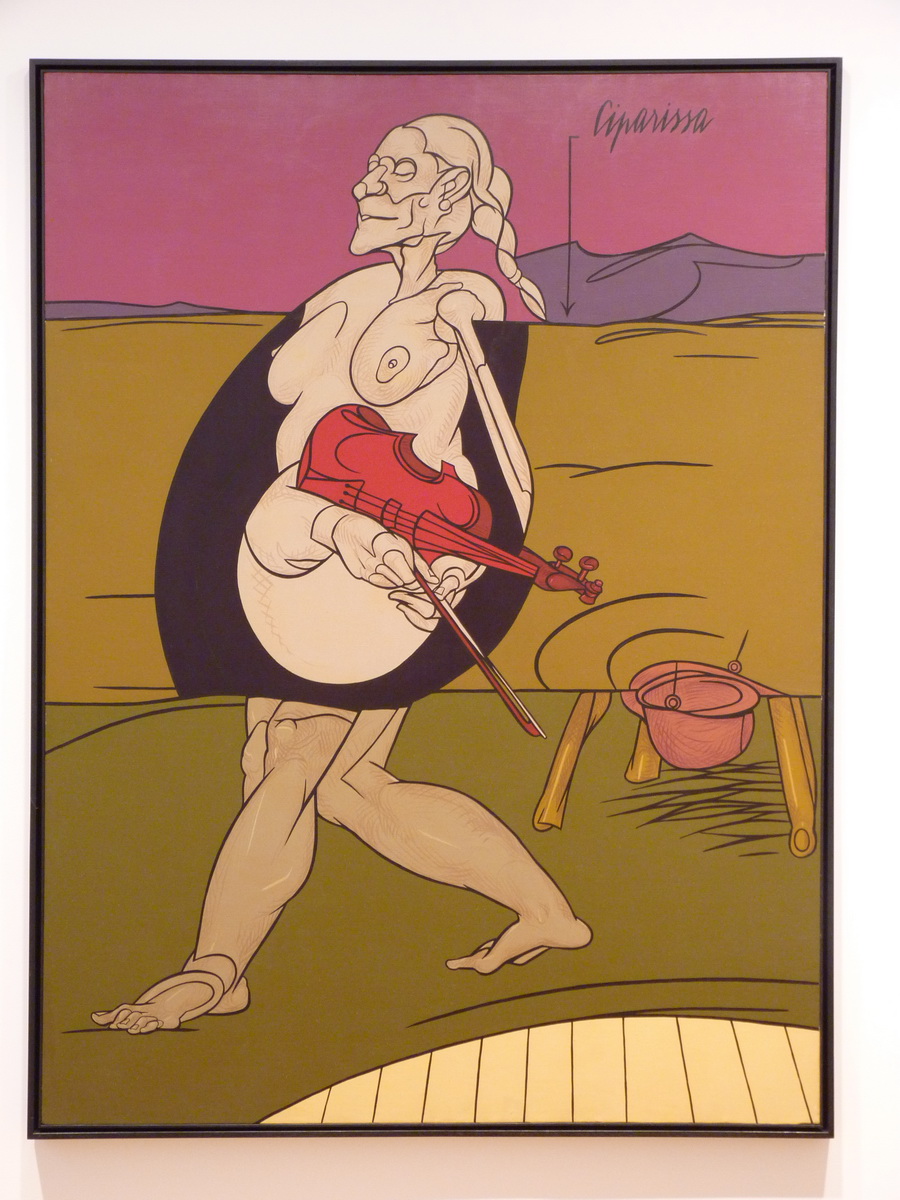
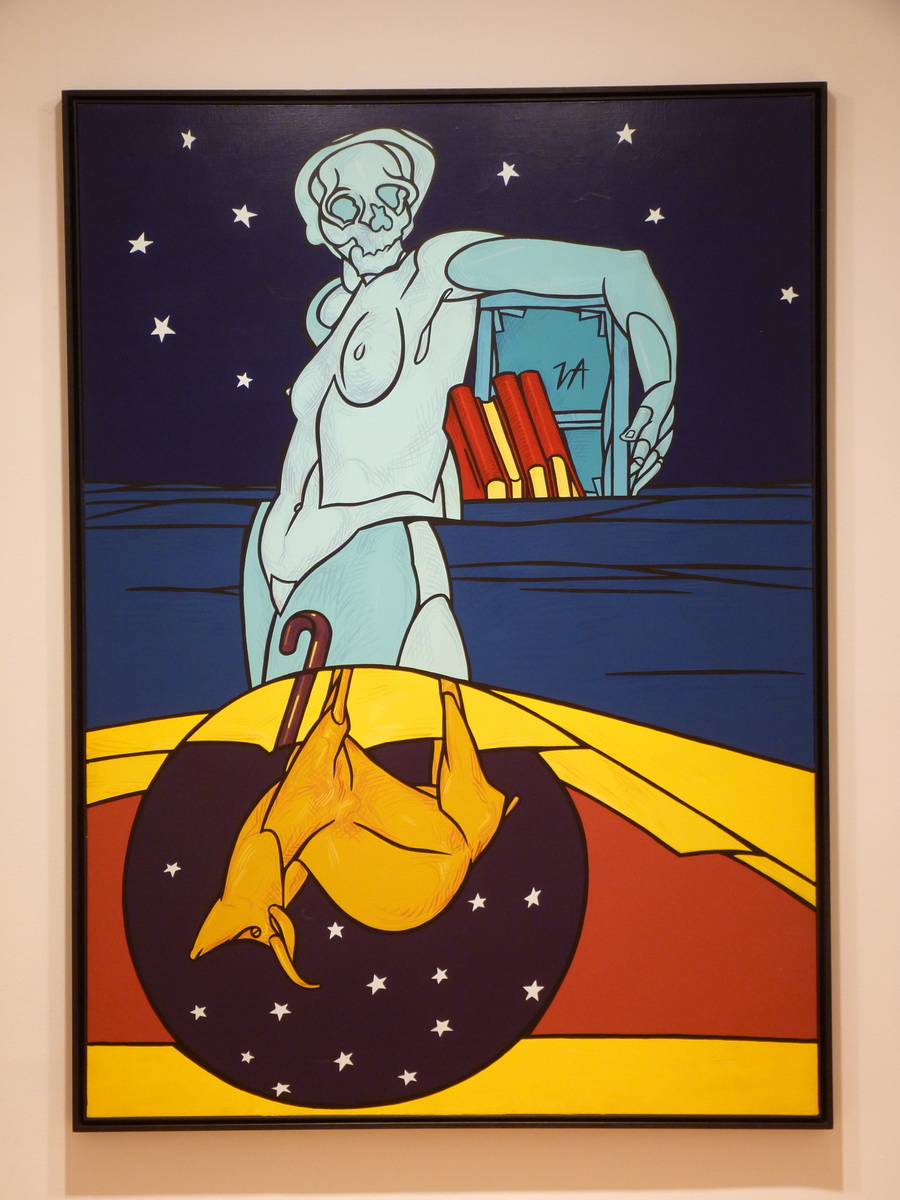
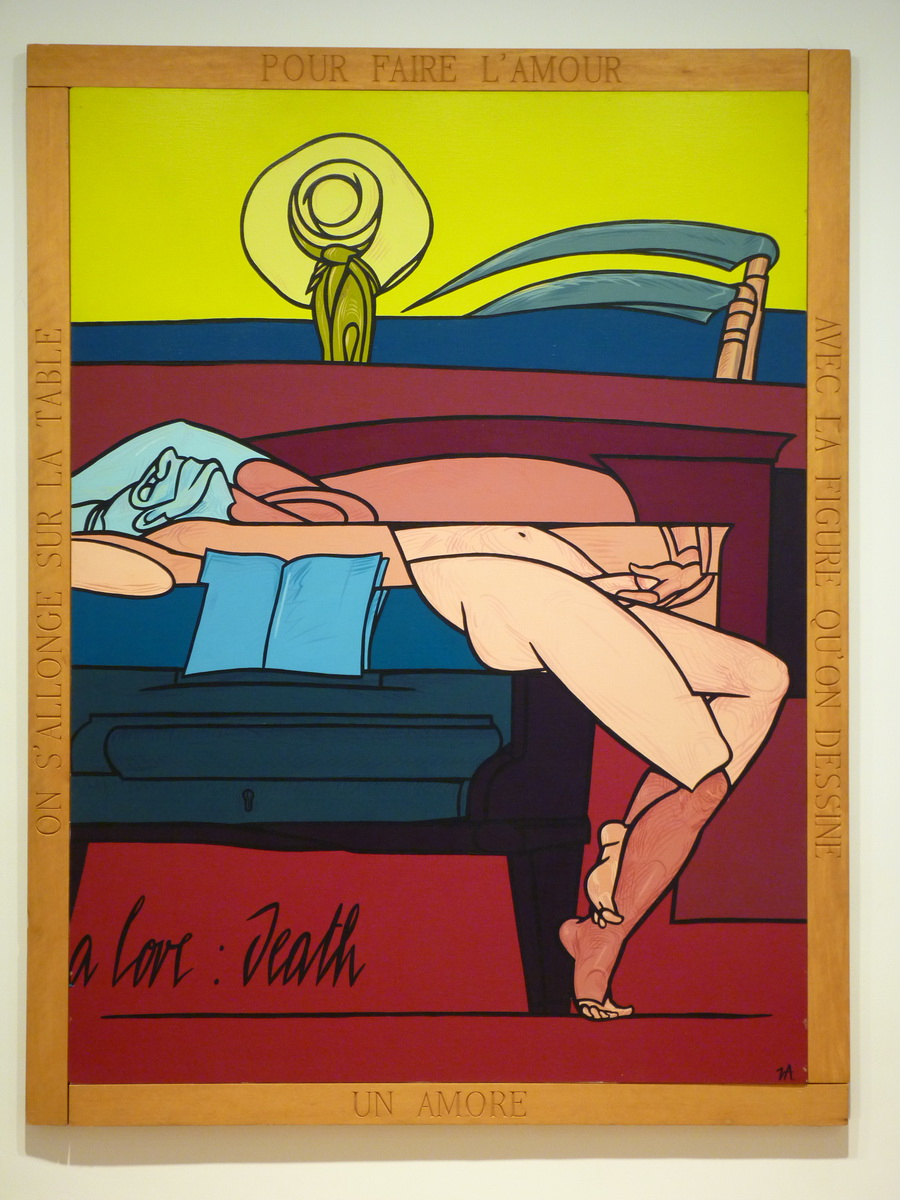
Full of literary quality, he reinterprets classical masterpieces such as The Prodigal Son (1982), the mythological The Spell of the Lake (1984), the poetic Night of the Ibex (1988), and the romantically sensual Love-Death (1990), among others.
Postmodern philosopher Jean-François Lyotard wrote about Adami's works from the 1980s: "One might say that line satisfactorily places order within chaos. What one sees is before interpretation.
One might say that line is sacredly present in the visible, even if there is a visibility. But even when visible, what people see is less color than line. Oh! Adami's colors submit to line (...).
Adami is a classicist because his line conforms to its materiality and proportion. (...) Proportion takes effect, submitting to criteria, as rigorously as Raphael; in this regard, Adami is clearly a classicist..." (Note 3)
Adami says: "The progress of painting is the progress of the self; this developmental path will be the simplification and erasure of the image. Continuing to expand in this regard, it will slowly disappear into nothingness, and suddenly reappear: Land! Land is the end of travel.
The viewing of things differs from their substantial existence. There is a way of seeing, which is to touch it with closed eyes... In perfect tranquility, before the storm of non-tensed pictures.
The value of an object's form and what we can perceive must be perfectly realized: this consistency gives birth to boundaries, drawing, becoming the result of the picture... Drawing and thinking are extremely similar.
It only explores action, with no intention of approaching a goal; it is painting for painting's sake, the eye only for the eye, a dog biting its own tail, endlessly... Painting talks too much about painting; it needs to return more healthily to the figurative." (4)
Note 1: Press release for Valerio Adami – "The 1980s" Solo Exhibition. Note 2: Art contemporain En France, by Catherine Millet, published by Flammarion, Paris, 1987, pp. 102–103. Note 3: Ou va l'art Contemporain?, by Jaen-Luc Chalumeau, published by Vuibert, 2003, p. 56. Note 4: Adami catalogue Collection Contemporains, Centre G Pompidou, published 1985. 25 ans d'art en France (1960-1985), published by Larousse, Paris, 1986, p. 125.