Wade Guyton "Painting" Solo Exhibition
Painting 200x300 cm Printing ink 2008
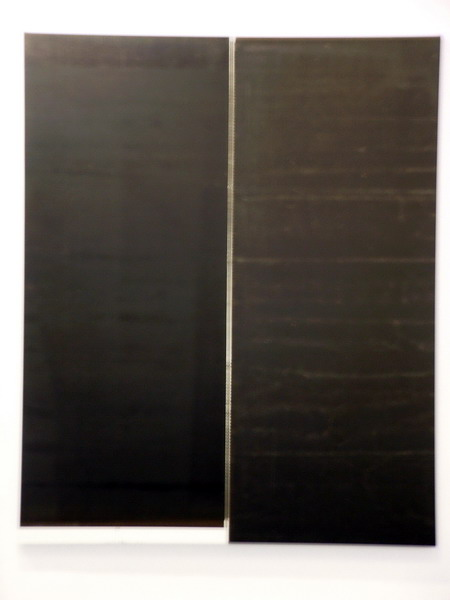
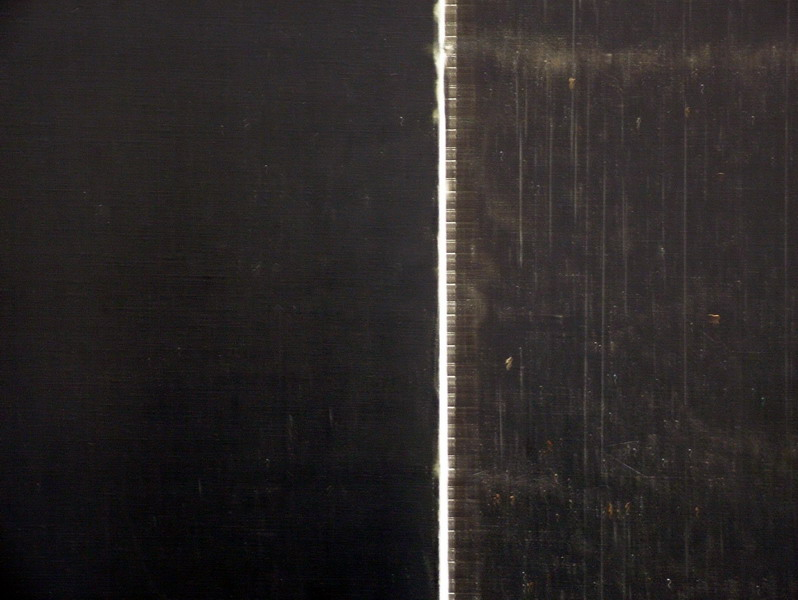
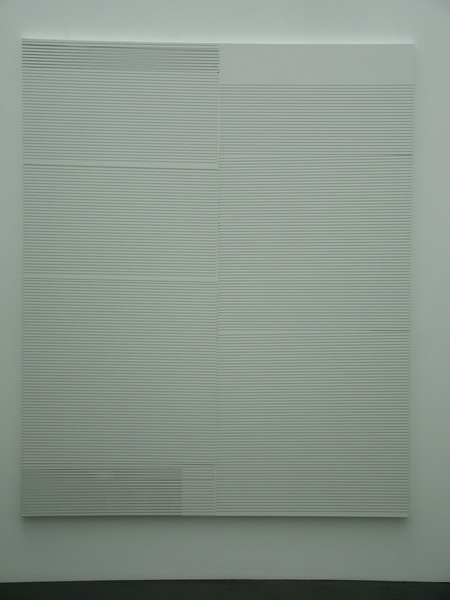
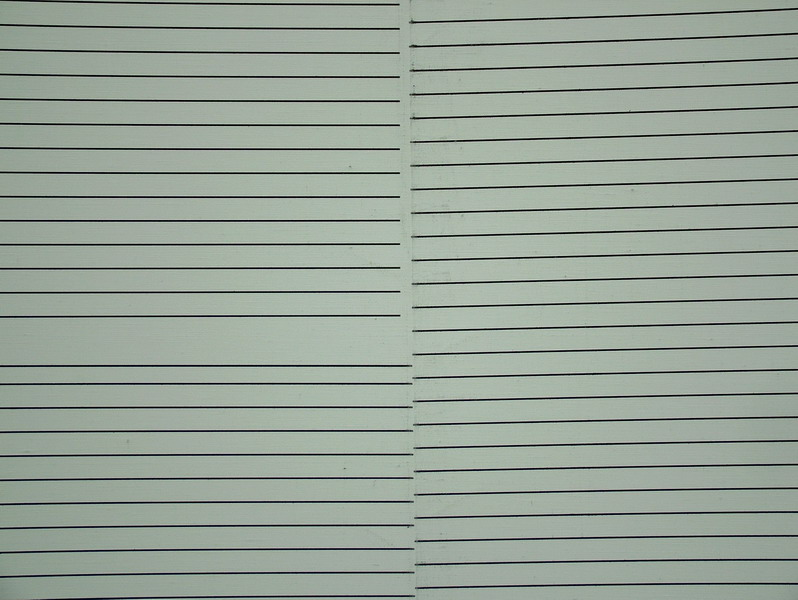
Detail of Painting 200x300 cm Printing ink 2008. Wade Guyton's "Painting" solo exhibition was on display at Galerie Chantal Crousel from April 26th to June 14th. Wade Guyton (born 1972) is one of New York's outstanding contemporary painters. In today's art scene, filled with anecdotal and literary yet listless painting, and of course with the art market still primarily a painting market, painting is not dead; on the contrary, it is more active and more commercial, saturating the entire market, but finding a satisfying painting requires searching for a needle in a haystack.
Painting is not charming, but its output value is staggering and bewildering; one doesn't know what to make of it, just how beautiful and spectacular the banknotes are. In an era of collapsing stock markets and real estate where capitalism prevails, art has become a moment for capitalism to spy on and add red to profits. No wonder painting, which has died and come back to life, is so confusing. But is it painting that is confusing? Is there some mistake? Wise people know the truth in their hearts; saying more is useless. Output value represents the market; it does not represent quality, much less innovation. Of course, in an era dominated by profit, it is natural for art to stage a revolution from within capitalism's pocket. In a situation where one is willing to strike and the other is willing to be struck, the harder the strike, the more exhilarating it is—this is more exciting and lively than a game of hide-and-seek.
How to paint, what to paint, why paint—it seems these questions are all unnecessary worries. One just paints like this. Does "just like this" become the mission of postmodern painting? Painting was forced into a corner by modernism but was resurrected in postmodernism. The stance of this resurrection is to discard all the legacy and institutions of modernism and, on the spiritual foundation of the paternal sentiment of modernism, ambiguously enter the market and institutions to stir up trouble. All this has become the current benchmark and ambition for creation.
How a painting is made is the core of Wade Guyton's artistic inquiry. So, how is it painted? Should one paint at all? What to paint? Questioning is the beginning of investigation, especially in today's generation of the internet and digital imagery. Who paints? Oneself, or does the machine replace the painter? Upon first viewing Wade Guyton's work (his first solo exhibition in Paris), it appears like black monochrome paintings or black line paintings. Upon closer observation, they are dense, coded black stains or lines, and are all divided into two equal parts. Within the monochrome or line paintings, there is always a white line, like a contrasting light transmission and space. Looking even closer, the black printing ink reveals a very rich tonality and the traces of machine printing. Suddenly, one understands: this is the result of the artist using a large Epson printer to print over and over again (the lines come from line designs in Photoshop). And because the printing machine can only print up to a hundred centimeters in width, it leaves a white gap line at the junction of the two sections. More interesting are the works the artist deemed poorly printed and reprinted, or the traces inevitably left when the canvas had to be dragged on the ground during the surprising process of printing, which become part of the truth of the black monochrome painting and inevitably enrich the picture. Wade Guyton's abstract paintings are created through mechanical operation, thus becoming a kind of abstract style, interpreting the painting behavior and the visual language of the era's messages for a new generation.